
ohata.ai
Ohata Resource Canada Inc.

RAM-C (mix and damaged RAM) Grade buying scrap price

Back to PC Memory(RAM) price list
UP↑
RAM-C (mix and damaged RAM)  Grade
Updated: Sep 11,2026

6.83 CAD / lb

The Price is buying by Yard of Richmond, BC, Canada.

Key Buying Introduction

1. We purchase RAM-C Grade memory modules from a minimum quantity of 1 lb, including damaged, incomplete, mixed, or heavily contaminated RAM that does not qualify for higher Ohata RAM grades.

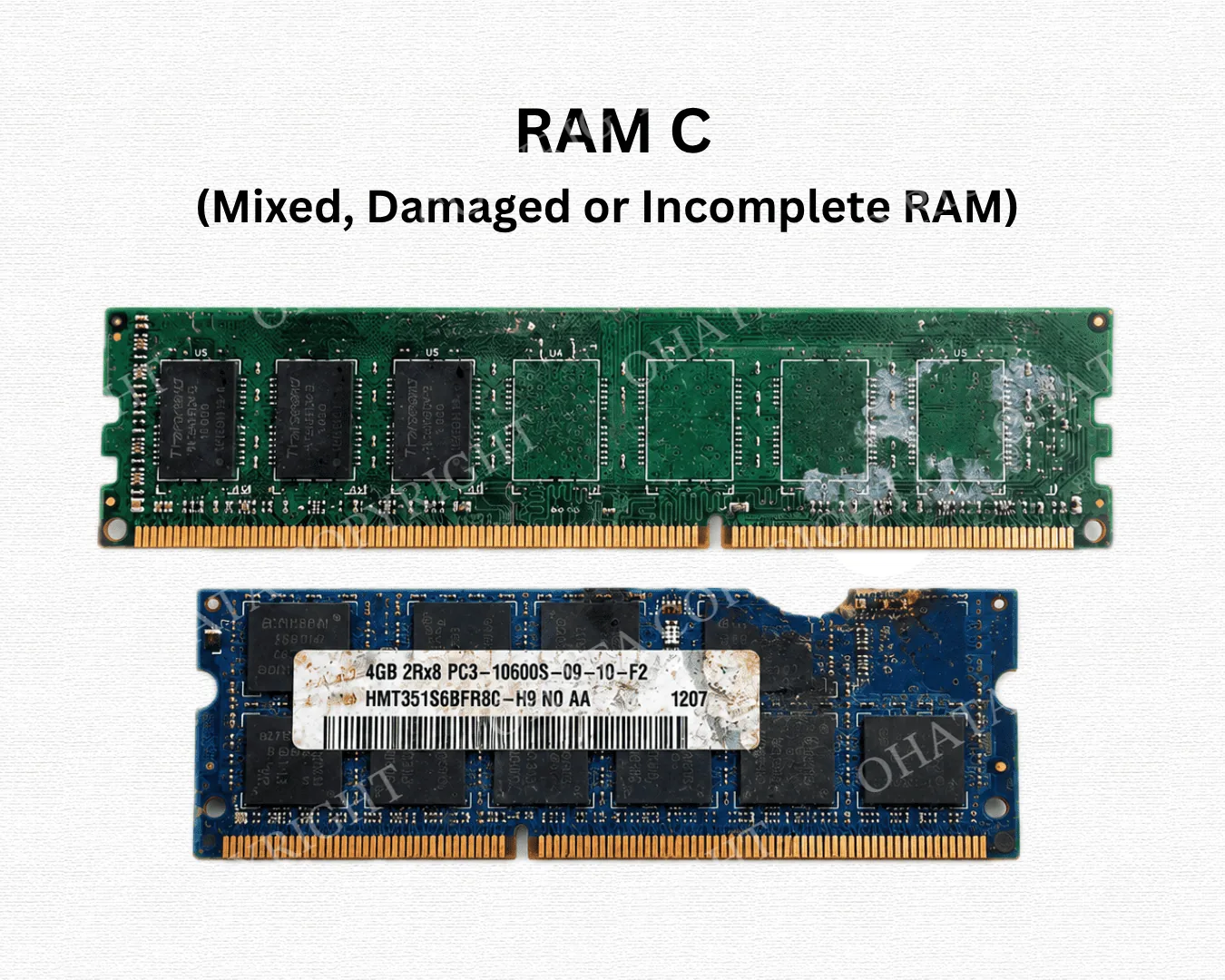
2. RAM-C commonly includes broken memory modules, RAM with missing memory ICs, cracked PCBs, heavily corroded modules, and mixed lots requiring additional sorting.

3. Memory modules may be assigned to RAM-C because of their physical condition rather than their DDR generation, manufacturer, or memory capacity.

4. Properly separating complete RAM-A and RAM-S modules from damaged material helps improve inspection efficiency and may result in higher purchasing values.

5. Electronic scrap prices may change without notice. Final classification and purchasing prices are confirmed after physical inspection according to the Ohata RAM Classification System.
Buying Details of Conditions

Learn more about RAM Scrap Classification


RAM-C (mix and damaged RAM) Grade

When Does RAM Become RAM-C?

Unlike RAM-A or RAM-S, RAM-C is not defined by the original type of memory. Instead, it is defined by the condition of the material when it arrives for inspection.

A module that originally qualified as RAM-A may become RAM-C if it is physically damaged, incomplete, heavily contaminated, or mixed with other electronic scrap.

For this reason, the inspection team evaluates the overall condition of every shipment before assigning a final purchasing grade.

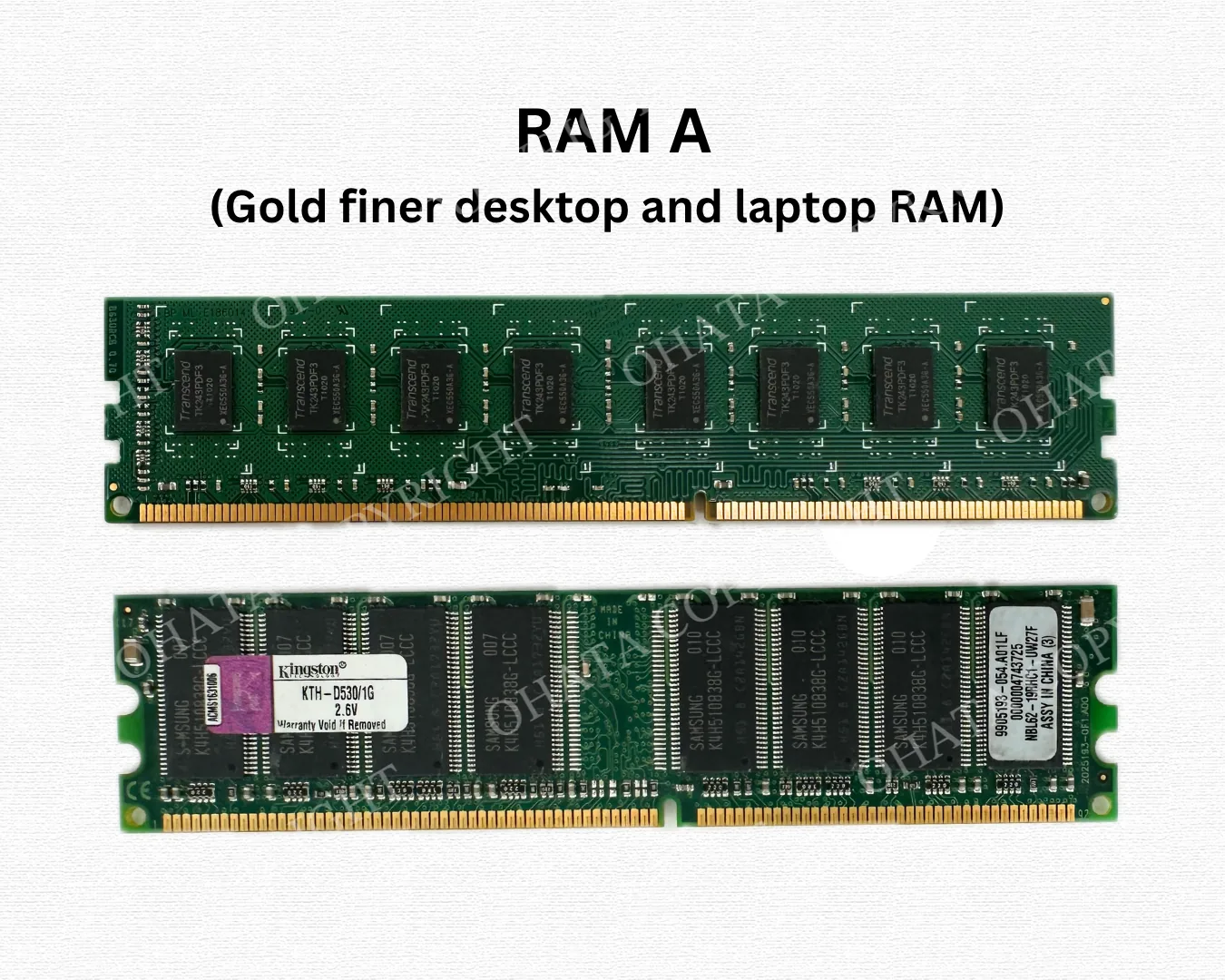
Comparison of RAM Grades

Although the five grades may appear similar, they are distinguished by their engineering characteristics and physical condition.

Grade

Typical Application

IC Density

Module Condition

Primary Characteristics

RAM-S

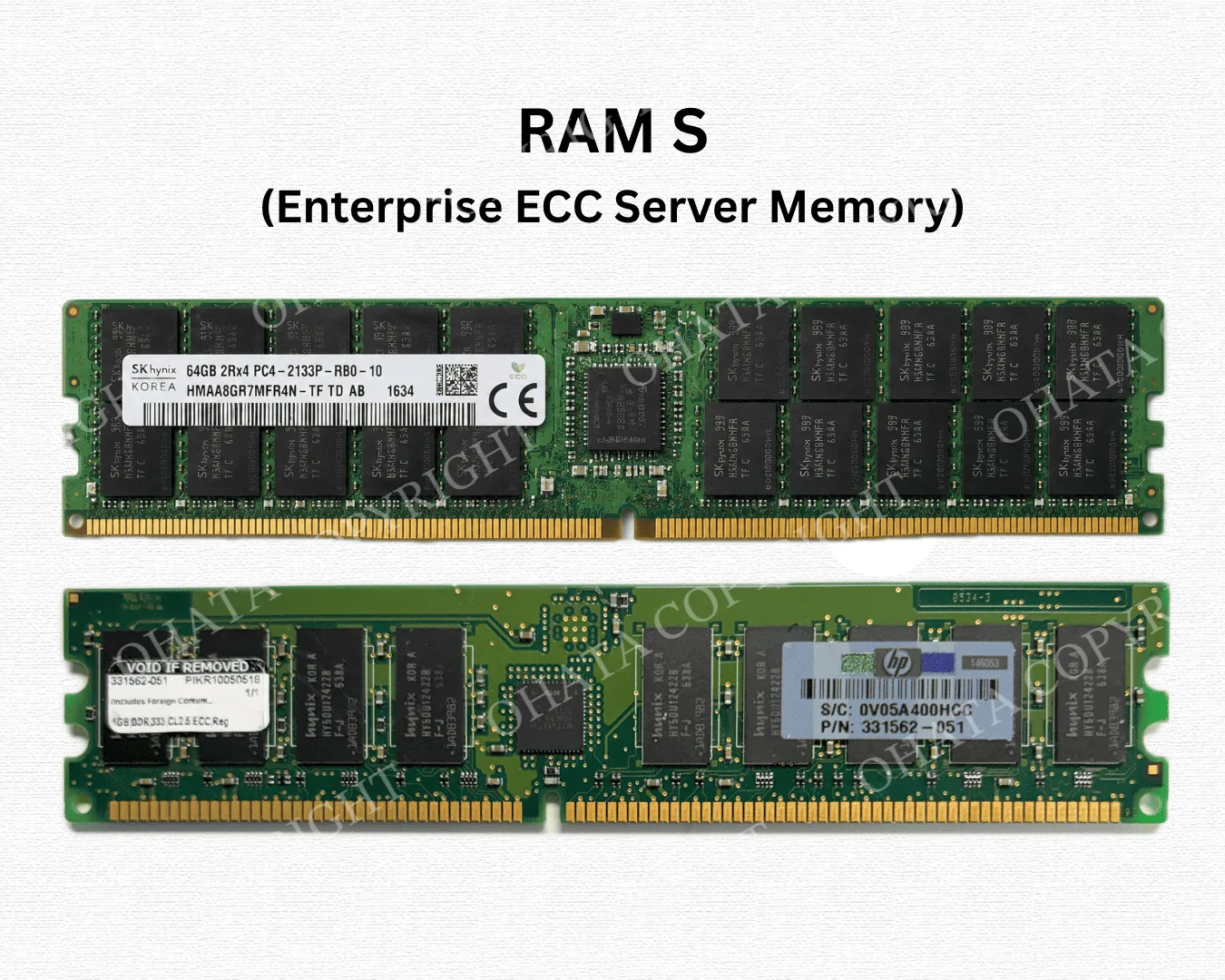
Enterprise Servers

Highest

Complete

ECC memory, Registered (RDIMM), high component density

RAM-A

Desktop & Laptop PCs

Standard

Complete

Standard consumer RAM with gold-plated edge connectors

RAM-B

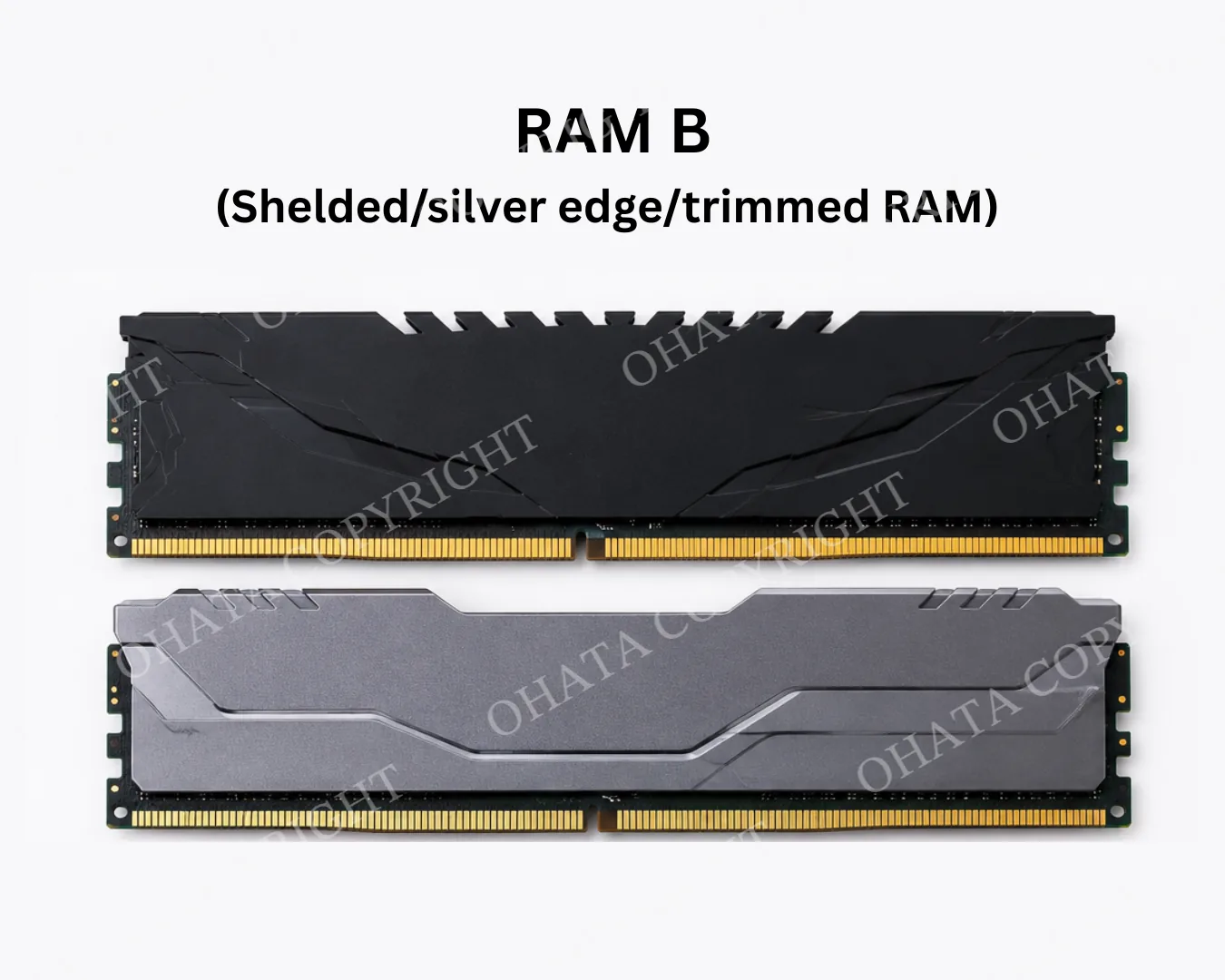
Gaming & Modified RAM

Standard

Complete

Heat spreaders, metal shields, silver/tin connectors, or trimmed gold fingers

RAM-C

Damaged or Mixed RAM

Varies

Incomplete or Damaged

Broken, contaminated, mixed, or missing components

RAM-D

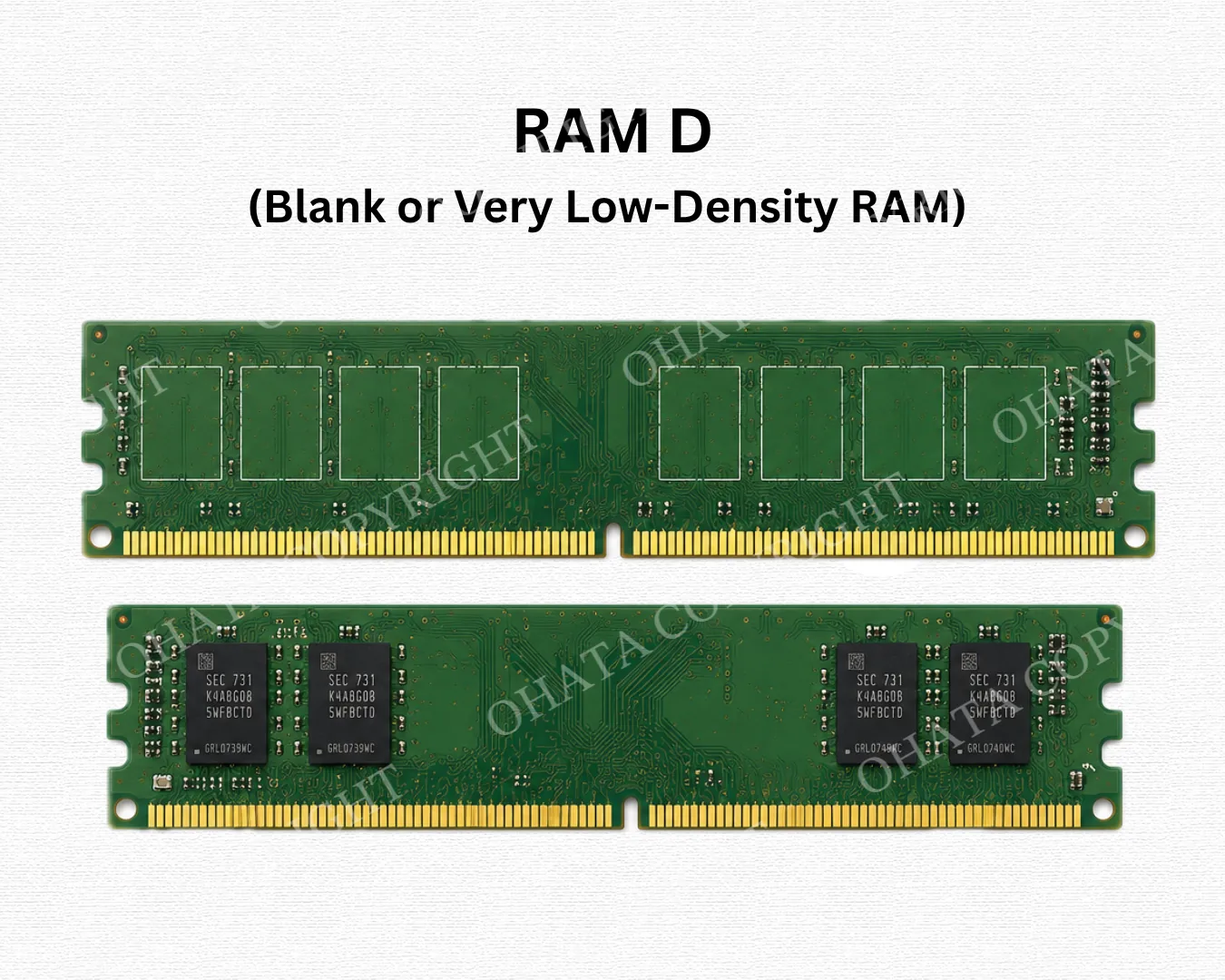
Blank RAM

Lowest

Minimal Components

No IC chips or blank PCB


Common Reasons RAM Is Classified as RAM-C

The following conditions commonly result in RAM-C classification.

Missing Memory Chips

If one or more memory ICs have been removed or broken off, the module is no longer complete and may be classified as RAM-C.

Broken PCB

Cracked, cut, bent, or heavily damaged printed circuit boards reduce recoverable material quality and often require additional inspection.

Corrosion or Water Damage

Heavy oxidation, moisture exposure, or chemical contamination can affect both inspection and recycling.

Burn Damage

Burn marks, melted components, or fire damage may lower the buying grade because the original construction can no longer be verified easily.

Mixed Electronic Scrap

RAM mixed together with CPUs, cables, circuit boards, or loose electronic parts requires additional sorting before inspection.


How to Avoid RAM-C Classification

Many RAM modules can qualify for a higher purchasing grade when properly prepared before delivery.

Whenever practical:

  • Keep the memory module complete.

  • Do not remove memory ICs.

  • Avoid breaking or cutting the PCB.

  • Separate RAM from CPUs and circuit boards.

  • Remove unnecessary packaging and loose debris.

  • Keep modules dry and clean.

Proper preparation reduces inspection time and helps maximize purchasing value.


Buying Conditions

Complete Modules

Complete RAM modules generally receive higher purchasing values than incomplete or damaged modules. Modules with missing memory chips, broken PCBs, or removed components may be classified into a lower grade.

Separate RAM Grades

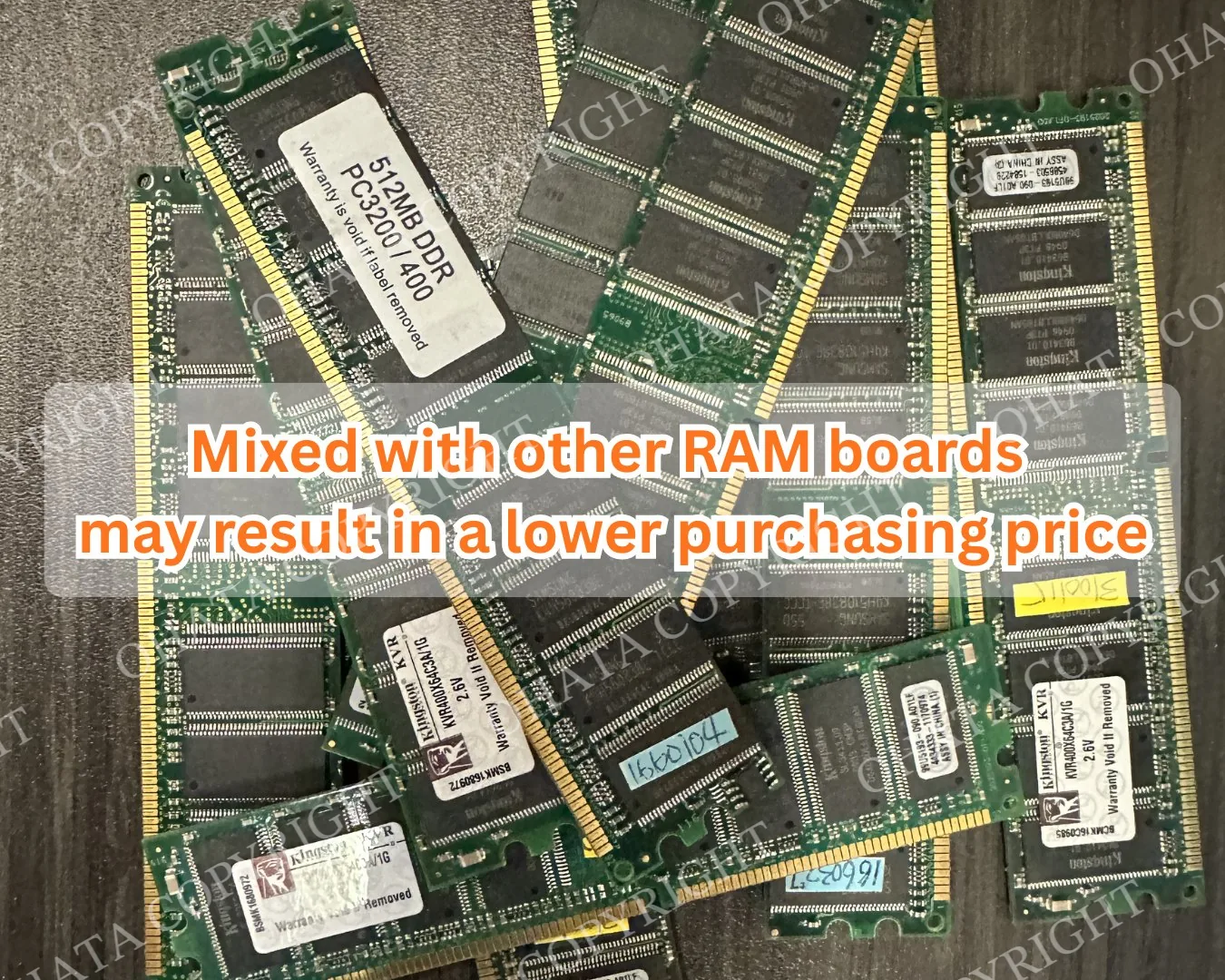
Whenever possible, separate RAM-S, RAM-A, RAM-B, damaged RAM, and blank RAM before delivery. Proper sorting helps speed up inspection and prevents higher-grade RAM from being mixed with lower-value material.

Mixed with other RAM boards may result in a lower purchasing price.

Clean Condition

RAM should be reasonably clean and dry. Heavy dirt, glue, paint, corrosion, moisture, or excessive contamination may reduce the purchasing value.

Loose Components

Do not mix loose memory chips, broken PCB pieces, or other electronic scrap with complete RAM modules. Keeping complete modules separate helps ensure faster inspection and more accurate grading.

Final Evaluation

Every shipment is inspected individually. Final classification depends on the module's condition, completeness, recoverable material content, quantity, and current market conditions.


Common Material We Receive at Ohata

At Ohata Resource Canada, RAM-C is commonly generated during electronic dismantling, warehouse cleanouts, IT asset disposition (ITAD) projects, and repair operations.

Our inspection team frequently receives mixed boxes containing complete desktop memory together with broken laptop RAM, loose memory chips, damaged server memory, and miscellaneous electronic scrap. These mixed shipments require additional sorting before a final purchasing grade can be assigned.


Includes / Excludes

Includes

  • Broken desktop RAM

  • Broken laptop RAM

  • Missing IC memory modules

  • Burned RAM

  • Water-damaged RAM

  • Corroded RAM

  • Mixed damaged RAM

Does Not Include

  • Complete desktop and laptop RAM β†’ RAM-A

  • Server ECC Registered RAM β†’ RAM-S

  • Heat spreader / silver-edge RAM β†’ RAM-B

  • Blank or very low-density modules β†’ RAM-D


Ready to Sell RAM-C in Richmond?

Once you believe your processors match the item's characteristics, you don’t need to confirm the final grade yourself. The next step is simply to check the current buying information, keep the processors intact and prepare them for inspection.

STEP 1 – Check Today’s Buying Prices and Sort Your Materials

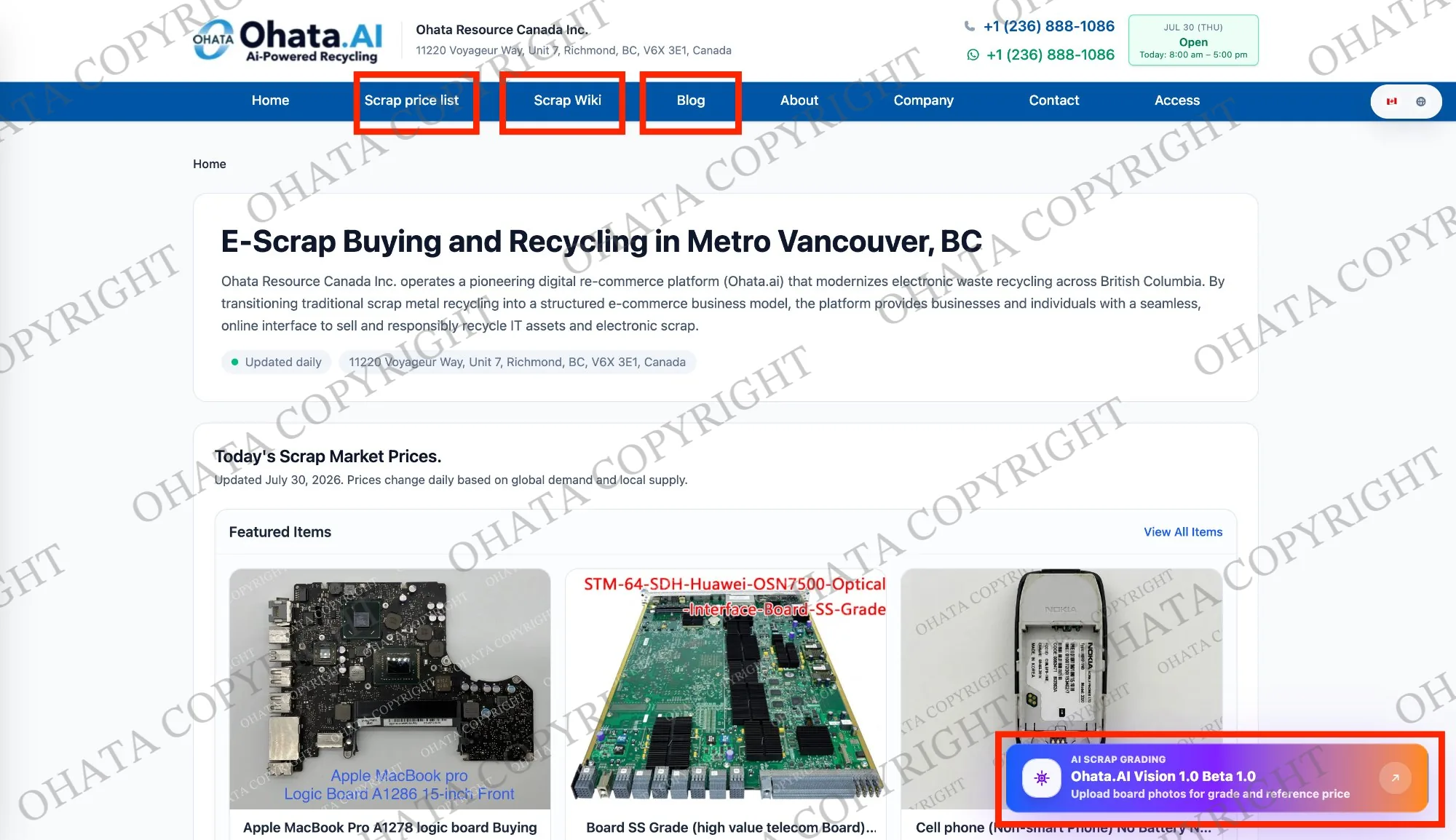
Before visiting our Richmond yard, please review the latest Canadian e-scrap buying prices and identification guides in the Ohata Scrap Wiki.

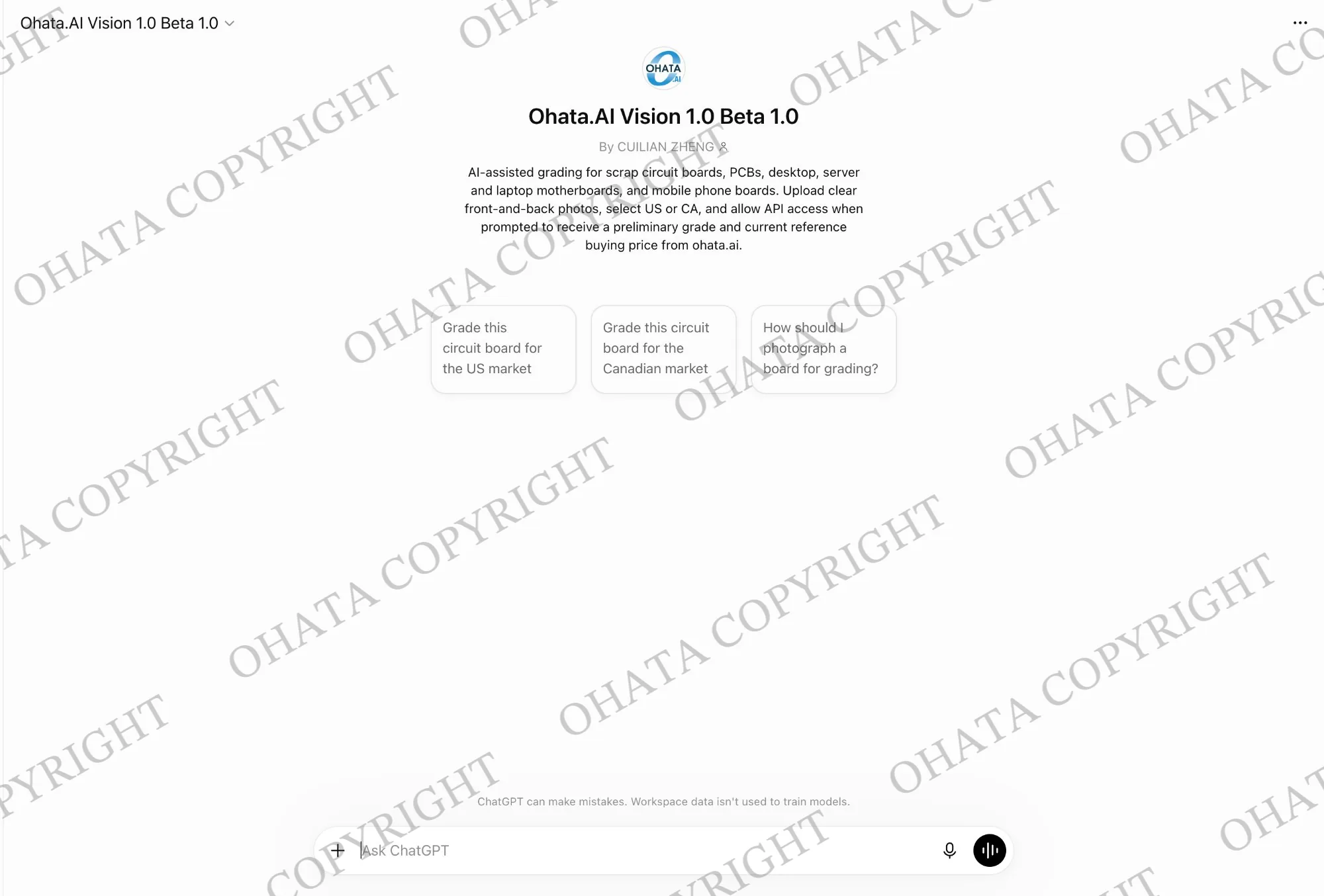
You can also use Ohata.AI Vision 1.0 Beta 1.0 to investigate an unfamiliar circuit board. Upload a clear photograph, and the tool can analyze visible features, such as the board’s shape, CPU socket, integrated circuits, connectors and component layout, to suggest what type of board it may be.

Ohata Resource Canada Scrap Price List, Scrap Wiki, Ohata AI 1.0 Vision 1.0
Ohata.AI Vision 1.0 Beta 1.0

Buying prices and conditions may change with the market, so checking the applicable item page before you leave can help you understand how your material should be prepared.

Whenever practical, separate your e-scrap into groups such as:

You don’t need to assign every item a final grade yourself. If something is unfamiliar, keep it in an β€œuncertain” group and use Ohata.AI for a preliminary photo-based identification.

Walk-ins are welcome during regular business hours, and no appointment is required for most ordinary drop-offs.

If you have a large commercial load, palletized shipment or an unusual type of material, please contact the Richmond team before visiting so we can prepare for your arrival.


STEP 2 – Bring Your E-Scrap and Valid Government-Issued Photo ID

Please bring your electronic scrap together with a valid government-issued photo ID.

Examples may include:

  • British Columbia Driver’s Licence

  • BC Identification Card

  • BC Services Card with photo

  • Canadian passport

  • Permanent Resident Card

  • Other valid government-issued photo identification

Business sellers may also be asked to provide company information or supporting documentation when applicable.

Clearly separated and labelled material is usually quicker to inspect. If possible, prepare the approximate weight and quantity for each group before visiting.

Please also remember that computers, servers, hard drives and solid-state drives may contain personal or business information. Back up anything you need and follow your own data-security requirements before the equipment leaves your control.


STEP 3 – Visit Our Richmond E-Scrap Buying Yard

Our Richmond yard is located at 11220 Voyageur Way, Unit 7, Richmond, BC, V6X 3E1. Before leaving, you can check the route and current traffic information through Google Maps.

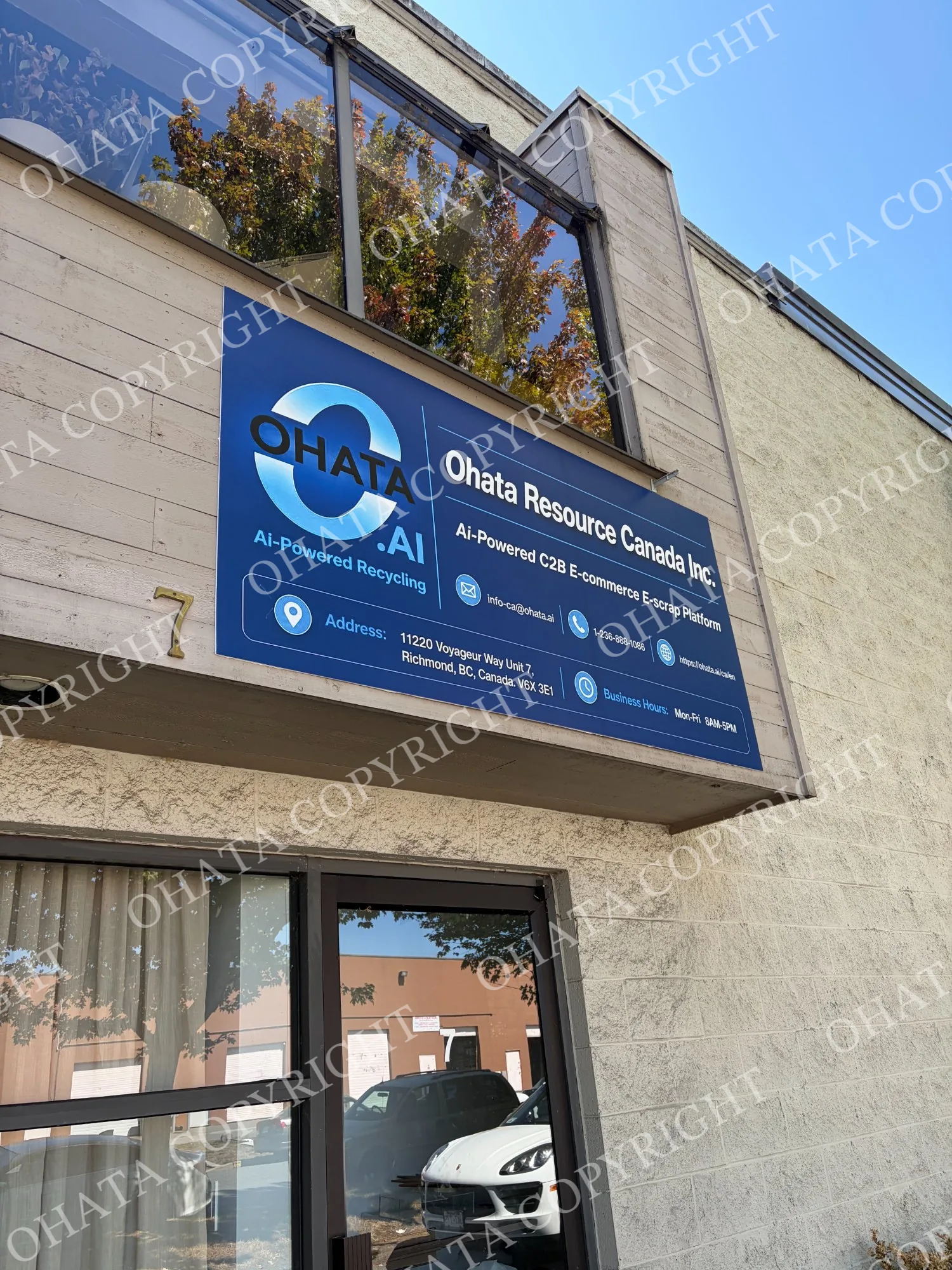
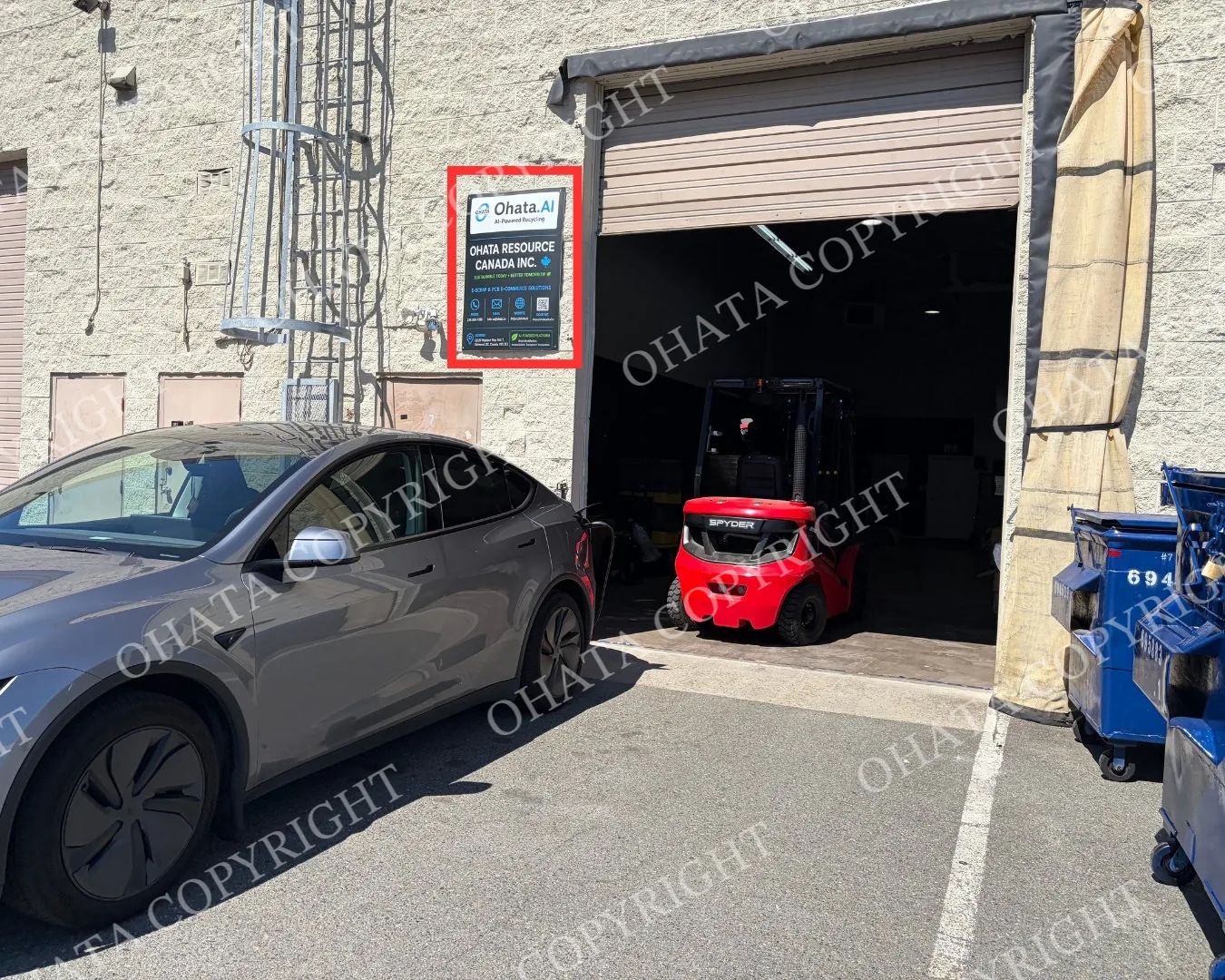
1. Look for the Ohata sign

When you arrive at the property, first look for the Ohata Resource Canada Inc. sign on the building. Once you find it, continue around to the rear of the building, where our warehouse entrance is located.

IMG 9449
Ohata Resource Canada Inc. sign at 11220 Voyageur Way in Richmond, BC.

When you see this sign, continue around to the rear of the building.

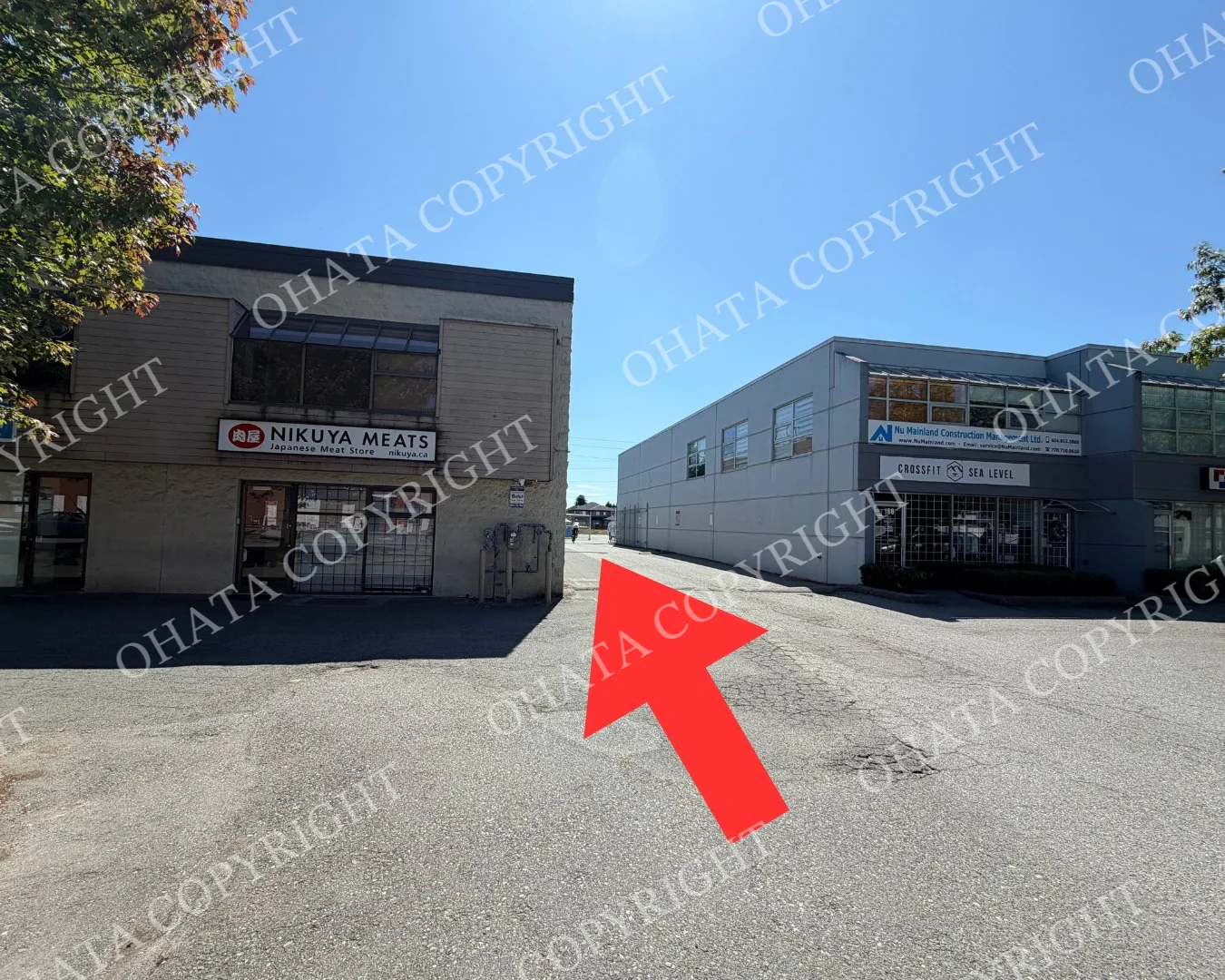
2. Continue to the Rear Warehouse Entrance

Drive carefully around the building and look for the vertical Ohata sign beside the rear entrance. This vertical sign is the easiest landmark for finding our receiving warehouse.

Driving route around the building toward the rear warehouse entrance of Ohata Resource Canada Inc.

Follow the route around the building to reach the warehouse.

Vertical Ohata Resource Canada Inc. sign marking the rear warehouse entrance in Richmond.

The vertical Ohata sign identifies the correct warehouse entrance.

3. Park Directly in Front of the Warehouse

If you arrive by car, you may park directly in front of the Ohata warehouse entrance while your e-scrap is being received.

Once you reach the warehouse, please park and wait there. A member of our team will come to assist you with your material.

If you have difficulty finding the rear entrance, please call or message us:

Telephone and WhatsApp: +1 (236) 888-1086

For large commercial loads or palletized shipments, please contact the Richmond team before visiting so we can prepare for unloading.

When you arrive:

  • Bring smaller quantities to the receiving area.

  • Ask a staff member for assistance with heavy or larger loads.

  • Our team will inspect, sort and weigh the material.

  • The applicable buying category and condition will be confirmed.

  • The final buying price will be determined after physical inspection.

  • Payment will be processed according to the current purchasing policy.

Walk-in customers are welcome during regular business hours. Most visits don’t require an appointment, but advance contact is recommended for commercial, palletized or unusually large loads.

You can review directions, parking and visitor information on the Richmond yard access page.


Helpful Tips Before Your Richmond Visit

  • Check the current Canadian buying prices before travelling.

  • Use Ohata.AI when you need help identifying an unfamiliar item.

  • Take clear front-and-back photographs before requesting an initial review.

  • Separate different board and equipment categories whenever practical.

  • Keep damaged, wet, burned, corroded or contaminated items separate.

  • Remove unrelated garbage and unnecessary packaging.

  • Don’t cut boards or remove major components unless you understand how the separated materials will be evaluated.

  • Back up and erase data-bearing devices according to your requirements.

  • Bring valid government-issued photo identification.

  • Contact Ohata Resource Canada Inc. before bringing a large commercial or palletized load.

Published online prices are references and may change. Final acceptance, classification, measured weight and buying price are determined after physical inspection.

FAQ
1. What is today’s price for RAM-C (mix and damaged RAM) Grade buying?
As of Sep 11,2026, Ohata Resource Canada Inc., (Richmond, BC, Canada) is purchasing RAM-C (mix and damaged RAM) Grade buying at 6.83 (CAD/lb). We provide competitive scrap prices in Delta, Surrey, Richmond, and across the Greater Vancouver area.
2. Why was my RAM classified as RAM-C?
RAM may be classified as RAM-C because it is broken, incomplete, heavily contaminated, or mixed with other materials requiring additional inspection.
3. Do broken DDR5 modules become RAM-C?
Yes. Physical condition is more important than DDR generation.
4. Can missing memory chips reduce the buying price?
Yes. Missing ICs often result in RAM-C classification.
5. Do you buy burned RAM?
Yes. Burned modules are accepted, although they may receive a lower purchasing value.
6. Does water damage matter?
Yes. Heavy corrosion and water damage may affect grading.
7. Can I mix broken RAM with complete RAM?
You can, but separating them helps improve inspection efficiency and may increase the value of complete modules.
8. Should I remove loose memory chips?
Loose chips should be packaged separately rather than mixed with complete RAM.
9. What is the minimum quantity?
Ohata Resource Canada purchases RAM-C from a minimum quantity of 1 lb.
10. How is RAM-C inspected?
Inspectors evaluate physical condition, completeness, contamination, recoverable material content, and sorting quality before assigning the final grade.
11. Can RAM-C still be recycled?
Yes. Even damaged memory modules contain recoverable materials and are accepted for recycling.

Related Items

Browse all PC Memory(RAM) items
AI Scrap Grading Ohata.AI Vision 1.0 Beta 1.0 Upload board photos for grade and reference price