
ohata.ai
+1-206-602-9022
中文电话支持 日本語で電話対応
+1-206-602-9022
Ohata Shoji America Inc.

Non-Smart Phone with Battery scrap price

Non-Smart phone boards

中文电话支持

日本語で電話対応

Today's buying price

Updated: Nov 11,2026

2.95 USD / lb

Buying at Seattle, WA, United States

Key Buying Introduction

Purchases start from just 1 lb of eligible Non-Smart Phone Board with Battery material.

This Ohata classification covers recognizable non-smartphones with the lithium battery intact along with the main motherboard.

Different brands and models may receive the same category price when they meet the applicable Ohata classification and buying conditions.

Keep the main motherboard, processors, memory chips, connectors, and other major electronic components attached.

Separate these phones from battery-containing phones, empty shells, loose circuit boards, older feature phones, tablets, and unrelated electronics.

Phones with installed batteries, missing motherboards, removed major integrated circuits, severe fire damage, broken circuit boards, or heavy contamination may receive a reduced price or may be rejected.
Buying Details of Conditions

Learn more about Mobile Phone Scrap Buying Guide in Seattle


Introduction, Construction, Components, and Recycling Value

Older cellphones can remain useful sources of recyclable material after their calling, texting, or network functions become obsolete. Their internal printed circuit boards connect the electronic components responsible for communication, memory, charging, and power distribution.

This category concerns assembled non-smartphones with their main board and battery installed. It is distinct from Ohata’s loose non-smartphone board category, which requires removal of the battery, housing, display, and keypad.

A typical older cellphone may contain:

  • A main printed circuit board with copper pathways

  • Baseband processors and other control chips

  • Flash memory and storage components

  • Radio-frequency amplifiers and communication circuitry

  • Power-management and charging components

  • SIM-card contacts and other connectors

  • A display, physical keypad, microphone, and speaker

  • A rechargeable battery

  • Plastic housing, metal shielding, and structural parts

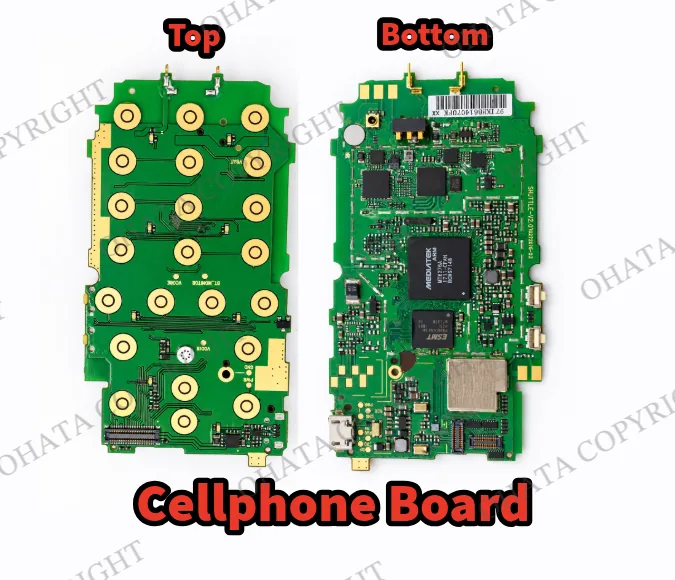
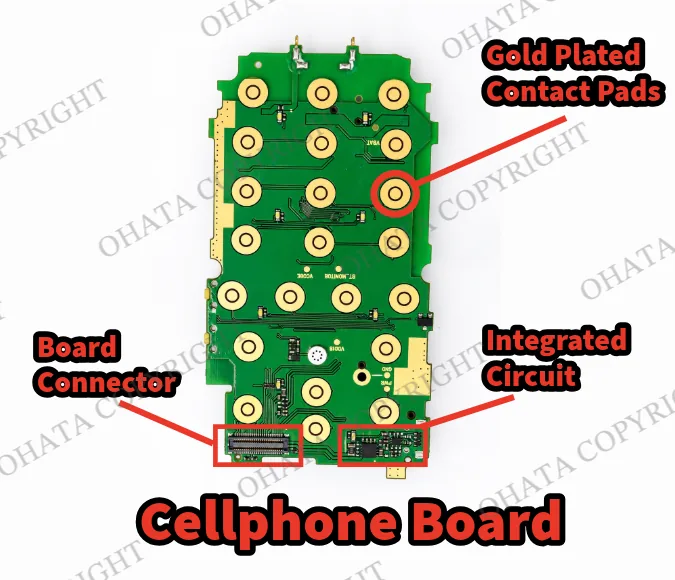
Non-Smart Phone Board with gold plated contact pads and other key features
Non-smart phone board recyclable materials on the keyboard circuit board.

Why the Internal Board Has Recycling Value

Precious metals: Gold, silver, and palladium may occur in small quantities within contacts, plated surfaces, semiconductor packages, and selected electronic components. Their distribution varies between designs; every chip or contact does not contain the same metals.

Copper: Conductive tracks and internal connections carry electricity through the circuit board. Copper contributes to the recoverable base-metal content.

Tin and nickel: Tin is commonly associated with solder connections, while nickel may occur in plating and other metallic structures. Together with precious metals and copper, these materials contribute to the board’s recycling potential.

The battery also contains recoverable materials, potentially including lithium, cobalt, nickel, manganese, copper, aluminum and graphite. Battery chemistry varies by manufacturer and production year. However, an installed battery creates additional transportation, storage, fire-prevention and processing obligations. Consequently, the presence of a battery does not simply add value; it also introduces handling costs and safety risks.

Displays, glass, frames and protective covers contribute weight but usually contain less precious-metal value than the logic board. The entire combination of recoverable materials, non-recoverable weight and processing costs must therefore be considered when establishing the grade price.

Retaining components matters. Removing chips, connectors, or sections of the board changes the material available for recovery. The phone’s overall condition and processing requirements must also be considered.

The installed battery is a separate material stream with its own handling requirements. Its presence should not be interpreted as an automatic increase in buying value. Displays, housings, and other attached parts also contribute weight, so a whole-phone price cannot be inferred from a loose-board price.


Non-Smart Phone Identification Guide

A phone presented for this category should have:

  1. Recognizable non-smartphone construction, such as a traditional flip-phone or basic keypad-phone design.

  2. Its main circuit board retained inside the handset.

  3. Its battery installed, rather than supplied loose beside the phone.

  4. Its remaining parts accurately described, including missing covers, damaged displays, or broken hinges.

  5. No undisclosed battery damage or contamination.

Physical number keys can help identify a basic phone, but they are not conclusive. Some keypad devices and early touchscreen models have smartphone functions and may need separate identification.

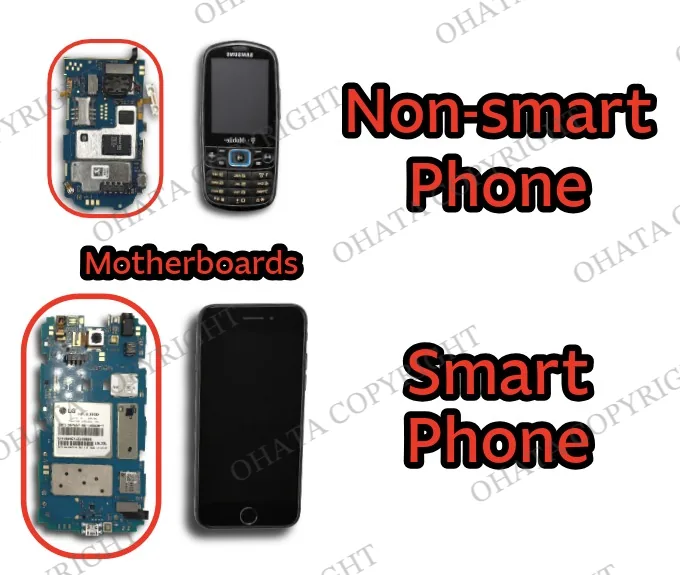
Different types of motherboards for smartphones vs non-smart phones.
Different types of motherboards for smartphones vs non-smart phones. Other than size these boards have varying densities that can be seen here, just because one is larger does not mean its more valuable as a motherboard.

Exterior photos cannot confirm concealed board completeness or battery condition. Model markings and inspection help establish the correct category.


Recoverable Materials, Buying Standards, and Handling

Keep the phone assembled for evaluation under the with-battery-and-board description. Do not remove its circuit board, chips, or connectors simply to expose valuable-looking material.

Before bringing your phones:

  • Sort non-smartphones separately from modern smartphones.

  • Separate phones that already have their batteries removed.

  • Keep loose batteries, chargers, cables, and unrelated accessories apart.

  • Disclose missing components, liquid damage, corrosion, or fire damage.

  • Remove personal information, SIM cards, and removable memory cards when safely accessible.

  • Avoid crushing, bending, puncturing, or charging damaged devices.

Do not attempt to remove a swollen, leaking, punctured, unusually hot, or burned battery. Contact the Seattle yard before transporting the device.


Comparison and Classification

Key feature

Smartphones

Non-smartphones

Typical design

Usually a large touchscreen with few physical buttons

Commonly a flip, bar, or slider design with a physical number keypad

Main functions

Calling, messaging, internet browsing, and a broad range of apps

Primarily calling and texting; some offer cameras, basic browsing, and limited apps

Internal circuit board

Typically integrates application processors, memory, storage, and communication circuitry

Typically contains baseband processors, memory, radio-frequency circuitry, and power-management components

Potentially recoverable metals

Boards may contain copper, gold, silver, palladium, tin, and nickel

Boards may also contain copper, gold, silver, palladium, tin, and nickel; quantities vary by design

Battery design

Often built in, although some models have removable batteries

Often removable behind a rear cover, although designs vary

For a with-battery-and-board category

Main board and battery remain installed; other completeness requirements depend on the category

Main board and battery remain installed; other completeness requirements depend on the category

What affects scrap evaluation?

Board construction, retained components, completeness, battery condition, contamination, and processing requirements

The same factors apply; age, brand, and keypad design alone do not establish buying value

Sorting before evaluation

Separate from non-smartphones, loose boards, battery-free devices, and loose batteries

Separate from smartphones, loose boards, battery-free devices, and loose batteries


Customers looking to recycle Modern Smart Phone with Battery and Cover can also browse our related buying categories.

Proposed Ohata Classification

This proposed category covers recognizable non-smartphones presented with their main circuit board and battery installed.

The evaluation should consider device identity, retained components, overall assembly, battery condition, contamination, and processing requirements. Missing covers, broken screens, non-working devices, and stripped components require category-specific purchasing rules.

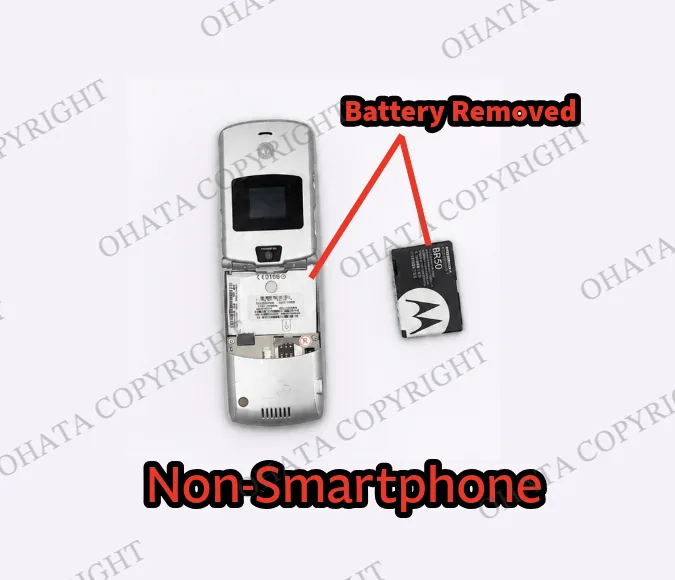
Non-Smartphone with battery removed
Some non-Smartphones will have their batteries removed and put into a separate grading category. Removing the battery is not required but will increase the value of the phone when brought for purchase to our yard.

Final acceptance and buying value require inspection.

FAQ
1. What is today’s price for Non-Smart Phone with Battery?
As of Nov 11,2026, Ohata Shoji America Inc., (Seattle, WA, United States) is purchasing Non-Smart Phone with Battery at 2.95 (USD/lb). We provide competitive scrap prices in Seattle, Bellevue, Renton, Tukwila, Kent, SeaTac, Tacoma, Everett, and surrounding communities.
2. What is a non-smartphone?
A non-smartphone is a basic mobile or feature phone primarily designed for calling and texting, often with physical number keys. Traditional flip and bar-style phones are common examples. Some newer keypad phones have smart features, so a model number or photo can help confirm identification.
3. Does “with board and battery” mean a whole phone?
It means the main circuit board and battery remain installed in the phone. A loose battery placed beside an empty housing does not demonstrate completeness. Tell our team if other parts are missing so the device can be evaluated correctly.
4. Should I remove the battery or circuit board?
For this proposed category, leave both installed. Removing either changes the material being presented. Do not dismantle the phone simply to show its board; send exterior photos and the model number first.
5. What if the phone no longer turns on?
Tell our team that it is non-working or untested. A phone’s ability to power on does not establish its physical completeness or battery safety. Final eligibility for this category requires inspection.
6. Can I mix these phones with loose non-smartphone boards?
Please sort them separately, otherwise mixed categories will be provided a lower grade. Phones without batteries but with boards will have a higher price, separate to Ohata’s existing loose non-smartphone board category. Which requires the battery, housing, back cover, and keypad to be removed. An assembled phone with its battery belongs outside that loose-board category.
7. What should I do if the battery is swollen or leaking?
Do not charge, puncture, crush, or attempt to remove a damaged battery. Swollen or leaking batteries cannot be handled like standard recyclables. Contact Local Household Hazardous Waste (HHW): Check your city, county, or local municipal waste management website for specialized electronic waste or hazardous waste drop-off events
8. What are the buying price and minimum quantity?
Contact Ohata Shoji America’s Seattle team to confirm the current price and minimum for non-smartphones with the board and battery installed. The minimum and price published for loose phone boards should not be applied to this category.
AI Scrap Grading Ohata.AI Vision 1.0 Beta 1.0 Upload board photos for grade and reference price