

- We purchase qualifying Tin Tableware starting at 1 lb.
- Material containing 85% tin (Sn) or more may qualify for this buying category.
- Material containing 84% tin or less may be purchased at a reduced value depending on its composition.
- Tin tableware may also contain lead (Pb), antimony (Sb), or other metals.
- Pewter made from tin and antimony alloys may also fall within this category.
- Foreign materials, attachments, or significantly lower tin content may reduce the purchasing value.
Tin Tableware Buying
Key Drop-off Introduction
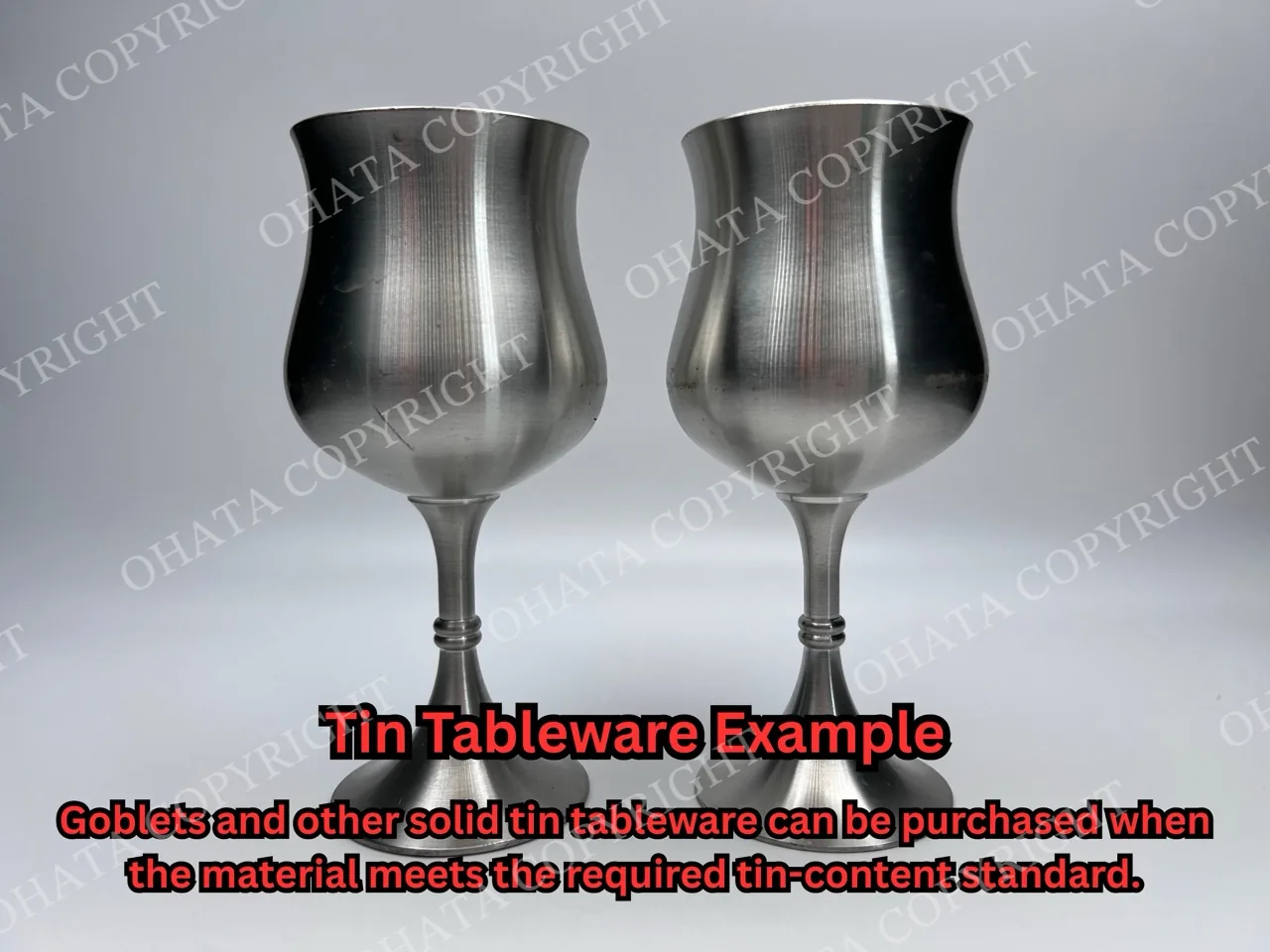
Key Drop-off Introduction
- We purchase qualifying Tin Tableware starting at 1 lb.
- Material containing 85% tin (Sn) or more may qualify for this buying category.
- Material containing 84% tin or less may be purchased at a reduced value depending on its composition.
- Tin tableware may also contain lead (Pb), antimony (Sb), or other metals.
- Pewter made from tin and antimony alloys may also fall within this category.
- Foreign materials, attachments, or significantly lower tin content may reduce the purchasing value.
Drop-off Details and Conditions
Tin tableware is commonly made from tin-based alloys rather than completely pure tin. The exact composition varies by item and may include antimony, lead, copper, or other metals.
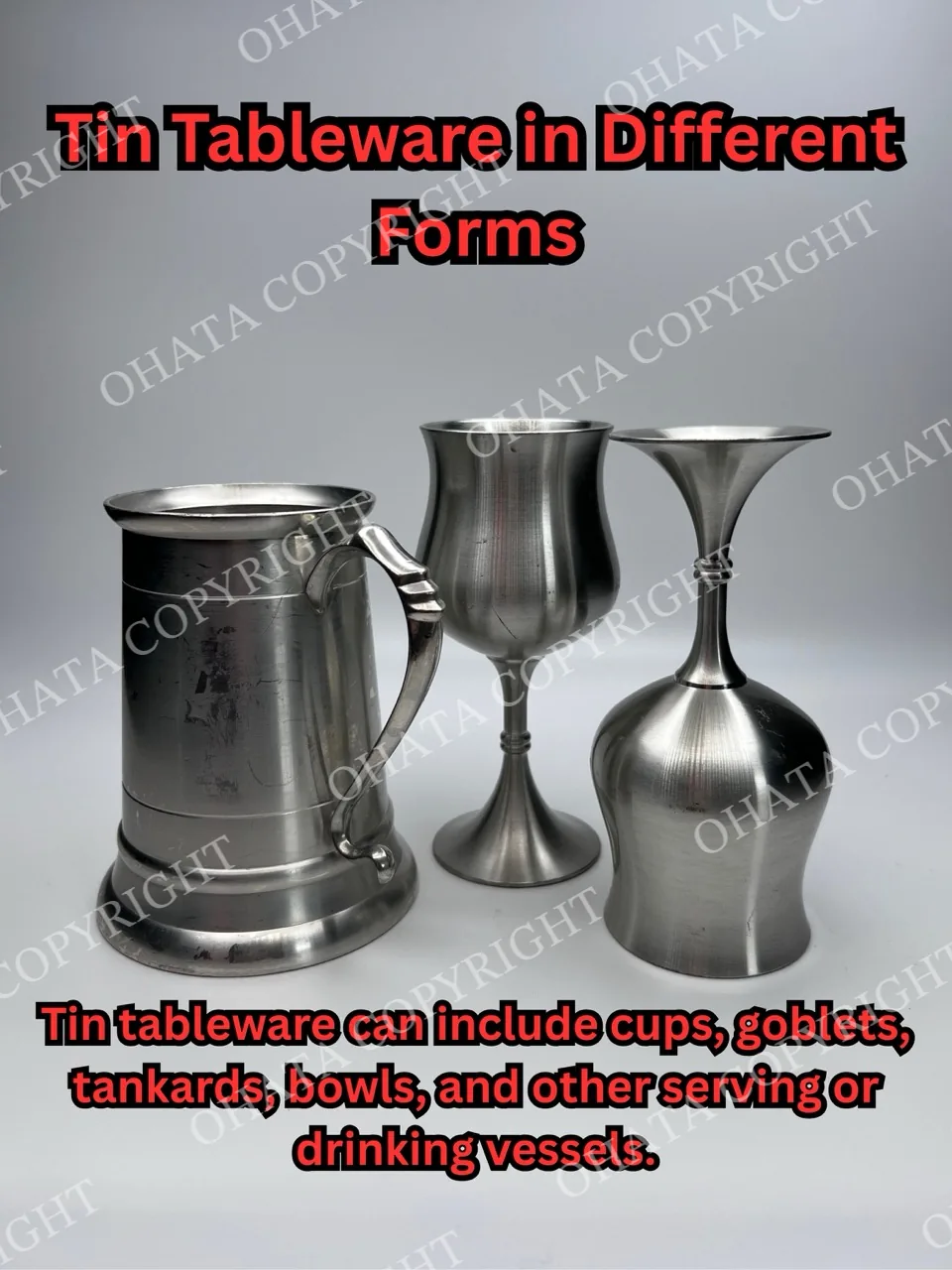
Pewter is one common type of tin-based alloy used for tableware. Because alloy composition can vary, two pieces that look similar may contain very different percentages of tin.
Common examples include:
Plates and serving dishes
Cups, mugs, and goblets
Bowls and trays
Decorative tableware
Pewter serving pieces
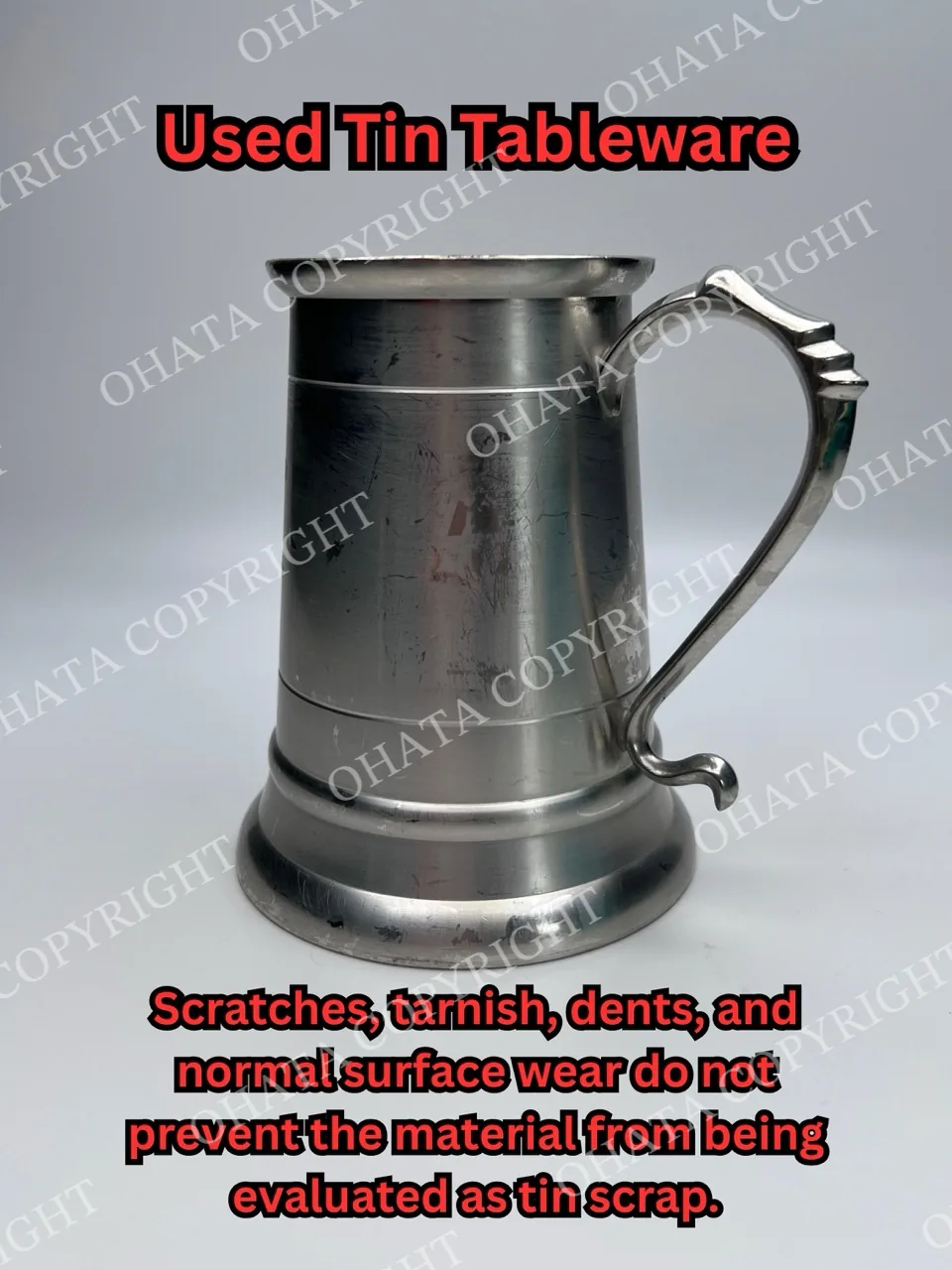
The tin content is the main factor used to determine this buying category. Higher-tin material may qualify for the standard category, while lower-tin alloys may receive a reduced purchasing value based on composition.
Used condition by itself does not prevent an item from qualifying. Normal scratches, tarnish, discoloration, or signs of age are generally less important than the metal composition.
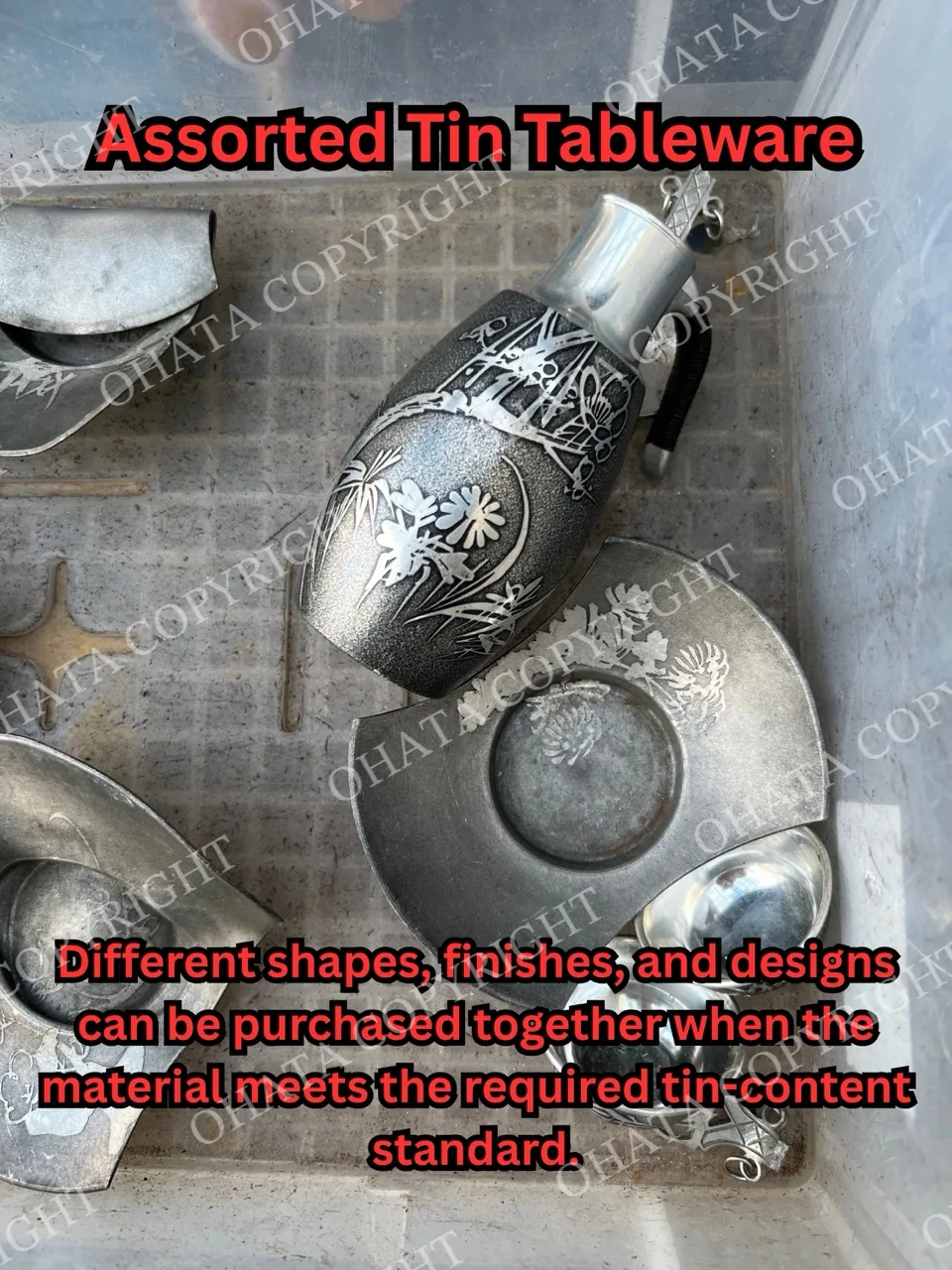
Foreign materials such as attached handles, bases, decorative pieces, coatings, or mixed-metal components may affect classification or purchasing value.
Older tin and pewter tableware may contain lead. Do not grind, sand, melt, drill, or otherwise process the material unnecessarily before bringing it in.
Final classification, acceptance, and purchasing value are confirmed after inspection under current buying requirements.
FAQ
- 1. Do you buy used tin tableware?
- Yes. Both used and unused tin tableware may be accepted for recycling.
- 2. Does the tableware need to be pure tin?
- No. Tin tableware is often made from tin-based alloys and may also contain antimony, copper, lead, or other metals.
- 3. What tin percentage is required for this category?
- Material containing 85% tin or more may qualify for the standard Tin Tableware category.
- 4. What happens if the tin content is below 85%?
- Material containing 84% tin or less may still be accepted, but the purchasing value may be reduced depending on its composition.
- 5. Do you buy pewter tableware?
- Yes. Pewter made from tin-based alloys may fall within this category depending on its composition.
- 6. Does tarnish or normal wear reduce the value?
- Normal scratches, tarnish, discoloration, or signs of use do not automatically prevent the item from qualifying. Metal composition is more important.
- 7. Can attached handles or decorative parts affect the price?
- Yes. Non-tin attachments, coatings, mixed-metal parts, or other foreign materials may affect classification or purchasing value.
- 8. Do I need to separate or dismantle the tableware before bringing it in?
- No. Keeping the item intact can make identification and inspection easier.
- 9. Can older tin or pewter tableware contain lead?
- Yes. Some older tin and pewter alloys may contain lead. Do not grind, sand, melt, drill, or otherwise process the material unnecessarily.
- 10. What if I do not know the tin percentage?
- You can still bring the material in for inspection. Final classification, acceptance, and purchasing value are confirmed after inspection under current buying requirements.
Contact us by phone or email