

- We purchase qualifying High-Speed Steel (HSS) scrap starting at 1 lb.
- HSS is a high-alloy tool steel designed to retain hardness at elevated cutting temperatures.
- HSS may contain tungsten (W), molybdenum (Mo), chromium (Cr), vanadium (V), cobalt (Co), and carbon (C) depending on the grade.
- Common markings include HSS, HSS-E, SKH, and SKH51, although some HSS tools may have no visible marking.
- HSS can resemble cemented carbide and ordinary tool steel, so appearance or magnet response alone may not confirm the correct category.
High-Speed Steel (HSS) Buying
Key Drop-off Introduction
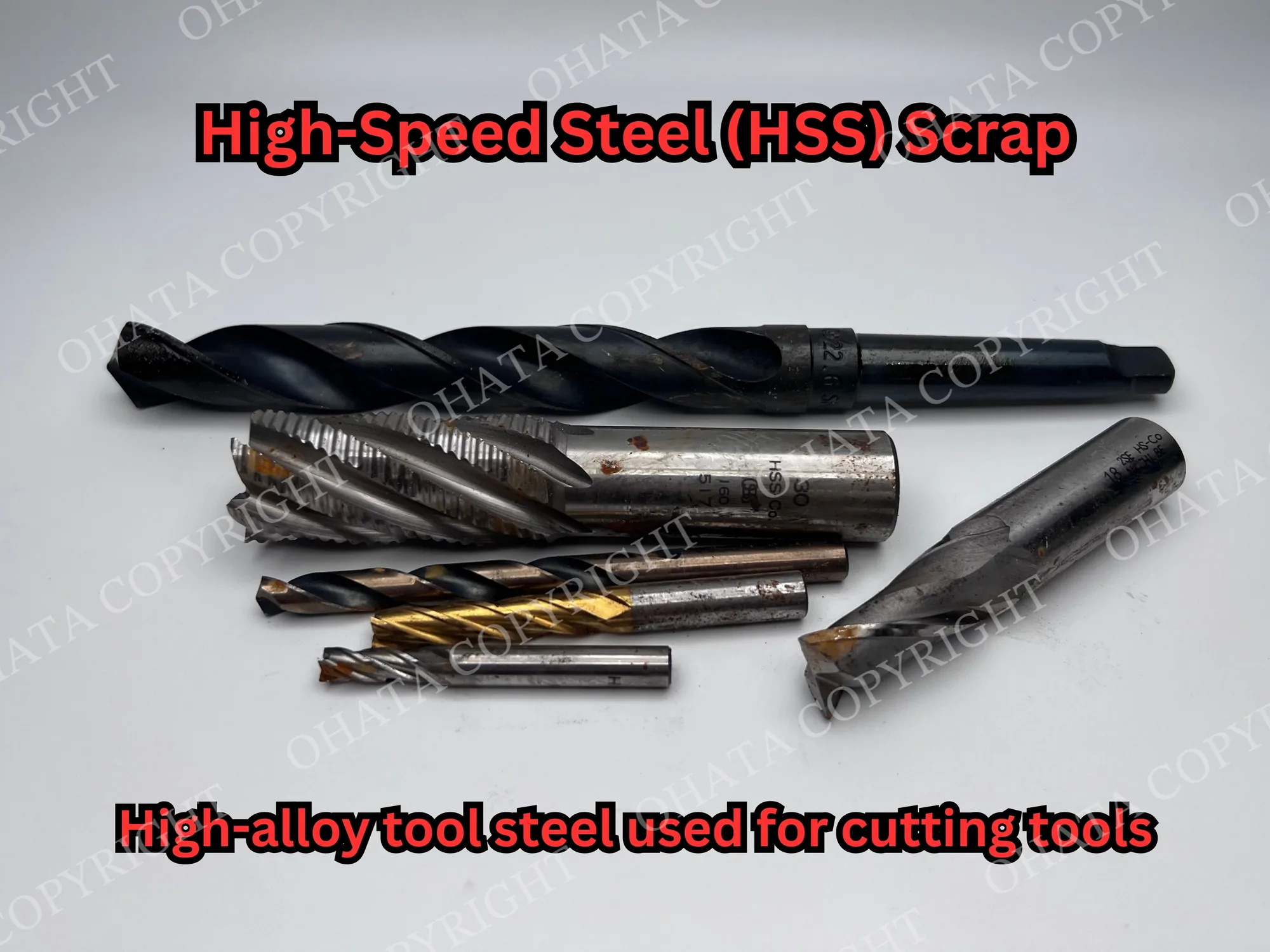
Key Drop-off Introduction
- We purchase qualifying High-Speed Steel (HSS) scrap starting at 1 lb.
- HSS is a high-alloy tool steel designed to retain hardness at elevated cutting temperatures.
- HSS may contain tungsten (W), molybdenum (Mo), chromium (Cr), vanadium (V), cobalt (Co), and carbon (C) depending on the grade.
- Common markings include HSS, HSS-E, SKH, and SKH51, although some HSS tools may have no visible marking.
- HSS can resemble cemented carbide and ordinary tool steel, so appearance or magnet response alone may not confirm the correct category.
Drop-off Details and Conditions
High-Speed Steel, commonly shortened to HSS, is a type of high-alloy tool steel used for cutting, drilling, and machining. It is designed to retain hardness even when the cutting edge becomes hot during higher-speed operation.
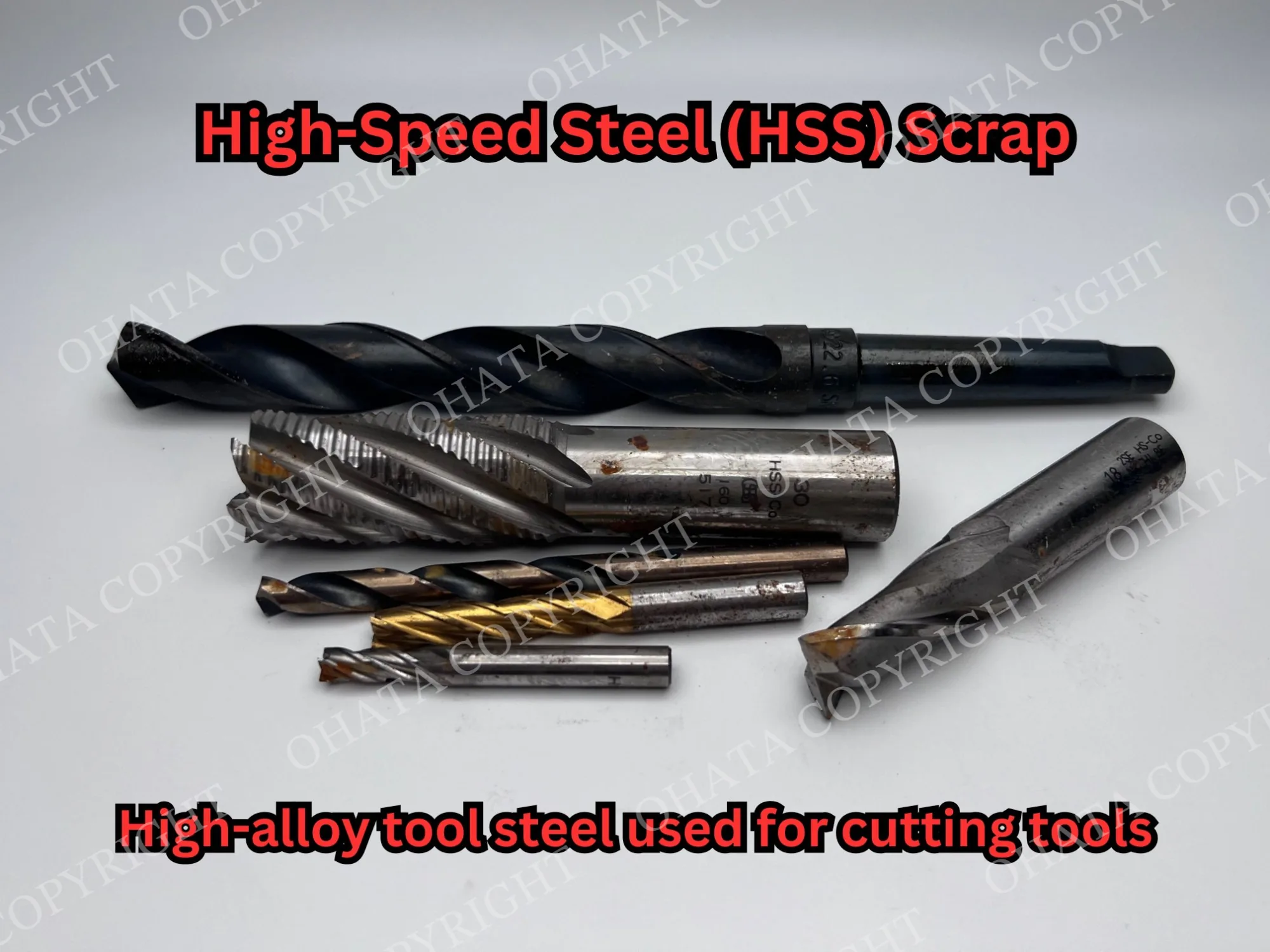
HSS is iron-based and contains different combinations of alloying elements depending on the grade. These may include carbon, chromium, tungsten, molybdenum, vanadium, and cobalt.
Common forms include:
Drill bits
End mills
Taps and reamers
Cutters and tool bits
Blades and knives
Punches and machining tools
Bars and tool-steel stock
Used, worn, or broken cutting tools
Both unused and used HSS material may qualify for recycling. A cutting tool does not need to remain usable for its original purpose to retain value as HSS scrap.
Identification and Markings
Some HSS tools have stamped or printed markings that help identify the material.
Common markings include:
HSS
HSS-E
SKH
SKH51Other
SKHgrade numbers
HSS identifies High-Speed Steel, while SKH is used for Japanese high-speed tool-steel grades.
Some tools have no visible grade marking. HSS can also closely resemble cemented carbide, ordinary steel, and other cutting-tool materials, so appearance alone is not enough for reliable identification.
HSS is generally magnetic because iron is its main component. However, magnet testing alone cannot reliably separate HSS from ordinary steel or every similar cutting-tool material.
When markings are missing or the material is uncertain, known material records or alloy analysis such as XRF may help determine the composition.
HSS and Similar Cutting-Tool Materials
HSS and cemented carbide are commonly found in similar tool shapes but have substantially different compositions.
Material
General composition
Relation to this category
High-Speed Steel (HSS)
Iron-based alloy containing elements such as W, Mo, Cr, V, and sometimes Co
This is the material covered by this buying page.
Cemented Carbide
Hard carbide particles, commonly tungsten carbide, bonded with a metallic binder
Separate special-metal category
Ordinary Steel / Tool Steel
Primarily iron-based material without the qualifying HSS alloy composition
May require a different classification
Drill bits, end mills, and other cutting tools can look almost identical while belonging to different scrap categories.
Condition and Sorting
Used, worn, chipped, or broken HSS tools may still qualify.
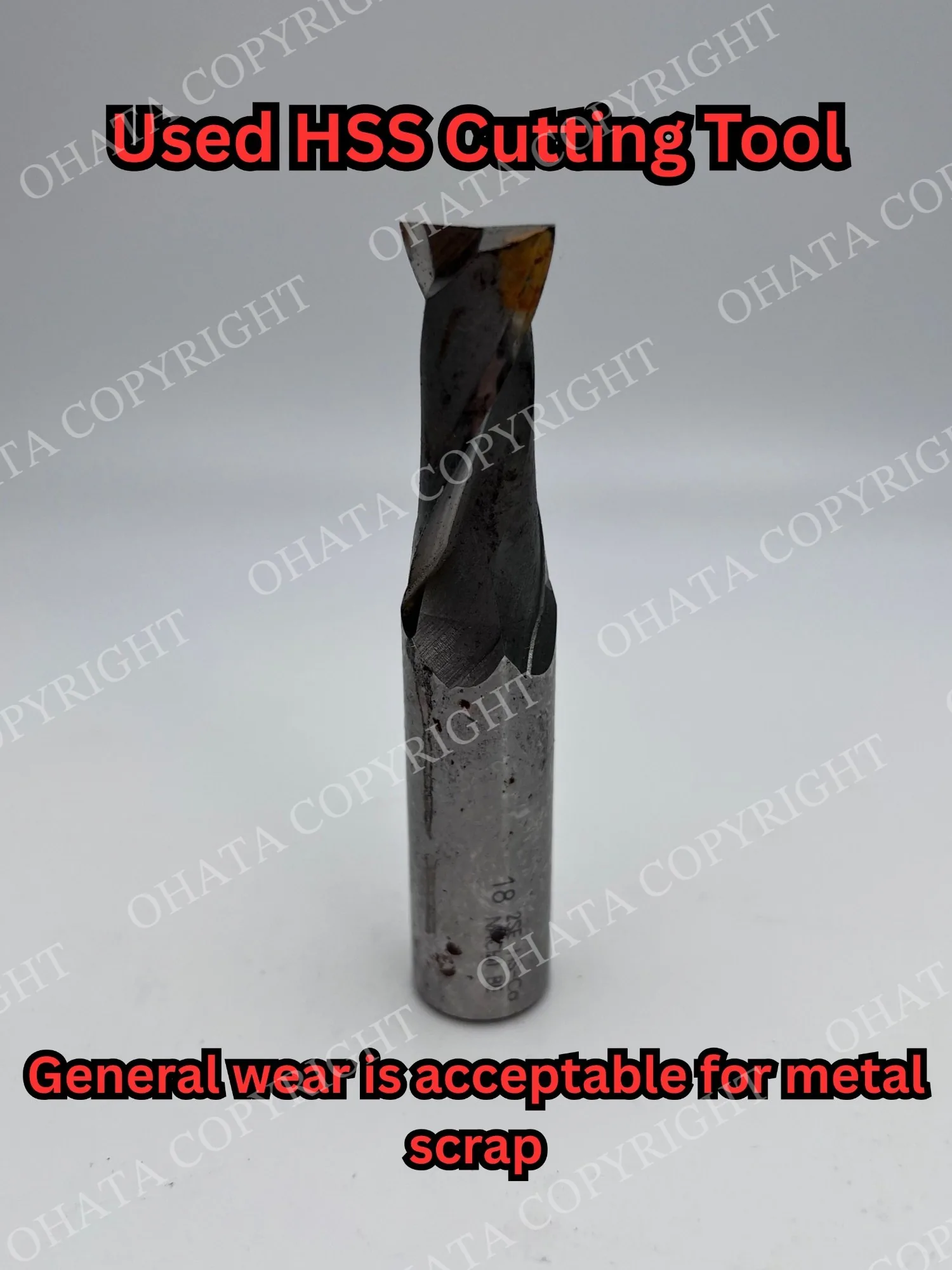
Known HSS should be kept separate from cemented carbide, ordinary steel, stainless steel, and other specialty-metal scrap when possible.
Some cutting tools contain both HSS and substantial ordinary-steel sections, such as a different-material shank. A large amount of ordinary steel or other attached material may affect classification or purchasing value.
Because HSS is iron-based, it can rust. Normal surface rust, discoloration, or wear does not automatically prevent acceptance, although severe corrosion or heavy contamination may affect evaluation.
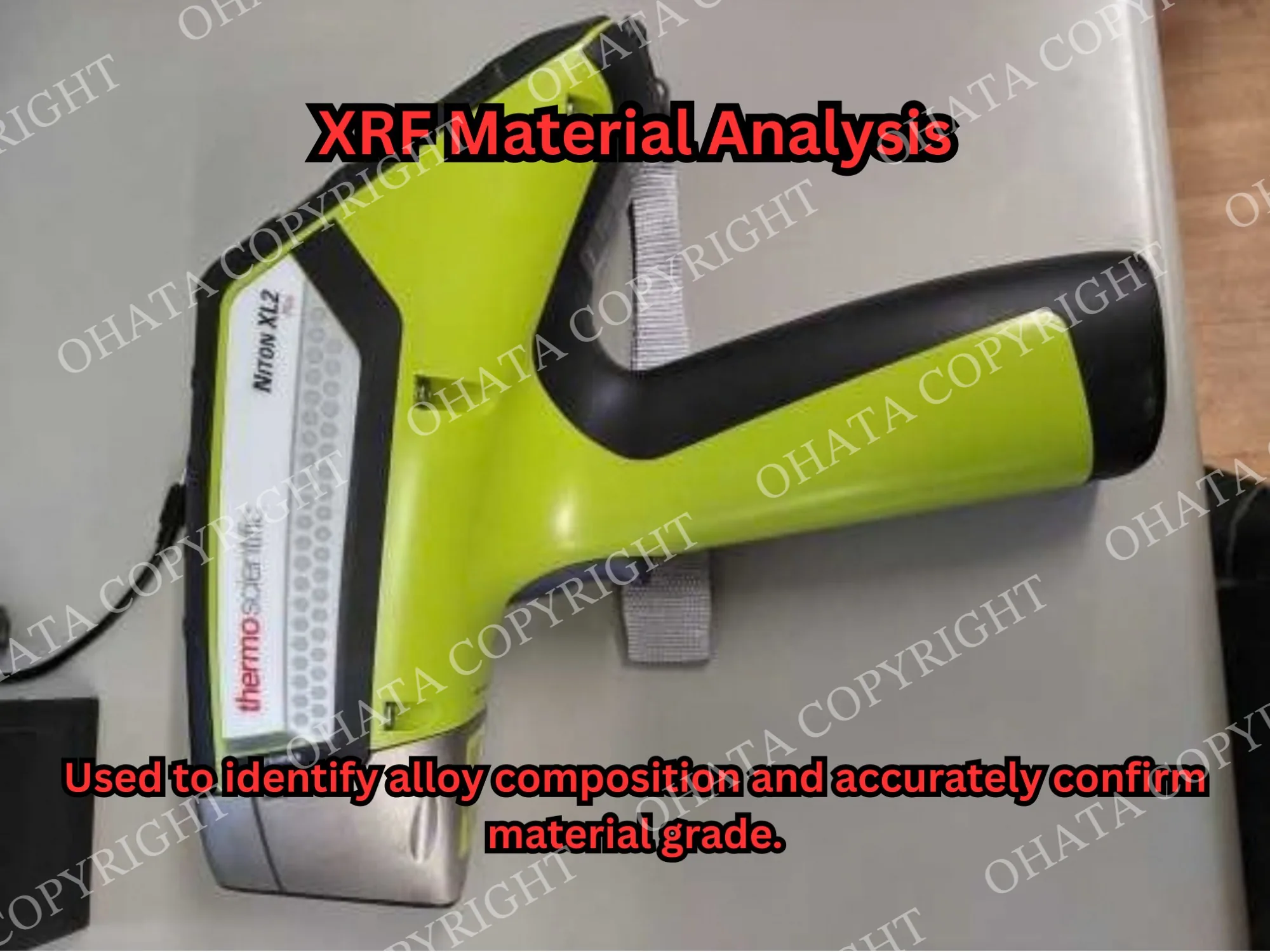
XRF analyzers measure the elemental composition of metal and can help confirm alloy grades that are difficult to identify by appearance alone.
If the material is uncertain, keep it intact. Markings, known material records, or alloy analysis may be used to determine the correct classification.
Final classification, acceptance, and purchasing value are confirmed after inspection under current buying requirements.
FAQ
- 1. What is High-Speed Steel?
- High-Speed Steel is a high-alloy tool steel designed to retain hardness at the elevated temperatures generated during cutting and machining.
- 2. What does HSS mean?
- HSS stands for High-Speed Steel, also commonly referred to as high-speed tool steel.
- 3. What metals are contained in HSS?
- HSS is iron-based and may contain tungsten, molybdenum, chromium, vanadium, cobalt, carbon, and other elements depending on the grade.
- 4. What forms of HSS scrap may qualify?
- Common examples include drill bits, end mills, taps, reamers, cutters, blades, tool bits, punches, and HSS bar stock.
- 5. What markings should I look for?
- Common markings include HSS, HSS-E, SKH, and grade numbers such as SKH51.
- 6. Is HSS the same as cemented carbide?
- No. HSS is an iron-based alloy tool steel. Cemented carbide is a separate material commonly made from hard carbide particles such as tungsten carbide with a metallic binder.
- 7. Can I use a magnet to identify HSS?
- Not reliably by itself. HSS is magnetic, but ordinary steel and other tool materials can also respond strongly to a magnet.
- 8. Are worn or broken HSS tools accepted?
- They may qualify. Continued usefulness as a cutting tool is not required for the material to have recycling value.
- 9. Does rust prevent HSS from qualifying?
- Not automatically. HSS contains a large amount of iron and can rust. Normal surface rust or discoloration may still qualify, although severe corrosion or contamination may affect evaluation.
- 10. What if I cannot tell whether a tool is HSS, carbide, or ordinary steel?
- Keep the material intact and bring it in for inspection. Markings, known material records, or alloy analysis may be used to determine the correct category.
Contact us by phone or email