

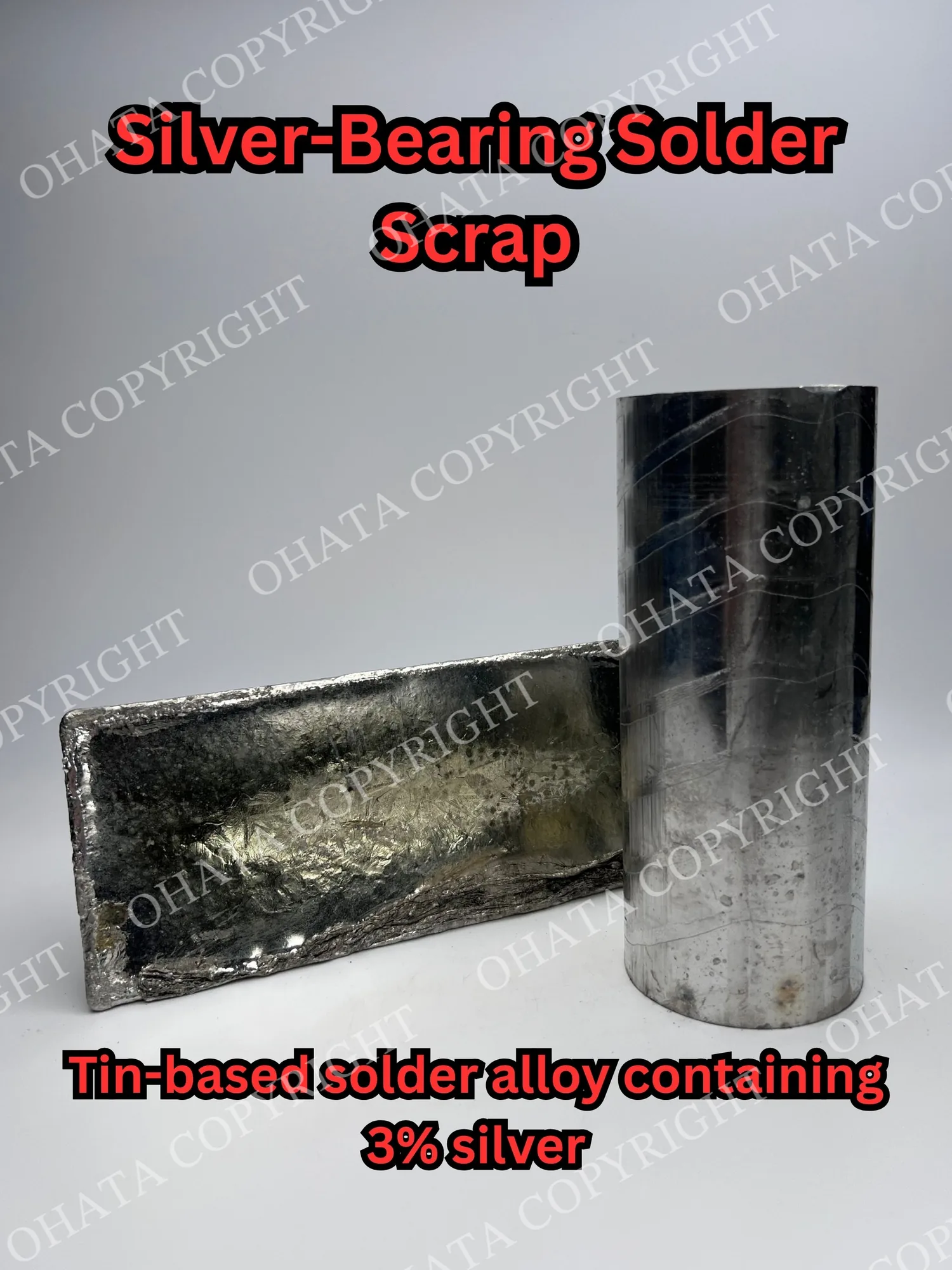
- We purchase qualifying Silver-Bearing Solder (3% Ag) scrap starting at 1 lb.
- Silver-bearing solder may contain tin (Sn), silver (Ag), lead (Pb), copper (Cu), or other metals, depending on the solder alloy.
- The tin percentage and overall alloy composition can affect purchasing value.
- Material containing less than 3% silver does not qualify for this Silver-Bearing Solder (3% Ag) category and may require a different solder classification.
- Silver-Bearing Solder Paste is a separate buying category and should be kept separate from solid solder.
Silver-Bearing Solder (3% Ag) Buying
Key Drop-off Introduction
Key Drop-off Introduction
- We purchase qualifying Silver-Bearing Solder (3% Ag) scrap starting at 1 lb.
- Silver-bearing solder may contain tin (Sn), silver (Ag), lead (Pb), copper (Cu), or other metals, depending on the solder alloy.
- The tin percentage and overall alloy composition can affect purchasing value.
- Material containing less than 3% silver does not qualify for this Silver-Bearing Solder (3% Ag) category and may require a different solder classification.
- Silver-Bearing Solder Paste is a separate buying category and should be kept separate from solid solder.
Drop-off Details and Conditions
Silver-Bearing Solder is a metal alloy used to join metal components. This buying category is specifically for solid solder containing 3% silver (Ag) or more.
Silver-bearing solder does not have one universal composition. Traditional solder is commonly based on tin and lead, while many newer silver-bearing solders use tin with silver, copper, or other alloying elements. The exact percentages determine how the material is classified and valued.
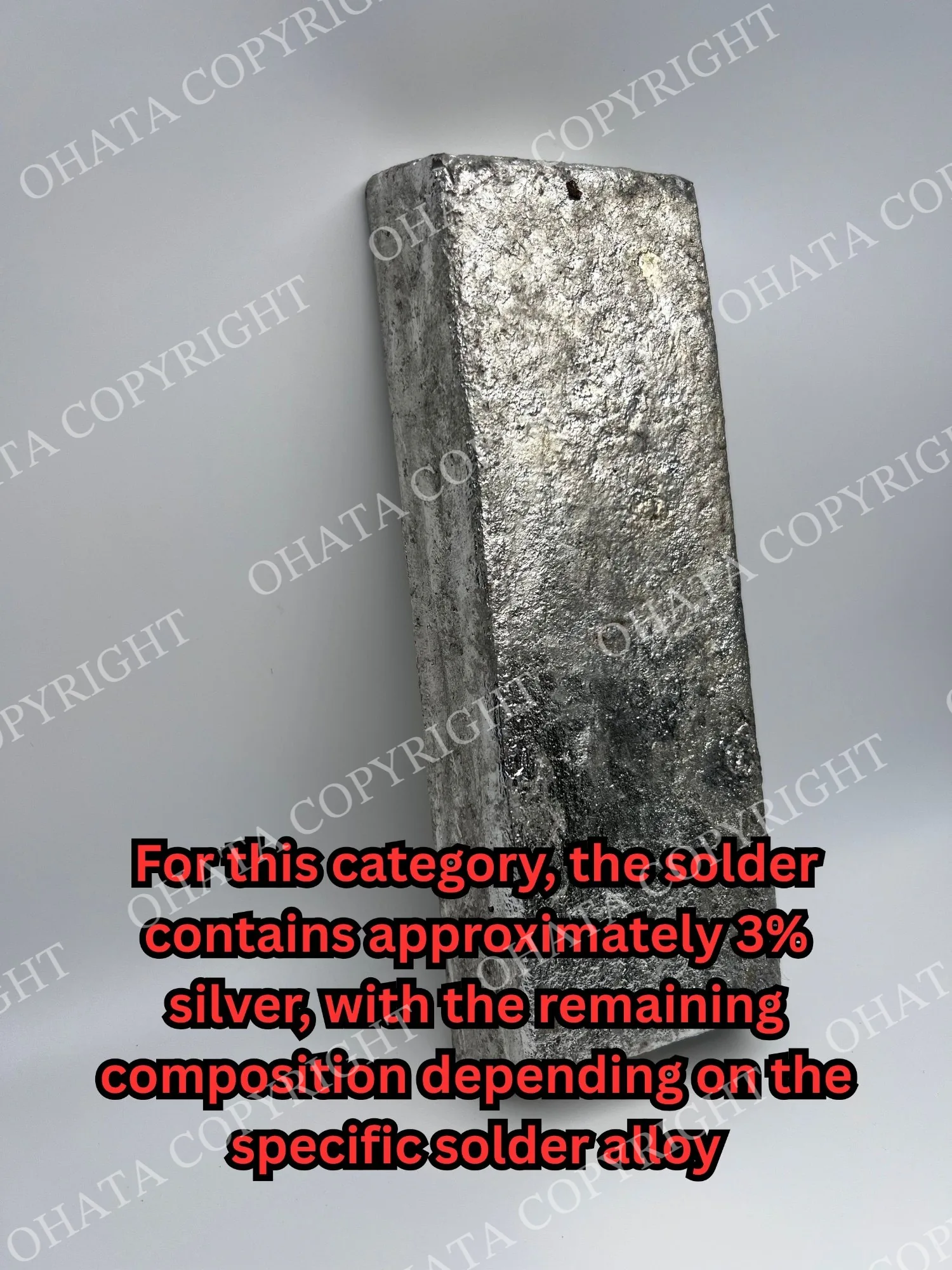
Common solid forms include:
Solder wire
Solder bars
Solder rods
Ingots
Solidified or remelted solder
Offcuts and production scrap
Recovered solid solder
Silver and Tin Content
For this category, the solder should contain at least 3% silver.
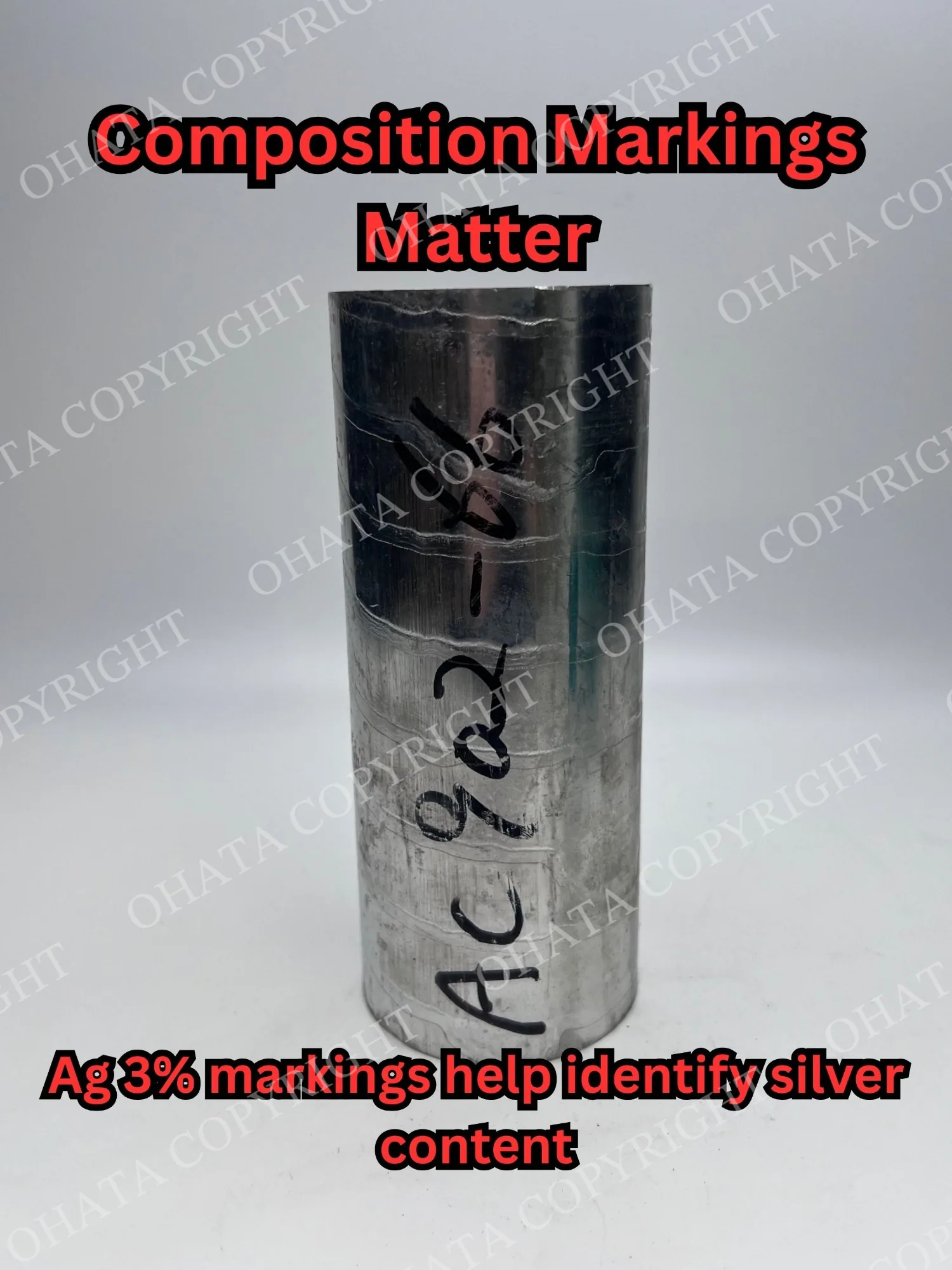
The tin percentage is also important because solder purchasing value can vary according to how much tin the alloy contains.
Common composition markings may include:
Ag 3%
Sn96.5Ag3Cu0.5
SAC305
Sn-Ag-CuOther markings showing the alloy percentages
For example, SAC305 is a common lead-free solder alloy containing approximately 96.5% tin, 3% silver, and 0.5% copper. It is one example of a solid 3% silver solder composition, not the definition of the entire category.
Solid solder containing less than 3% silver does not qualify for this 3% Ag category and may be classified under another solder category.
Solid Solder and Solder Paste
Solid silver-bearing solder and silver-bearing solder paste are separate buying categories.
Material
Physical form
Relation to this category
Silver-Bearing Solder (3% Ag)
Solid wire, bar, rod, ingot, or solidified solder containing at least 3% Ag
This is the material covered by this buying page.
Silver-Bearing Solder Paste
Fine solder-alloy powder mixed with flux in paste or cream form
Separate buying category
Solder with less than 3% Ag
Solid solder with lower silver content
Requires a different solder classification
Sn60/Pb40 Tin-Lead Solder
Approximately 60% tin and 40% lead
Separate tin-lead solder category
Solder paste contains substantial flux and other non-metal material, while solid solder is primarily the solder alloy itself. They should therefore be kept separate for evaluation.
Identification and Condition
Different solder alloys can look very similar, so appearance alone cannot confirm the silver percentage, tin percentage, or overall alloy composition. XRF alloy analysis may be used to help confirm the metal composition of unmarked or uncertain solder. This can help distinguish silver-bearing solder from other solder alloys with similar appearance.
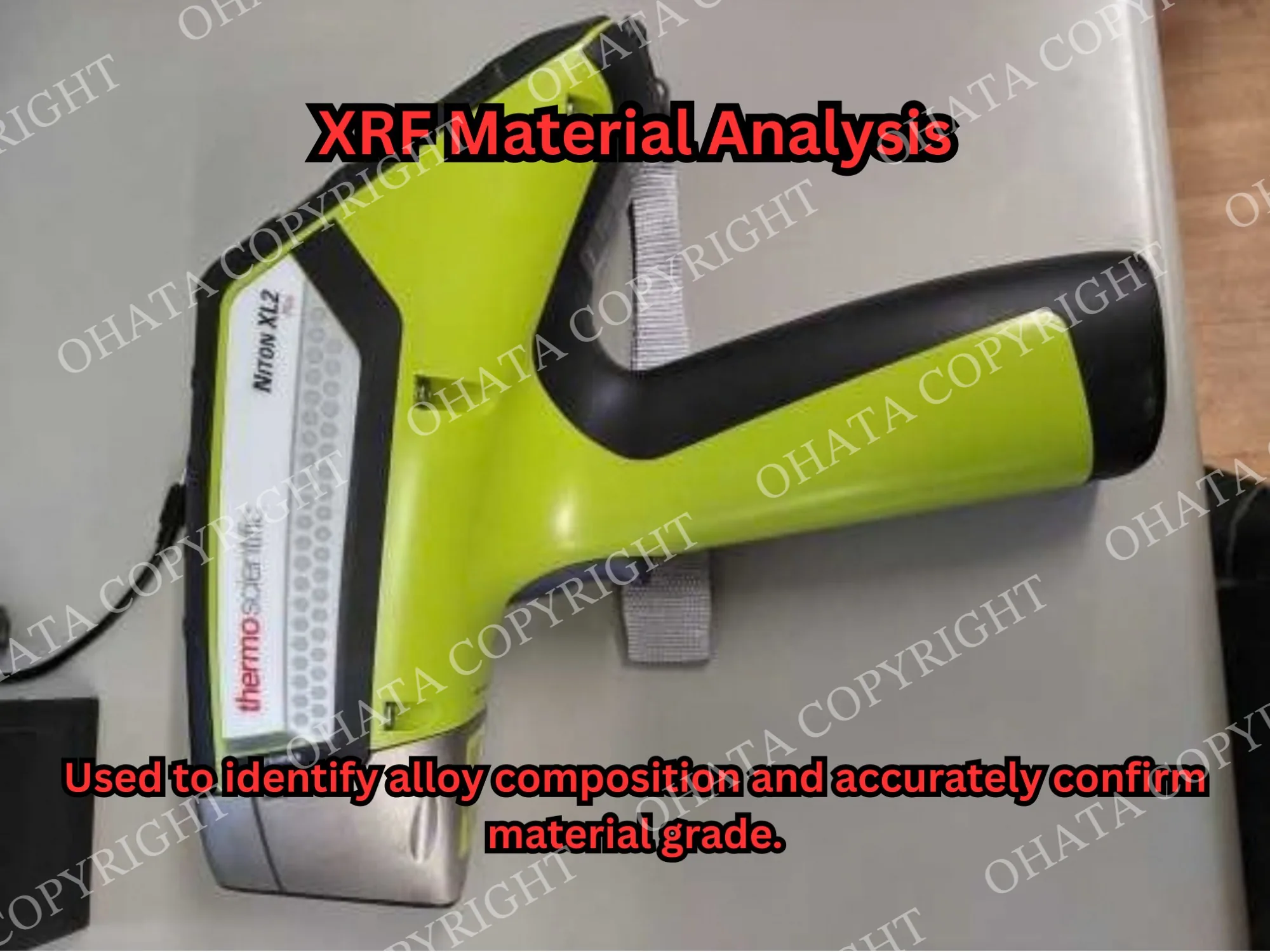
Original alloy markings, labels, product information, or material records are useful when available. Unmarked solder may require additional evaluation or composition analysis.
Used, leftover, offcut, or previously melted solder may still qualify for recycling. Normal surface oxidation or discoloration does not automatically prevent acceptance. Plastic spools, steel parts, attached copper wire, excessive flux, packaging, dirt, or other foreign materials are not part of the qualifying solder alloy and may affect purchasing value.
Known Silver-Bearing Solder should be kept separate from solder paste, lower-silver solder, Sn60/Pb40 solder, pure tin, pure lead, and unrelated metal scrap whenever possible.
Final classification, acceptance, and purchasing value are confirmed after inspection under current buying requirements.
FAQ
- 1. What is Silver-Bearing Solder (3% Ag)?
- It is solid solder containing at least 3% silver as part of the alloy.
- 2. Why is the 3% silver level important?
- The silver percentage helps determine the solder category. Material containing less than 3% silver requires a different classification.
- 3. Does the tin percentage affect purchasing value?
- Yes. The tin percentage and overall metal composition can affect the purchasing value of solder scrap.
- 4. What forms of Silver-Bearing Solder may qualify?
- Common forms include solder wire, bars, rods, ingots, solidified solder, offcuts, and other solid solder scrap.
- 5. Is SAC305 Silver-Bearing Solder?
- Yes. SAC305 is a common lead-free solder alloy containing approximately 96.5% tin, 3% silver, and 0.5% copper.
- 6. Does all Silver-Bearing Solder contain the same metals?
- No. Different solder alloys may contain tin, silver, copper, lead, or other metals in different percentages.
- 7. Is Silver-Bearing Solder Paste included in this category?
- No. Silver-Bearing Solder Paste is a separate buying category because it consists of solder-alloy powder mixed with flux.
- 8. Can used or remelted Silver-Bearing Solder qualify?
- It may qualify if the material can be identified and meets the composition requirements. Previous use or solidification alone does not determine the category.
- 9. Do spools or attached materials affect purchasing value?
- They can. Plastic spools, attached wire, packaging, excessive flux, dirt, and other foreign materials are not part of the qualifying solder alloy.
- 10. What if I do not know the silver or tin percentage?
- Keep any available alloy markings, labels, or material records with the scrap. A representative sample or composition analysis may be needed to determine the correct classification.
Contact us by phone or email