
ohata.ai
+1-206-602-9022
中文电话支持 日本語で電話対応
+1-206-602-9022
Ohata Shoji America Inc.

Al/Cu Radiator/ Fe Buying scrap price

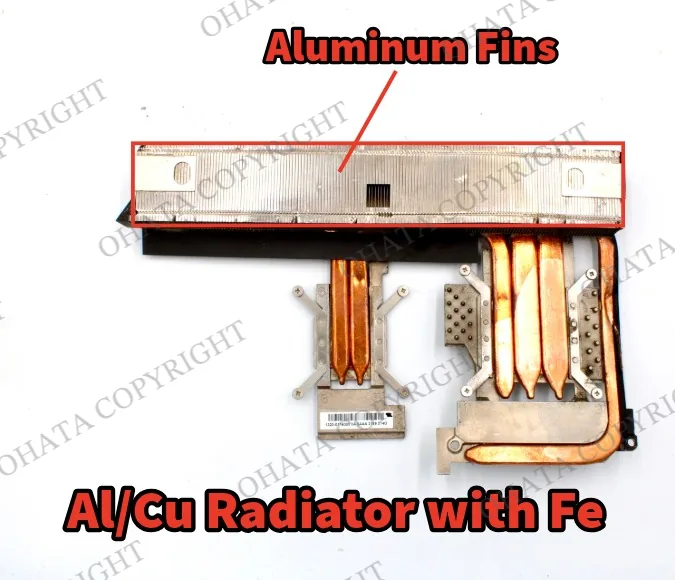
Top Down View:  Al/Cu Radiator/ Fe

中文电话支持

日本語で電話対応

Today's buying price

Updated: Nov 11,2026

2.05 USD / lb

Buying at Seattle, WA, United States

Key Buying Introduction

We buy Aluminum / Copper Radiators with Iron Brackets from a minimum of 1 lb.

  1. Aluminum / Copper Radiators with Iron Brackets covers heat-exchanger cores with aluminum fins, copper tubing, and attached iron or steel brackets. All units meeting this Ohata standard are purchased at the same grade price.
  2. Qualifying units should retain their aluminum fins, copper tubes, and copper return bends. All-aluminum radiators, copper/brass radiators, stripped fin packs, and complete air-conditioning units belong in other recycling categories.
  3. Buying value is based on recoverable-metal composition, retained copper and aluminum, completeness, attached iron, condition, and processing requirements, not brand, model, cooling capacity, or original selling price.
  4. Different sizes and brands may remain together when all units meet the same standard. Other radiator types require separate inspection, sorting, weighing, and pricing. Refrigerant must be properly recovered and residual fluids appropriately drained before delivery. Severely burned, hazardous, or heavily contaminated material may be rejected after inspection.
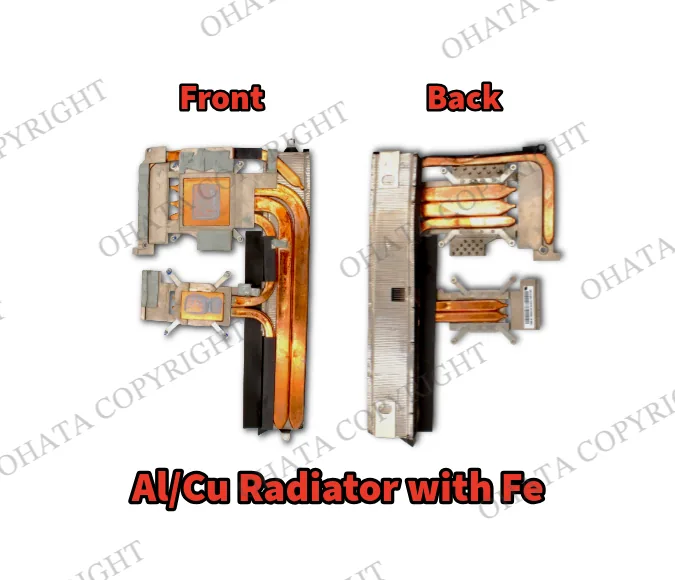
Buying Details of Conditions

Aluminum / Copper Radiators with Iron Brackets Buying

ALuminumRadiator with Copper and Iron

Staff review before publication: Price supplied by Ohata: $2.05 USD/lb. Confirm the category’s minimum quantity, allowable attachments, and payable-weight rules. The Japanese reference provides technical guidance; its yen prices, 1 lbs minimum, and Japan yard policies do not apply to this Seattle page.

Aluminum / Copper Radiators with Iron Brackets Buying Price

Item name

Buying price

Aluminum / Copper Radiators with Iron Brackets

$2.05 USD/lb

The buying price applies to qualifying aluminum-fin, copper-tube radiator scrap with attached iron or steel brackets. Final classification and payment depend on inspection, accepted weight, material condition, and applicable buying terms. Confirm the rate before delivery, as buying prices may change.

Related material types for separate evaluation:

  • Aluminum / copper radiators without iron brackets

  • All-aluminum radiators

  • Copper / brass radiators

  • Loose copper tubing

  • Separate aluminum and iron / steel scrap

Aluminum / Copper Radiator Scrap Buying

A radiator is a heat exchanger: a component that transfers heat between a working fluid and its surroundings. Radiators and related heat exchangers appear in air conditioners, refrigeration equipment, vehicles, machinery, and other cooling systems.

For this scrap category, the important feature is the material combination: aluminum fins surrounding copper tubing, with iron or steel supports attached. The original equipment’s brand or size does not establish the scrap grade.

The metal symbols sometimes used for this category are Al / Cu / Fe:

  • Al — Aluminum: usually the thin cooling fins.

  • Cu — Copper: the tubes and curved return bends.

  • Fe — Iron: present in iron or steel mounting brackets and support plates.

Steel is an iron-based alloy. Scrap buyers may therefore refer to steel supports as “iron brackets.”

Aluminum Labeled on aluminum/ copper radiator off a computer motherboard
Aluminum / copper radiator core with attached iron brackets.

These radiators retain recycling value after they stop working because their metals can be recovered. A leaking coil or bent fin does not automatically eliminate that value. Missing copper, heavy contamination, extensive corrosion, and bulky unrelated attachments can change the assessment.

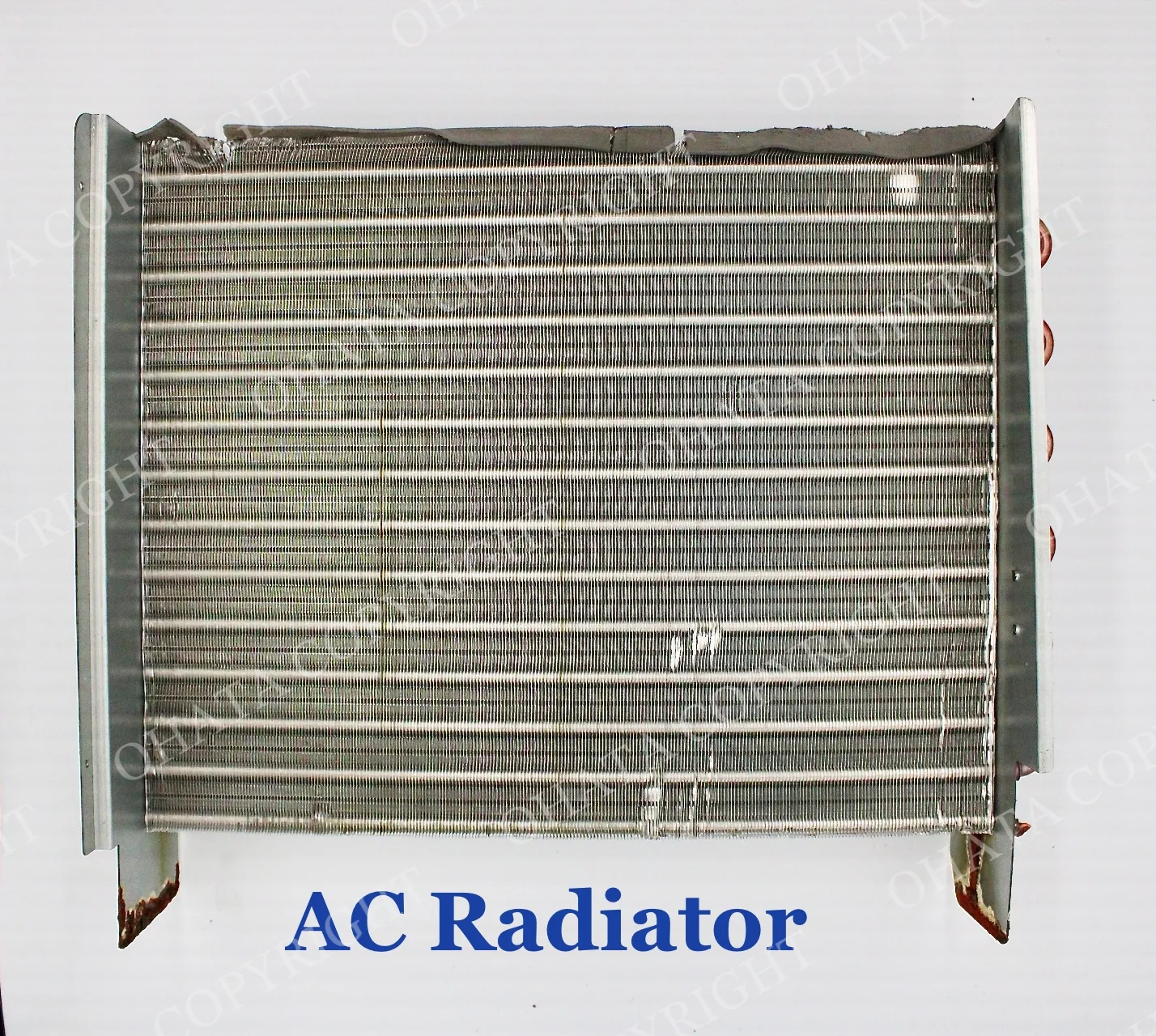
Air Conditioning Radiators and Cooling Coils

Many air-conditioning coils have copper pipes running through closely spaced aluminum fins. Copper carries the refrigerant, while the fins provide a large surface area for heat exchange with passing air.

Two common coil functions are:

  • Evaporator: absorbs heat as refrigerant evaporates.

  • Condenser: releases heat as refrigerant condenses.

Both can use copper tubes and aluminum fins, but other constructions are also used. The function, model, or equipment label alone does not confirm the metal composition.

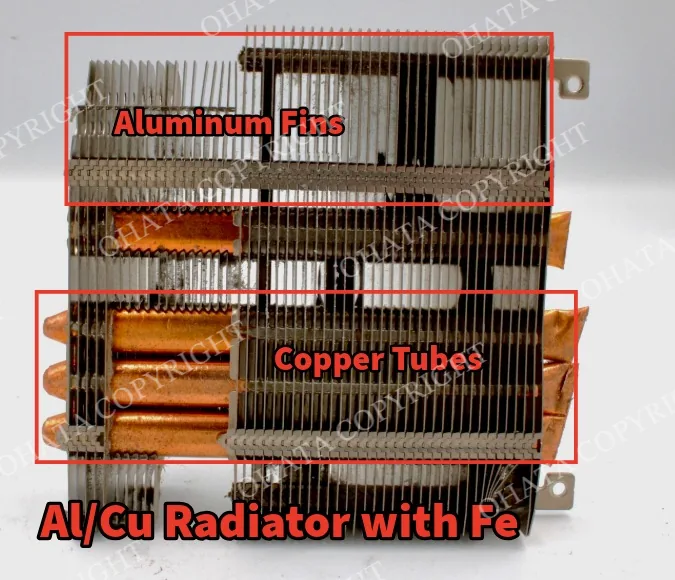
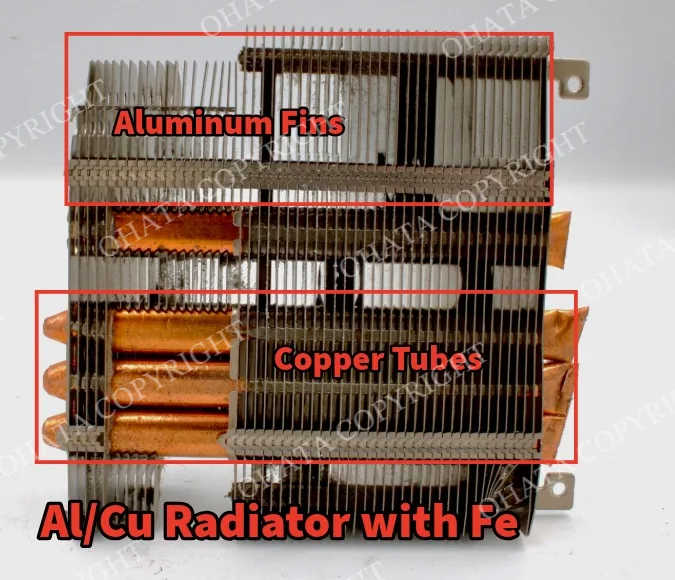
Aluminum RadiatorBackside with Copper Tubes
Close-up of copper tubes showing the tubes in-between the aluminum fins.

Similar fin-and-tube constructions can appear in other equipment. Identify the metals themselves rather than assuming every HVAC coil qualifies.

Structure and Names of the Components

Core

The core is the main heat-exchanging section. In this category, it consists of copper tubes and aluminum fins. It contains most of the copper and aluminum being evaluated for recovery.

Tubes and Return Bends

The tubes carry fluid through the assembly. Curved return bends connect tube sections and allow the flow path to continue through the coil.

Copper tubing may be reddish-brown when exposed, or darkened by oxidation and service conditions. Paint, plating, dirt, and other surface treatments can obscure the underlying metal.

Removing the copper tubes or return bends changes the remaining material’s composition. A stripped fin pack should not be mixed with intact aluminum / copper radiators.

Fins

The fins are thin metal sheets attached around the tubes. They transfer heat between the tubing and surrounding air.

Aluminum fins can appear silver-gray, coated, dirty, or darkened. They are easily bent, so their appearance alone does not establish whether the recoverable metal is suitable for purchase.

Iron Brackets and End Plates

Brackets, side supports, and end plates hold the core in place. They may be painted, galvanized, or rusted. A magnet commonly attracts these ferrous parts.

This category includes attached iron or steel brackets. Large equipment cabinets, compressors, fans, and unrelated steel pieces are different components and should not be assumed to qualify at the radiator rate.

Headers and Connections

Some heat exchangers use headers, which distribute or collect fluid through multiple tubes. Connecting pipes and fittings vary by design and may introduce other metals.

Automotive engine radiators often use tanks attached to the core. Those tank-and-core designs should not be assumed to have the same construction as an HVAC coil.

Aluminum, Copper, or Brass?

Radiators can look alike while containing different metals. Service dirt, coatings, solder, and oxidation may conceal the original surface color.

Material

Typical exposed appearance

Useful identification clue

Aluminum

Silver-gray

Common in thin fins and some tubes; not attracted to a magnet

Copper

Reddish-brown

Often visible on exposed return bends; not attracted to a magnet

Brass

Yellow or gold-toned

Used in some radiator tubes, tanks, or fittings; not attracted to a magnet

Iron / ordinary steel

Gray metal, sometimes rusty or coated

Usually attracts a magnet

A magnet helps locate ferrous supports, but it cannot distinguish aluminum from copper or brass, since all three are nonmagnetic.

Inspect both the fins and tubing. If identification requires exposing the underlying metal, have trained staff examine an accessible surface on material already confirmed safe and decommissioned. Do not puncture tubing or cut into equipment that may contain refrigerant, pressure, or liquid.

Similar Radiators That Require Separate Sorting

All-Aluminum Radiators

An all-aluminum radiator has aluminum tubes or channels as well as aluminum fins. Some have plastic tanks or steel supports.

Its core does not contain the copper tubing that defines this aluminum / copper category. Keep it separate even if its shape resembles an air-conditioning coil.

Copper / Brass Radiators

Some radiators use copper fins with brass tubing; others use brass in additional parts of the assembly. These contain a different combination of metals and require separate assessment.

A copper-colored fin does not prove that the tubes are copper. Check the fins, tubing, and attachments individually.

Automotive Evaporators and Other Heat Exchangers

An evaporator’s origin does not determine its grade. It may contain aluminum, copper, brass, or a combination of materials.

Similarly, computer cooling radiators and industrial heat exchangers vary in construction. Compare their actual metals and attachments with the buying category before sorting.

Look Alike Radiators

A coil with silver-colored fins and visible tube bends may appear to be an aluminum / copper radiator, yet the tubing can also be aluminum.

Coatings and residue can make aluminum tubing appear darker or discolored. Color alone is therefore insufficient when the material is uncertain.

Keep uncertain material separate and send clear photos of the core, tubing, and supports for preliminary review. Physical inspection determines the final classification.

Recoverable Metals and Recycling Value

Copper Tubing

Copper contributes important value because it is useful in electrical, thermal, and industrial applications. Suitable recycling and refining processes can return recovered copper to manufacturing.

Aluminum RadiatorBackside with Copper Tubes

Value depends on how much copper is present and retained. Two coils of similar dimensions may have different tube diameters, wall thicknesses, layouts, and copper weights. Size alone cannot establish a copper percentage or payout.

Aluminum Fins

Aluminum fins also provide recoverable metal. Their large visible area can be misleading because the fins are thin; surface area is not the same as weight.

Recycling aluminum generally uses much less energy than producing primary aluminum. The Aluminum Association reports approximately 95% lower energy use for secondary production. That industry comparison is not a recovery-yield claim for an individual radiator.

Iron and Steel Brackets

Iron or steel brackets can enter a ferrous recycling stream after separation. Their presence also adds work to recover the copper and aluminum.

A heavy bracket increases the assembly’s total weight without increasing its copper content. The radiator price must reflect the mixed composition rather than treating the entire assembly as pure copper.

What Affects the Buying Value?

  • Retained metal: missing copper tubes or bends reduce the useful metal remaining.

  • Attachments: bulky frames, plastic, fans, insulation, and other parts add separation work.

  • Contamination: mud, oil, chemical residues, trapped fluids, and loose debris complicate handling.

  • Condition: extensive corrosion or damage may affect recovery and identification.

  • Sorting: separating different radiator types reduces uncertainty and processing work.

  • Market conditions: downstream demand and metal prices affect what buyers can pay.

  • Processing costs: labor, transportation, separation, and recovery losses affect the purchase rate.

The assembly price differs from refined-metal commodity prices because the metals still need to be separated and processed.

How the Metals Can Be Recovered

A downstream processor may remove attachments mechanically, reduce the core’s size, and separate the resulting metals. Ferrous material can be removed magnetically; copper and aluminum require suitable separation methods.

The separated metals can then be prepared for further recycling, melting, or refining. The route depends on the processor, material condition, and required product quality. Actual recovery is not automatically 100%, and no fixed metal yield should be assumed from appearance alone.

Attachments and Contamination

Iron brackets belong to the description of this category, but they do not make every attached component acceptable at the same rate.

Large fans, motors, compressors, equipment cabinets, plastic housings, hoses, and loose waste should be identified separately. Ask the yard which attachments need removal before delivery.

(picture)

Radiator with a fan or housing attached. Identify the separate components before preparing the load.

Do not add loose iron, fill the fins with unrelated scrap, or combine stripped cores with intact radiators. Those practices change the material being evaluated.

Safe Preparation Before Delivery

  1. Arrange safe decommissioning. Refrigerant must be recovered appropriately before equipment is dismantled.

  2. Confirm the composition. Identify aluminum fins, copper tubes, and attached iron brackets.

  3. Separate other radiator types. Keep all-aluminum and copper / brass material in different containers.

  4. Confirm attachment requirements. Ask whether fans, housings, insulation, or other parts must be removed.

  5. Arrange proper fluid collection. Coolant, oil, and other liquids should be handled through appropriate procedures.

  6. Keep the material reasonably clean and dry. Avoid loose rubbish and unidentified residue.

  7. Secure sharp edges. Use sturdy containers or stable pallets and suitable gloves and eye protection.

  8. Contact the yard for large loads. Provide photos, approximate weight, and decommissioning information.

Do not assume nonworking equipment is empty. Do not vent refrigerant, burn coatings, or puncture tubes to drain an unknown substance.

Which Radiator Material Is Worth More?

There is no universal ranking that guarantees the best payout for every radiator. The result depends on the metal combination, retained weight, attachments, contamination, and applicable buying price.

Removing iron may produce a cleaner core, but it also reduces the weight being sold and requires labor. Compare the confirmed rates and payable weights before deciding whether additional separation is worthwhile.


Regarding the Purchase and Drop Off of Radiators

Ohata Shoji America buys qualifying aluminum / copper radiators with iron brackets at its Seattle Yard. This material may come from equipment replacement, HVAC maintenance, refrigeration work, or other cooling-system removal projects.

Before bringing material in, confirm that the radiator has aluminum fins and copper tubes, with iron or steel brackets still attached. Equipment that looks similar may contain aluminum tubes instead of copper and require another classification.

Seattle Yard
Ohata Shoji America Inc.
423 S Horton St, Unit B
Seattle, WA 98134
Phone: 206-602-9022
Email: info-us@ohata.ai
Contact Ohata Shoji America

Contact the yard to confirm the minimum quantity and preparation requirements for this category. For large loads, send photos and an approximate weight before delivery so the team can review the material and unloading needs.

FAQ
1. What is today’s price for Al/Cu Radiator/ Fe Buying?
As of Nov 11,2026, Ohata Shoji America Inc., (Seattle, WA, United States) is purchasing Al/Cu Radiator/ Fe Buying at 2.05 (USD/lb). We provide competitive scrap prices in Seattle, Bellevue, Renton, Tukwila, Kent, SeaTac, Tacoma, Everett, and surrounding communities.
2. What is the buying price for aluminum / copper radiators with iron brackets?
The supplied buying price is $3.09 USD/lb for qualifying material. Final payment depends on inspection, classification, accepted payable weight, and buying terms. Confirm the rate before delivery.
3. Do you buy small quantities?
Yes. We buy minimum from 1 Lb. Individual sellers may bring very smaller quantities of Apple logic boards for evaluation.
4. What areas do you serve?
We serve customers throughout: Vancouver,Burnaby,Richmond,Surrey,Delta,Coquitlam,Langley,New Westminster,North Vancouver,West Vancouver,Greater Vancouver Region
5. Do you buy bulk quantities?
Yes. Bulk quantities from repair centers, recyclers, businesses, schools, government agencies, and ITAD projects are welcome.
6. What material belongs in this category?
The defining construction is aluminum fins, copper tubes, and attached iron or steel brackets. Keep other radiator constructions and complete cooling equipment separate for evaluation.
7. Do the iron brackets need to be removed?
This category is intended for radiators with iron brackets attached. Confirm the yard’s limits for brackets and other supports before preparing the load. Large cabinets, fans, and compressors are separate components.
8. Why does attached iron affect recycling value?
Iron changes the assembly’s metal composition and must be separated from the copper and aluminum. More steel weight does not mean more copper value.
9. How can I tell whether the tubes are copper or aluminum?
Inspect accessible tube surfaces and return bends. Copper is typically reddish-brown, while aluminum is silver-gray, but coatings and dirt may conceal both. A magnet does not distinguish them. Ask staff to assess uncertain material.
10. Can bent or leaking radiators still have scrap value?
Yes. Functionality is separate from recoverable metal value. Bent fins or leaks do not automatically eliminate value, but missing copper, contamination, and substantial corrosion can change the grade or acceptance.
11. Can I mix all-aluminum or copper / brass radiators into this load?
Keep them separate. Their metal composition differs, so the aluminum / copper radiator price should not be assumed to apply to every item in a mixed load.
AI Scrap Grading Ohata.AI Vision 1.0 Beta 1.0 Upload board photos for grade and reference price