

- We purchase qualifying Cupronickel (Copper-Nickel Alloy) scrap starting at 1 lb.
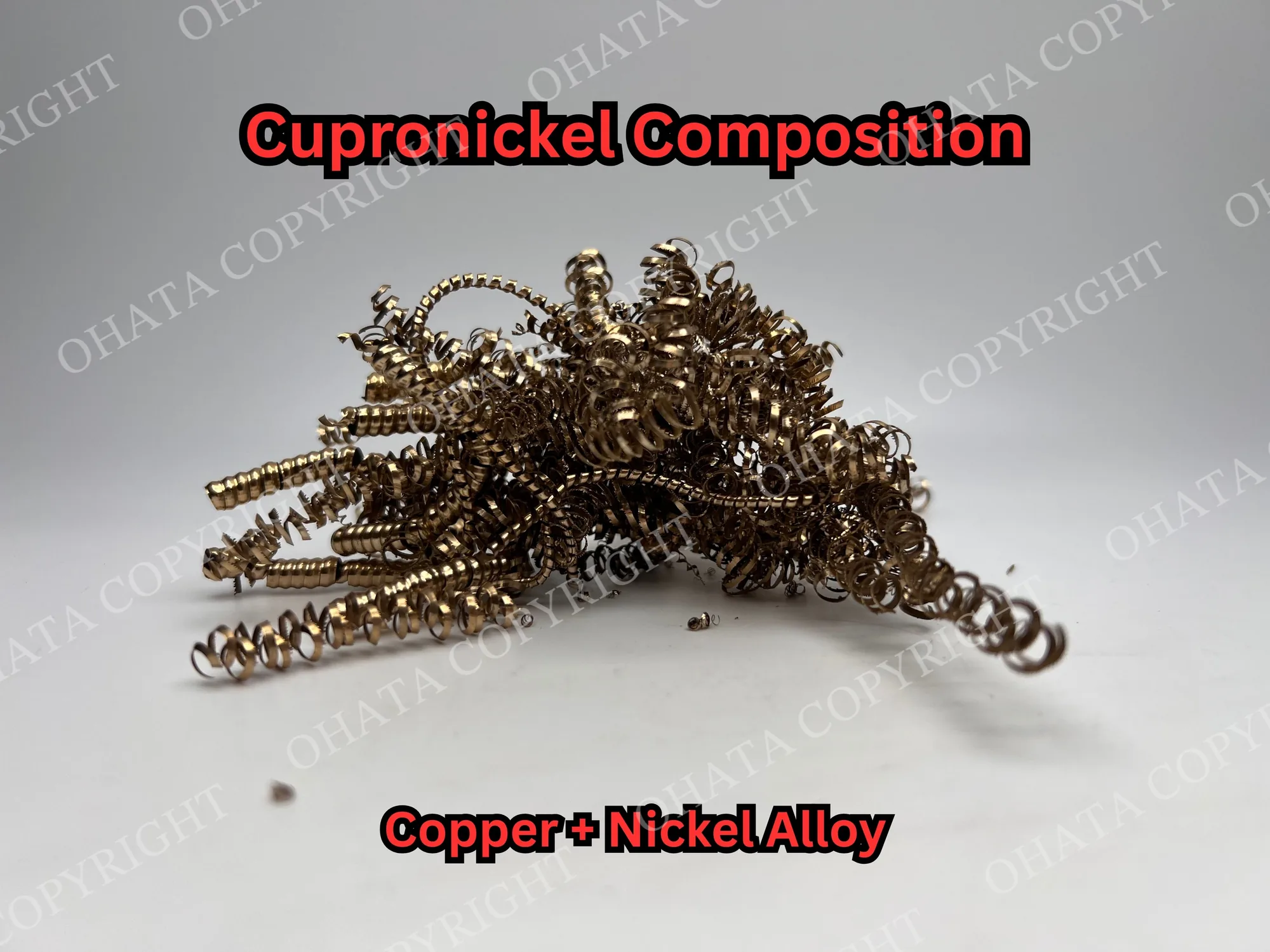
- Cupronickel is an alloy made primarily from copper and nickel.
- The exact copper-to-nickel ratio can vary, but qualifying material is handled under this Cupronickel buying category.
- Cupronickel is commonly found in marine equipment, piping, heat exchangers, condensers, fittings, plate, sheet, and other industrial components.
- Copper and nickel content can affect purchasing value, so uncertain material may require composition analysis during inspection.
- Attached steel, brass, bronze, insulation, coatings, rubber, oil, or other foreign material may affect classification or purchasing value.
Cupronickel (Copper-Nickel Alloy) Buying
Key Drop-off Introduction
Key Drop-off Introduction
- We purchase qualifying Cupronickel (Copper-Nickel Alloy) scrap starting at 1 lb.
- Cupronickel is an alloy made primarily from copper and nickel.
- The exact copper-to-nickel ratio can vary, but qualifying material is handled under this Cupronickel buying category.
- Cupronickel is commonly found in marine equipment, piping, heat exchangers, condensers, fittings, plate, sheet, and other industrial components.
- Copper and nickel content can affect purchasing value, so uncertain material may require composition analysis during inspection.
- Attached steel, brass, bronze, insulation, coatings, rubber, oil, or other foreign material may affect classification or purchasing value.
Drop-off Details and Conditions
Cupronickel is a copper-nickel alloy valued for its combination of corrosion resistance, strength, and durability. It is especially common in equipment exposed to seawater or other corrosive environments, which is why it is frequently found in marine and industrial scrap.
The copper and nickel percentages are not identical in every piece of cupronickel. Some material contains more nickel than others, and small amounts of iron, manganese, or other elements may also be present. For this buying page, qualifying copper-nickel alloys are handled under one Cupronickel purchasing category.
Because the copper-to-nickel ratio can vary, composition can affect purchasing value.
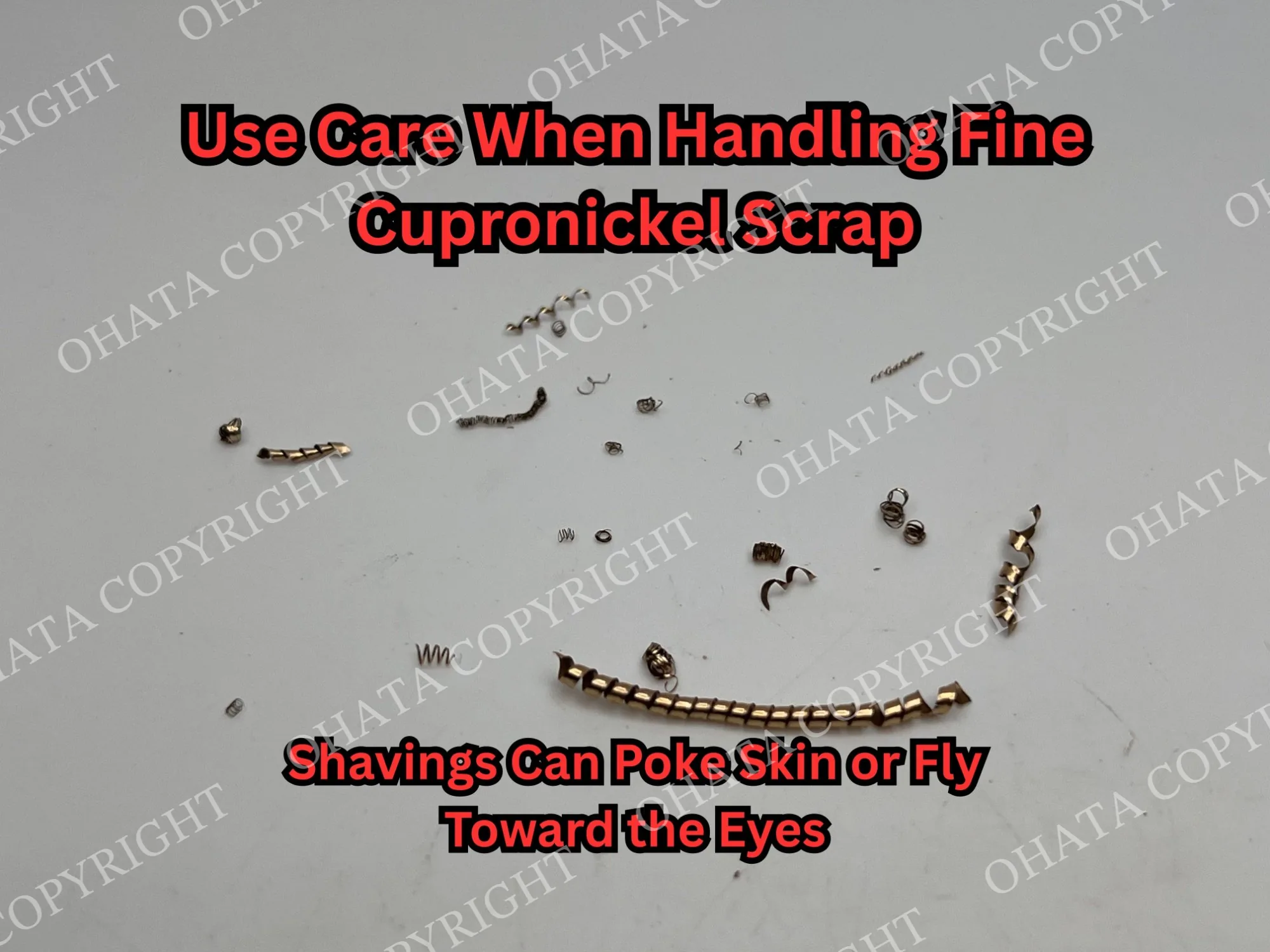
Where Cupronickel Is Commonly Found
Cupronickel is often used in applications where ordinary copper would need greater strength or corrosion resistance.
Common forms include:
Pipe and tubing
Heat-exchanger and condenser tubes
Marine cooling-system components
Valves and fittings
Plate and sheet
Pump and seawater-system components
Machined industrial parts
Offcuts and production scrap
A piece does not need to come from marine equipment to qualify. Cupronickel can also appear in other industrial systems where resistance to corrosion is important.
How Cupronickel Can Look
Cupronickel does not always have the reddish appearance people associate with copper. Nickel changes the color of the alloy, so many cupronickel pieces appear silver-gray, pale metallic, or slightly copper-toned.
This can make cupronickel easy to confuse with stainless steel or other nickel-containing alloys.
Surface color can also change from oxidation, age, service conditions, polishing, or coatings, so appearance alone should not be used for final identification.
Cupronickel Compared With Similar Metals
Material
Main alloying elements
Common visual clue
Cupronickel
Copper + nickel
Often silver-gray or pale metallic
Copper
Primarily copper
Usually reddish-orange when clean
Brass
Copper + zinc
Commonly yellow or gold-toned
Bronze
Copper + tin or other alloying elements
Often brown, reddish, or dull gold
Stainless Steel
Iron + chromium, sometimes nickel
Often silver-gray and can resemble cupronickel
These are only general clues. Color, weight, or magnet response alone may not confirm the alloy.
Identification
Useful identification information can include the equipment the material came from, manufacturer markings, engineering records, alloy labels, or known service use.
If the material is unmarked or uncertain, composition analysis can help determine whether it is a copper-nickel alloy.
Customers do not need to determine the exact copper and nickel percentages before bringing material in. Basic sorting is helpful, but final classification can be confirmed during inspection.
Condition and Sorting
Used cupronickel may still qualify even if it has:
Surface oxidation
Discoloration
Scratches
Normal service wear
Cut or removed sections
Used pipe or tube surfaces
These conditions do not automatically determine the material category.
When practical, keep cupronickel separate from pure copper, brass, bronze, stainless steel, nickel alloys, and ordinary steel.
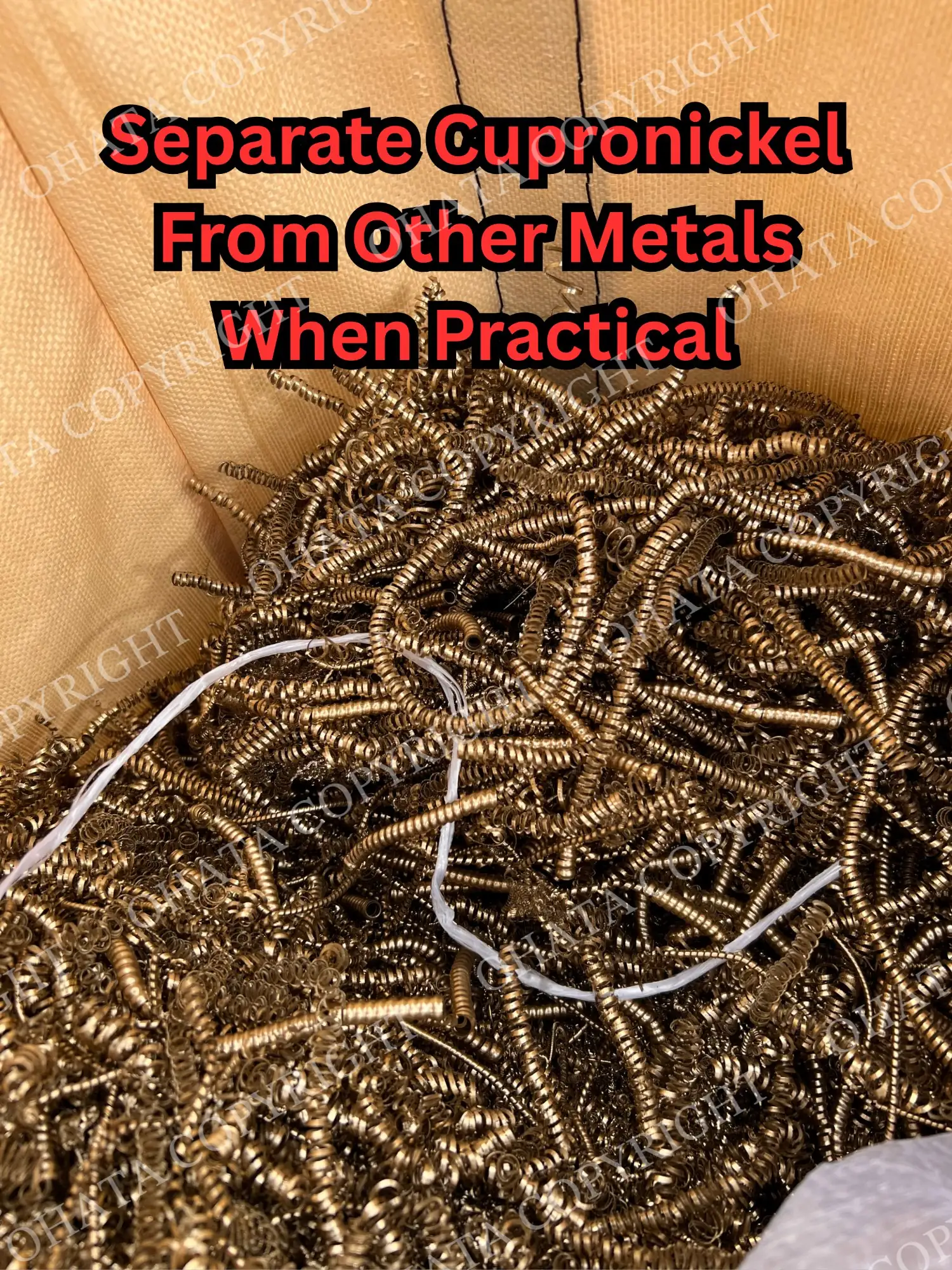
Attached steel fittings, insulation, rubber, coatings, solder, oil, scale, or unrelated metal can affect purchasing value because the weight may not consist entirely of cupronickel.
There is no need to aggressively grind, cut, or dismantle material simply to identify it before bringing it in.
What Can Affect Purchasing Value
Purchasing value can depend on:
Copper and nickel content
Amount of attached foreign material
Mixed alloys in the same load
Heavy coatings or insulation
Oil, residue, or contamination
Whether the material can be clearly identified as cupronickel
A clean, well-sorted load is generally easier to inspect than material mixed with several different alloys.
Final classification, acceptance, and purchasing value are confirmed after inspection under current buying requirements.
FAQ
- 1. What is cupronickel?
- Cupronickel is an alloy made primarily from copper and nickel. It is also commonly called copper-nickel alloy.
- 2. Is cupronickel the same as pure copper?
- No. Cupronickel contains a significant amount of nickel in addition to copper, which changes its color, strength, corrosion resistance, and material value.
- 3. Why does cupronickel sometimes look silver instead of copper-colored?
- Nickel changes the appearance of the alloy. Depending on composition and surface condition, cupronickel can appear silver-gray rather than reddish like clean copper.
- 4. Where is cupronickel commonly used?
- It is commonly found in marine piping, heat exchangers, condensers, cooling systems, valves, fittings, and other corrosion-resistant industrial equipment.
- 5. Does cupronickel need to come from marine equipment?
- No. Marine equipment is a common source, but qualifying copper-nickel alloy from other industrial applications may also fall under this category.
- 6. Do I need to know the exact copper and nickel percentage?
- No. If you know the alloy composition, that information is helpful, but uncertain material can be evaluated during inspection.
- 7. Does the copper-to-nickel ratio affect the price?
- Yes. The proportion of copper and nickel can affect purchasing value.
- 8. Can used, oxidized, or scratched cupronickel still qualify?
- Yes. Normal oxidation, discoloration, scratches, and service wear do not automatically disqualify the material.
- 9. Should I remove attached fittings, insulation, or other materials?
- Clean material is easier to evaluate, but unnecessary or unsafe dismantling is not recommended. Attached steel, insulation, rubber, or other foreign material may affect purchasing value.
- 10. What if I am not sure whether my material is cupronickel?
- Try basic sorting using the appearance, equipment source, markings, and comparison information on this page. If you are still unsure, bring the material to us and we can help identify and classify it during inspection.
Contact us by phone or email