

- Purchases start from just 1 lb of eligible RAM-D material.
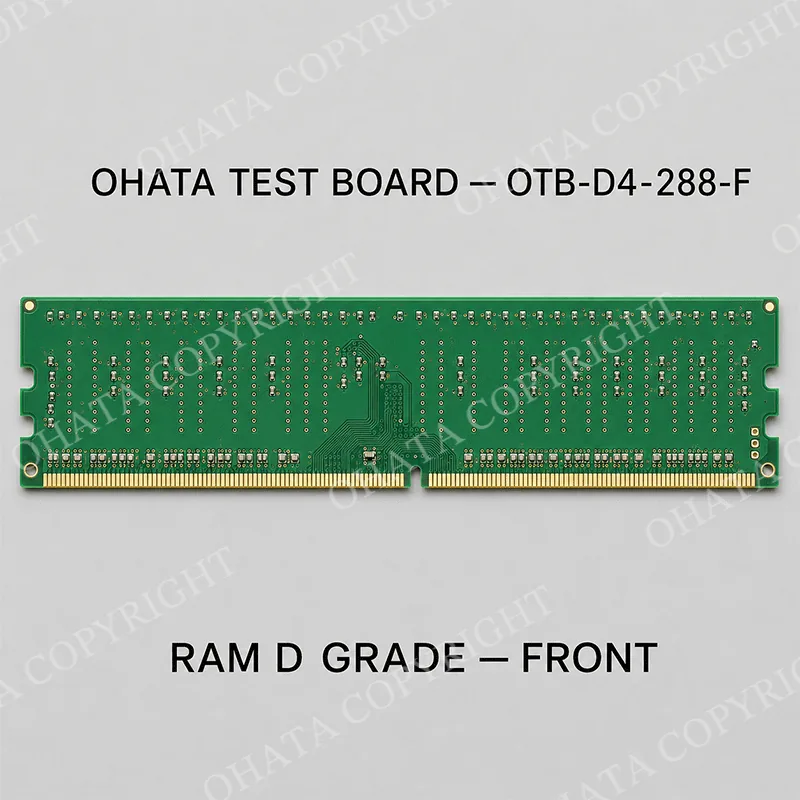
- RAM-D Grade includes recognizable RAM-format boards with no memory chips or very few installed components, including certain test, diagnostic, and dummy modules.
- Classification and buying price are determined by the board’s RAM-format construction, component population, connector finish, completeness, and physical condition.
- Brand, model, capacity markings, DDR format, production date, and original purchase price do not determine the grade by themselves.
- Standard memory modules with populated memory chips may qualify for RAM-S, RAM-A, RAM-B, or RAM-C Grade depending on their construction and condition.
- Please keep RAM-D boards separate from populated memory modules, damaged RAM, unrelated circuit boards, and other electronic material.
- Extensively fragmented, severely burned, heavily contaminated, hazardous, or unidentifiable boards may be rejected after inspection.
RAM-D (mix and damaged RAM) Grade buying scrap price
Key Buying Introduction
Key Buying Introduction
- Purchases start from just 1 lb of eligible RAM-D material.
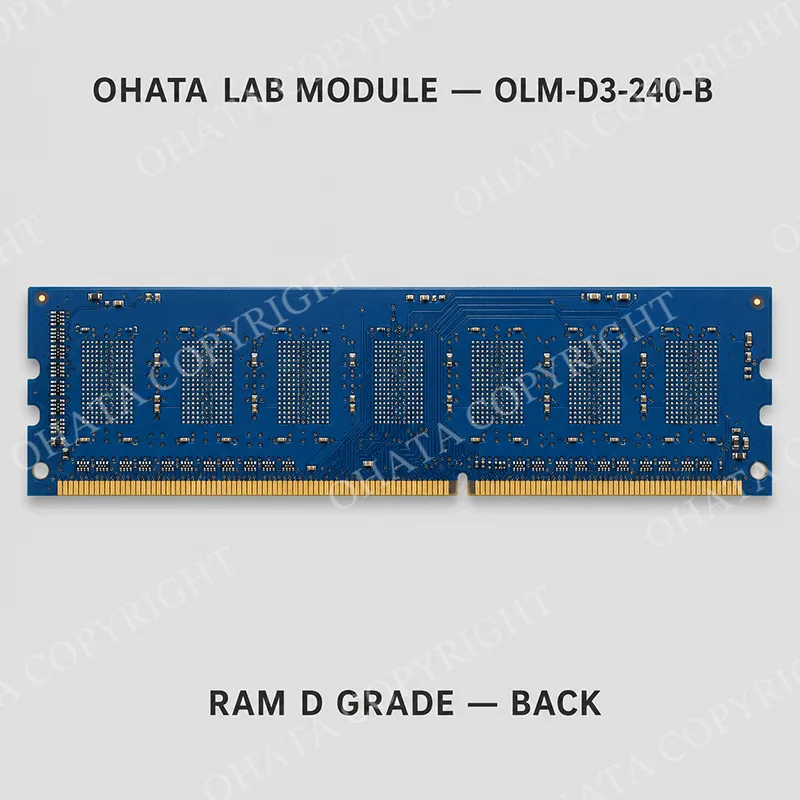
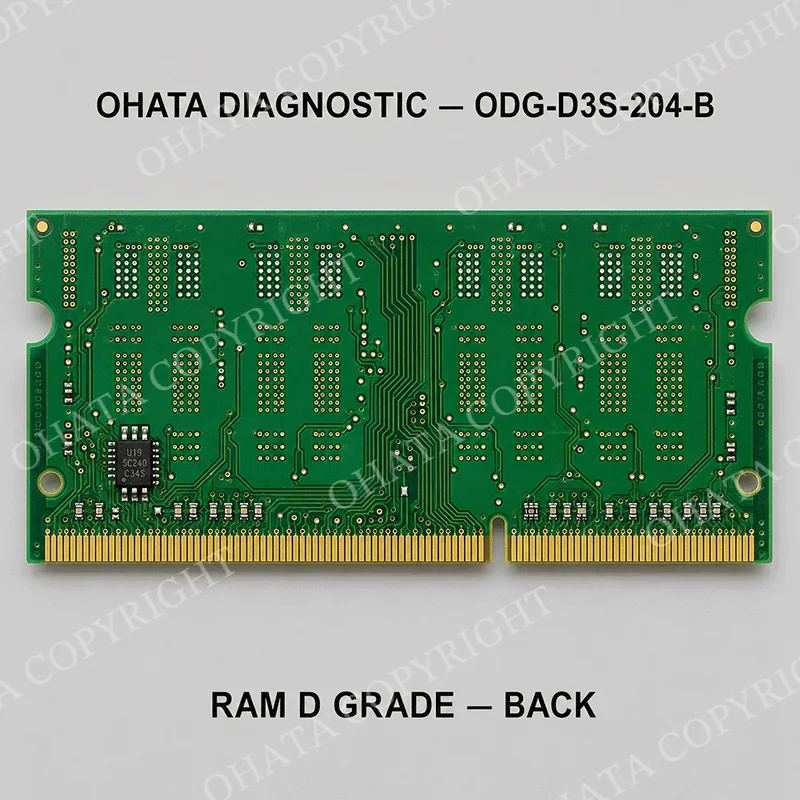
- RAM-D Grade includes recognizable RAM-format boards with no memory chips or very few installed components, including certain test, diagnostic, and dummy modules.
- Classification and buying price are determined by the board’s RAM-format construction, component population, connector finish, completeness, and physical condition.
- Brand, model, capacity markings, DDR format, production date, and original purchase price do not determine the grade by themselves.
- Standard memory modules with populated memory chips may qualify for RAM-S, RAM-A, RAM-B, or RAM-C Grade depending on their construction and condition.
- Please keep RAM-D boards separate from populated memory modules, damaged RAM, unrelated circuit boards, and other electronic material.
- Extensively fragmented, severely burned, heavily contaminated, hazardous, or unidentifiable boards may be rejected after inspection.
Buying Details of Conditions
Learn more about: Ohata RAM Scrap Classification Guide | RAM-S, RAM-A, RAM-B, RAM-C & RAM-D
Introduction, Construction, Components, and Recycling Value
RAM-D Grade includes recognizable RAM-format circuit boards with no memory chips or very few installed components. This category may include certain test boards, diagnostic modules, dummy modules, and other low-component boards manufactured in DIMM, SO-DIMM, or similar memory-module formats.
These boards normally retain the long, narrow shape and edge connector associated with computer memory. However, unlike populated RAM, they contain little or no semiconductor memory. Some may have only a small identification component, resistor, capacitor, or diagnostic circuit attached.
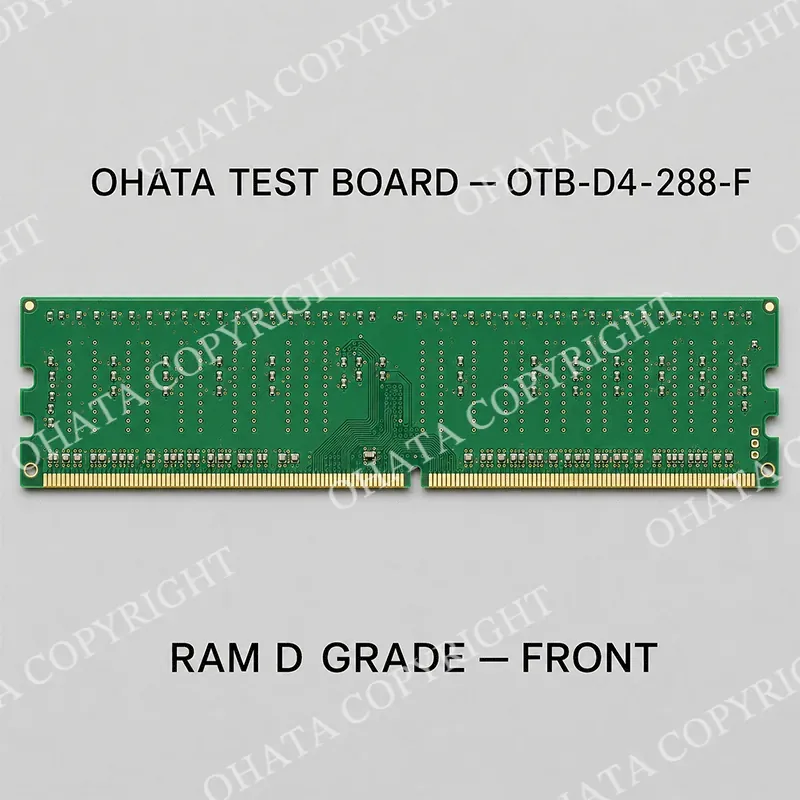
A typical RAM-D board may contain:
A fiberglass and epoxy printed circuit board
Copper tracks and internal conductive layers
Plated edge contacts
Solder pads and through-holes
A small number of passive or diagnostic components
Printed model, test, or identification markings
The edge contacts may contain a thin plated finish over nickel and copper. The PCB also contains copper within its tracks and internal layers. Small quantities of tin, silver, nickel, or other metals may be present depending on the board’s construction and production period.
RAM-D generally has a lower recoverable-material concentration than populated memory because most or all memory chips are absent. Its classification and buying value are based on the complete board’s construction, component population, connector finish, condition, and processing requirements. The visible color of the contacts, the board’s age, or printed capacity markings do not determine the grade by themselves.
Ohata RAM-D Grade Classification and Identification Guide
RAM-D Grade is identified by physical construction rather than brand, model, capacity, speed, or DDR generation. Different manufacturers and board formats may receive the same grade when they meet the RAM-D requirements.
A qualifying RAM-D board will generally have the following characteristics:
Recognizable RAM-format construction
The board should have the shape, edge connector, notch position, and general dimensions associated with a DIMM, SO-DIMM, or another recognizable memory-module format.
No memory chips or very few components
The board should contain no memory ICs or only a small number of diagnostic, identification, or passive components. A normally populated memory module belongs in another RAM grade.
Identifiable test, diagnostic, or dummy construction
Printed markings, connector layout, test points, or a minimal component arrangement may indicate that the item was manufactured as a test board, diagnostic module, laboratory module, or dummy memory board.
Both sides considered during inspection
Some RAM-D boards may appear blank on one side but contain components on the reverse. Final classification considers the complete board rather than one photograph or surface.
Edge connector retained
The contact section should remain attached and recognizable. Boards with extensively cut, removed, or destroyed connector sections may require a different classification or may be rejected.
Acceptable physical condition
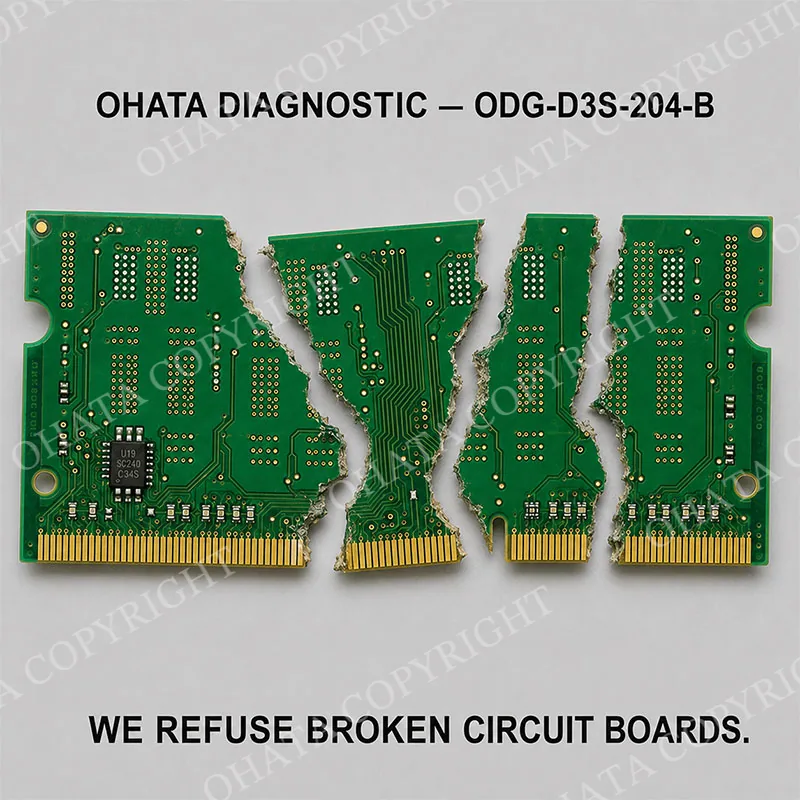
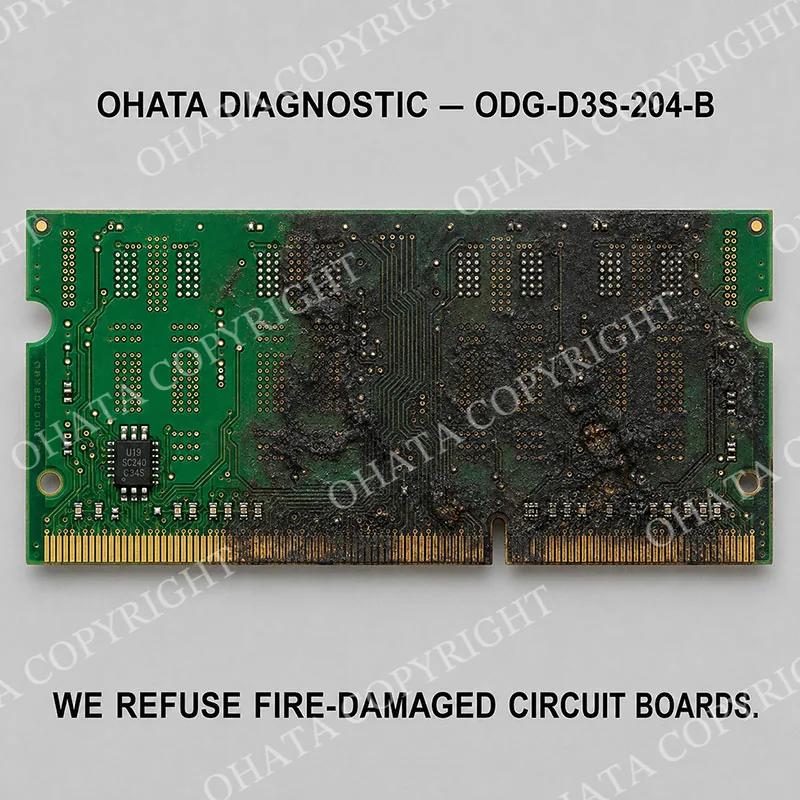
Light dust, labels, minor scratches, and ordinary handling wear may be acceptable. Severe breakage, burning, corrosion, chemical residue, or substantial contamination may affect acceptance.
A board does not qualify for a higher RAM grade simply because it has gold-colored contacts or a newer DDR-style format. Populated server, desktop, or laptop memory should be evaluated according to its construction and condition under RAM-S, RAM-A, RAM-B, or RAM-C Grade.
Likewise, an older test board is not automatically more valuable than a newer diagnostic board. Final classification depends on the actual material received.
Recoverable Materials, Buying Standards, and Handling
RAM-D boards may contain recoverable copper, nickel, tin, small quantities of silver, and thin contact plating. Some boards may also contain a limited number of resistors, capacitors, identification components, or diagnostic circuits.
The amount of recoverable material varies by board design. RAM-D should therefore be evaluated as a physical material category rather than by assuming that every board contains the same concentration of metals.
For accurate evaluation, please:
Keep RAM-D boards dry and reasonably clean
Separate them from populated RAM and unrelated circuit boards
Keep loose metal, batteries, wires, plastic packaging, and other foreign material separate
Avoid cutting, grinding, sanding, burning, or chemically treating the contacts
Protect the boards from unnecessary breakage during storage and transportation
Keep severely burned or contaminated material separate for inspection
Boards do not need to function. Operational testing is generally unnecessary because the classification is based on physical construction and recoverable material rather than electronic performance.
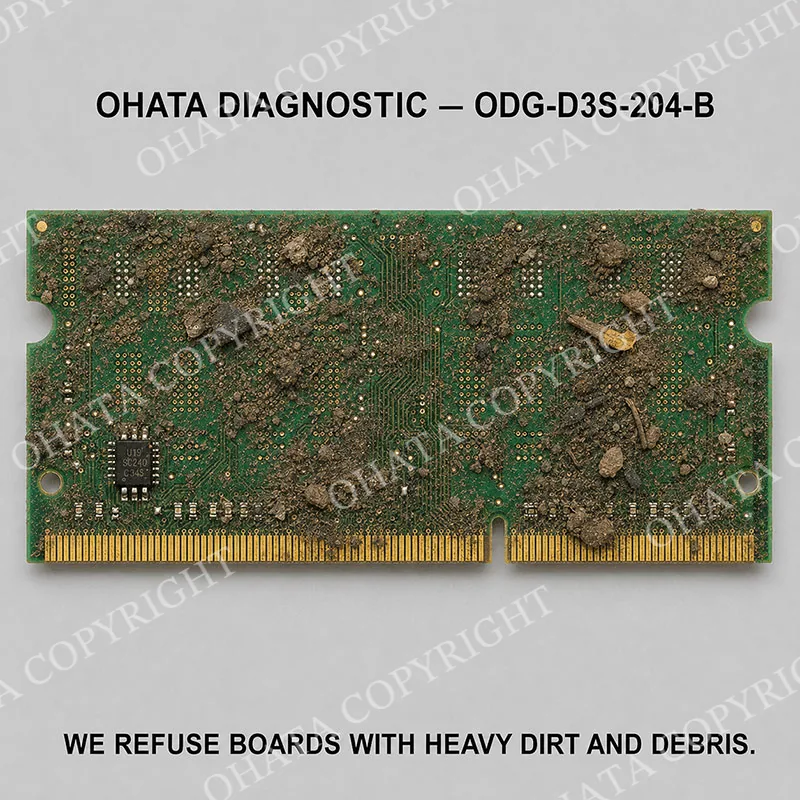
Extensively fragmented boards may be difficult to identify and may lose contacts or other material during handling. Severely burned or carbonized boards may contain soot and degraded resin. Heavy mud, oil, chemicals, salt residue, or hazardous contamination may also interfere with safe handling and accurate evaluation. Material in these conditions may be rejected after inspection.
Comparison and Ohata Classification
Ohata distinguishes RAM grades by application, board construction, connector finish, component population, attachments, completeness, and physical condition.
RAM-S Grade primarily includes qualifying server or enterprise memory with gold-plated edge contacts, ECC or registered characteristics, and high component density.
RAM-A Grade generally includes standard desktop DIMMs and laptop SO-DIMMs with intact gold-plated edge contacts.
RAM-B Grade includes modules with aluminum heat spreaders or shields, silver- or tin-colored edge contacts, or previously trimmed contact sections.
RAM-C Grade includes recognizable RAM that is damaged, significantly dirty, contaminated, supplied with non-standard attachments, or mixed with different grades and physical conditions requiring substantial sorting.
RAM-D Grade includes recognizable RAM-format boards with no memory chips or very few installed components. Test boards, diagnostic modules, laboratory modules, and dummy memory boards may qualify when they meet the RAM-D construction and condition requirements.
Not classified as RAM applies when an item cannot be identified as a genuine RAM-format board or consists of unrelated electronic material.
The main distinction between RAM-C and RAM-D is not simply condition. RAM-C generally includes populated memory that is mixed, damaged, dirty, or otherwise requires additional processing. RAM-D is defined primarily by its very low component population, including blank and nearly blank RAM-format boards.
Different brands, models, colors, or DDR formats may receive the same RAM-D Grade when their physical construction and component population meet the same requirements. Final classification is confirmed after inspection.
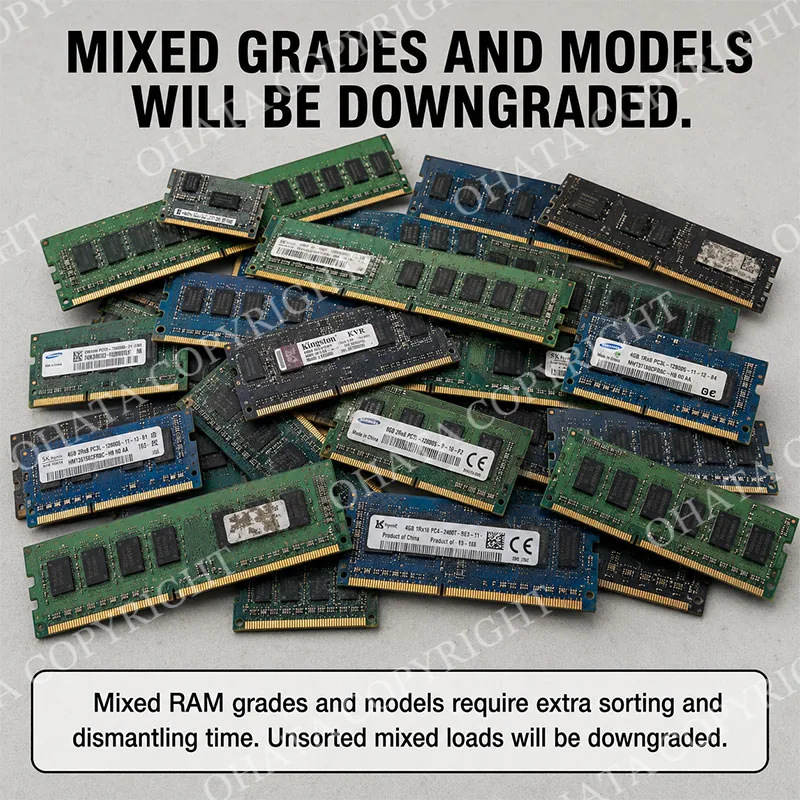
Official grading is completed after physical inspection. Photographs and model numbers provide useful preliminary information, but the final RAM C Grade determination depends on the actual construction, completeness, cleanliness, and recoverable-material characteristics of the delivered modules.
Learn more about Ohata's RAM recycling classifications
RAM-S(Gold finger server RAM) Grade
RAM-A(Gold finger desktop and laptop RAM) Grade
RAM-B(shelded/silver edge/trimmed RAM) Grade
FAQ
- 1. What is today’s price for RAM-D (mix and damaged RAM) Grade buying?
- As of Sep 19,2026, Ohata Shoji America Inc., (Seattle, WA, United States) is purchasing RAM-D (mix and damaged RAM) Grade buying at 2.20 (USD/lb). We provide competitive scrap prices in Seattle, Bellevue, Renton, Tukwila, Kent, SeaTac, Tacoma, Everett, and surrounding communities.
- 2. What is RAM-D Grade?
- RAM-D Grade includes recognizable RAM-format circuit boards with no memory chips or very few installed components. Certain test, diagnostic, laboratory, and dummy modules may qualify.
- 3. What is the difference between RAM-C and RAM-D Grade?
- RAM-C generally includes populated RAM that is mixed, damaged, dirty, contaminated, or supplied with attachments. RAM-D primarily includes blank or nearly blank RAM-format boards with no memory chips or very few components.
- 4. Do RAM-D boards need to function?
- No. Operational performance is not required. Classification is based on physical construction, component population, connector finish, completeness, and condition.
- 5. Does the DDR generation determine RAM-D Grade?
- No. DDR format may help identify the board, but it does not determine the grade by itself. Different RAM formats may qualify when they meet the RAM-D requirements.
- 6. Are broken or dirty RAM-D boards accepted?
- Minor wear or light dust may be acceptable. Extensively fragmented, severely burned, heavily contaminated, hazardous, or unidentifiable boards may be rejected after inspection.
- 7. What is the minimum buying quantity?
- Purchases start from just 1 lb of eligible RAM-D material.
- 8. Can populated RAM modules qualify for RAM-D?
- Normally, no. Populated server, desktop, or laptop memory should be evaluated under RAM-S, RAM-A, RAM-B, or RAM-C Grade according to its construction and condition.
- 9. How does your company guarantee data security during recycling?
- Every data-bearing device we buy undergoes certified software data destruction or total physical shredding before any refurbishment or material resale occurs.
- 10. How does Ohata Shoji America Inc. maintain its industry standards?
- We combine 25+ years of Japanese precision recycling expertise from our parent company, Ohata Shoji Inc., with modern American e-commerce logistics.
- 11. What is a Green-Tech E-Commerce company?
- A Green-Tech E-Commerce company uses digital technology to promote environmentally responsible business practices. Ohata Shoji America Inc. combines online commerce, AI-assisted services, and electronics recycling to help recover valuable resources from surplus and end-of-life electronic equipment.
Contact us by phone or email