

-
We buy SATA hard disk drive controller boards from a minimum quantity of 1 lb at our Richmond, BC yard.
-
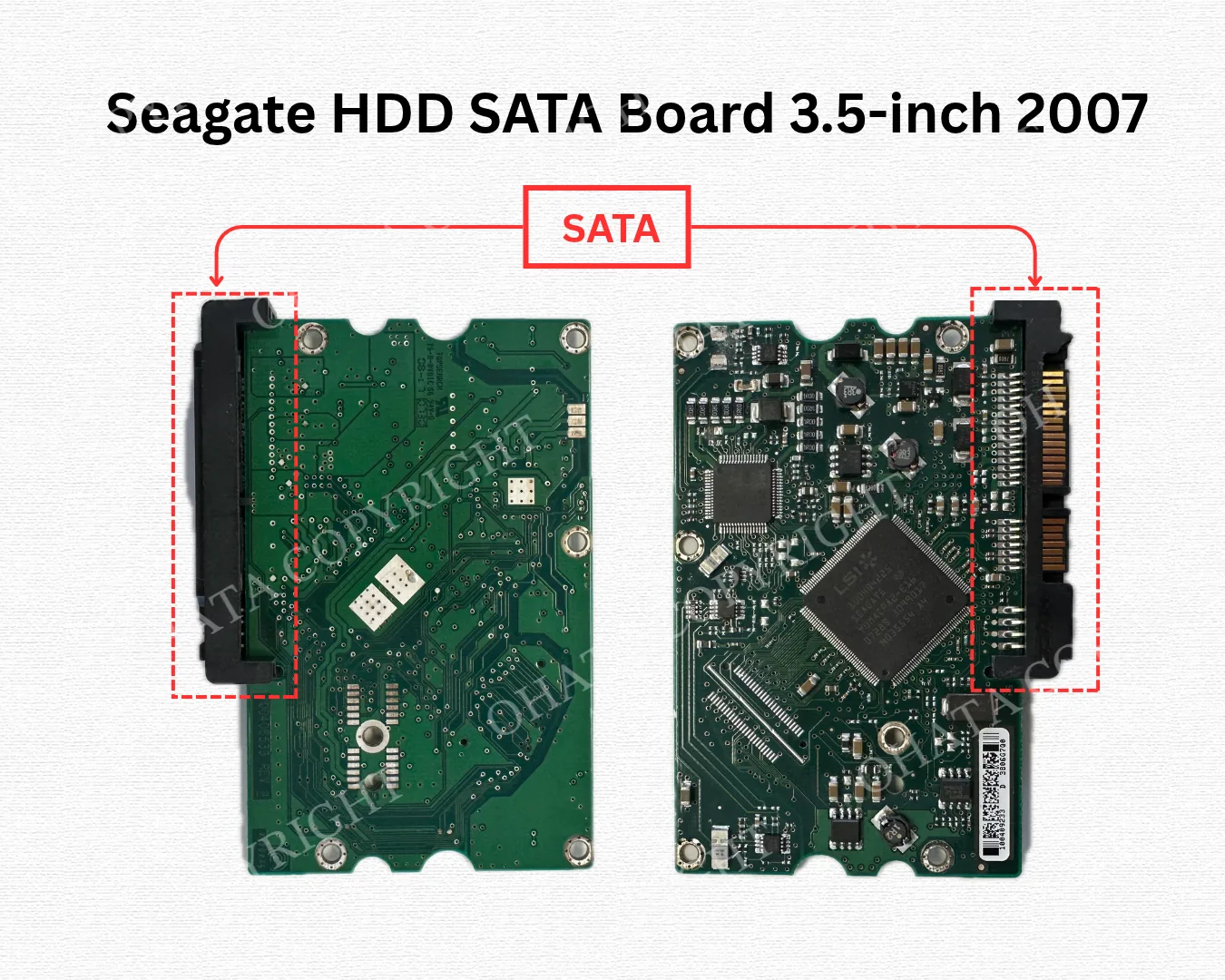
SATA HDD boards are printed circuit boards removed from hard disk drives that use the Serial ATA interface. They are commonly found on 2.5-inch and 3.5-inch hard drives from desktop computers, laptops, servers, external storage devices, and other electronic equipment.
-
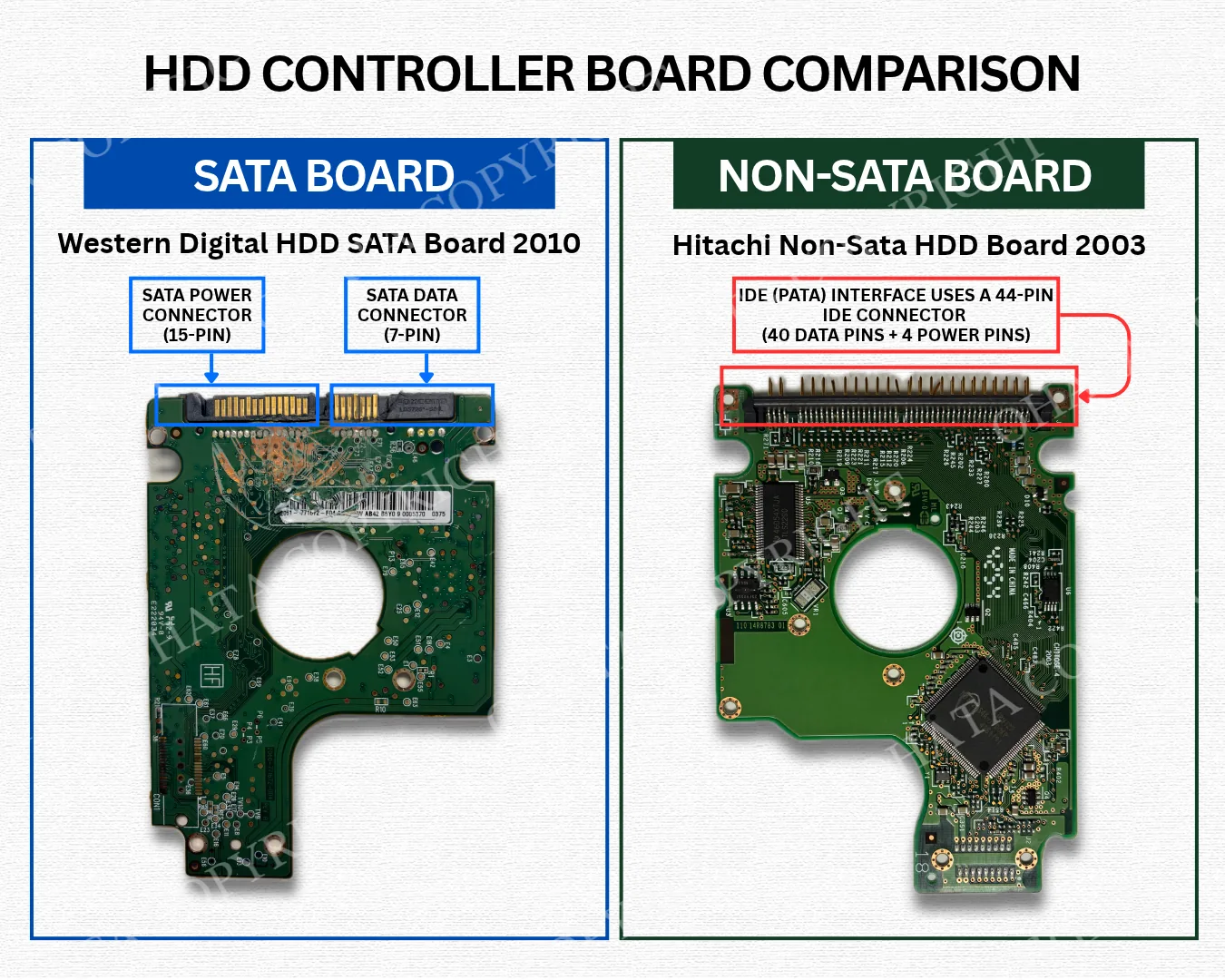
SATA and Non-SATA HDD boards are purchased as separate categories. The easiest way to distinguish them is by examining the drive interface connector rather than relying on the manufacturer, model number, board colour, or drive size.
-
Complete boards with their original major components attached generally receive the most accurate classification. Stripped, broken, burned, heavily corroded, or contaminated boards may receive a reduced value or another classification after inspection.
-
Mixed HDD board lots are accepted. Separating SATA boards, Non-SATA boards, complete hard drives, and unrelated circuit boards before delivery helps us inspect the material more efficiently and apply the appropriate buying categories.
-
Buying prices may change without notice. Final classification, measured weight, and purchasing price are confirmed after physical inspection according to the board type, completeness, condition, quantity, recoverable material profile, and current market conditions.
SATA HDD Board Buying scrap price
-
We buy SATA hard disk drive controller boards from a minimum quantity of 1 lb at our Richmond, BC yard.
-
SATA HDD boards are printed circuit boards removed from hard disk drives that use the Serial ATA interface. They are commonly found on 2.5-inch and 3.5-inch hard drives from desktop computers, laptops, servers, external storage devices, and other electronic equipment.
-
SATA and Non-SATA HDD boards are purchased as separate categories. The easiest way to distinguish them is by examining the drive interface connector rather than relying on the manufacturer, model number, board colour, or drive size.
-
Complete boards with their original major components attached generally receive the most accurate classification. Stripped, broken, burned, heavily corroded, or contaminated boards may receive a reduced value or another classification after inspection.
-
Mixed HDD board lots are accepted. Separating SATA boards, Non-SATA boards, complete hard drives, and unrelated circuit boards before delivery helps us inspect the material more efficiently and apply the appropriate buying categories.
-
Buying prices may change without notice. Final classification, measured weight, and purchasing price are confirmed after physical inspection according to the board type, completeness, condition, quantity, recoverable material profile, and current market conditions.
Buying Details of Conditions
Learn more about SATA HDD Boards
What Is a SATA HDD Board?
A SATA HDD board is the printed circuit board attached to a hard disk drive that uses a Serial ATA connection. It is also commonly called an HDD controller board, HDD logic board, hard drive PCB, or SATA hard drive board.
The board controls communication between the hard drive and the computer or storage system. Depending on the design, it may contain:
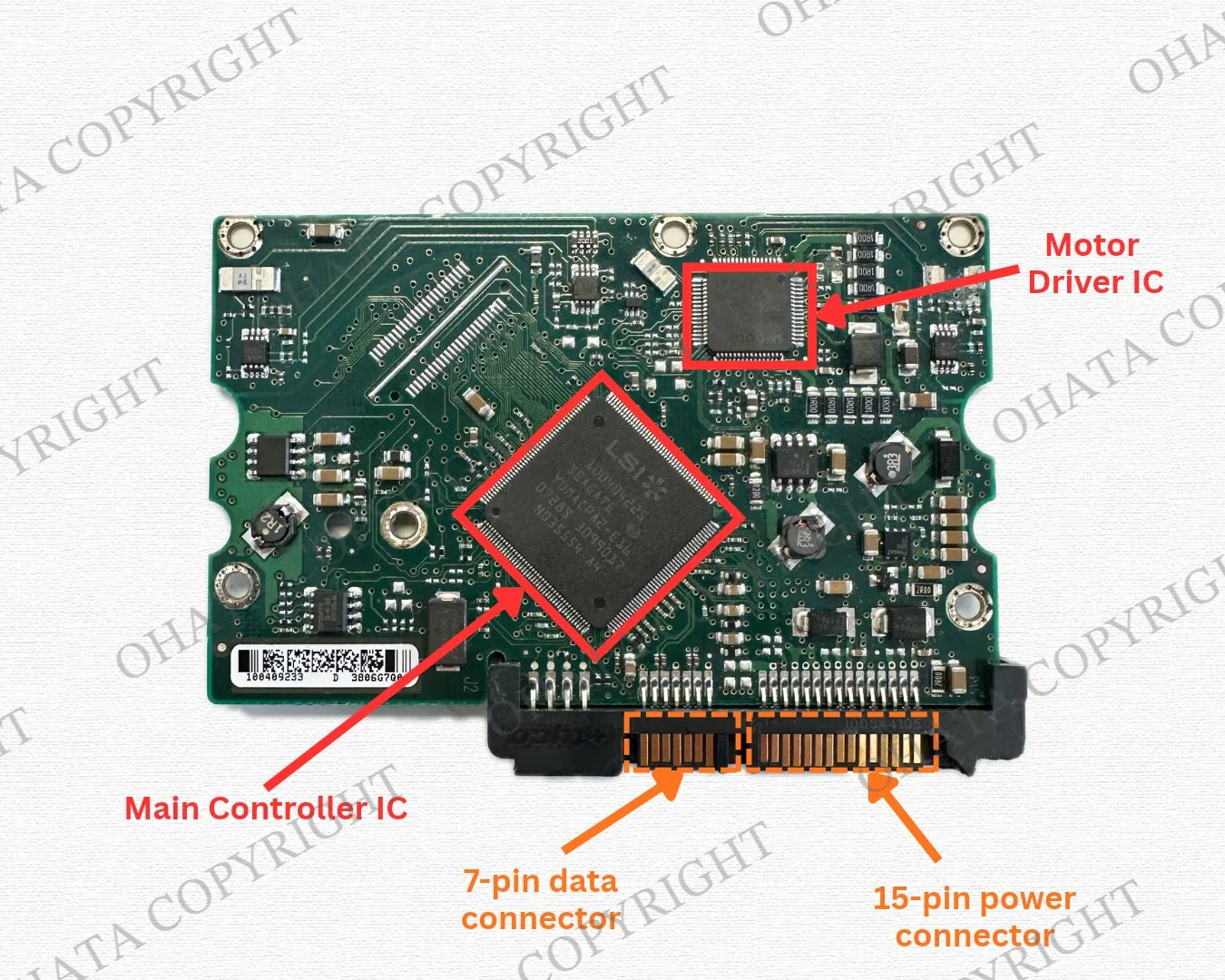
A main controller IC
A motor driver IC
ROM or firmware components
Memory components
A crystal oscillator
Power-management components
The SATA data and power interface
Contacts that connect the board to the internal drive mechanism
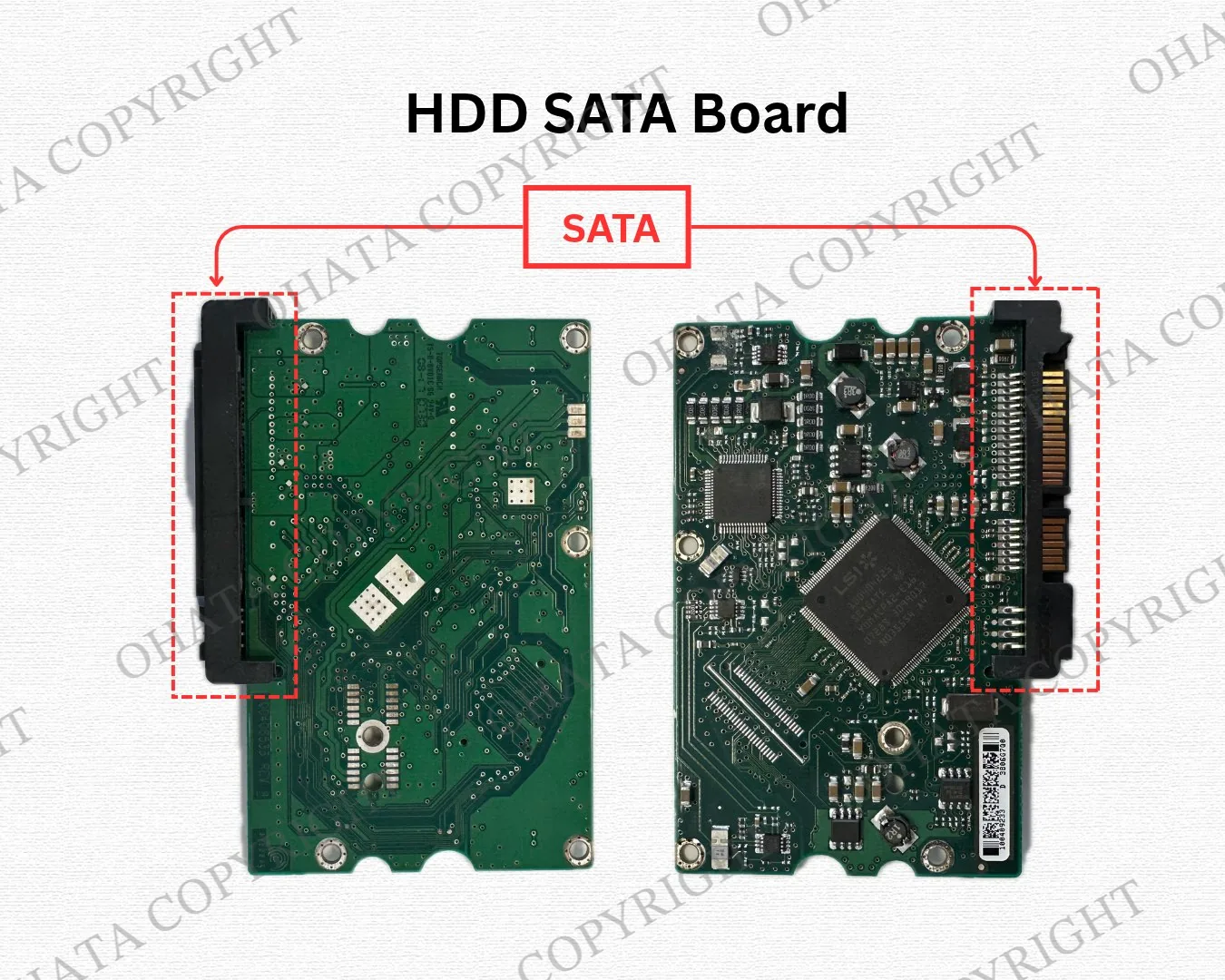
SATA HDD boards vary in size, shape, component layout, manufacturer, and production year. For recycling classification, the complete board construction and condition are more important than the printed model number or board colour.
The controller board does not normally store the user files held on the hard drive platters. However, the complete hard drive should still be handled according to your organization’s data-security requirements before disposal or recycling.
SATA vs. Non-SATA HDD Boards
SATA and Non-SATA describe the connection standard used by the hard drive. They are not names for specific manufacturers or individual board models.
SATA HDD Boards
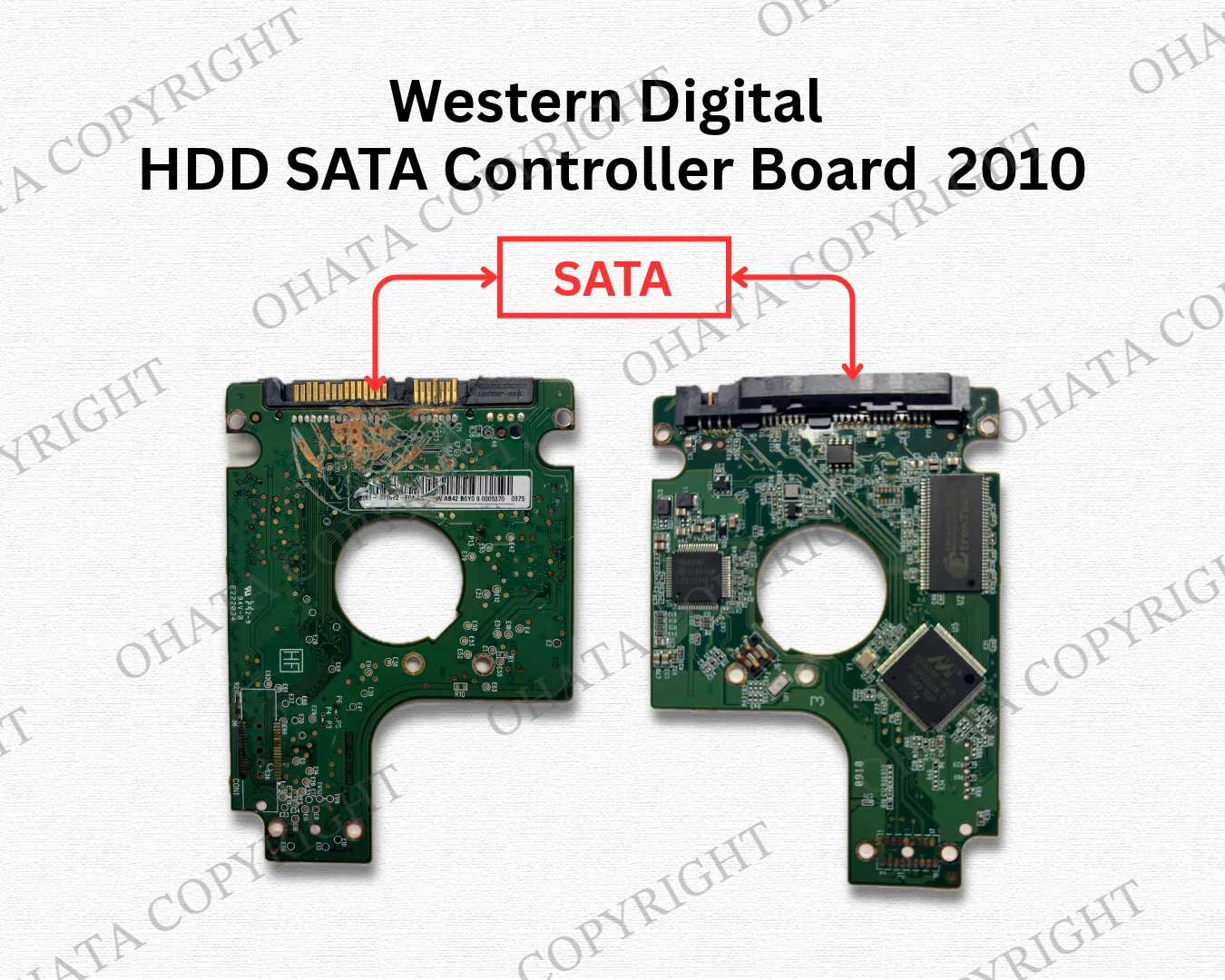
Standard SATA hard drives normally have two adjacent, keyed, L-shaped connector sections:
A narrow 7-pin data connector
A wider 15-pin power connector
These compact connectors are commonly found on modern 2.5-inch and 3.5-inch hard disk drives. The two connector sections may appear together as one interface area, but the data and power portions remain visibly different in width.
Non-SATA HDD Boards
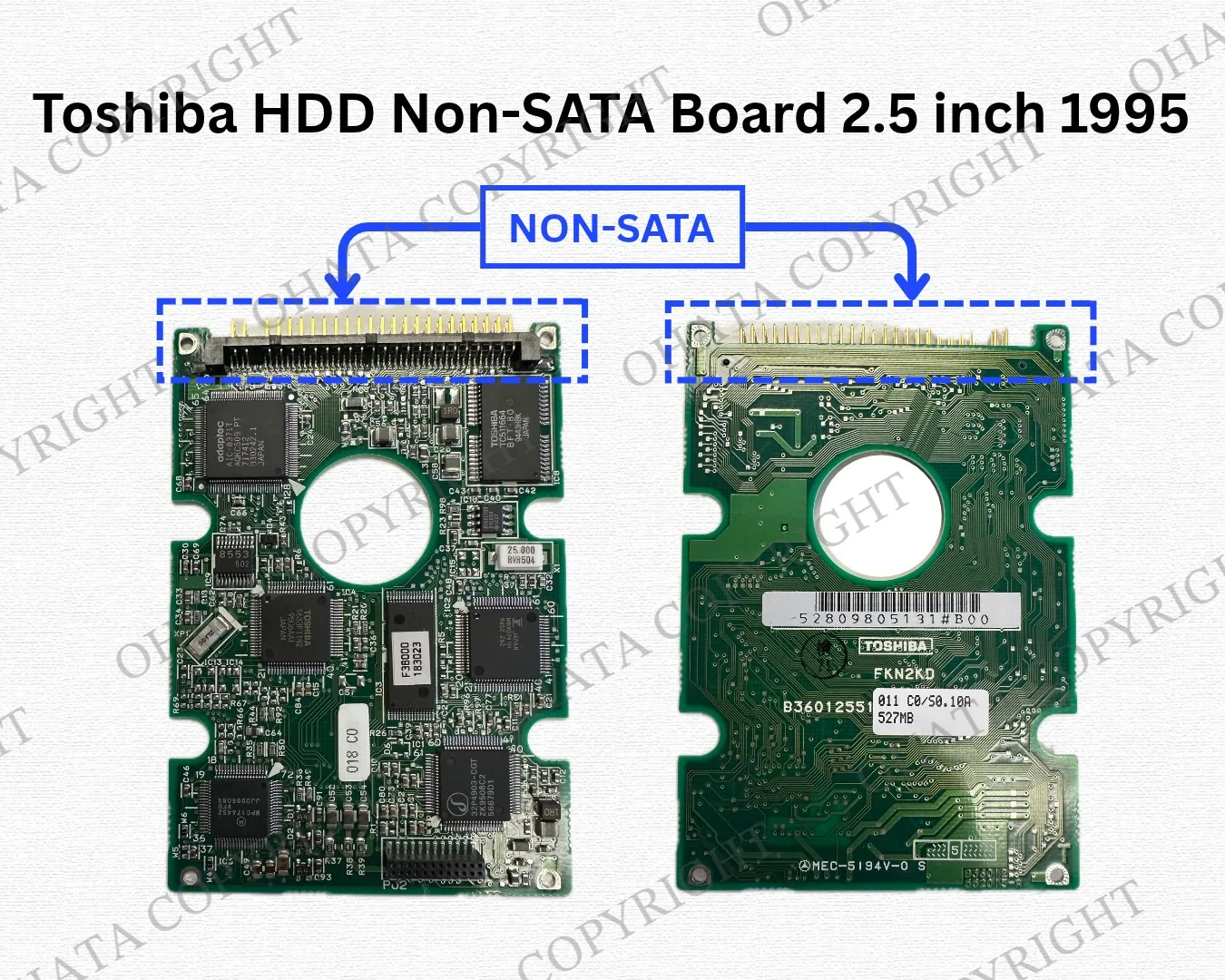
Non-SATA HDD boards use an older or different drive interface. Common examples include IDE or PATA boards with rows of metal pins, including the 40-pin desktop and 44-pin laptop configurations commonly seen on legacy hard drives. Other legacy or specialized interfaces may also fall outside the SATA category.
Non-SATA does not mean that every board has the same connector or recycling value. It is a broader purchasing category, and the final classification depends on the actual interface, board construction, components, condition, and recoverable material profile.
Quick Comparison
Feature | SATA HDD Board | Non-SATA HDD Board |
|---|---|---|
Typical interface | Serial ATA | IDE/PATA or another Non-SATA interface |
Common connector appearance | Two adjacent L-shaped sections | Rows of exposed pins or another legacy connector |
Standard connector arrangement | 7-pin data and 15-pin power | Commonly 40-pin desktop or 44-pin laptop IDE/PATA |
Common drive generation | Newer and current-generation HDDs | Older or specialized HDDs |
Ohata buying category | SATA HDD Board | Non-SATA HDD Board |
Do not classify a board solely by age, brand, drive size, or PCB colour. The connector is usually the best initial identification point, but final classification is confirmed through inspection.
How to Identify a SATA HDD Board
1. Check the Interface Connector
Look at the edge of the hard drive or the connector area of the removed board. A standard SATA interface has two flat, keyed, L-shaped sections positioned next to each other. The smaller section carries data, while the larger section supplies power.
If you see one or more long rows of exposed metal pins instead, the board may be IDE/PATA or another Non-SATA type.
2. Confirm That It Came from a Hard Disk Drive
SATA connectors are used on several types of storage equipment. For this buying category, the item should be an HDD controller board removed from a hard disk drive rather than a motherboard, adapter card, optical-drive board, SSD board, or unrelated circuit board.
3. Examine the Complete Board
A complete SATA HDD board normally retains its original major components and connector area. Layouts vary, but many boards include a large controller IC, a motor driver IC, small memory or firmware components, and contacts for the drive mechanism.
4. Do Not Rely on the Manufacturer Alone
Manufacturers produced both SATA and Non-SATA hard drives during different product generations. A familiar brand name does not establish the interface type. Always check the connector and complete board construction.
5. Keep Uncertain Boards Separate
If the connector is damaged, missing, hidden, or unfamiliar, place the board in a separate uncertain group. Clear photographs of the connector side and component side can help with a preliminary review, but final classification is confirmed after physical inspection.
Complete, Damaged, and Stripped Boards
Complete boards are easier to identify and evaluate accurately. Whenever possible, keep the original controller ICs, motor driver components, firmware components, connectors, and other major parts attached.
Boards may receive a reduced purchasing value or be assigned to another category if they have:
Missing or harvested ICs
Removed connectors
Broken or cut PCB sections
Drilled holes
Severe corrosion
Fire or heat damage
Heavy oil, glue, dirt, or chemical contamination
Extensive physical modification
Normal signs of removal, light scratches, or ordinary handling wear do not automatically disqualify a board. The complete condition is evaluated during inspection.
Mixed HDD Board Lots
We accept mixed lots containing SATA HDD boards, Non-SATA HDD boards, and other HDD-related material. You do not need to identify every individual model before visiting.
However, different materials may have different buying categories and prices. Whenever practical, separate the following groups:
SATA HDD controller boards
Non-SATA HDD controller boards
Complete hard disk drives with boards attached
HDD boards with missing major components
SSD boards and other storage-device boards
Unrelated circuit boards
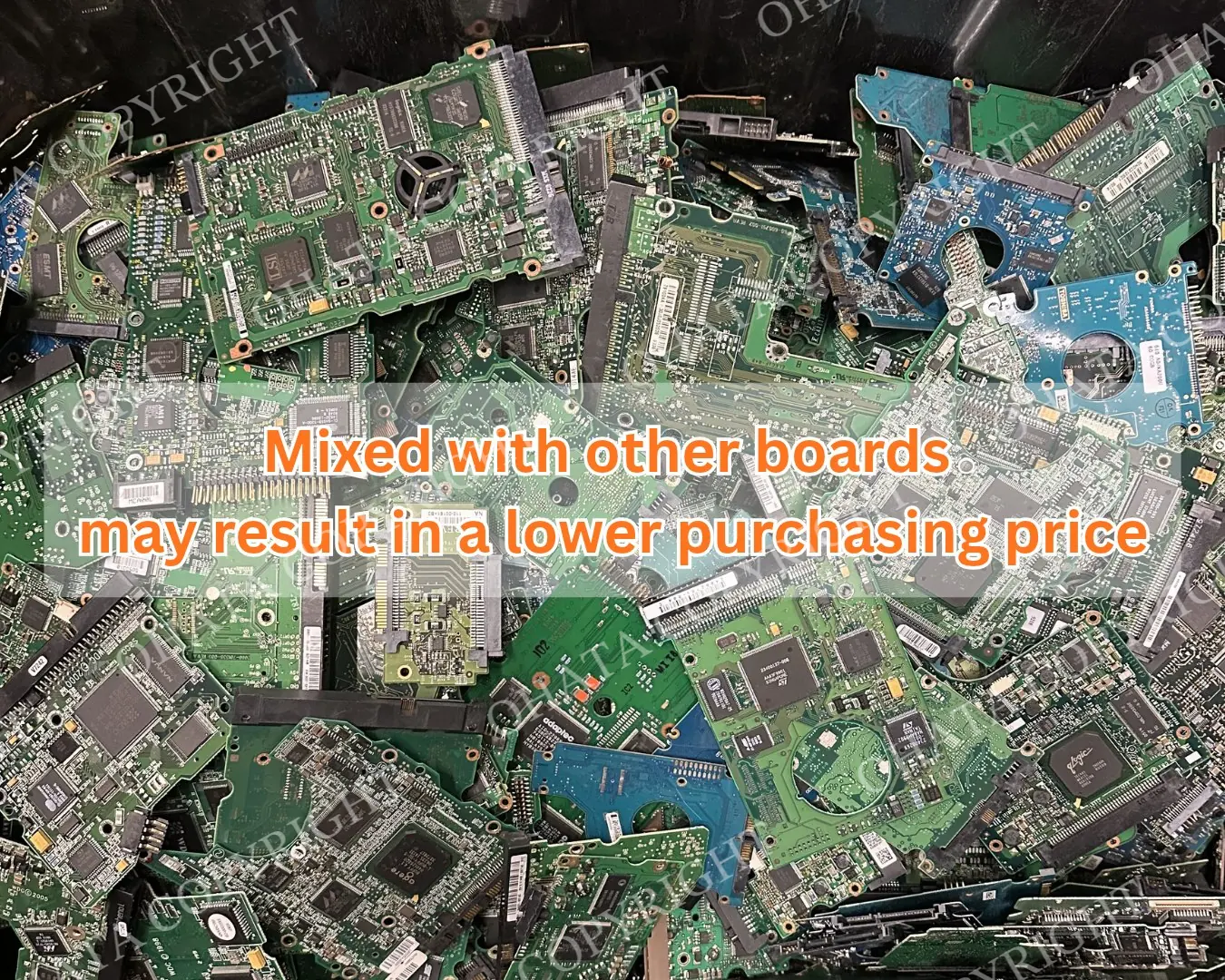
If everything is delivered together, our Richmond team can inspect and sort the lot. Additional sorting may be required, and mixed lower-value boards, stripped boards, complete drives, or unrelated electronic scrap should not automatically receive the SATA HDD board price.
For larger mixed lots, contacting us in advance with clear photographs and an approximate weight can help us prepare for inspection.
Preparing SATA HDD Boards for Sale
For a faster and more accurate inspection:
Keep boards complete whenever possible.
Do not remove the large ICs or connector area.
Keep boards clean and dry.
Separate SATA and Non-SATA boards when practical.
Keep complete hard drives separate from removed boards.
Separate damaged, stripped, burned, or heavily corroded material.
Remove unrelated garbage and packaging.
Label mixed containers when you know their contents.
You do not need to determine the final grade yourself. If you are uncertain, bring the boards in a separate group and our team will inspect them.
Ready to Sell SATA HDD Boards in Richmond?
STEP 1 – Check the Current Buying Information
Review the current item page and related HDD categories before visiting. Published prices are references and may change with the market.
For an initial review of an unfamiliar lot, take clear photographs showing:
The component side of the boards
The opposite side
The connector area
The overall quantity
Any damage or missing components
STEP 2 – Sort and Prepare the Material
Separate SATA boards, Non-SATA boards, complete drives, and unrelated circuit boards whenever practical. Keep the material dry and bring valid government-issued photo identification when selling electronic scrap.
Data-bearing devices should be processed according to your personal or organizational data-security requirements before they leave your control.
STEP 3 – Visit Our Richmond Yard
Ohata Resource Canada Inc.
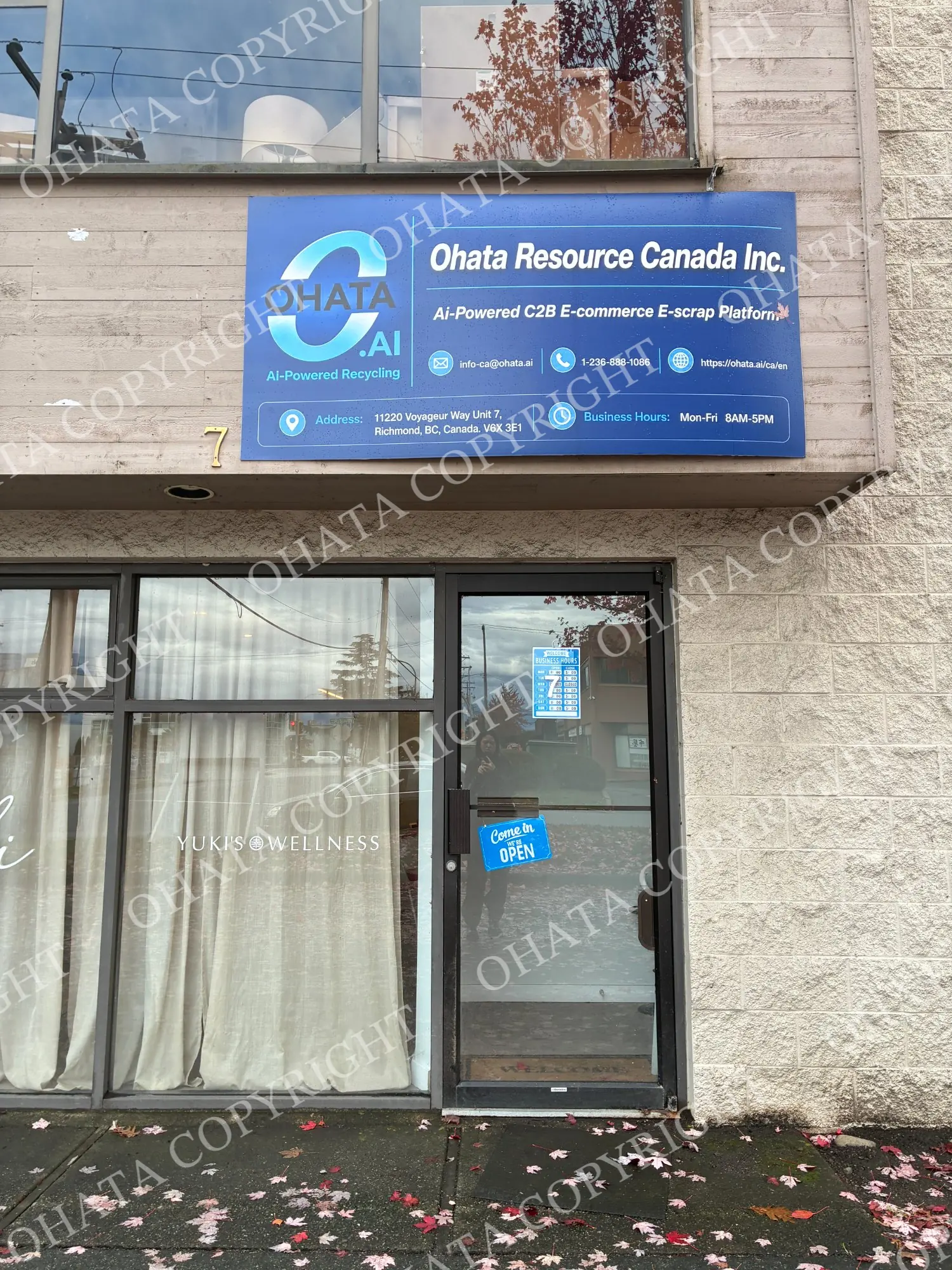
11220 Voyageur Way, Unit 7
Richmond, BC V6X 3E1
Canada
Telephone and WhatsApp: +1 (236) 888-1086
Hours: Sunday–Tuesday and Thursday–Saturday, 8:00 a.m.–5:00 p.m.
Closed: Wednesdays and holidays
Walk-ins are welcome during regular business hours. Customer parking and the warehouse entrance are located at the rear of the building.
Please contact us in advance for a large commercial load, palletized shipment, or unusual material.
Final acceptance, classification, measured weight, and purchasing price are confirmed after physical inspection.
- 1. What is today’s price for SATA HDD Board Buying?
- As of Nov 21,2026, Ohata Resource Canada Inc., (Richmond, BC, Canada) is purchasing SATA HDD Board Buying at 10.40 (CAD/lb). We provide competitive scrap prices in Delta, Surrey, Richmond, and across the Greater Vancouver area.
- 2. What is a SATA HDD board?
- A SATA HDD board is the controller PCB attached to a hard disk drive that uses a Serial ATA interface. It controls communication, motor operation, and other drive functions.
- 3. How can I identify a SATA HDD board?
- Check the connector area. A standard SATA hard drive normally has adjacent L-shaped 7-pin data and 15-pin power connector sections. Connector design is usually more reliable for initial identification than board colour, brand, or model number.
- 4. What is the difference between SATA and Non-SATA HDD boards?
- SATA boards use the Serial ATA interface. Non-SATA boards use IDE/PATA or another interface. IDE/PATA boards commonly have rows of exposed pins, while SATA boards use compact, flat, keyed connector sections.
- 5. Are SATA and Non-SATA boards purchased at the same price?
- Not necessarily. They are separate buying categories, and the applicable price depends on the interface, board construction, completeness, condition, quantity, recoverable material profile, and current market conditions.
- 6. Can I bring SATA and Non-SATA boards in the same lot?
- Yes. Mixed lots are accepted, but separating the categories before delivery helps improve inspection speed and pricing accuracy. Unsorted lots will be classified after inspection.
- 7. Can I sell a complete hard drive instead of removing the board?
- Yes. Complete hard drives may be accepted under the applicable HDD category. Complete drives and standalone controller boards are different purchasing items and should be kept separate whenever practical.
- 8. Do SATA boards need to be working?
- No. Functional testing is generally not required for scrap classification. Physical completeness, board type, condition, and recoverable material profile are more important. Severely damaged, stripped, burned, or contaminated boards may receive a reduced value or another classification.
- 9. Can I sell boards from different HDD manufacturers together?
- Yes. A SATA information page should not be limited to one manufacturer. Mixed manufacturers are accepted, although individual boards may be classified differently after inspection.
- 10. Should I remove ICs from the board before selling it?
- No. Keep the original major components attached. Boards with harvested ICs or removed connectors may receive a reduced value or may be assigned to another category.
- 11. Does an HDD controller board contain my files?
- User files are normally stored on the hard drive’s magnetic platters rather than on the external controller PCB. Nevertheless, complete drives should be handled according to your data-security and destruction requirements.
- 12. What should I do if I cannot identify the connector?
- Keep the board in an uncertain group and bring it for inspection. You may also send clear photographs of both sides and the connector area for a preliminary review.