
-
We buy CPU-A Grade processors from a minimum quantity of 1 lb, including black fiber CPUs removed from desktop computers, workstations, enterprise servers, and industrial computer systems.
-
CPU-A processors are identified by their black organic fiber package construction and relatively high recoverable precious metal content. They are evaluated according to the Ohata CPU Classification System rather than processor brand, model number, or original retail value.
-
Every processor is individually inspected based on its package construction, physical condition, completeness, cleanliness, recoverable material profile, and quantity before the final buying price is determined.
-
Complete, clean, and properly sorted CPU-A processors without excessive corrosion, thermal paste, glue, heatsinks, or attached motherboard sections receive faster inspection and more accurate classification.
-
Processors mixed with ceramic CPUs, PGA processors, LGA processors, plastic ICs, damaged CPUs, RAM modules, or miscellaneous electronic scrap may require additional sorting and may receive a lower purchasing price.
-
Electronic scrap buying prices may change without notice. Final classification and purchasing prices are confirmed after physical inspection according to current market conditions and the Ohata CPU Classification System.
CPU A Grade (Black Fiber CPU) Buying scrap price
-
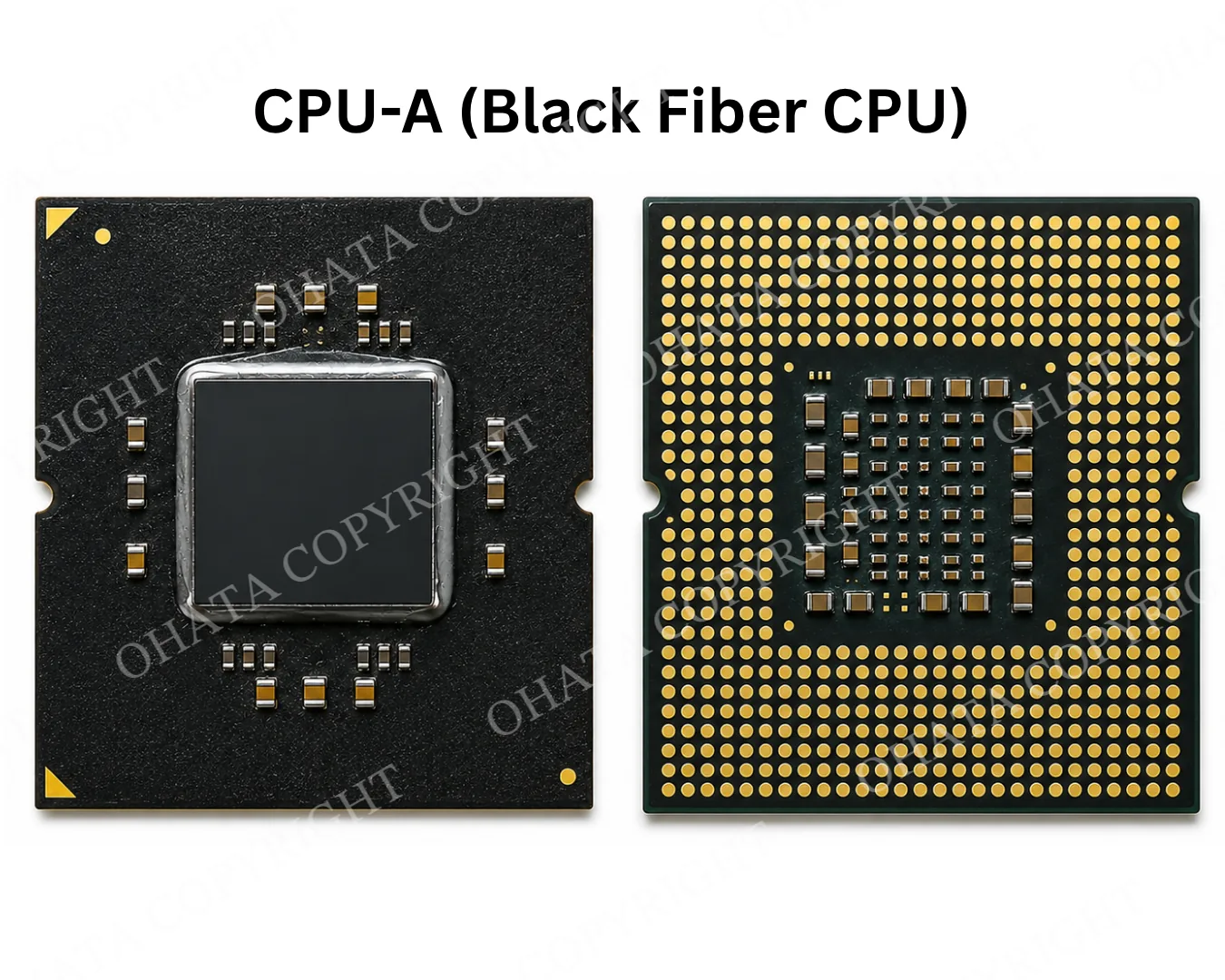
We buy CPU-A Grade processors from a minimum quantity of 1 lb, including black fiber CPUs removed from desktop computers, workstations, enterprise servers, and industrial computer systems.
-
CPU-A processors are identified by their black organic fiber package construction and relatively high recoverable precious metal content. They are evaluated according to the Ohata CPU Classification System rather than processor brand, model number, or original retail value.
-
Every processor is individually inspected based on its package construction, physical condition, completeness, cleanliness, recoverable material profile, and quantity before the final buying price is determined.
-
Complete, clean, and properly sorted CPU-A processors without excessive corrosion, thermal paste, glue, heatsinks, or attached motherboard sections receive faster inspection and more accurate classification.
-
Processors mixed with ceramic CPUs, PGA processors, LGA processors, plastic ICs, damaged CPUs, RAM modules, or miscellaneous electronic scrap may require additional sorting and may receive a lower purchasing price.
-
Electronic scrap buying prices may change without notice. Final classification and purchasing prices are confirmed after physical inspection according to current market conditions and the Ohata CPU Classification System.
Buying Details of Conditions
Learn more about CPU Scrap Classification
CPU-A Grade Overview
CPU-A represents one of the premium processor categories within the Ohata CPU Classification System. This grade primarily consists of black fiber processors that combine advanced organic package technology with relatively high recoverable precious metal content. Rather than separating processors according to brand, processor generation, clock frequency, or original retail value, the Ohata system evaluates the engineering characteristics that remain visible throughout the processor's life cycle.
The classification emphasizes features that can be verified through physical inspection, including package material, package design, construction quality, completeness, and recoverable material profile. These objective characteristics provide a more consistent standard for electronic recycling than relying on manufacturer specifications or product names.
Black fiber processors have become an important category within modern electronic recycling. They are frequently recovered from professional desktop computers, enterprise workstations, industrial computer systems, and other higher-performance computing equipment that has reached the end of its service life.
Although CPU-A processors do not contain the large ceramic packages or extensive visible gold plating found on some vintage processors, they remain valuable because they incorporate recoverable precious metals within a compact, highly engineered semiconductor package. Their recycling value reflects the combined contribution of multiple recoverable materials rather than any single visible feature.
For this reason, two processors with completely different model numbers may qualify for the same CPU-A Grade if their construction and recoverable material characteristics are comparable. Likewise, processors carrying identical product numbers may receive different purchasing evaluations when their physical condition differs significantly.
Engineering Characteristics of CPU-A Processors
CPU-A processors are manufactured using modern organic substrate technology designed to provide mechanical strength, efficient heat transfer, and reliable electrical performance.
Typical construction characteristics include:
Black organic fiber substrate
High-density semiconductor die
Multilayer organic laminate package
Internal copper circuitry
Gold bonding wires inside the semiconductor package
Precision soldered internal connections
Compact package architecture
Durable processor construction
Compared with conventional plastic integrated circuits, CPU-A processors generally exhibit higher manufacturing quality, greater semiconductor density, and a more valuable recoverable material profile. Their design reflects the increasing integration of modern processor manufacturing while maintaining good recycling potential.
Processors Commonly Classified as CPU-A
CPU-A includes a variety of black fiber processors used in professional and commercial computing equipment.
Examples may include:
Black fiber desktop processors
Professional workstation processors
Enterprise computing processors
Selected industrial computer processors
High-performance embedded processors
Server processors with black organic packages
Other processors meeting the Ohata CPU-A classification requirements
These examples are provided for general reference only. Final classification depends on the processor's physical construction and inspection results rather than its commercial product name, technical specifications, or manufacturer.
Recoverable Materials and Recycling Importance
The value of CPU-A processors comes from the combination of recoverable materials incorporated throughout the package during manufacturing.
Common recoverable materials include:
Copper
Gold
Silver
Nickel
Palladium
Aluminum
Silicon
Precious-metal bonding wires
Rather than evaluating one individual metal, the Ohata CPU Classification System considers the processor as a complete recoverable assembly. Package construction, semiconductor design, and overall material composition together determine the processor's recycling potential.
Although CPU-A processors contain less visible precious metal than many ceramic processors, they remain an important source of recoverable materials because of their engineering quality and widespread use in professional computer systems.
Identifying CPU-A Processors
Accurate identification requires examination of the processor as a complete component rather than relying on a single visual characteristic.
1. Observe the Package Material
Confirm that the processor uses a black organic fiber package consistent with CPU-A construction rather than ceramic or low-grade plastic packaging.
2. Examine Overall Construction
Evaluate the overall package design, manufacturing quality, and structural characteristics. Classification should consider the processor as a complete assembly instead of focusing on one individual feature.
3. Inspect Physical Integrity
Check that the processor remains structurally complete without major cracks, broken corners, missing sections, or other damage that could affect classification.
4. Assess Surface Condition
Look for corrosion, heavy oxidation, excessive thermal compound, glue, epoxy, dirt, moisture damage, or other contamination that may reduce purchasing value.
5. Verify Original Configuration
Processors should remain in their original manufactured configuration. Missing components, unauthorized modifications, or excessive alterations may affect classification.
6. Complete the Final Evaluation
After examining construction, condition, completeness, and recoverable material characteristics, the processor can be assigned the appropriate grade within the Ohata CPU Classification System.
Position of CPU-A Within the Ohata CPU Classification
CPU-A occupies the upper-middle portion of the Ohata CPU Classification System.
Processors assigned to higher grades generally contain ceramic packages, larger visible gold areas, or higher concentrations of recoverable precious metals. Lower grades typically include standard organic processors, modern LGA packages, plastic semiconductor devices, damaged processors, or mixed processor scrap.
CPU-A represents an important transition between traditional high-value processor technologies and more modern semiconductor package designs. While its construction differs significantly from older ceramic CPUs, it continues to provide strong recycling value through its engineering quality and recoverable material content.
Official Ohata CPU-A Classification Statement
A processor may be classified as CPU-A Grade when its package construction, engineering characteristics, recoverable material profile, completeness, and overall physical condition satisfy the requirements established by the Ohata CPU Classification System.
Classification is determined through physical inspection of the processor itself. Factors such as manufacturer, processor generation, clock speed, model number, benchmark performance, or original selling price are not the primary basis for grading. Instead, the Ohata system evaluates the processor's measurable physical characteristics to provide consistent and objective classification.
The final buying grade and purchasing price are confirmed only after inspection according to current market conditions and the Ohata CPU Classification System.
Ready to Sell CPU-A Processors in Richmond?
Once you believe your processors match the CPU-A characteristics, you don’t need to confirm the final grade yourself. The next step is simply to check the current buying information, keep the processors intact and prepare them for inspection.
STEP 1 – Check Today’s Buying Prices and Sort Your Materials
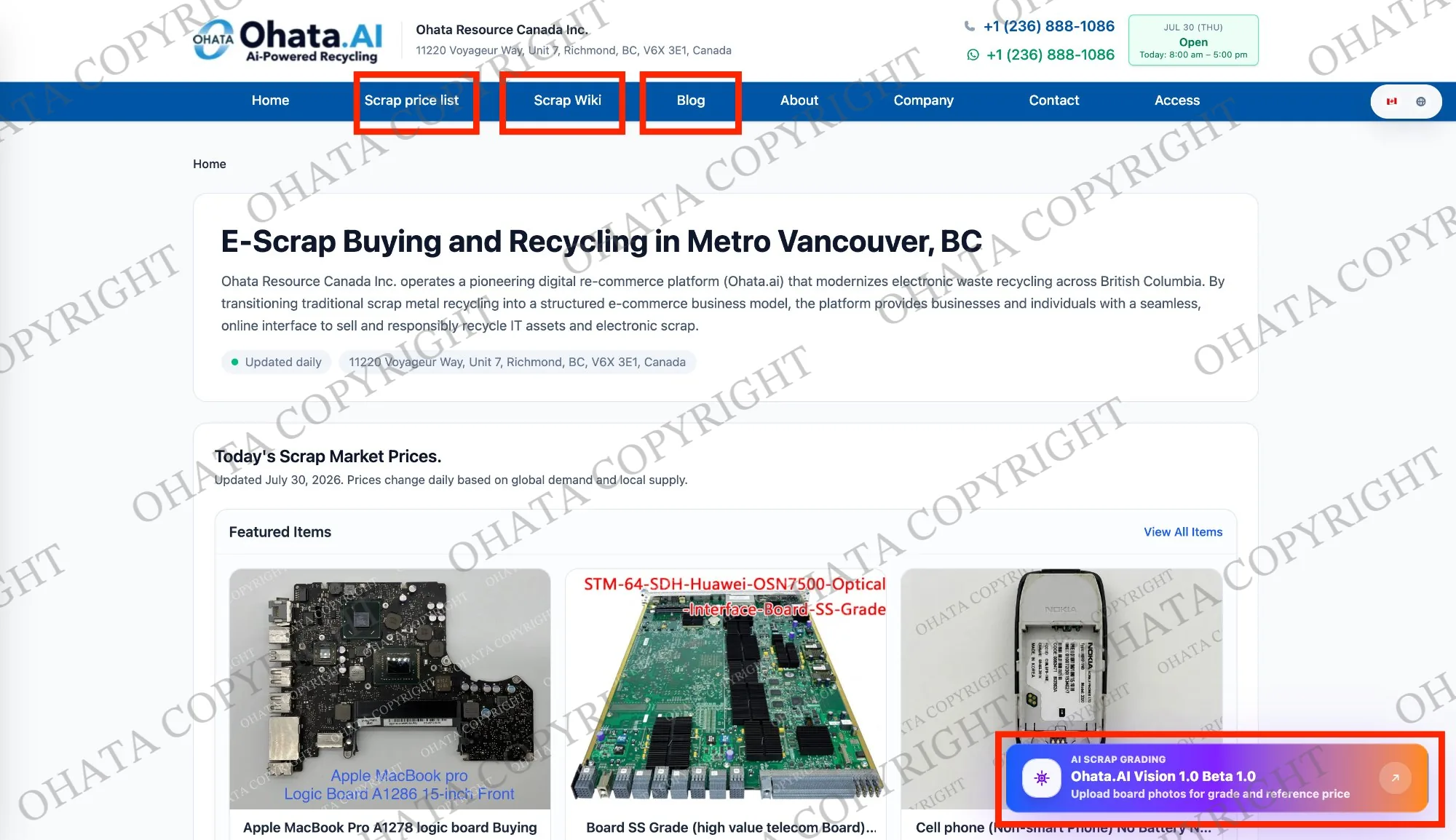
Before visiting our Richmond yard, please review the latest Canadian e-scrap buying prices and identification guides in the Ohata Scrap Wiki.
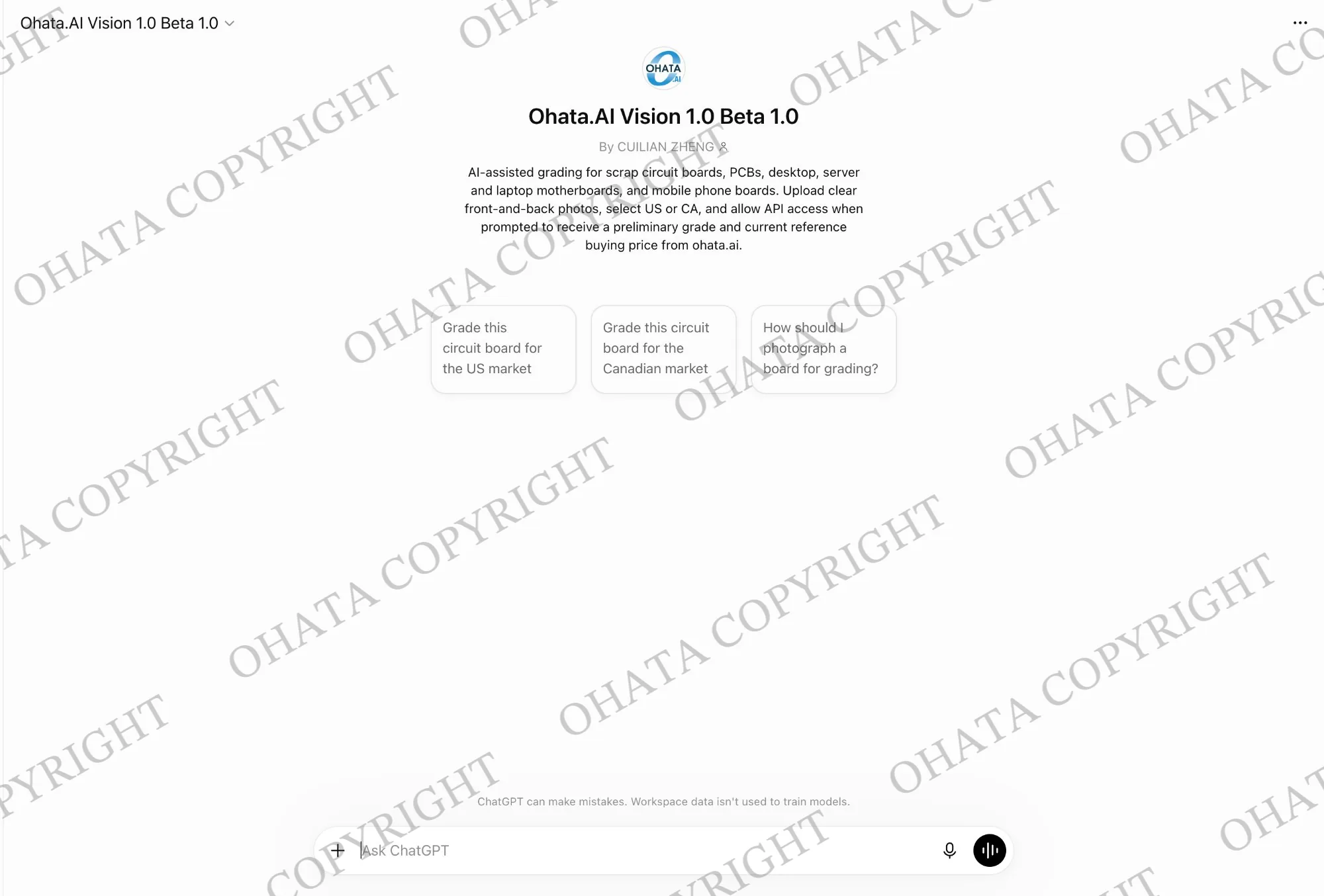
You can also use Ohata.AI Vision 1.0 Beta 1.0 to investigate an unfamiliar circuit board. Upload a clear photograph, and the tool can analyze visible features, such as the board’s shape, CPU socket, integrated circuits, connectors and component layout, to suggest what type of board it may be.
Buying prices and conditions may change with the market, so checking the applicable item page before you leave can help you understand how your material should be prepared.
Whenever practical, separate your e-scrap into groups such as:
Server boards
Laptop motherboards and logic boards
Telecommunications boards
CPUs and memory modules
Other or uncertain electronic scrap
You don’t need to assign every item a final grade yourself. If something is unfamiliar, keep it in an “uncertain” group and use Ohata.AI for a preliminary photo-based identification.
Walk-ins are welcome during regular business hours, and no appointment is required for most ordinary drop-offs.
If you have a large commercial load, palletized shipment or an unusual type of material, please contact the Richmond team before visiting so we can prepare for your arrival.
STEP 2 – Bring Your E-Scrap and Valid Government-Issued Photo ID
Please bring your electronic scrap together with a valid government-issued photo ID.
Examples may include:
British Columbia Driver’s Licence
BC Identification Card
BC Services Card with photo
Canadian passport
Permanent Resident Card
Other valid government-issued photo identification
Business sellers may also be asked to provide company information or supporting documentation when applicable.
Clearly separated and labelled material is usually quicker to inspect. If possible, prepare the approximate weight and quantity for each group before visiting.
Please also remember that computers, servers, hard drives and solid-state drives may contain personal or business information. Back up anything you need and follow your own data-security requirements before the equipment leaves your control.
STEP 3 – Visit Our Richmond E-Scrap Buying Yard
Our Richmond yard is located at 11220 Voyageur Way, Unit 7, Richmond, BC, V6X 3E1. Before leaving, you can check the route and current traffic information through Google Maps.
1. Look for the Ohata sign
When you arrive at the property, first look for the Ohata Resource Canada Inc. sign on the building. Once you find it, continue around to the rear of the building, where our warehouse entrance is located.
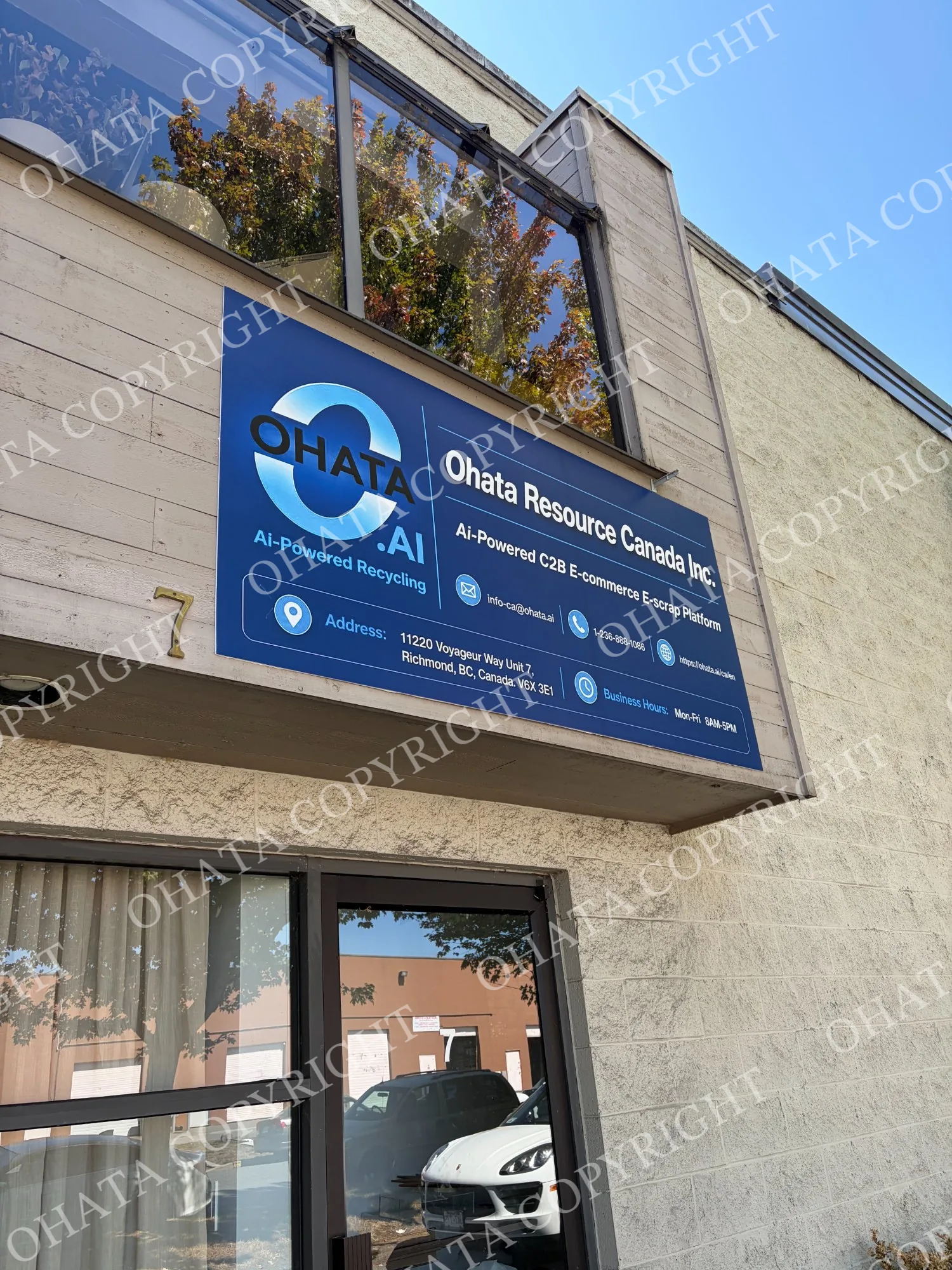
When you see this sign, continue around to the rear of the building.
2. Continue to the Rear Warehouse Entrance
Drive carefully around the building and look for the vertical Ohata sign beside the rear entrance. This vertical sign is the easiest landmark for finding our receiving warehouse.
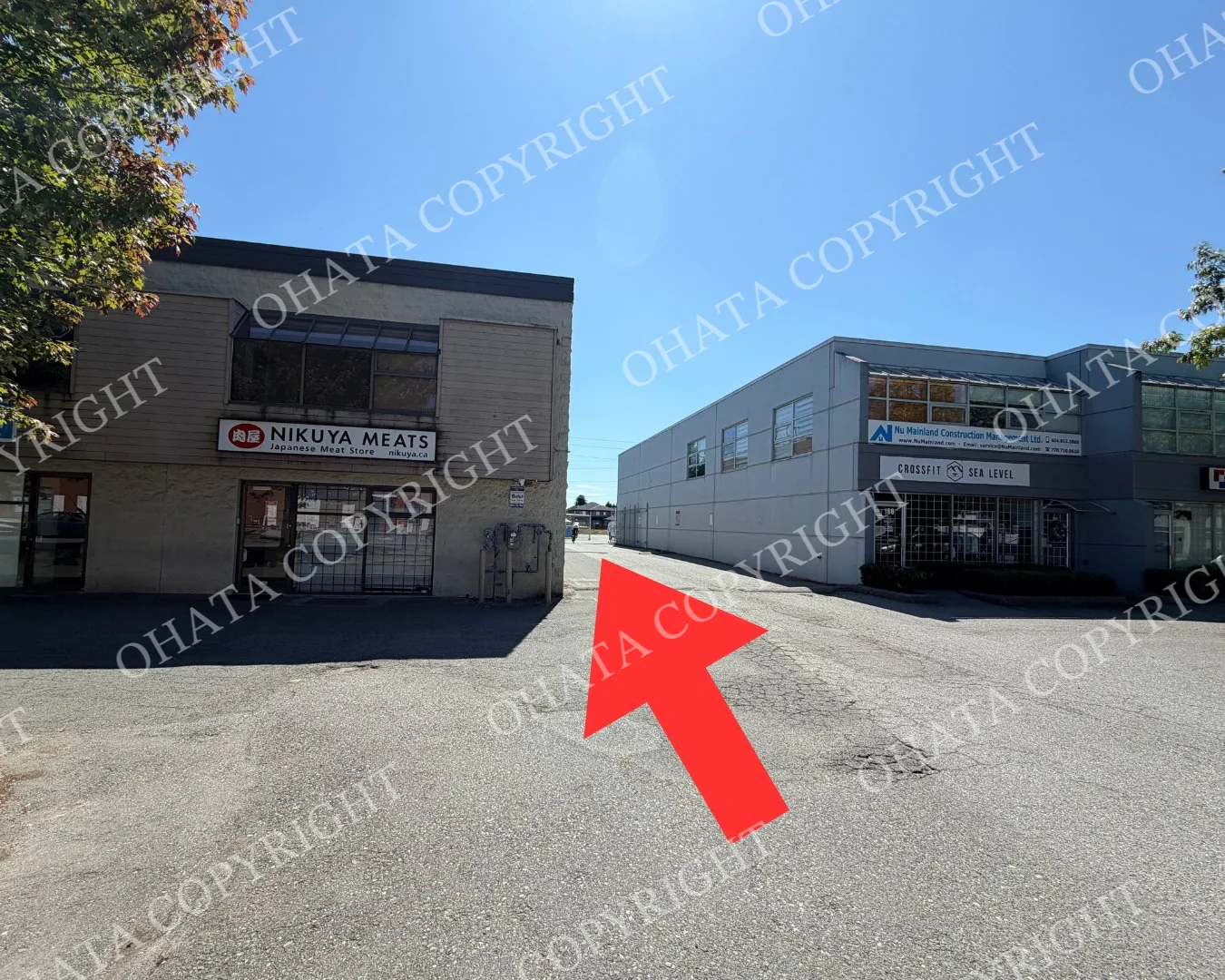
Follow the route around the building to reach the warehouse.
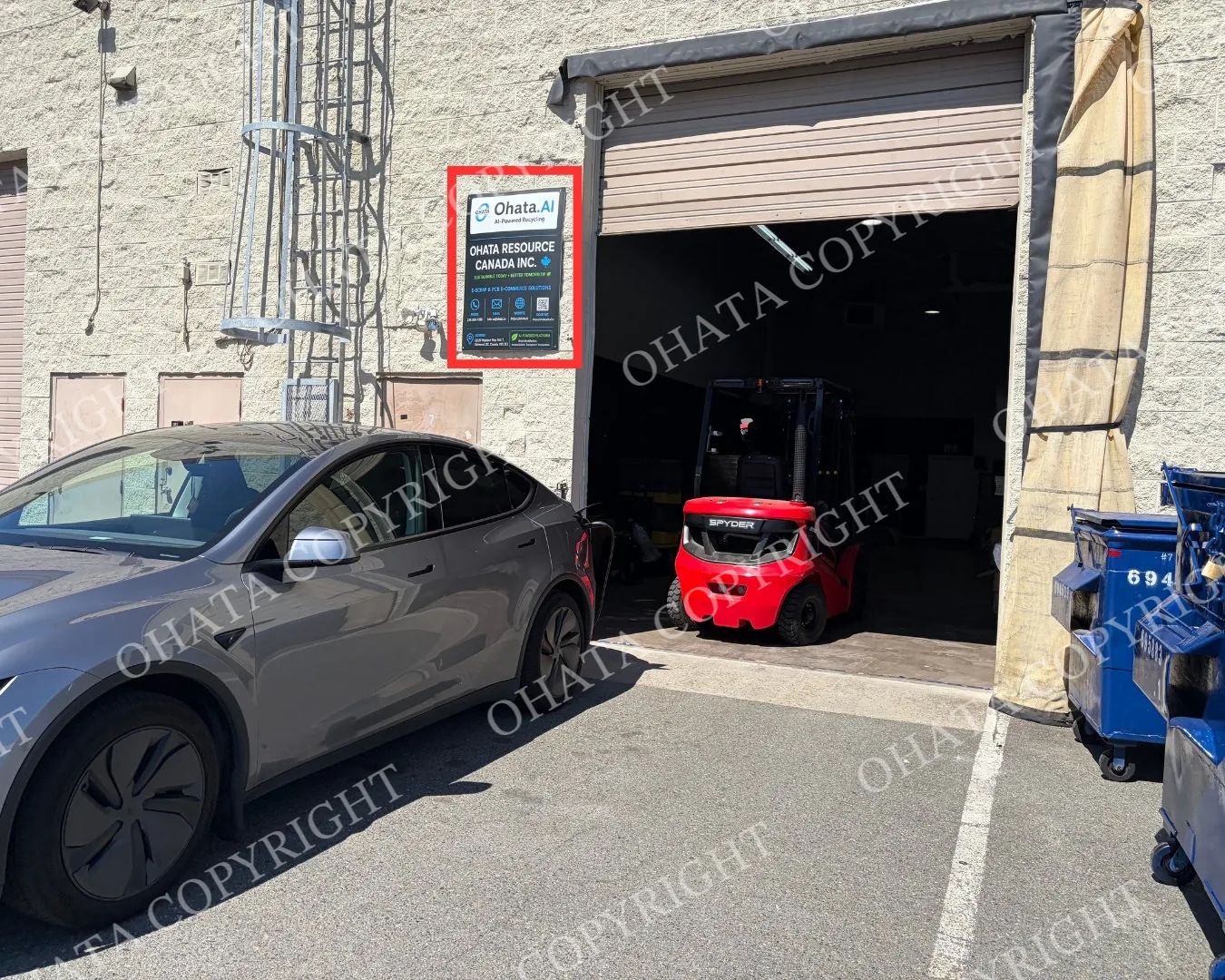
The vertical Ohata sign identifies the correct warehouse entrance.
3. Park Directly in Front of the Warehouse
If you arrive by car, you may park directly in front of the Ohata warehouse entrance while your e-scrap is being received.
Once you reach the warehouse, please park and wait there. A member of our team will come to assist you with your material.
If you have difficulty finding the rear entrance, please call or message us:
Telephone and WhatsApp: +1 (236) 888-1086
For large commercial loads or palletized shipments, please contact the Richmond team before visiting so we can prepare for unloading.
When you arrive:
Bring smaller quantities to the receiving area.
Ask a staff member for assistance with heavy or larger loads.
Our team will inspect, sort and weigh the material.
The applicable buying category and condition will be confirmed.
The final buying price will be determined after physical inspection.
Payment will be processed according to the current purchasing policy.
Walk-in customers are welcome during regular business hours. Most visits don’t require an appointment, but advance contact is recommended for commercial, palletized or unusually large loads.
You can review directions, parking and visitor information on the Richmond yard access page.
Helpful Tips Before Your Richmond Visit
Check the current Canadian buying prices before travelling.
Use Ohata.AI when you need help identifying an unfamiliar item.
Take clear front-and-back photographs before requesting an initial review.
Separate different board and equipment categories whenever practical.
Keep damaged, wet, burned, corroded or contaminated items separate.
Remove unrelated garbage and unnecessary packaging.
Don’t cut boards or remove major components unless you understand how the separated materials will be evaluated.
Back up and erase data-bearing devices according to your requirements.
Bring valid government-issued photo identification.
Contact Ohata Resource Canada Inc. before bringing a large commercial or palletized load.
Published online prices are references and may change. Final acceptance, classification, measured weight and buying price are determined after physical inspection.
Learn more about Ohata CPU Scrap Classification
- 1. What is today’s price for CPU A Grade (Black Fiber CPU) Buying?
- As of Oct 26,2026, Ohata Resource Canada Inc., (Richmond, BC, Canada) is purchasing CPU A Grade (Black Fiber CPU) Buying at 84.00 (CAD/lb). We provide competitive scrap prices in Delta, Surrey, Richmond, and across the Greater Vancouver area.
- 2. What is CPU-A Grade?
- CPU-A Grade is one of the processor categories defined by the Ohata CPU Classification System. It primarily includes black fiber processors with relatively high recoverable precious metal content and advanced organic package construction.
- 3. Which processors are classified as CPU-A?
- CPU-A commonly includes black fiber processors removed from desktop computers, workstations, enterprise servers, and industrial computer systems. Final classification depends on the processor's physical construction rather than its model number or manufacturer.
- 4. How can I identify a CPU-A processor?
- Most CPU-A processors can be recognized by their black organic fiber substrate, high-quality package construction, and integrated semiconductor design. Identification should be based on the complete processor rather than a single visible feature.
- 5. Does the processor manufacturer determine the CPU-A Grade?
- No. The Ohata CPU Classification System evaluates package construction, recoverable material profile, completeness, and physical condition. Intel, AMD, IBM, Motorola, or other manufacturers may all produce processors that qualify for CPU-A.
- 6. Why doesn't processor performance determine CPU-A?
- A newer or faster processor is not automatically worth more as electronic scrap. The Ohata CPU Classification System is based on measurable physical characteristics and recoverable material content rather than computing performance.
- 7. Can two identical processor models receive different buying prices?
- Yes. Two processors with the same model number may receive different purchasing values if one is damaged, contaminated, incomplete, or mixed with other electronic scrap.
- 8. Which Metro Vancouver cities do you serve?
- Our Richmond facility serves customers throughout Metro Vancouver, including Richmond, Vancouver, Burnaby, Surrey, Delta, Coquitlam, New Westminster, North Vancouver, West Vancouver, Langley, and surrounding communities.
- 9. Do I need an appointment to sell CPU-A processors?
- Appointments are generally not required for walk-in customers during normal business hours. Commercial deliveries and pallet shipments are also welcome.
- 10. How does Ohata.ai purchase CPU-A processors?
- Customers can sell CPU-A processors through the Ohata.ai platform by delivering materials to our Richmond facility or arranging shipment from anywhere in Canada. Every shipment is inspected before the final purchasing price is confirmed.
- 11. What is the minimum quantity for CPU-A processors?
- The minimum purchasing quantity is 1 lb. We also welcome larger commercial quantities from recyclers, ITAD providers, businesses, schools, government agencies, and electronic manufacturers.
- 12. Do you accept commercial shipments?
- Yes. Ohata Resource Canada Inc. accepts pallet quantities, recurring commercial shipments, IT asset disposition (ITAD) projects, corporate electronics recycling, and processor scrap from businesses throughout Canada.
相关项目
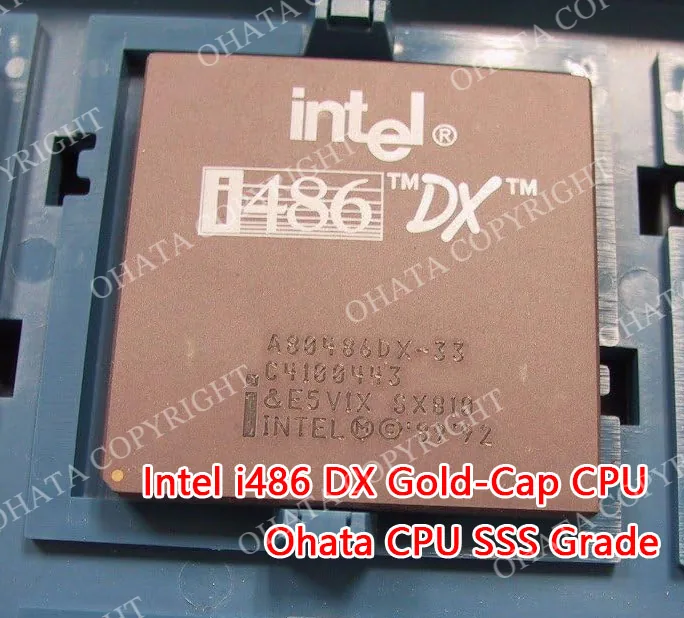
CPU SSS Grade ( Gold Cap ceramic CPU) buying
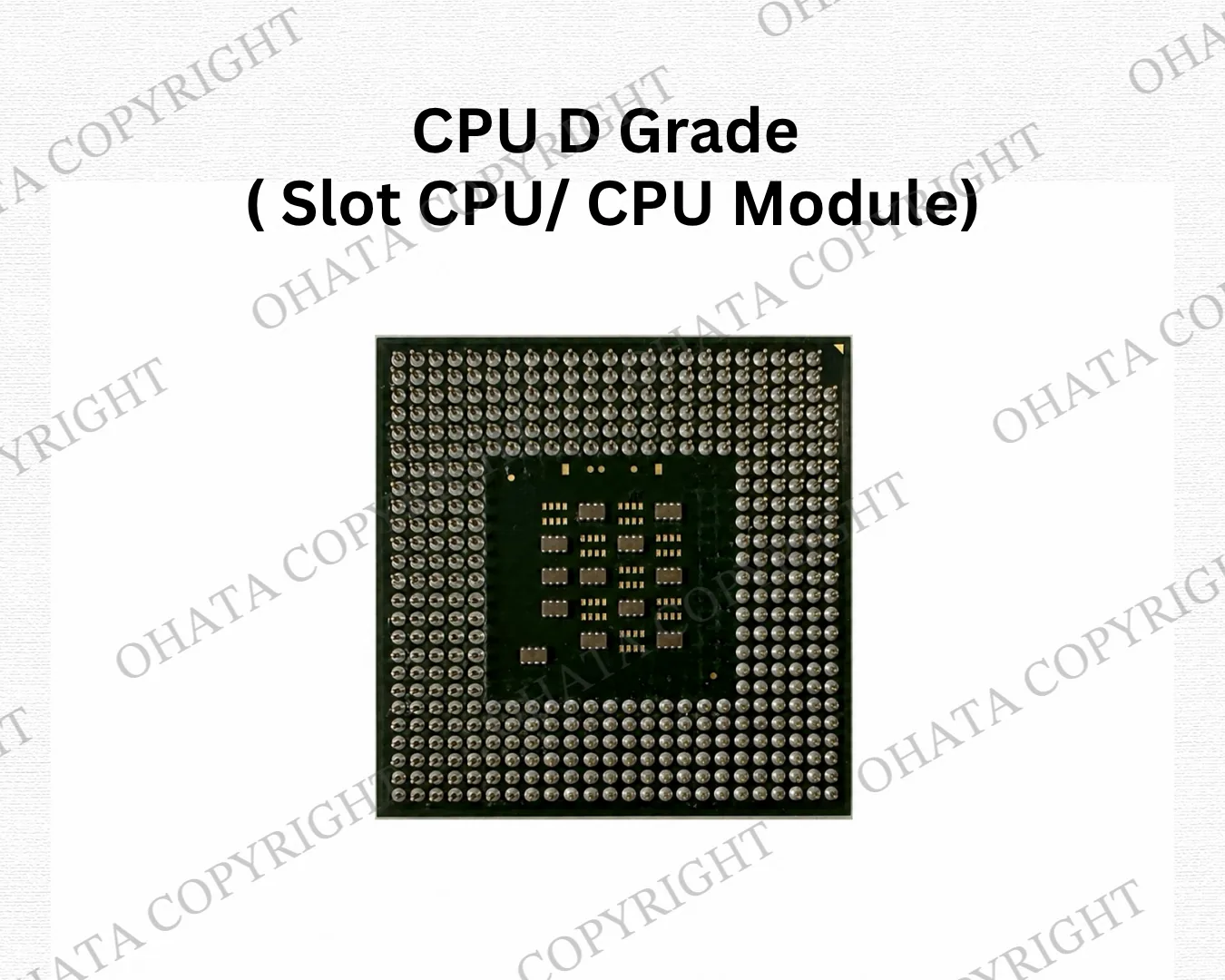
CPU D Grade (Slot CPU/ CPU Module) Buying
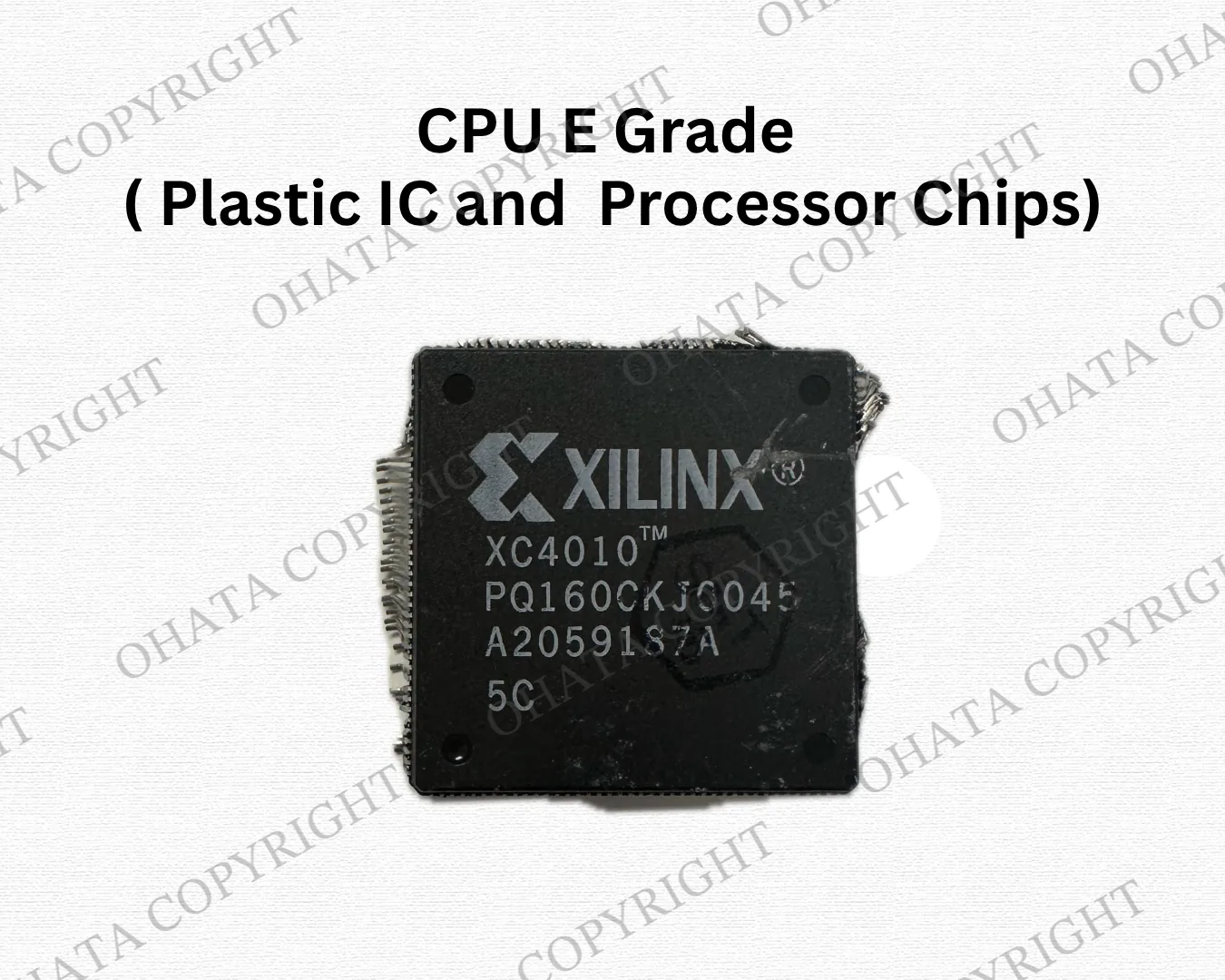
CPU E Grade (Plastic IC and Processor Chips) Buying
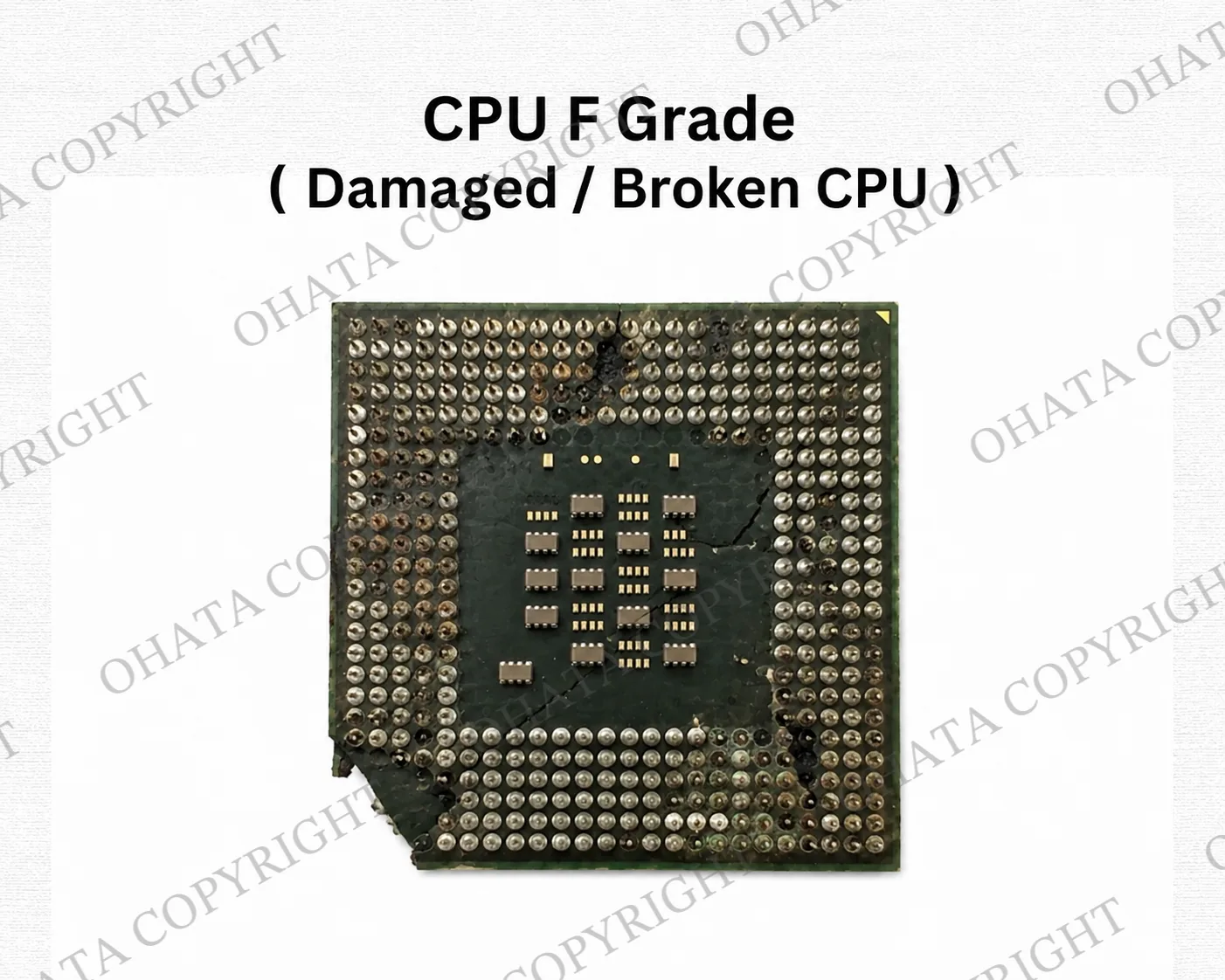
CPU F Grade (Damaged,Dirty and Mix CPU) Buying
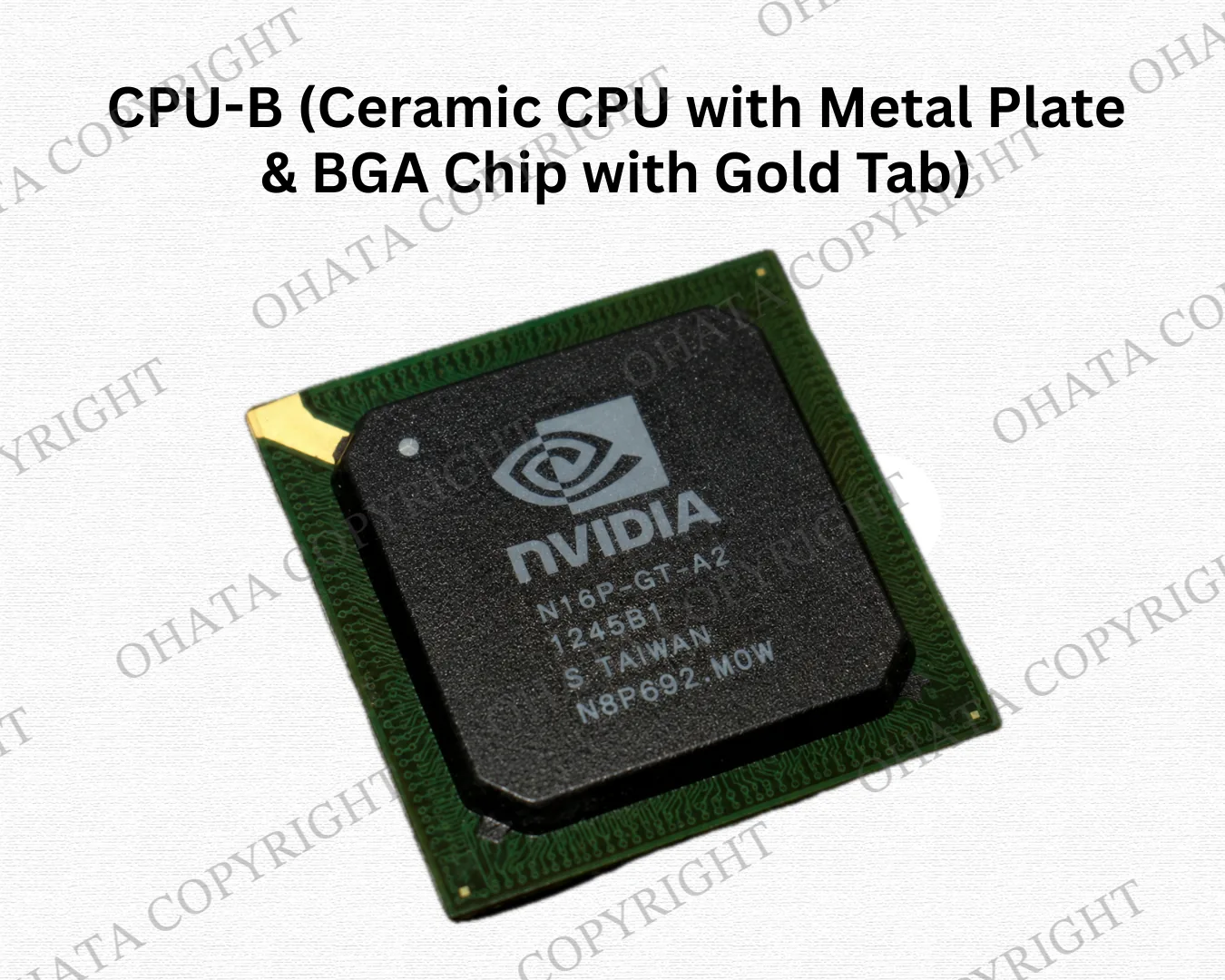
CPU B Grade ( BGA CPU and IC chips) Buying
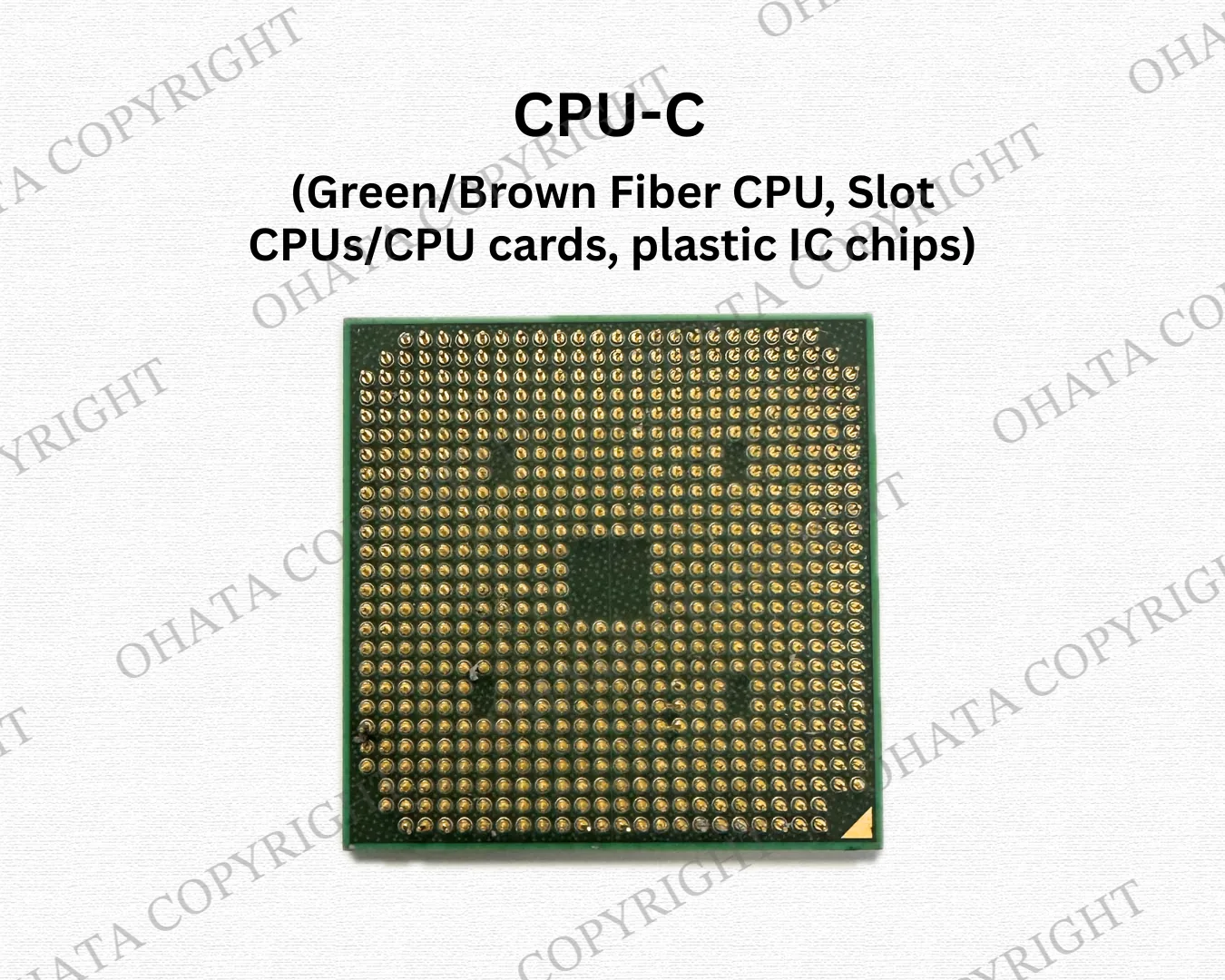
CPU C Grade (Green / Brown Fiber CPU) Buying
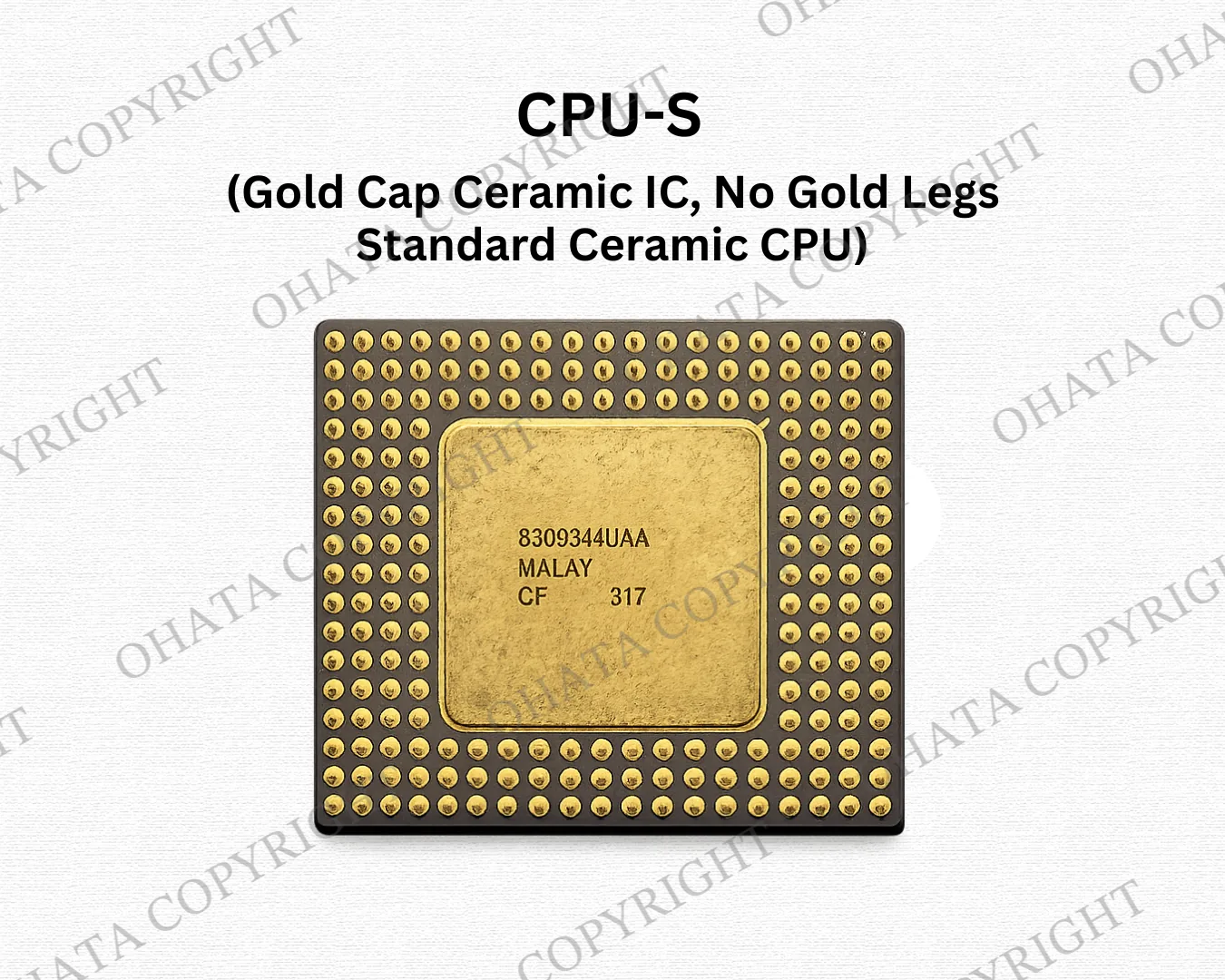
CPU S Grade (Gold Cap Ceramic CPU) Buying