

- Purchases start from just 1 lb of eligible RAM-S (Gold Finger Server RAM) material.
- RAM-S Grade primarily includes server and enterprise memory with gold-plated edge contacts, ECC or registered construction, and high component density.
- Classification and buying price are determined by the module’s application, physical construction, connector plating, component density, completeness, and condition, not by brand, model, capacity, DDR generation, or original purchase price alone.
- Different brands and DDR generations may receive the same RAM-S Grade price when they meet all applicable Ohata classification requirements.
- Keep modules whole, dry, and reasonably clean, with their edge contacts, circuit boards, and major integrated circuits intact.
- Desktop RAM, laptop SO-DIMMs, heat-spreader-covered modules, trimmed modules, and broken or contaminated RAM may belong to different grades.
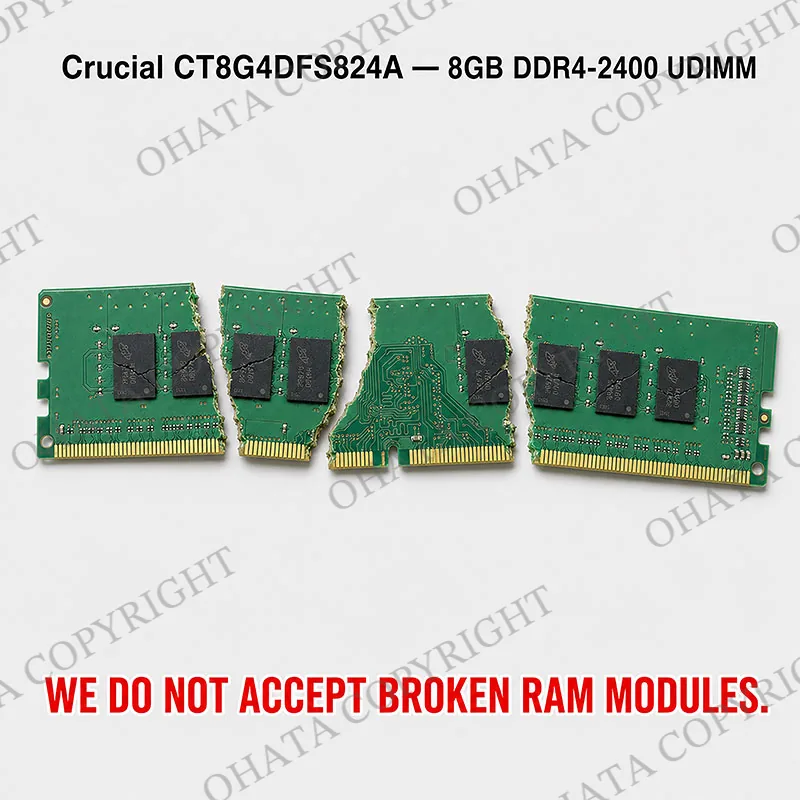
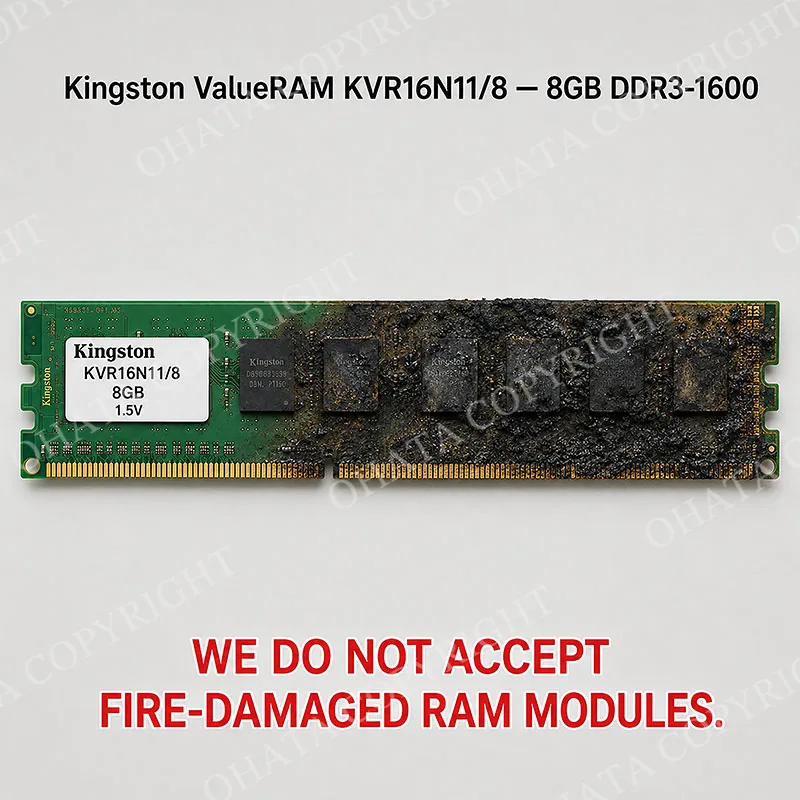
- Modules with severe fire damage, carbonization, hazardous contamination, or extensive fragmentation may be rejected after inspection.
RAM-S (Gold Finger Server RAM) Grade buying scrap price
Key Buying Introduction
UP↑
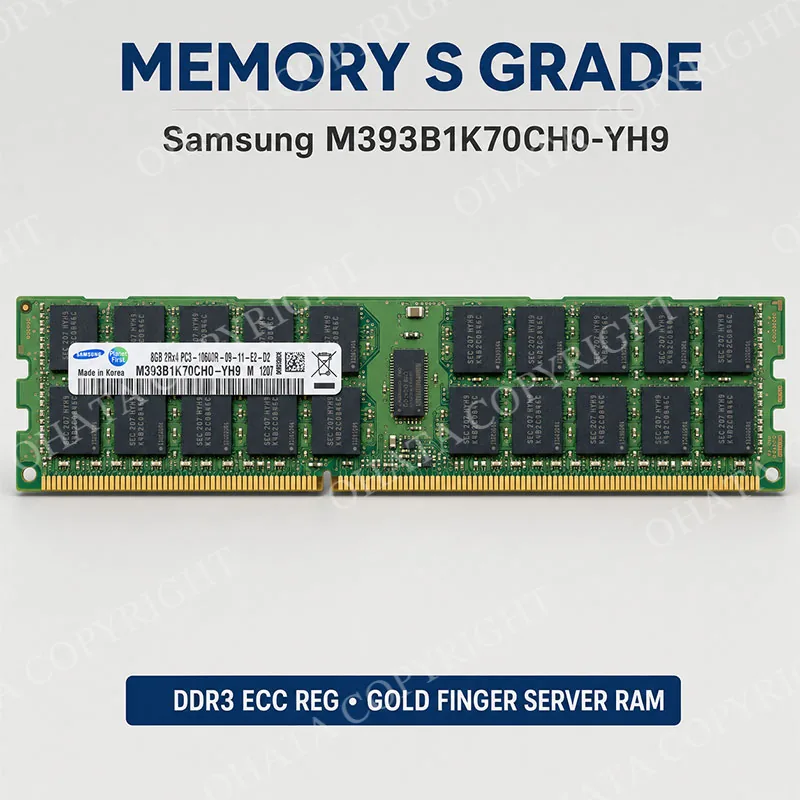
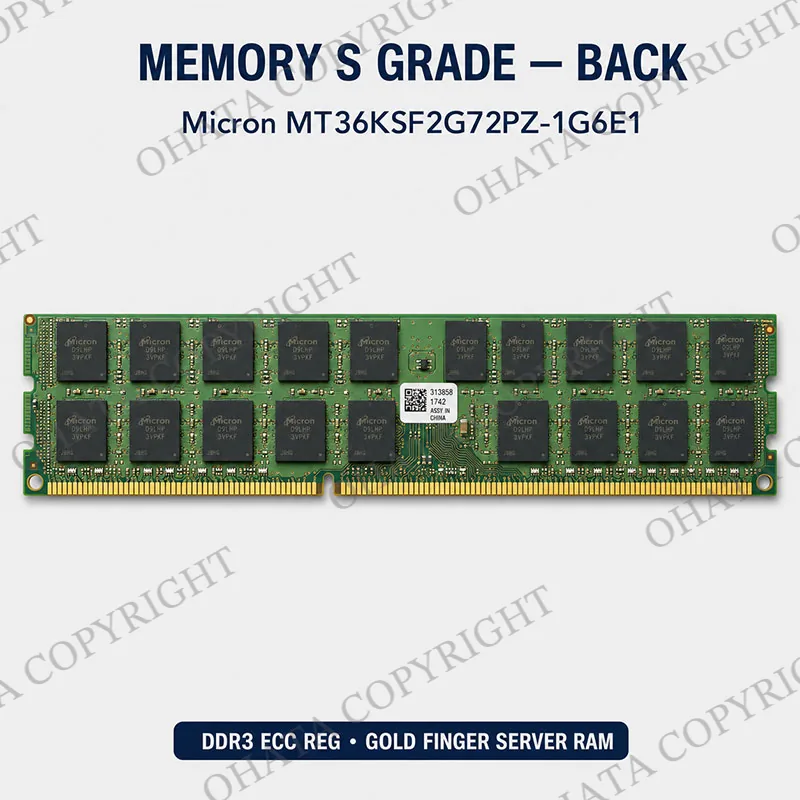
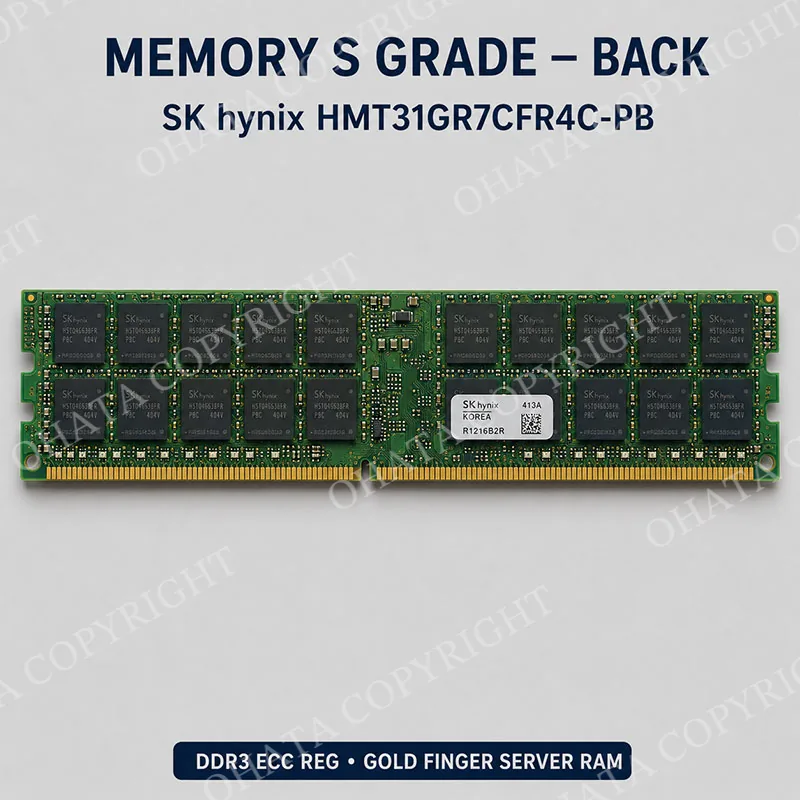
Key Buying Introduction
- Purchases start from just 1 lb of eligible RAM-S (Gold Finger Server RAM) material.
- RAM-S Grade primarily includes server and enterprise memory with gold-plated edge contacts, ECC or registered construction, and high component density.
- Classification and buying price are determined by the module’s application, physical construction, connector plating, component density, completeness, and condition, not by brand, model, capacity, DDR generation, or original purchase price alone.
- Different brands and DDR generations may receive the same RAM-S Grade price when they meet all applicable Ohata classification requirements.
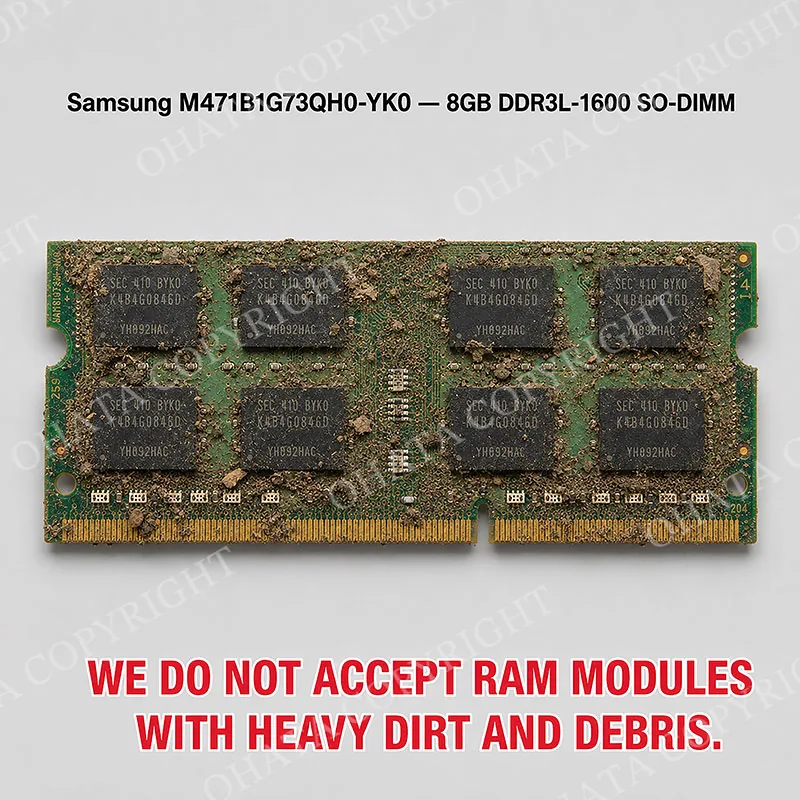
- Keep modules whole, dry, and reasonably clean, with their edge contacts, circuit boards, and major integrated circuits intact.
- Desktop RAM, laptop SO-DIMMs, heat-spreader-covered modules, trimmed modules, and broken or contaminated RAM may belong to different grades.
- Modules with severe fire damage, carbonization, hazardous contamination, or extensive fragmentation may be rejected after inspection.
Buying Details of Conditions
Learn more about identifying and sorting RAM-S (Gold Finger Server RAM) Grade in our Wiki: RAM-S Gold Finger Server RAM Scrap Classification Guide | Ohata Classification
Learn more about: Ohata RAM Scrap Classification Guide | RAM-S, RAM-A, RAM-B, RAM-C & RAM-D
Introduction, Construction, Components, and Recycling Value
The classification is based on the physical construction and recoverable material value of the module rather than one specific brand, generation, capacity, or part number. Therefore, any memory module that satisfies the complete Ohata Memory S Grade standard is purchased at the applicable S Grade price. Older server RAM and newer enterprise modules may receive the same recycling grade when their construction and material characteristics meet the same standard.
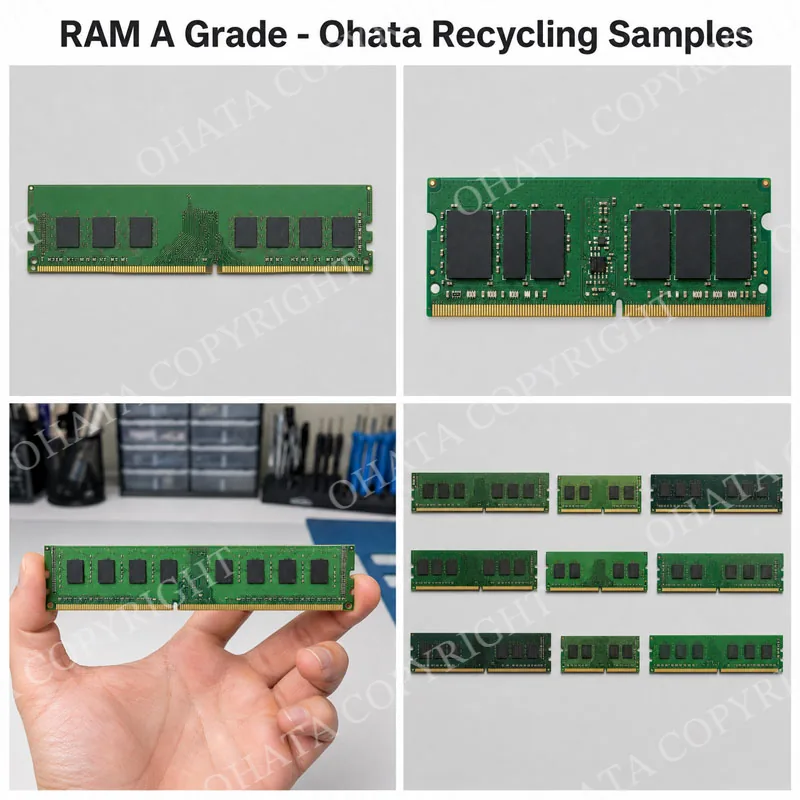
A S Grade module normally consists of a multilayer printed circuit board, gold-plated contact fingers, multiple DRAM packages, resistors, capacitors and server-related control components. Depending on its design, the module may also contain a register, buffer or error-correction support components.
Common examples include:
ECC server DIMMs
Registered DIMMs, marked RDIMM
Load-Reduced DIMMs, marked LRDIMM
High-density enterprise memory modules
Older server memory with numerous IC packages
Gold-finger memory designed for servers, workstations or networking equipment
The PCB contains copper tracks and internal copper layers that connect the memory chips to the host system. Its edge connector is normally plated with nickel and a thin surface layer of gold to provide reliable electrical contact and resistance to corrosion. The module’s large number of IC packages, gold-plated fingers and multilayer PCB construction gives it a higher expected recycling value than ordinary desktop RAM, shielded RAM, damaged memory or blank modules.
The amount of recoverable material varies between manufacturers and generations. A visually larger module is not automatically more valuable, and a high-capacity label alone does not guarantee S Grade. Grading must be based on the actual construction, connector plating, application and component density.
Ohata Memory S Grade Classification and Identification Guide
The first identification step is to confirm that the item is a genuine memory module. It should have the long, narrow PCB shape associated with RAM, an edge connector designed to fit a memory socket and multiple memory-related components. Items that merely resemble RAM must not be automatically classified as memory.
Next, determine whether the module is intended for server or enterprise use. Useful indicators include manufacturer labels containing terms such as “ECC,” “Registered,” “REG,” “RDIMM” or “LRDIMM.” Some part-number descriptions may end in letters such as “R,” indicating registered server memory, although the exact naming system varies by manufacturer.
The following physical indicators support an S Grade classification:
Server or enterprise construction: The module was designed for servers, enterprise workstations, storage systems, telecom equipment or similar professional hardware.
Gold-plated edge contacts: The connector fingers should have a visible gold-colored plated surface. Silver- or tin-colored edge contacts are not S Grade under the uploaded standard.
ECC or registered design: ECC modules often carry additional memory chips for error-correction data. Registered modules normally include a register or control device that helps manage communication between the memory controller and the DRAM packages.
High IC density: S Grade modules generally carry numerous DRAM packages, often on both sides of the PCB. High component density is an important value indicator.
Recognizable and reasonably complete condition: The module should remain identifiable and suitable for normal recycling inspection. Severe damage, contamination, attached assemblies or removed sections can cause downgrading.
A common visual clue for ECC memory is an unusual number of DRAM packages. For example, an ECC module may have nine chips where a comparable non-ECC module has eight, or eighteen where a standard module has sixteen. However, chip count alone is not conclusive. Some registered modules use different package arrangements, and some desktop modules also have numerous chips.
Inspectors should use several indicators together: the label, PCB layout, register or buffer chips, application, gold contacts and total IC density. The Ohata procedure evaluates memory from the highest grade downward and then checks it again from the lowest grade upward. This two-direction review reduces errors caused by relying on a single feature.
Most importantly, DDR generation does not decide the grade by itself. Server DDR2, DDR3, DDR4 or DDR5 can all qualify for Memory S Grade when they meet the required construction standard. Likewise, a new DDR5 module is not automatically S Grade if it is ordinary desktop memory without the necessary server or enterprise characteristics.
Recoverable Materials, Buying Standards, and Handling
Memory S Grade may contain several commercially recoverable materials:
Gold: Primarily found as thin plating on the edge contacts. Very small amounts may also be present inside certain semiconductor packages, although modern chips may use copper or other bonding materials.
Copper: Present in PCB tracks, internal conductive layers and electronic connections.
Tin and silver: Commonly associated with solder systems. The exact alloy depends on the module’s production period and manufacturer.
Nickel: Frequently used as an intermediate layer beneath the gold plating and in component finishes.
Palladium: May occur in small quantities in certain multilayer ceramic capacitors, depending on their composition and production technology.
The presence of these metals does not mean that every module contains the same concentration. Recovery yield depends on PCB construction, plating thickness, chip population and processing technology. Professional sampling and refining results are more reliable than visual estimates.
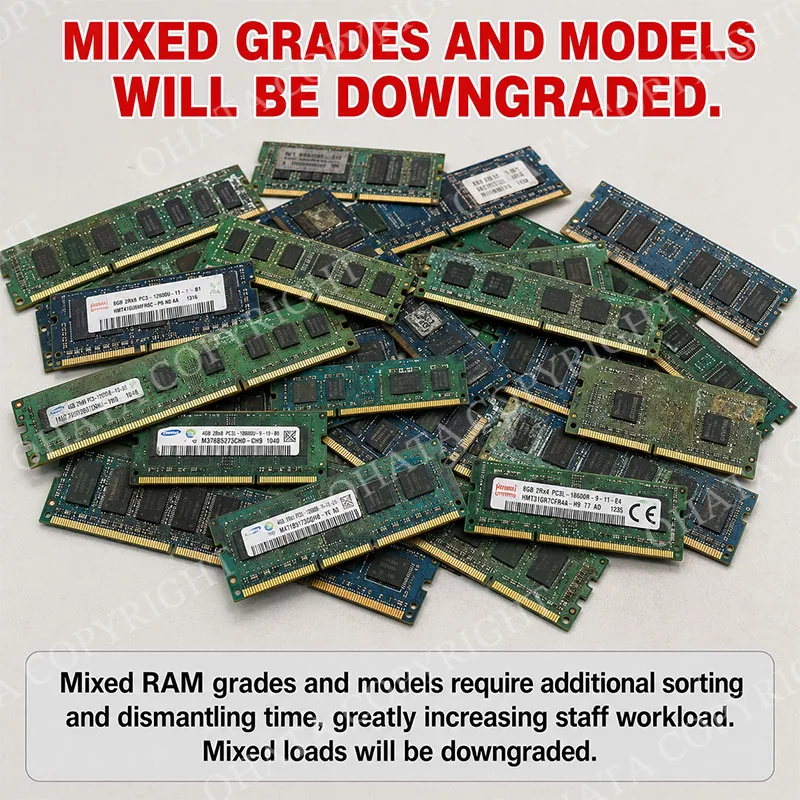
For S Grade buying, modules should be separated from desktop RAM and lower grades before delivery. Mixing server ECC/registered memory with ordinary desktop, shielded, trimmed, dirty or damaged modules increases inspection and sorting time. A mixed shipment may therefore be separated, reclassified or purchased according to the lower applicable grade.
Sellers should keep modules dry and avoid chemical cleaning, sanding or burning. Gold fingers should not be cut from the PCB, because trimmed connectors place the material in a lower category. Aluminum heat spreaders should be removed when safe and practical, especially when the underlying module must be inspected. Batteries, excessive wiring, socket assemblies and unrelated attachments should also be kept separate.
Final buying classification is determined after physical inspection. Labels can assist identification, but they cannot override the actual condition and construction of the material.
Comparison and Official Ohata Classification
|
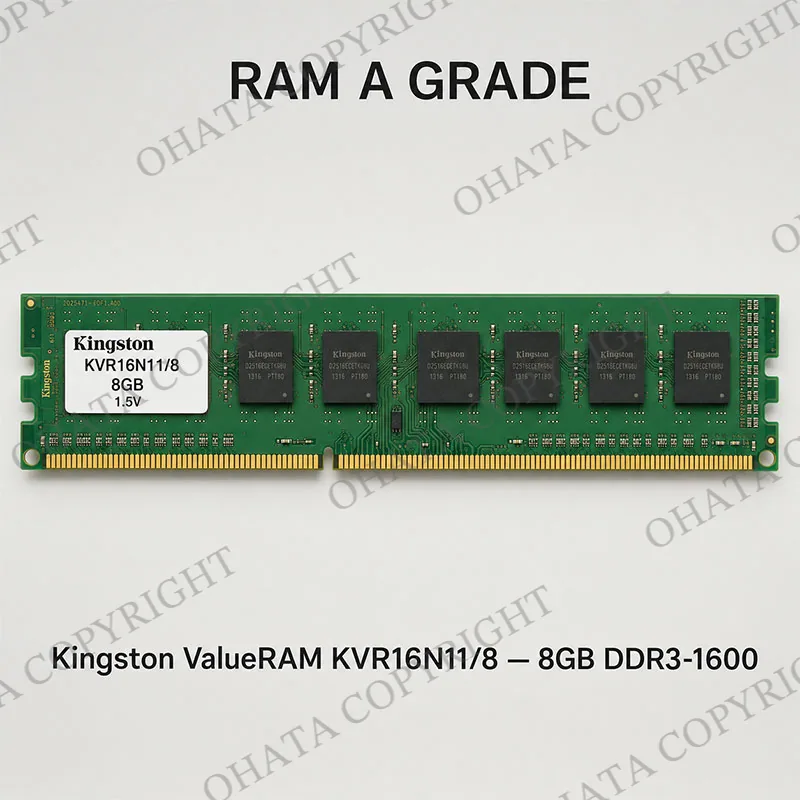
The most important difference between S and A Grade is application and construction. Both may have gold-plated fingers, but S Grade is server or enterprise memory characterized by ECC/registered architecture and high IC density. Ordinary desktop and laptop RAM with gold contacts belongs to A Grade.
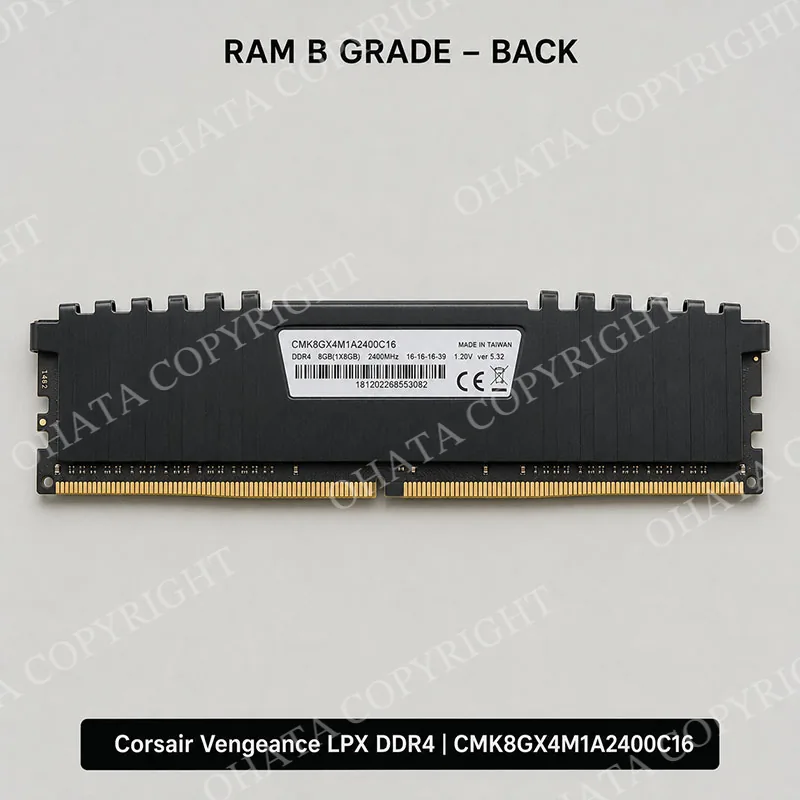
Heat-spreader-covered modules, silver-colored contacts and trimmed gold fingers correspond to B Grade. Mixed or damaged RAM belongs to C Grade, while blank and dummy modules belong to D Grade.
Official Ohata classification: A module qualifies as Memory S Grade when inspection confirms that it is gold-finger server or enterprise RAM with ECC/registered characteristics and high IC density. The grade applies to every qualifying module regardless of brand, model, capacity or DDR generation. Any module failing one or more essential S Grade requirements must be assigned to the appropriate lower grade according to its actual construction and condition.
Learn more about Ohata's RAM recycling classifications
RAM-S(Gold finer server RAM) Grade
RAM-A(Gold finer desktop and laptop RAM) Grade
RAM-B(shelded/silver edge/trimmed RAM) Grade
FAQ
- 1. What is today’s price for RAM-S (Gold Finger Server RAM) Grade buying?
- As of Sep 19,2026, Ohata Shoji America Inc., (Seattle, WA, United States) is purchasing RAM-S (Gold Finger Server RAM) Grade buying at 53.50 (USD/lb). We provide competitive scrap prices in Seattle, Bellevue, Renton, Tukwila, Kent, SeaTac, Tacoma, Everett, and surrounding communities.
- 2. What is Memory S Grade?
- Memory S Grade is the highest RAM recycling category in the Ohata classification system. It mainly includes gold-finger server and enterprise memory with ECC or registered construction and high IC density.
- 3. Which memory modules can qualify as S Grade?
- ECC server DIMMs, RDIMMs, LRDIMMs and other high-density enterprise memory modules may qualify, provided they meet all Ohata S Grade requirements.
- 4. Is Memory S Grade determined by brand or model?
- No. Classification is based on construction, application, gold-plated contacts, ECC or registered characteristics, IC density and physical condition—not a particular brand or model.
- 5. Can different DDR generations receive the same S Grade price?
- Yes. Qualifying DDR, DDR2, DDR3, DDR4 and DDR5 server memory can all be purchased at the applicable S Grade price.
- 6. How can I distinguish S Grade from A Grade memory?
- S Grade is primarily server or enterprise RAM with ECC or registered architecture and high IC density. A Grade generally includes ordinary desktop and laptop DIMM or SO-DIMM modules with gold-plated contacts.
- 7. Are modules with aluminum heat spreaders accepted as S Grade?
- Heat-spreader-covered RAM is generally classified as Memory B Grade unless the shield is removed and the underlying module can be inspected and confirmed to meet all S Grade requirements.
- 8. Which valuable materials can be recovered from S Grade RAM?
- Recoverable materials may include gold from connector plating, copper from PCB layers, nickel beneath plated surfaces, tin and silver from solder, and small quantities of palladium in certain components.
- 9. Where are your physical U.S. logistics operations based?
- Our main American operational hub is strategically located in Seattle, Washington, managing regional logistics and tech-driven processing.
- 10. Do you purchase high-performance AI hardware?
- Yes, we specialize in the online procurement and data-secure decommissioning of complex AI servers, GPUs, and high-capacity storage.
- 11. How do you handle non-functional or broken hardware?
- Items that cannot be refurbished are routed to our automated material lines for high-yield precious metal resource recovery.
Related Items
Contact us by phone or email