

- Purchases start from just 1 lb of eligible RAM-C material.
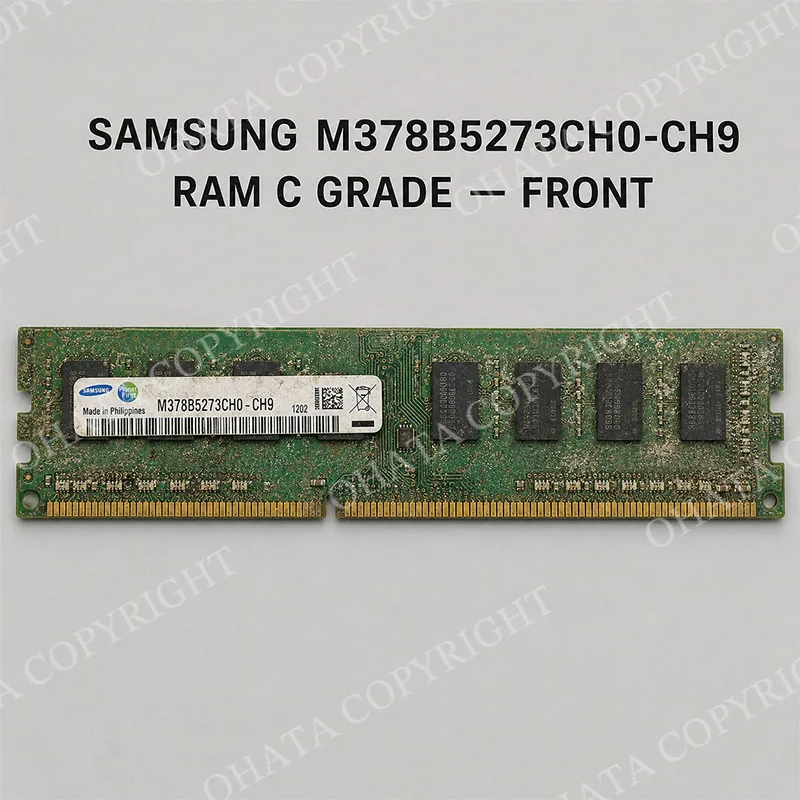
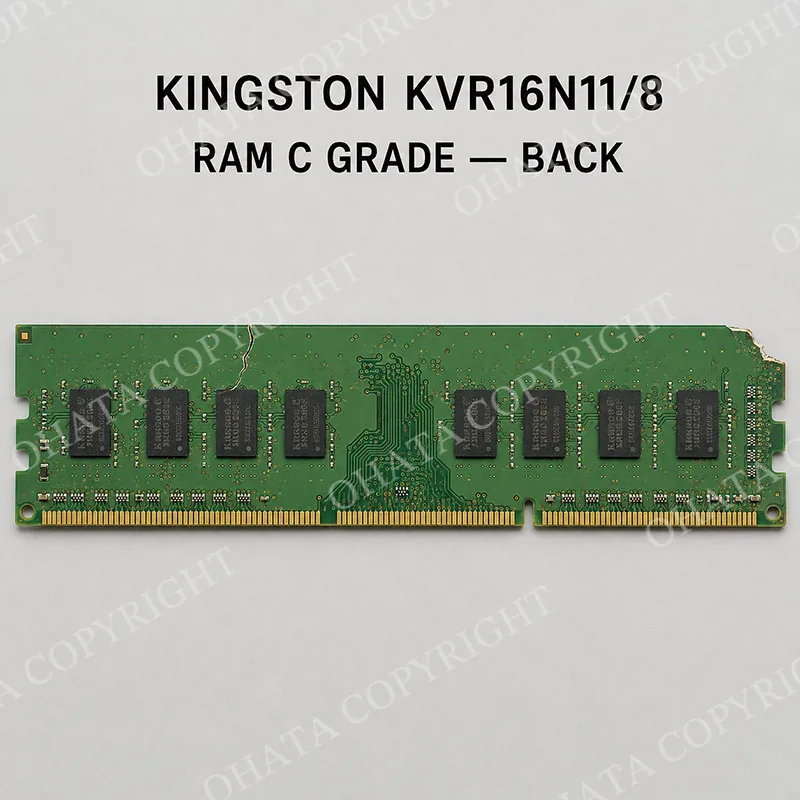
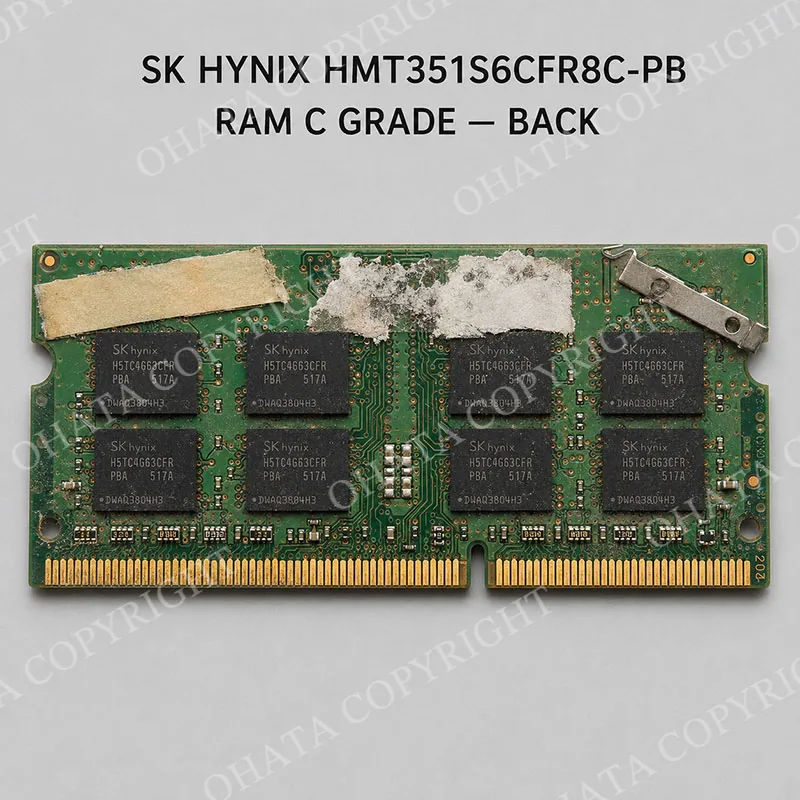
- RAM-C (Mixed and Damaged RAM) Grade includes recognizable memory modules with physical damage, significant dirt or contamination, non-standard attachments, or mixed grade characteristics that require additional sorting.
- Desktop DIMMs, laptop SO-DIMMs, server memory, ECC modules, and different DDR generations may receive RAM-C Grade when their condition or mixed presentation meets the applicable requirements.
- Different brands, models, capacities, and DDR generations do not automatically make a load RAM-C Grade when all modules otherwise meet the same higher-grade requirements.
- Classification and buying price are determined by the material’s construction, installed components, physical condition, contamination, and required sorting or processing.
- Broken, cracked, chipped, or bent modules may qualify when they remain recognizable and suitable for recycling.
- Extensively fragmented, severely burned, chemically contaminated, hazardous, or unidentifiable material may be rejected after inspection.
RAM-C (Mixed and Damaged RAM) Grade buying scrap price
Key Buying Introduction
Key Buying Introduction
- Purchases start from just 1 lb of eligible RAM-C material.
- RAM-C (Mixed and Damaged RAM) Grade includes recognizable memory modules with physical damage, significant dirt or contamination, non-standard attachments, or mixed grade characteristics that require additional sorting.
- Desktop DIMMs, laptop SO-DIMMs, server memory, ECC modules, and different DDR generations may receive RAM-C Grade when their condition or mixed presentation meets the applicable requirements.
- Different brands, models, capacities, and DDR generations do not automatically make a load RAM-C Grade when all modules otherwise meet the same higher-grade requirements.
- Classification and buying price are determined by the material’s construction, installed components, physical condition, contamination, and required sorting or processing.
- Broken, cracked, chipped, or bent modules may qualify when they remain recognizable and suitable for recycling.
- Extensively fragmented, severely burned, chemically contaminated, hazardous, or unidentifiable material may be rejected after inspection.
Buying Details of Conditions
Introduction, Construction, Components, and Recycling Value
All qualifying modules are purchased at the applicable RAM C Grade price, regardless of their original retail price, memory capacity, operating frequency, or manufacturer. A damaged high-capacity module does not automatically retain a higher recycling grade. Ohata grading is primarily based on recoverable construction, connector condition, component content, cleanliness, and the labor required to prepare the material for processing.
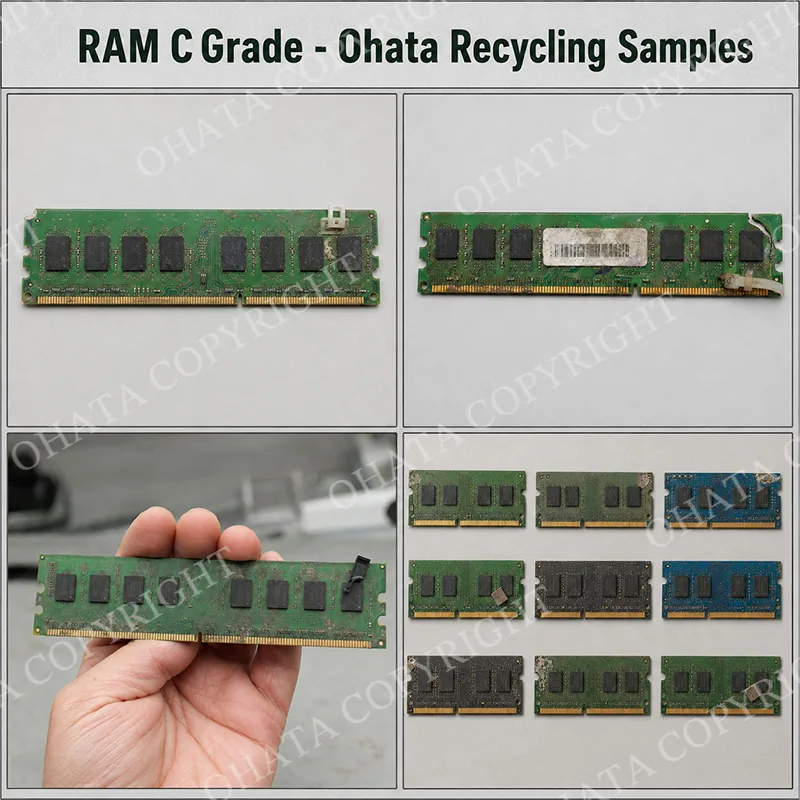
A typical RAM module consists of a fiberglass-reinforced printed circuit board, copper circuitry, memory IC chips, small passive components, identification labels, and a plated edge connector. Some modules also include heat spreaders, thermal pads, clips, shields, or other attachments. Although RAM contains recoverable metals, its recycling value depends heavily on how easily the material can be identified, sorted, dismantled, and processed.
RAM C Grade usually has lower value than clean and correctly separated RAM because mixed types and poor physical condition increase handling costs. Workers may need to separate different module families, remove foreign materials, clean dirty boards, inspect broken sections, and determine whether the remaining material is suitable for recovery. Therefore, its price reflects both the recoverable metal content and the additional preparation required.
Ohata RAM C Grade Classification, Identification Guide
Under the Ohata Board Scrap Classification System, RAM C Grade is defined as mixed and damaged RAM. The principal identifying conditions are:
Mixed RAM types, generations, grades, or physical conditions in one lot.
Broken, cracked, chipped, bent, or otherwise damaged memory modules.
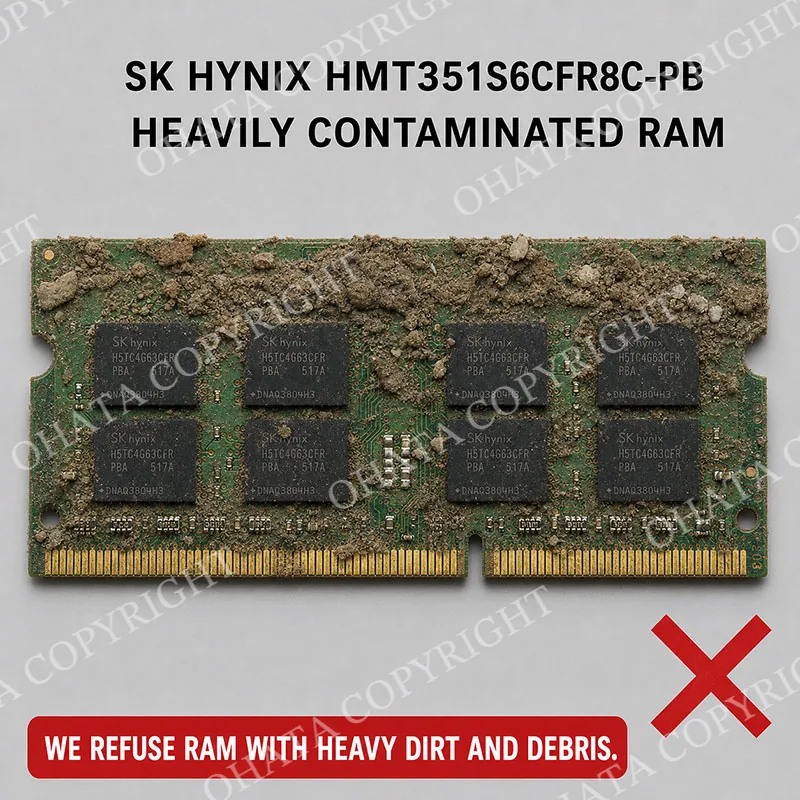
Dirty RAM containing dust, mud, grease, residue, or other contamination.
RAM supplied with attachments that must be removed before processing.
Unsorted memory that requires classification before recycling.
The grading process begins by confirming that the item is an actual RAM module. It should retain the recognizable construction of computer memory, including a narrow memory PCB, edge-connector area, and memory-related IC layout. Items that are not RAM should not be included in this grade.
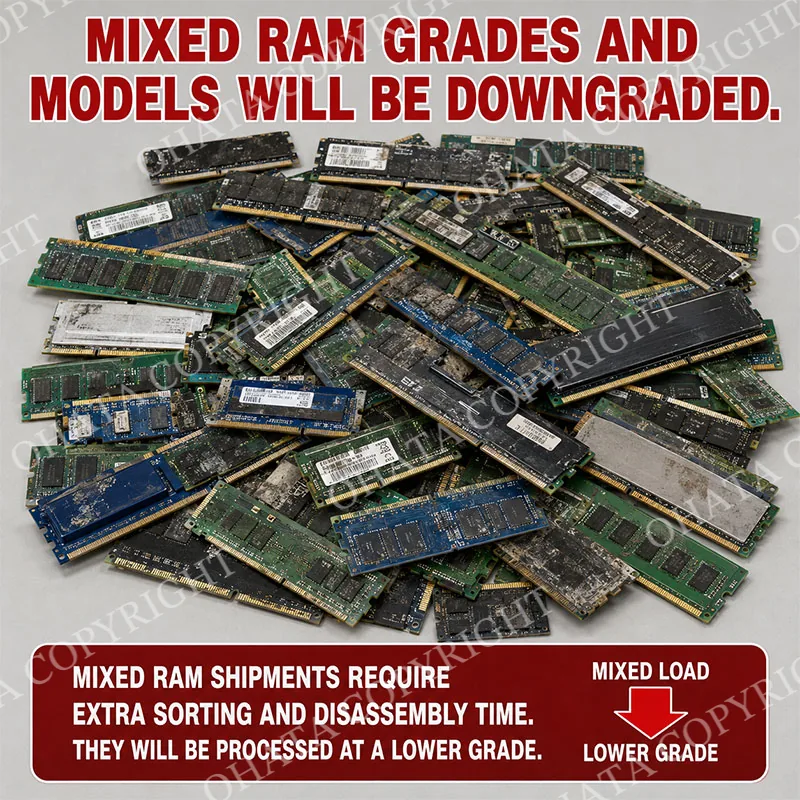
Next, the inspector evaluates the overall lot rather than choosing a grade solely from the best module present. For example, a container may contain clean gold-finger desktop RAM, shielded modules, trimmed modules, damaged SO-DIMMs, and boards with attachments. If these materials are mixed together and require extensive sorting, the shipment may be handled as RAM C Grade until properly separated.
Physical damage must also be considered. Modules with cracked PCBs, broken corners, bent boards, missing sections, damaged connector edges, or attached foreign parts normally fall into C Grade when they remain recognizable and recyclable as RAM. However, completely destroyed, heavily fragmented, hazardous, or unidentifiable electronic material may be rejected or classified outside the RAM category.
The following inspection sequence is recommended:
Confirm that every item is a genuine memory module.
Check whether the lot contains mixed RAM generations or construction types.
Inspect the PCB, IC chips, and connector area for damage.
Look for dirt, oil, moisture, corrosion, adhesive, or hazardous contamination.
Identify heat spreaders, clips, cables, sockets, or other attachments.
Determine how much sorting, cleaning, or dismantling is required.
Separate higher or lower grades whenever practical.
Assign RAM C Grade when mixed condition, damage, contamination, or preparation labor is the defining characteristic.
Capacity markings such as 2 GB, 8 GB, or 32 GB do not determine the scrap grade. Likewise, a famous manufacturer’s label does not override the physical buying condition.
Recoverable Materials, Buying Standards, and Handling
RAM C Grade can still contain several recoverable materials:
Copper: Found in internal PCB tracks, electrical planes, and plated-through holes.
Gold: May be present on edge contacts, connector plating, and in microscopic IC bonding structures.
Silver: Commonly associated with solder alloys and certain electronic contacts.
Palladium: May occur in small quantities within multilayer ceramic capacitors.
Nickel: Frequently used as a barrier layer beneath connector plating.
Aluminum: Often found in heat spreaders and attached cooling covers.
Tin and other alloys: Present in solder joints and some silver-colored connector surfaces.
Ohata buys RAM C Grade according to the condition of the delivered material, not according to its former functional performance. Testing whether each module still works is normally less important than inspecting its construction and recycling condition.
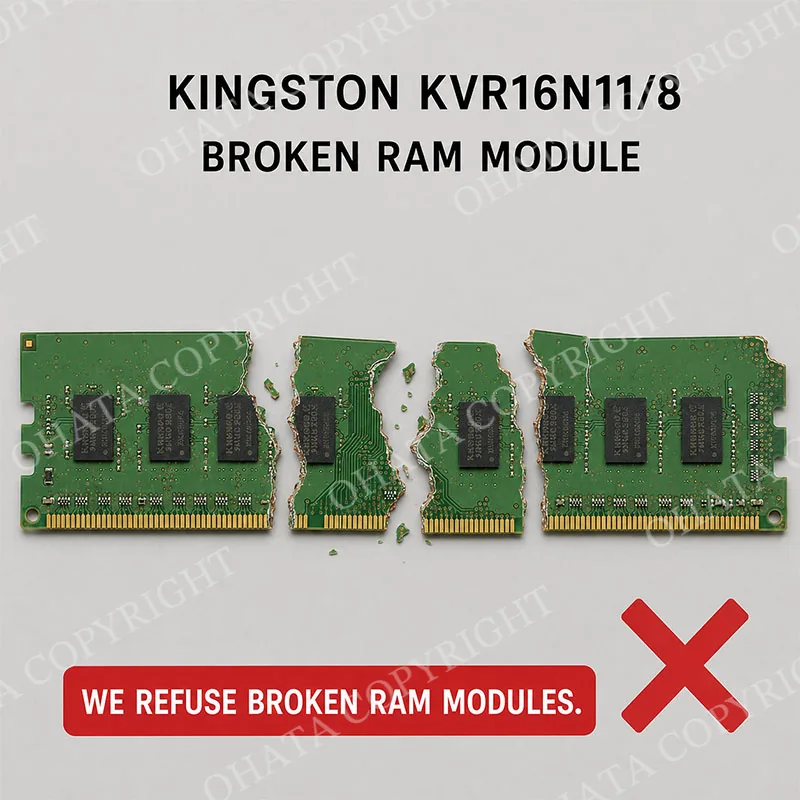
Acceptable C Grade loads may include mixed DIMMs and SO-DIMMs, damaged but identifiable memory boards, dirty modules, RAM with heat spreaders or attachments, and batches that need substantial sorting. Sellers should keep the material dry and free from hazardous substances. Batteries, loose steel parts, cables, packaging, plastic trays, and unrelated electronic components should be removed whenever possible.
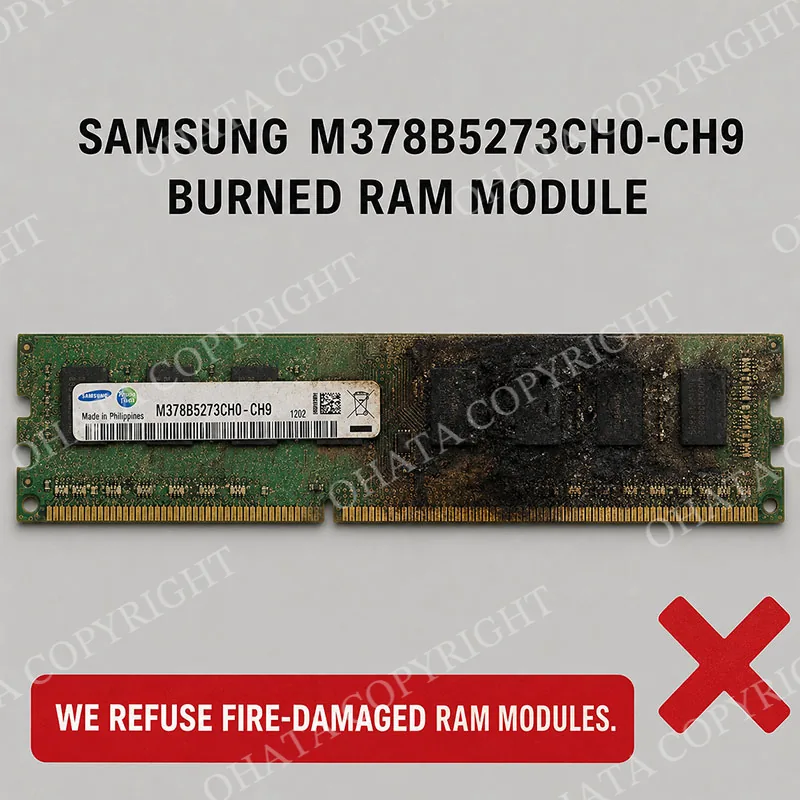
RAM should not be deliberately crushed or shredded before inspection. Excessive breakage makes identification difficult and may reduce the recoverable yield. Wet, burned, chemically contaminated, or hazardous material should be disclosed before delivery and may be downgraded or refused.
For better value, sellers should separate clean gold-finger server RAM, clean desktop or laptop RAM, shielded or trimmed RAM, damaged RAM, and blank memory boards into different containers. Proper separation reduces inspection time and helps prevent higher-value modules from being purchased at the lower mixed-lot price.
Comparison and Official Ohata Classification
The easiest way to distinguish RAM C Grade from the other Ohata grades is to compare construction, condition, and processing requirements.
Comparison and Ohata Classification
Ohata distinguishes RAM grades by physical construction, connector type, installed components, completeness, condition, and required processing.
RAM-S Grade primarily includes qualifying server or enterprise memory with gold-plated edge contacts, ECC or registered characteristics, and high component density.
RAM-A Grade generally includes standard desktop DIMMs and laptop SO-DIMMs with intact gold-plated edge contacts.
RAM-B Grade includes modules with aluminum heat spreaders or shields, silver- or tin-colored edge contacts, or previously trimmed contact sections. Customers do not need to remove heat spreaders or shields before delivery.
RAM-C Grade includes recognizable RAM that is damaged, significantly dirty, contaminated, supplied with non-standard attachments, or mixed with different grades and physical conditions requiring additional sorting. Different brands, models, capacities, or DDR generations do not automatically make a load RAM-C.
RAM-D Grade includes blank or nearly blank memory boards with no integrated circuits or very few components, including certain test and dummy modules.
Not classified as RAM applies when the material cannot be identified as a genuine memory module or is unsuitable for classification within the RAM categories.
Recognizable modules that meet the mixed-or-damaged requirements are evaluated as RAM-C Grade. Brand, capacity, DDR generation, and original purchase price do not determine the grade by themselves. Separating higher-grade modules from damaged, contaminated, and lower-grade material supports accurate inspection and classification.
Learn more about Ohata's RAM recycling classifications
RAM-S(Gold finer server RAM) Grade
RAM-A(Gold finer desktop and laptop RAM) Grade
RAM-B(shelded/silver edge/trimmed RAM) Grade
FAQ
- 1. What is today’s price for RAM-C (Mixed and Damaged RAM) Grade buying?
- As of Sep 19,2026, Ohata Shoji America Inc., (Seattle, WA, United States) is purchasing RAM-C (Mixed and Damaged RAM) Grade buying at 6.00 (USD/lb). We provide competitive scrap prices in Seattle, Bellevue, Renton, Tukwila, Kent, SeaTac, Tacoma, Everett, and surrounding communities.
- 2. What is RAM C Grade?
- RAM C Grade refers to mixed, damaged, dirty, or attachment-bearing memory modules that require additional sorting, cleaning, or dismantling before recycling.
- 3. Which types of memory can be classified as RAM C Grade?
- DDR, DDR2, DDR3, DDR4, DDR5, DIMM, SO-DIMM, ECC, registered, desktop, laptop, and server RAM may all qualify when their condition meets the C Grade standard.
- 4. Does the RAM brand or capacity affect its recycling grade?
- No. Brand, capacity, speed, and original retail price do not determine the scrap grade. Ohata primarily evaluates physical condition, construction, component content, and required processing labor.
- 5. Why is mixed RAM classified as C Grade?
- Mixed RAM requires workers to identify and separate different generations, constructions, connector types, and conditions. This additional labor reduces processing efficiency and affects the purchase price.
- 6. Is broken RAM accepted as RAM C Grade?
- Broken, cracked, chipped, or bent modules may qualify if they remain recognizable and suitable for recycling. Completely destroyed, heavily fragmented, hazardous, or unidentifiable material may be refused.
- 7. Is dirty RAM automatically classified as C Grade?
- RAM containing significant dust, mud, grease, residue, or other contamination will generally be classified as C Grade. Hazardous or chemical contamination may result in rejection.
- 8. Does RAM with a heat spreader qualify as C Grade?
- It may qualify when the heat spreader, shield, clips, or thermal materials require removal. When possible, sellers should remove these attachments and separate the modules before delivery.
- 9. How do I get paid for my electronic scrap and IT hardware?
- Once our processing facility verifies your shipment, we issue your funds securely through your chosen digital payment method.
- 10. Can corporate clients receive payment via bank wire transfer?
- Yes, we accommodate enterprise clients with automated bank wire transfers and provide formal digital invoices for corporate compliance.
- 11. How does Ohata Shoji America Inc. support responsible electronics recycling?
- We help businesses and individuals sell surplus electronic equipment through our online platform while promoting reuse, responsible recycling, and resource recovery to reduce
Contact us by phone or email