
ohata.ai
Ohata Resource Canada Inc.

CPU S Grade (Gold Cap Ceramic CPU) Buying scrap price

Back to CPU price list
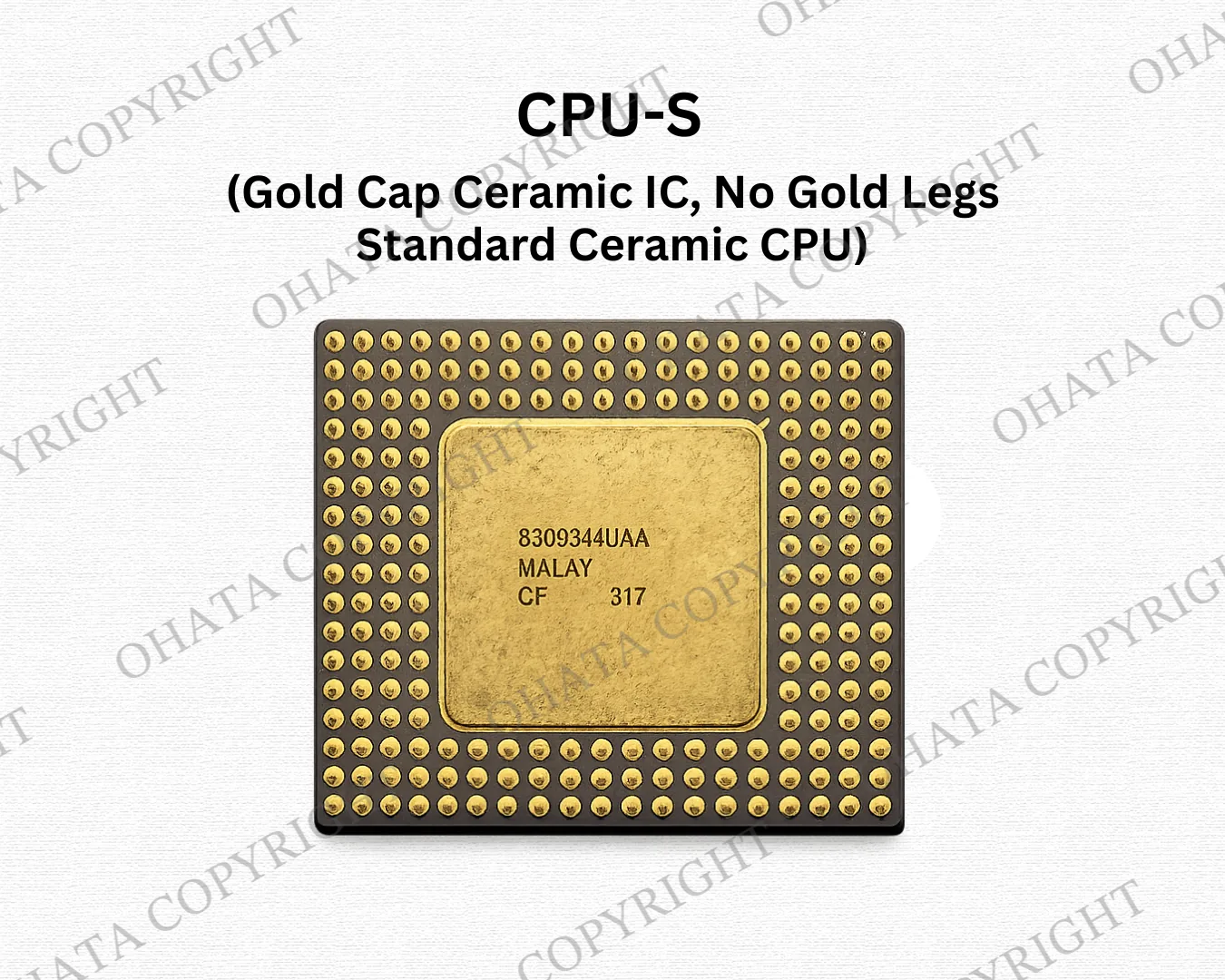
CPU S (Gold Cap Ceramic IC, No Gold Legs Standard Ceramic CPU)
Updated: Aug 04,2026

105.00 CAD / lb

The Price is buying by Yard of Richmond, BC, Canada.

Key Buying Introduction

1. We buy CPU-S Grade processors from a minimum quantity of 1 lb, including Gold Cap Ceramic ICs (no gold legs) and standard ceramic CPUs.

2. CPU-S processors are identified by their ceramic package and visible gold cap, not by the processor manufacturer, model number, or original retail value.

3. Complete, clean, dry, and properly sorted CPU-S processors receive faster inspection and more accurate classification under the Ohata CPU Classification System.

4. Processors that are broken, contaminated, mixed with other CPU grades, or missing their original components may receive a lower purchasing value after inspection.

5. Electronic scrap buying prices may change without notice. Final classification and purchasing prices are confirmed after physical inspection according to current market conditions and the official Ohata CPU Classification System.
Buying Details of Conditions

Learn more about CPU Scrap Classification


CPU-S Grade (Gold Cap Ceramic IC, No Gold Legs, Standard Ceramic CPU)

What Qualifies as CPU-S

CPU-S Grade is one of the processor categories defined by the Ohata CPU Classification System. Unlike conventional CPU classifications based on manufacturer, processor model, clock speed, or original retail value, the Ohata system evaluates processors according to their package construction, physical characteristics, recoverable material profile, completeness, and overall condition.

CPU-S primarily includes Gold Cap Ceramic ICs without gold legs and standard ceramic CPUs. Typical examples include white, purple, and gray ceramic processor packages that feature a visible gold-plated cap but do not have gold-plated legs or pins. Although these processors were manufactured by different companies for various computing platforms, they are grouped together because they share similar package construction and recoverable material characteristics.

Every processor is individually inspected before a final CPU-S classification is assigned. Physical constructionβ€”not processor brand or specificationsβ€”determines the final buying grade.


Visual Identification Guide

CPU-S processors can usually be identified through their ceramic package construction and visible gold cap. Correct identification should always be based on the complete processor package rather than the manufacturer or printed model number.

Gold Cap Ceramic IC (No Gold Legs)

The primary CPU-S category consists of ceramic integrated circuits fitted with a gold-plated cap while lacking gold-plated legs or pins. These processors typically have a square ceramic body with a gold cap attached to the top surface.

The absence of gold-plated legs is one of the easiest ways to distinguish CPU-S from higher ceramic CPU grades.


Standard Ceramic CPU

Standard ceramic processors also qualify for CPU-S when their package construction matches the Ohata CPU Classification requirements. These processors may have ceramic bodies in various colors but share similar engineering characteristics and recoverable material profiles.


White Ceramic CPU

White ceramic processors are among the most recognizable CPU-S packages. Their ceramic construction provides excellent durability while the gold cap contributes to their recoverable precious metal content.


Purple Ceramic CPU

Many older processors use purple ceramic packages with a gold-plated cap. Depending on their overall package construction and pin configuration, these processors may qualify for CPU-S after inspection.


Gray Ceramic CPU

Gray ceramic processors are less common but may also belong to CPU-S when they satisfy the physical requirements of the Ohata CPU Classification System.


What Does Not Qualify as CPU-S

Not every ceramic processor belongs to CPU-S.

The following processors are generally classified elsewhere:

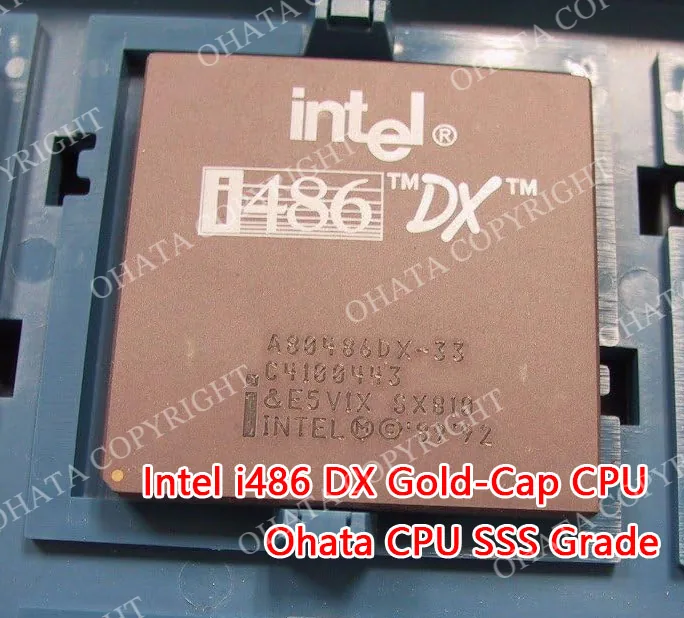
  • Gold cap with gold legs β†’ CPU-SSS

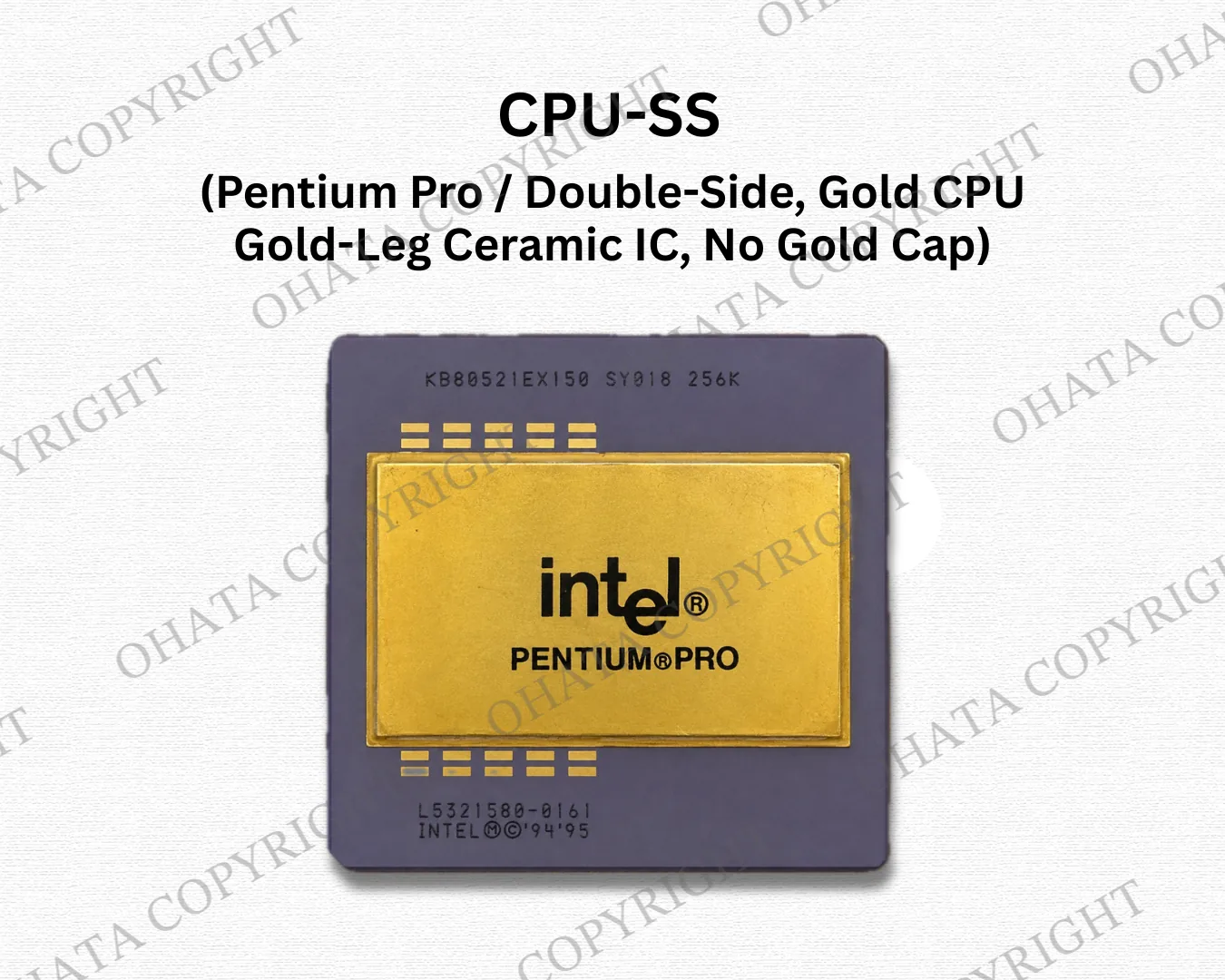
  • Ceramic CPU with gold legs but no gold cap β†’ CPU-SS

  • Ceramic CPU with metal heat plate β†’ CPU-B

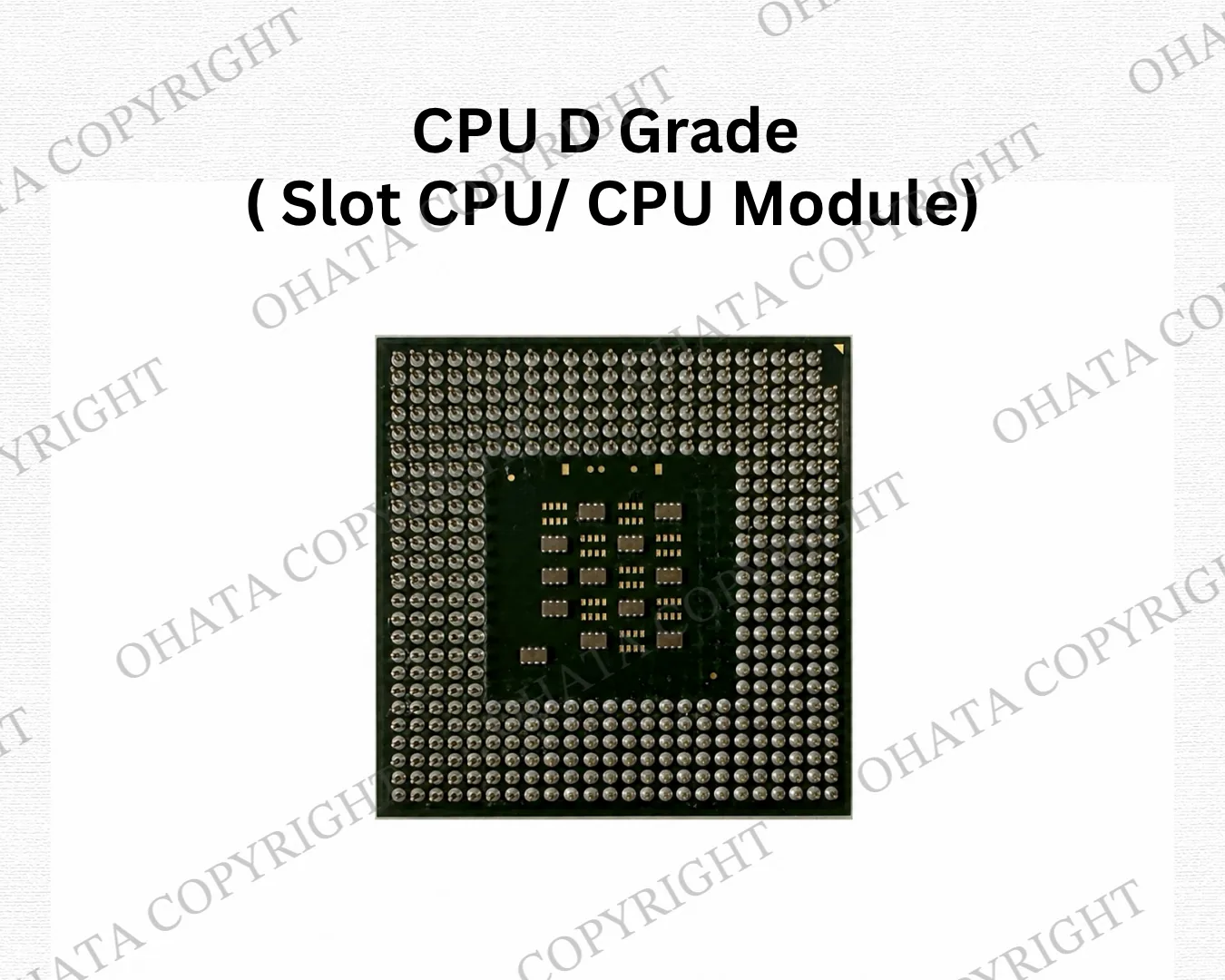
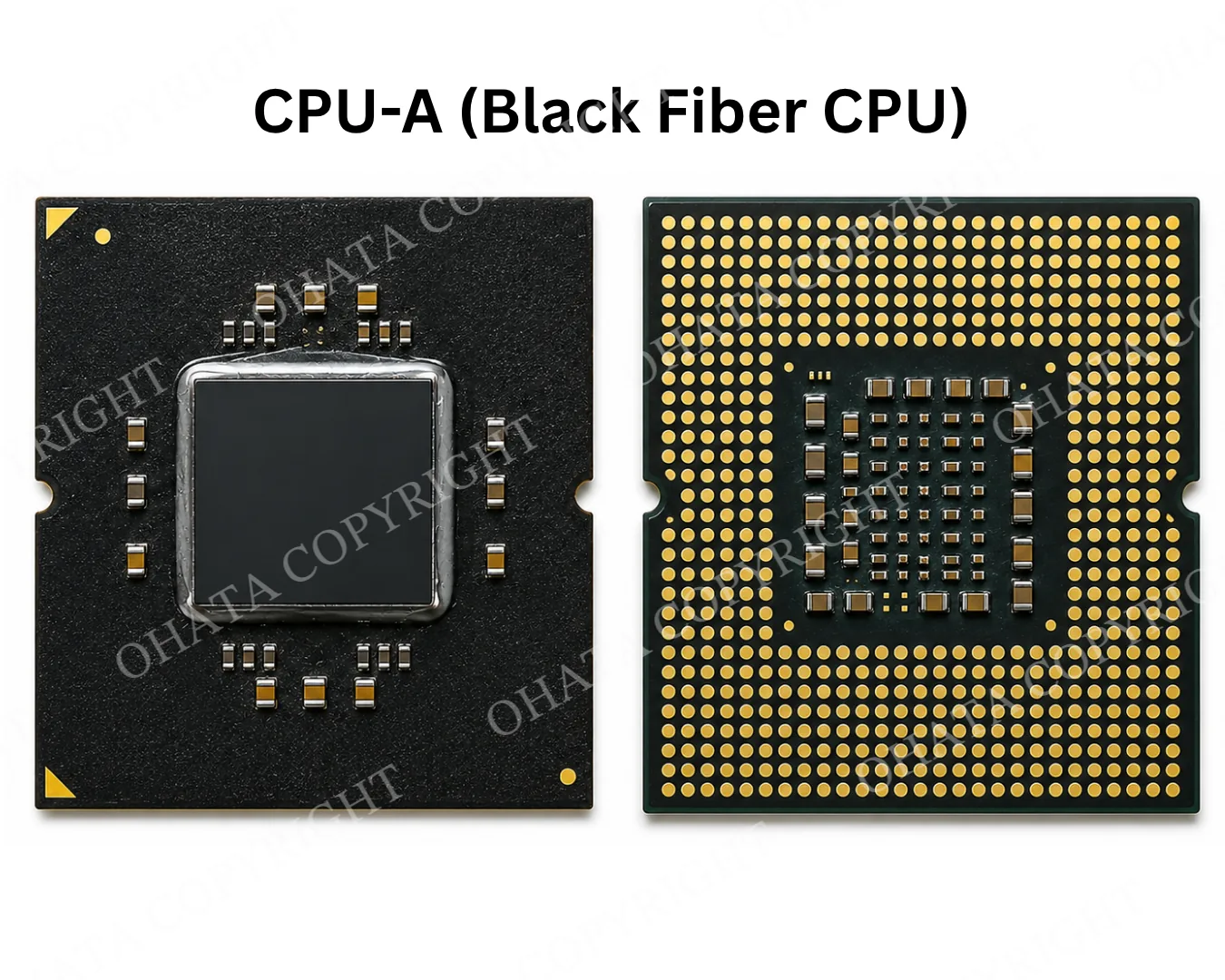
  • Fiber package processors β†’ CPU-A, CPU-C, or CPU-D depending on construction

Whenever classification is uncertain, the complete processor package is physically inspected before a final buying grade is assigned.


Common Sources of CPU-S Processors

CPU-S processors are commonly recovered from:

  • Desktop computers

  • Professional workstations

  • Enterprise servers

  • Industrial control equipment

  • Telecommunications systems

  • Scientific instruments

  • Medical electronics

  • Military and embedded computer systems

Many CPU-S processors originate from legacy computer systems manufactured during the ceramic CPU era and continue to enter the recycling stream through equipment upgrades, IT asset disposition (ITAD) projects, electronic dismantling, and industrial equipment replacement.


Why CPU-S Has Recycling Value

CPU-S processors are valued because of their ceramic package construction and recoverable precious metal content.

Unlike modern fiber processors, ceramic CPU packages were designed for durability, long service life, and stable electrical performance. Their ceramic substrate, gold-plated cap, internal bonding wires, and precision semiconductor package contribute to their recycling value.

Although CPU-S processors generally contain less recoverable precious metal than premium ceramic CPUs with gold-plated legs, they remain an important category within the Ohata CPU Classification System due to their construction quality and recoverable materials.

The buying value of a CPU-S processor is determined by the complete processor package rather than any single visible feature.


Buying Standards

Higher purchasing values are generally offered for CPU-S processors that are:

  • Complete and unmodified

  • Clean and dry

  • Properly sorted as CPU-S

  • Free from excessive corrosion

  • Free from glue, epoxy, thermal compound, or heavy contamination

  • Removed from heatsinks, motherboard sections, and unrelated electronic scrap

Proper preparation before delivery helps improve inspection efficiency and supports accurate classification under the Ohata CPU Classification System.


Common Reasons for Reduced Purchasing Value

Purchasing values may be reduced when processors are:

  • Mixed with other CPU grades

  • Broken ceramic packages

  • Missing gold caps

  • Burned or heavily corroded

  • Covered with excessive contamination

  • Still attached to heatsinks or printed circuit boards

  • Mixed with miscellaneous electronic scrap

Processors that are damaged or incomplete may be assigned to another CPU grade following inspection.


Common Misclassification Guide

CPU-S vs CPU-SSS

CPU-SSS processors have both a gold cap and gold-plated legs or pins. CPU-S processors have a gold cap but do not have gold-plated legs. This is one of the easiest ways to distinguish these two premium ceramic CPU grades.


CPU-S vs CPU-SS

CPU-SS processors normally have gold-plated legs but no gold cap, while CPU-S processors have a gold cap but no gold legs. Although both use ceramic packages, the package construction differs significantly.


CPU-S vs CPU-B

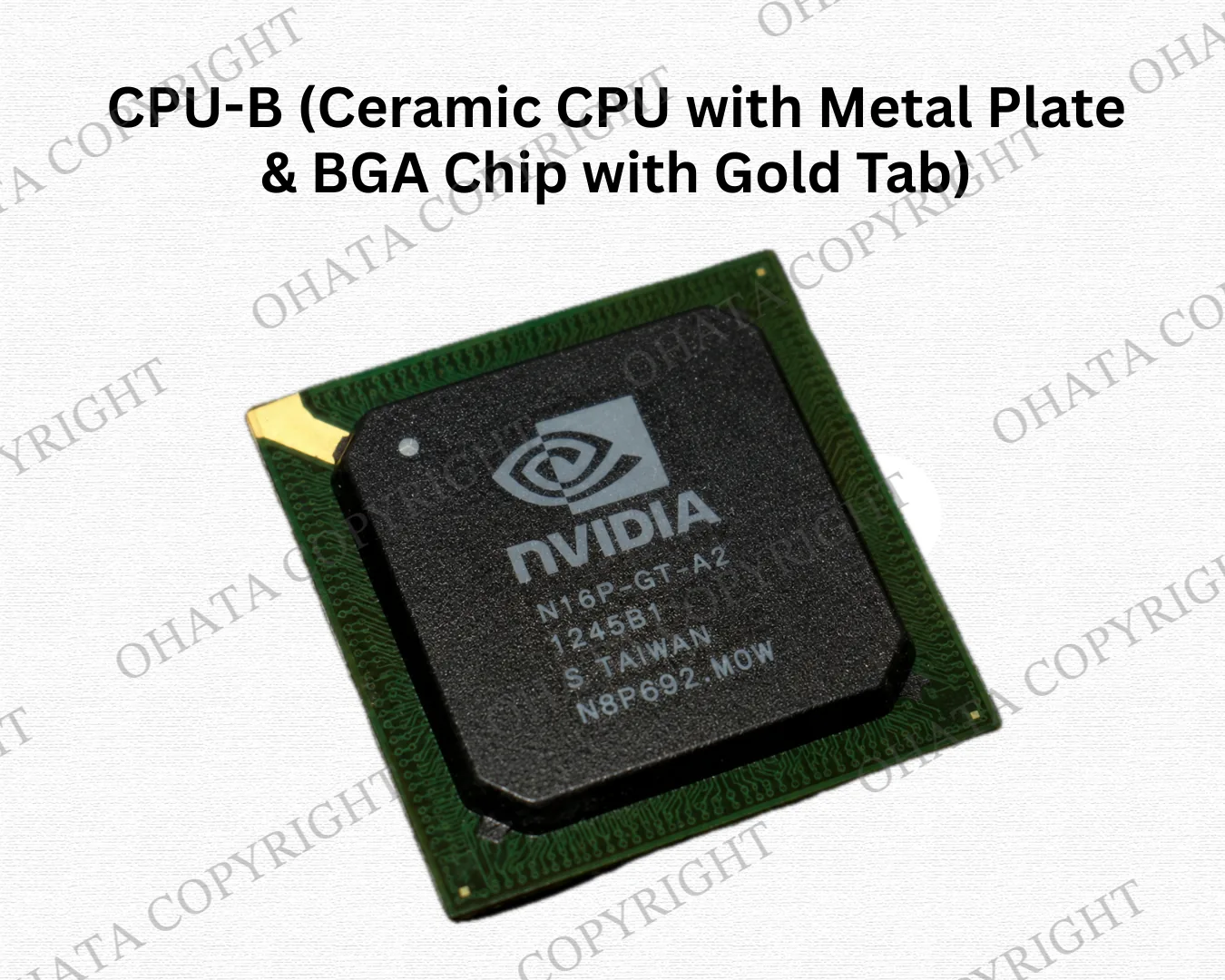
CPU-B primarily includes ceramic processors fitted with a metal heat plate rather than a gold cap. Large BGA chips with visible gold tabs also belong to CPU-B. The top surface of the processor is one of the quickest visual differences.


CPU-S vs CPU-C

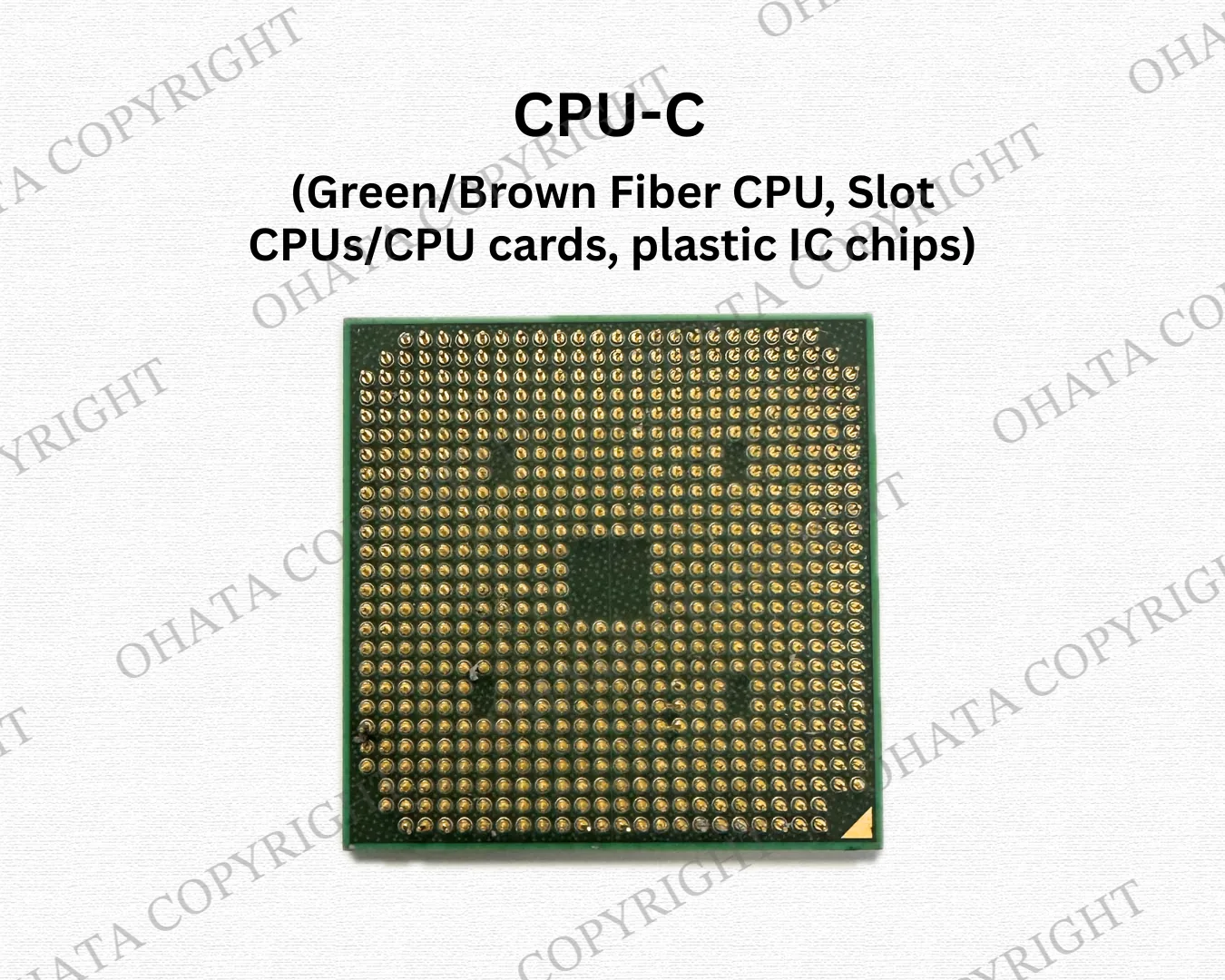
CPU-C mainly includes fiber processors, Slot CPU modules, and plastic processors with gold-plated legs. CPU-S processors use ceramic package construction rather than organic fiber substrates.


Inspection and Classification

Every CPU-S shipment is individually inspected before the final buying grade is confirmed.

Inspectors evaluate:

  • Ceramic package construction

  • Gold cap configuration

  • Presence or absence of gold legs

  • Physical condition

  • Completeness

  • Cleanliness

  • Recoverable material profile

  • Quantity submitted

Processor manufacturer, processor model, clock speed, computing performance, and original retail value are not the primary factors used during classification.


Official Ohata CPU-S Classification Statement

A processor may be officially classified as CPU-S Grade when its ceramic package construction, gold cap configuration, recoverable material profile, physical characteristics, completeness, and overall condition satisfy the requirements of the Ohata CPU Classification System.

CPU-S primarily includes Gold Cap Ceramic ICs without gold-plated legs and standard ceramic CPUs. Classification is determined through physical inspection rather than processor manufacturer, model number, processor specifications, or original selling price. Final purchasing prices are confirmed after inspection according to current market conditions and the official Ohata CPU Classification System.
Learn more about Ohata's CPU recycling classifications

FAQ
1. What is today’s price for CPU S Grade (Gold Cap Ceramic CPU) Buying?
As of Aug 04,2026, Ohata Resource Canada Inc., (Richmond, BC, Canada) is purchasing CPU S Grade (Gold Cap Ceramic CPU) Buying at 105.00 (CAD/lb). We provide competitive scrap prices in Delta, Surrey, Richmond, and across the Greater Vancouver area.
2. What is CPU-S Grade?
CPU-S Grade is one of the processor categories defined by the Ohata CPU Classification System. It primarily includes Gold Cap Ceramic ICs without gold-plated legs and standard ceramic CPUs that meet the required package construction and physical characteristics.
3. What types of processors belong to CPU-S?
CPU-S commonly includes Gold Cap Ceramic ICs without gold legs, as well as white, purple, and gray standard ceramic CPUs that satisfy the Ohata CPU Classification requirements.
4. How can I identify a CPU-S processor?
CPU-S processors are usually identified by their ceramic package and visible gold-plated cap. Unlike higher ceramic CPU grades, they do not have gold-plated legs or pins.
5. What is the difference between CPU-S and CPU-SS?
CPU-SS processors generally have gold-plated legs but no gold cap. CPU-S processors have a visible gold cap but do not have gold-plated legs.
6. Why do CPU-S processors have recycling value?
CPU-S processors contain ceramic packages, gold-plated caps, internal bonding wires, and other recoverable materials that contribute to their recycling value.

Related Items

Browse all CPU items
AI Scrap Grading Ohata.AI Vision 1.0 Beta 1.0 Upload board photos for grade and reference price