

- Purchases start from just 1 lb of eligible RAM-B material.
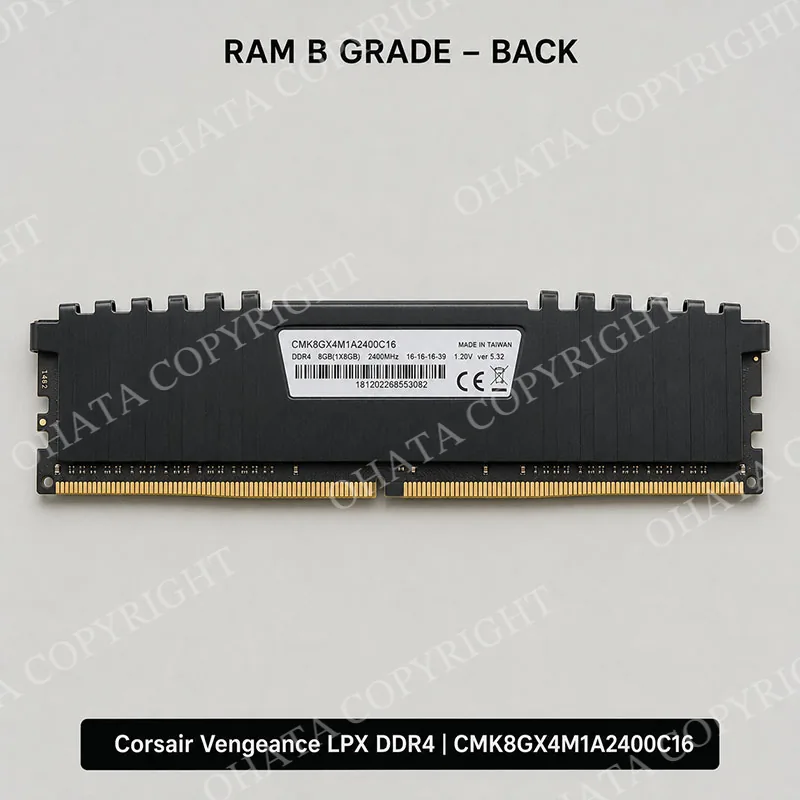
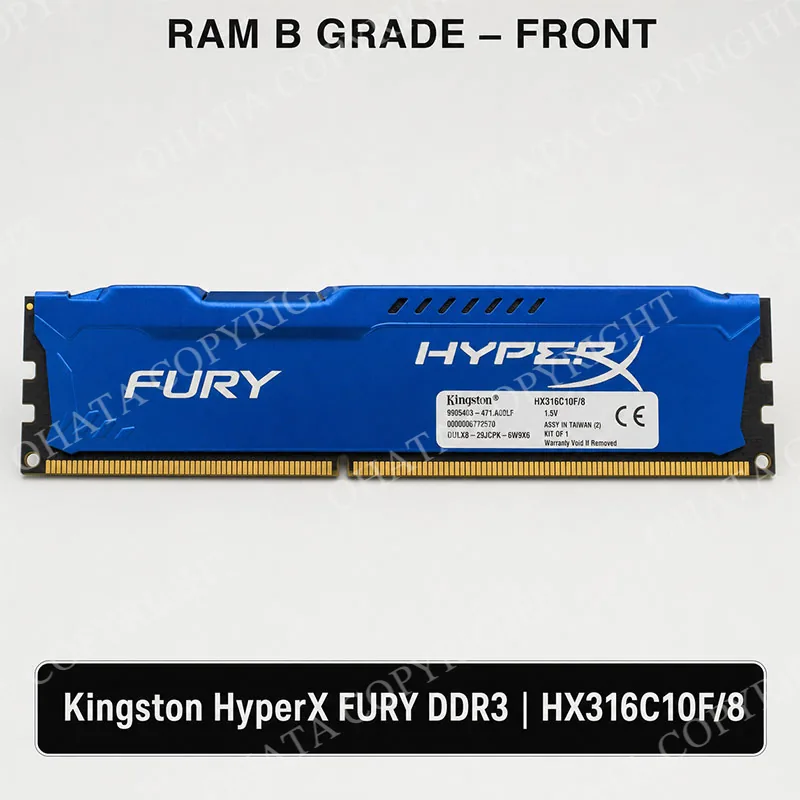
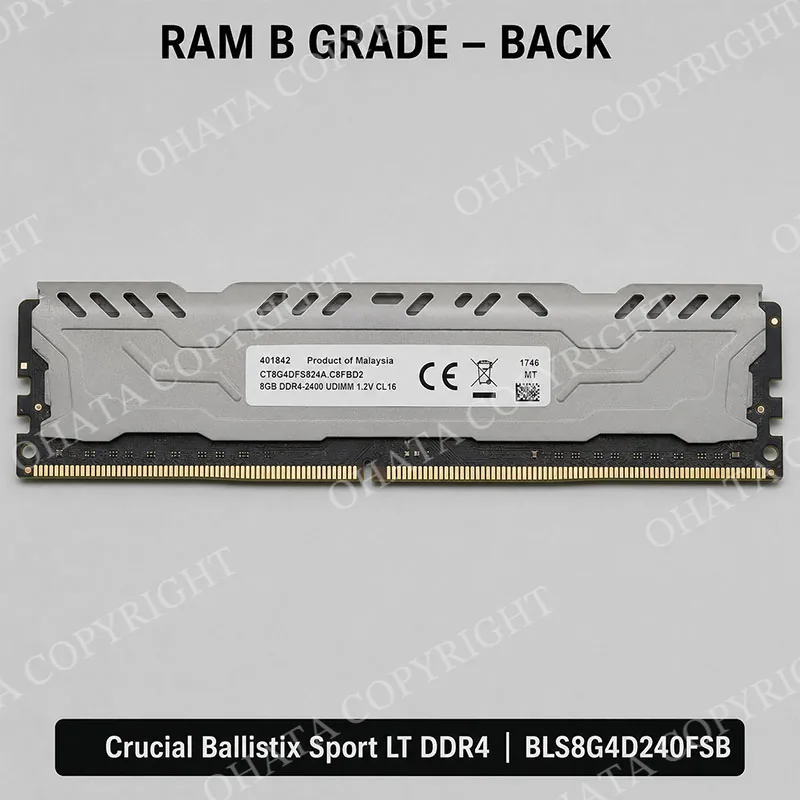
- RAM-B (Shielded/Silver-Edge/Trimmed RAM) Grade may include memory modules with aluminum heat spreaders or shields, silver- or tin-colored edge contacts, or previously trimmed contact sections.
- Classification and buying price are determined by the module’s physical construction, connector finish, attachments, component population, completeness, and condition, not by brand, model, capacity, speed, DDR generation, or original purchase price alone.
- Different brands and memory generations may receive the same RAM-B Grade price when they meet the applicable Ohata classification requirements.
- Heat spreaders and shields do not need to be removed before delivery. Customers should not cut, trim, sand, burn, or chemically treat the edge contacts.
- Please keep RAM-B separate from RAM-S, RAM-A, heavily damaged modules, blank boards, and unrelated electronic material.
- Broken, severely burned, heavily contaminated, or extensively fragmented modules may receive a lower classification or may be rejected after inspection.
RAM-B (Shielded/Silver-Edge/Trimmed RAM) Grade buying scrap price
Key Buying Introduction
Key Buying Introduction
- Purchases start from just 1 lb of eligible RAM-B material.
- RAM-B (Shielded/Silver-Edge/Trimmed RAM) Grade may include memory modules with aluminum heat spreaders or shields, silver- or tin-colored edge contacts, or previously trimmed contact sections.
- Classification and buying price are determined by the module’s physical construction, connector finish, attachments, component population, completeness, and condition, not by brand, model, capacity, speed, DDR generation, or original purchase price alone.
- Different brands and memory generations may receive the same RAM-B Grade price when they meet the applicable Ohata classification requirements.
- Heat spreaders and shields do not need to be removed before delivery. Customers should not cut, trim, sand, burn, or chemically treat the edge contacts.
- Please keep RAM-B separate from RAM-S, RAM-A, heavily damaged modules, blank boards, and unrelated electronic material.
- Broken, severely burned, heavily contaminated, or extensively fragmented modules may receive a lower classification or may be rejected after inspection.
Buying Details of Conditions
Learn more about identifying and sorting RAM-B (Shielded/Silver-Edge/Trimmed RAM) Grade in our Wiki: RAM-B Shielded, Silver Edge & Trimmed RAM Scrap Classification | Ohata Wiki
Learn more about: Ohata RAM Scrap Classification Guide | RAM-S, RAM-A, RAM-B, RAM-C & RAM-D
Introduction, Construction, Components, and Recycling Value
Products in this category may include desktop DIMMs, laptop SO-DIMMs, server memory, and other removable memory modules from different production periods. Specifications such as DDR generation, storage capacity, operating frequency, or current resale value do not independently determine the recycling grade. Grading primarily depends on the module’s physical construction, contact design, component population, recoverable-metal content, completeness, and condition.
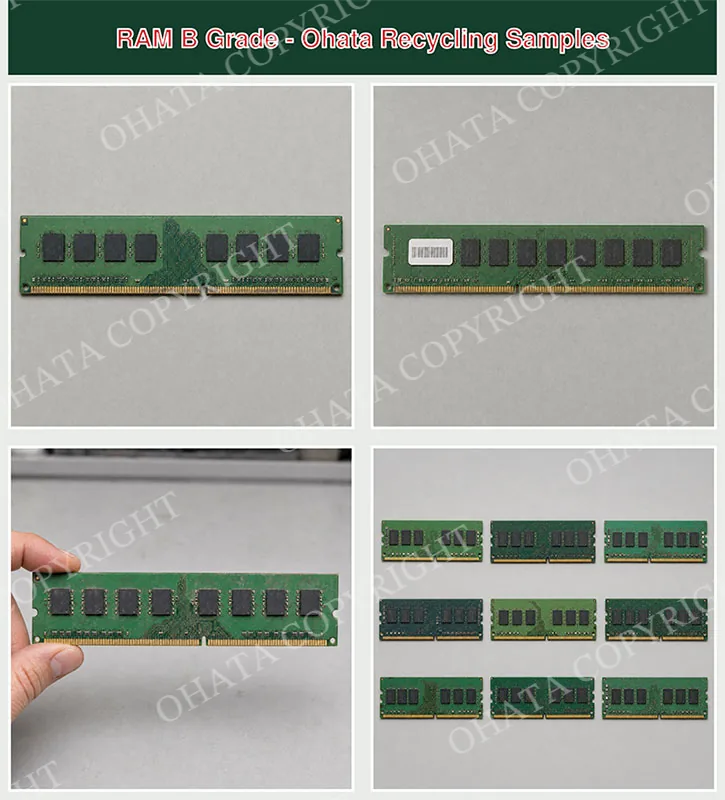
A typical RAM module contains a multilayer printed circuit board, memory chips, solder joints, resistors, capacitors, and an edge connector. Some server modules also contain registers, buffers, or components that support error correction. Copper is present in the PCB tracks and internal conductive layers that connect the memory chips to the computer.
RAM-B Grade includes several types of memory that do not meet the RAM-S or RAM-A requirements. This may include modules with aluminum heat spreaders or shields, silver- or tin-colored edge contacts, or previously trimmed contact sections. Because RAM-B includes different constructions, gold-plated contacts are not required on every qualifying module.
Recoverable metals may include:
Copper from PCB tracks, internal layers, and component connections
Gold from remaining plated contacts and certain electronic components
Nickel from plated surfaces and barrier layers
Tin and small quantities of silver from solder and conductive materials
Trace quantities of palladium in some electronic components
Aluminum from attached heat spreaders or shields
The type and concentration of these materials vary by module. Ohata therefore assigns the grade according to physical construction, connector finish, attachments, component population, completeness, and condition rather than estimating a fixed metal yield from appearance alone.
Ohata RAM-B Grade Classification and Identification Guide
RAM-B Grade is determined through physical inspection rather than brand, model, capacity, speed, or DDR generation. Modules from different manufacturers and production periods may receive the same grade when they meet the same Ohata classification requirements.
RAM-B Grade may include:
Shielded RAM: Modules with aluminum heat spreaders, shields, or similar attached coverings.
Silver-edge RAM: Modules with silver- or tin-colored edge contacts rather than standard gold-plated contacts.
Trimmed RAM: Modules with previously cut or removed contact sections that remain recognizable as memory.
Modules with major components present: The memory chips and other important electronic components should generally remain attached.
Modules in acceptable condition: Normal labels, light dust, minor scratches, and ordinary handling wear may be acceptable.
Material without severe contamination: Heavy mud, oil, chemicals, hazardous residue, batteries, and unrelated attachments may affect classification or result in rejection.
Customers do not need to remove heat spreaders or shields before delivery. Previously trimmed modules may qualify for RAM-B Grade, but modules should not be cut or trimmed to prepare them for sale.
DDR generation is only one identification detail. A newer module is not automatically assigned a higher grade, and an older module is not automatically more valuable. Final classification considers the module’s construction, connector finish, installed components, attachments, completeness, and condition.
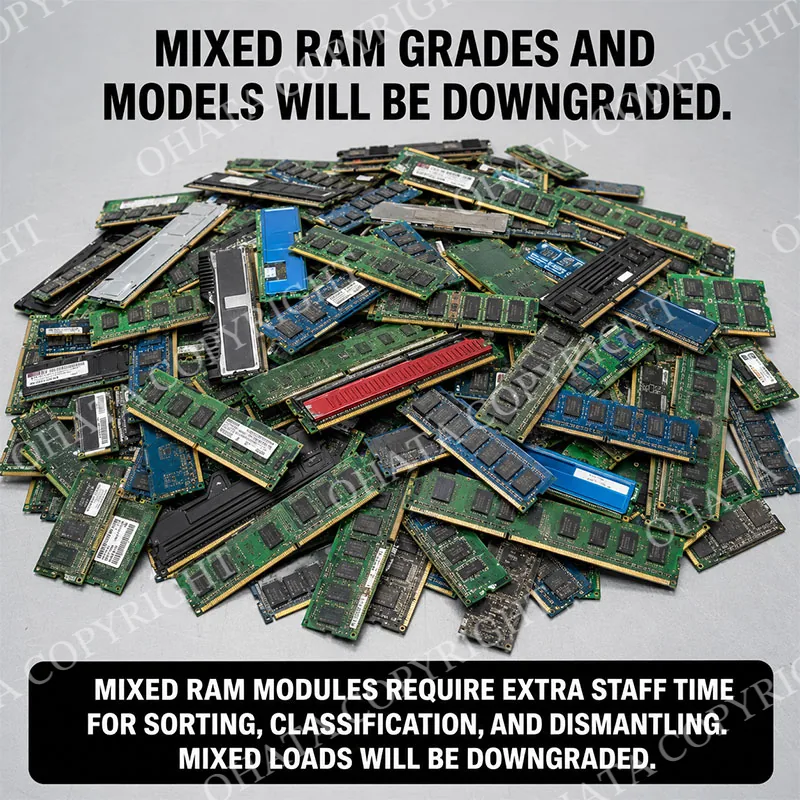
For accurate evaluation, please keep RAM-B modules separate from RAM-S, RAM-A, lower-grade memory, broken boards, blank modules, and unrelated electronic material. Mixed loads may require additional sorting and may receive a different classification.
Recoverable Materials, Buying Standards, and Handling
RAM-B is purchased as recyclable electronic material, so the modules do not need to function. Testing memory capacity, operating speed, or compatibility is generally unnecessary for scrap evaluation. Final classification, measured weight, and buying value are confirmed through physical inspection.
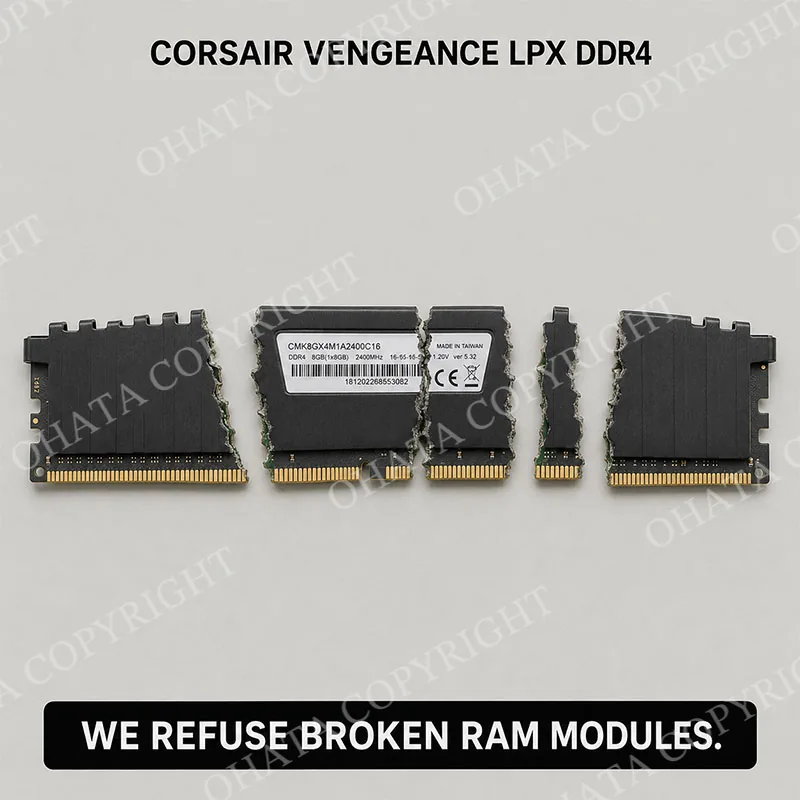
To qualify for the standard B Grade buying price, RAM should be delivered complete, clean, dry, and reasonably sorted. Brand labels and original identification stickers may remain attached. Ordinary labels usually do not affect classification unless they conceal damage, contamination, or evidence that components have been removed.
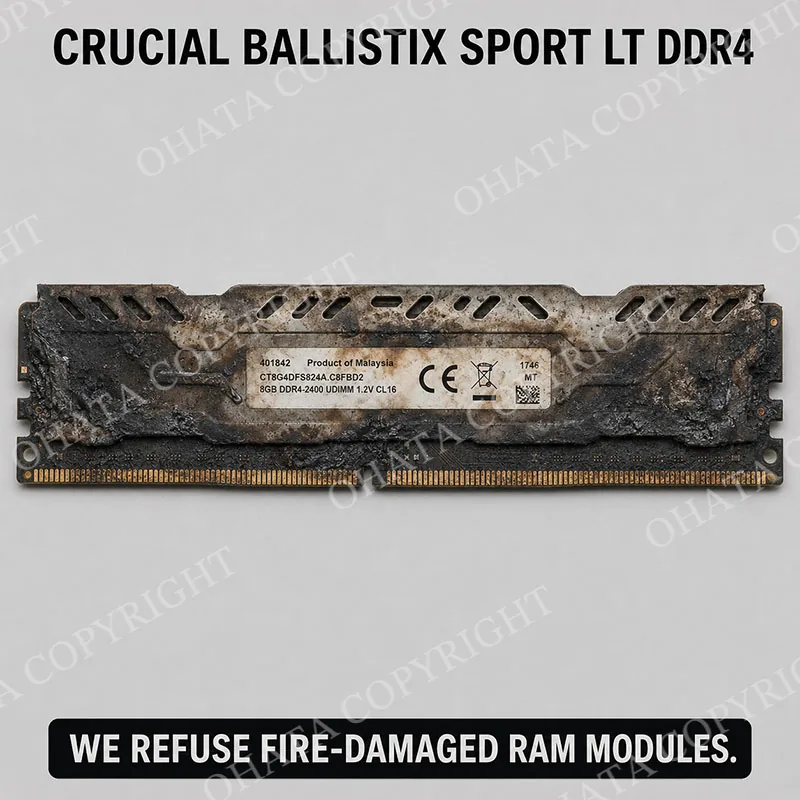
The following conditions may cause a downgrade:
Gold fingers that have been cut, sanded, heavily worn, or removed
Missing memory ICs or other important electronic components
Broken, cracked, crushed, or severely bent PCBs
Heavy corrosion, fire damage, or extensive heat discoloration
Excessive dirt, oil, mud, adhesive, or mixed non-RAM material
Mixed RAM grades that require additional sorting
Incomplete modules produced by prior manual dismantling
Severely burned, chemically contaminated, or hazardous material may be rejected instead of downgraded. Final acceptance depends on the actual condition of the shipment.
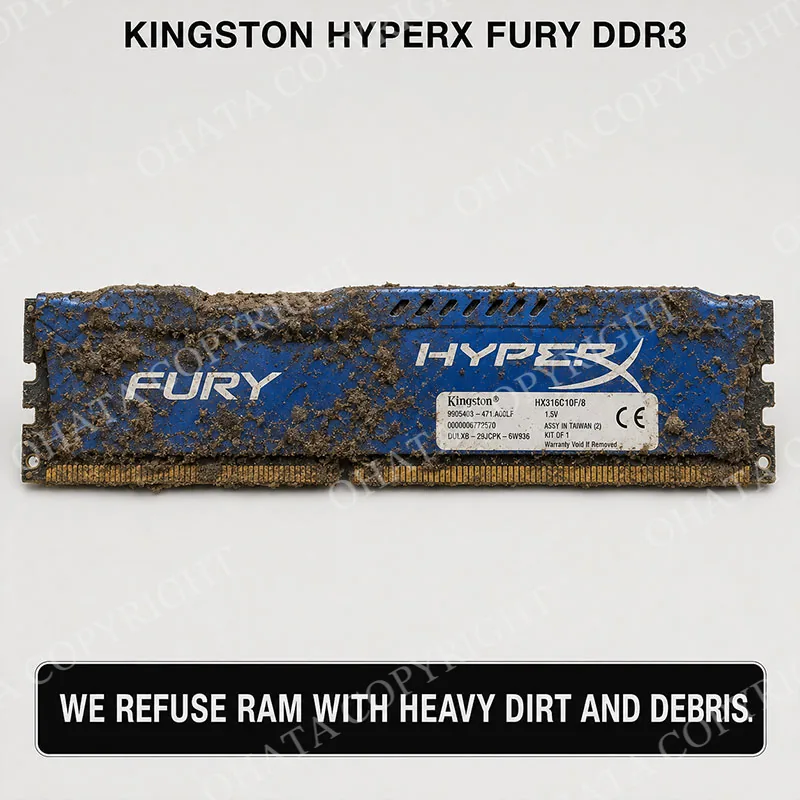
RAM should be stored in a dry container and protected from rain, saltwater, chemical exposure, and excessive mechanical pressure. Suppliers should not burn the boards, grind the contacts, remove chips, or attempt chemical gold recovery. Such processing creates safety risks and usually reduces the material’s commercial recycling value.
For larger shipments, separate bags or containers should be used for different Ohata grades. Clear labeling—such as “RAM B Grade”—helps speed up inspection, weighing, and settlement. Higher-grade memory should never be mixed with lower-grade or damaged modules if the supplier wants to preserve its full classification value.
Comparison and Ohata Classification
RAM-B Grade is a separate category for memory modules with physical characteristics that prevent them from qualifying for RAM-S or RAM-A Grade. Common examples include modules with aluminum heat spreaders or shields, silver- or tin-colored edge contacts, and previously trimmed contact sections.
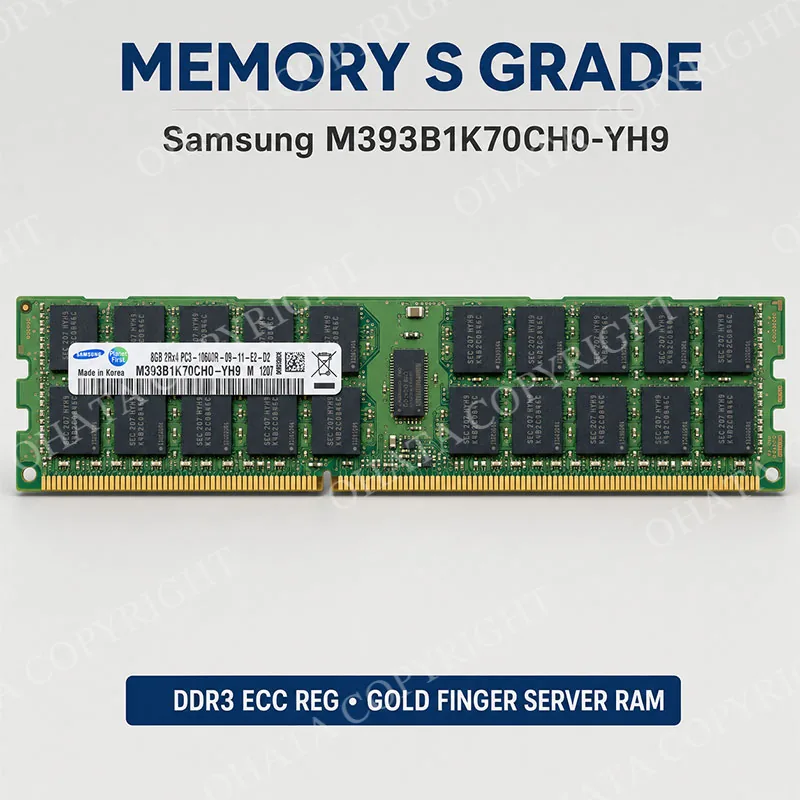
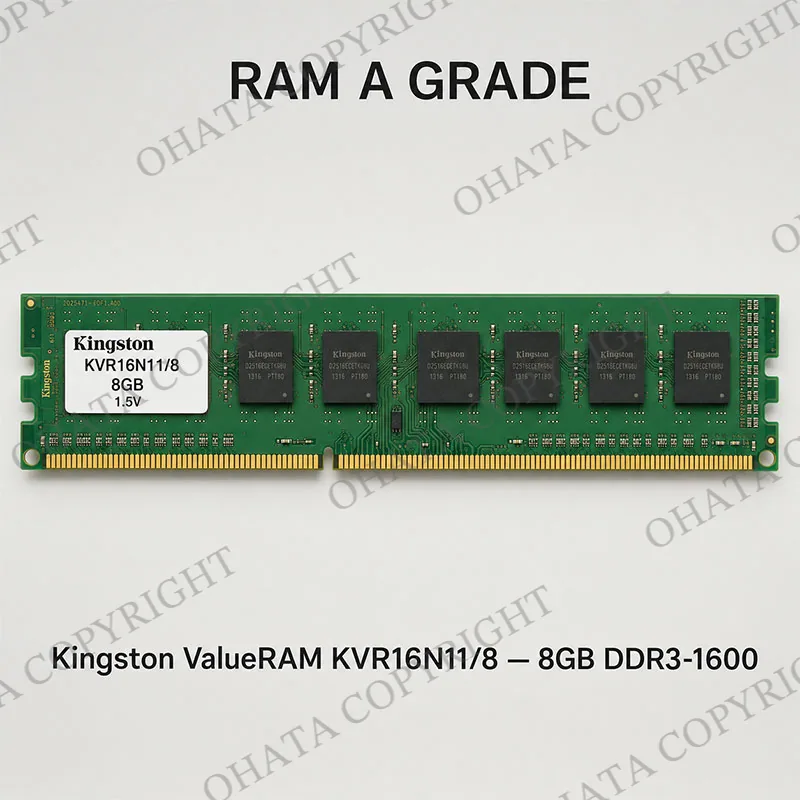
RAM-S Grade primarily includes qualifying server or enterprise memory with gold-plated contacts, ECC or registered characteristics, and high component density. RAM-A Grade generally includes standard desktop DIMMs and laptop SO-DIMMs with intact gold-plated edge contacts.
RAM-B Grade may include desktop, laptop, or server memory when its connector finish, attached shielding, or trimmed condition matches the RAM-B requirements. It is not defined only by having a lower metal concentration. Its classification reflects the module’s construction, attachments, connector type, completeness, condition, and processing requirements.
Broken, heavily contaminated, burned, stripped, or substantially incomplete modules may receive RAM-C Grade or another lower classification. Blank or nearly blank memory boards may receive RAM-D Grade. Severely burned, hazardous, or unidentifiable material may be rejected.
Once a module is confirmed as RAM-B Grade, it is evaluated at the applicable RAM-B Grade price. Brand and model do not determine the price by themselves. Classification considers the module’s construction, connector finish, attachments, components, completeness, condition, contamination, and processing requirements.
Learn more about Ohata's RAM recycling classifications
RAM-S(Gold finer server RAM) Grade
RAM-A(Gold finer desktop and laptop RAM) Grade
RAM-B(shelded/silver edge/trimmed RAM) Grade
RAM-C(mix and damaged RAM) Grade
RAM-D(mix and damaged RAM) Grade
FAQ
- 1. What is today’s price for RAM-B (Shielded/Silver-Edge/Trimmed RAM) Grade buying?
- As of Sep 19,2026, Ohata Shoji America Inc., (Seattle, WA, United States) is purchasing RAM-B (Shielded/Silver-Edge/Trimmed RAM) Grade buying at 18.00 (USD/lb). We provide competitive scrap prices in Seattle, Bellevue, Renton, Tukwila, Kent, SeaTac, Tacoma, Everett, and surrounding communities.
- 2. What is RAM B Grade?
- RAM B Grade is an Ohata recycling classification for complete memory modules with a moderate recoverable-material value. Any RAM that meets the B Grade inspection standard is purchased at the RAM B Grade price.
- 3. Is RAM B Grade limited to a particular brand or model?
- No. RAM B Grade may include modules from different manufacturers, models, capacities, and production periods. Classification is based primarily on construction, components, condition, and recycling value.
- 4. Can DDR, DDR2, DDR3, and DDR4 modules qualify as RAM B Grade?
- Yes. Different RAM generations may qualify when their physical construction and recoverable-material profile meet the Ohata B Grade standard. Memory generation alone does not determine the grade.
- 5. How is RAM B Grade different from RAM S Grade and RAM A Grade?
- RAM S Grade and RAM A Grade generally have higher-value construction, component density, contact design, or recoverable precious-metal content. RAM B Grade has a moderate material profile and does not meet the higher-grade requirements.
- 6. Does the RAM need to be functional?
- Not necessarily. RAM is purchased as electronic scrap, so operational performance is not the primary grading factor. Complete, clean, and physically acceptable non-working modules may still qualify as RAM B Grade.
- 7. What materials can be recovered from RAM B Grade?
- Recoverable materials may include gold from edge contacts, copper from PCB layers, silver and tin from solder, nickel from plated surfaces, and small quantities of palladium from certain electronic components.
- 8. Can RAM with missing memory chips qualify for the standard B Grade price?
- Normally, no. Modules with removed memory chips or other important components have reduced recycling value and may be downgraded. Complete modules should be delivered whenever possible.
- 9. What is your minimum quantity policy for online sellers?
- True to our core philosophy, our digital system welcomes recycling projects starting from just 1 lb or a single device.
- 10. How does Ohata Shoji America Inc. maintain its industry standards?
- We combine 25+ years of Japanese precision recycling expertise from our parent company, Ohata Shoji Inc., with modern American e-commerce logistics.
- 11. How fast will I receive my funds after my hardware is received?
- Payouts are processed automatically through our e-commerce portal within 24 to 48 hours of physical inspection and verification.
Related Items
Contact us by phone or email