

Hello everyone, it's Nicole!
Today is July 28, 2026.
It looks like a pleasant day in Seattle, with partly sunny skies and temperatures around 74°F. Hopefully, everyone gets a chance to enjoy the comfortable summer weather.
I hope you are all having a good day. I certainly am, because I am happy to announce that it is officially Jimothy Summer!
Jimothy, the unusually compressed raccoon spotted around Seattle’s Ballard neighborhood, quickly became a local favorite after videos of him began circulating online. His popularity has spread well beyond Ballard. A Jimothy mascot even appeared at T-Mobile Park and won the Seattle Mariners’ fourth-inning Salmon Run against fellow mascots King, Silver, Sockeye, and Humpy.
It goes without saying that everyone in our Seattle office is a big fan of Jimothy. The excitement has even reached our offices in Japan, where he reminded everyone of Punch, the young monkey known for carrying around his stuffed orangutan.
I, for one, love how the antics of animals around the world can bring people some unexpected joy.
Today, I am introducing the identification and buying conditions for the GIGABYTE GA-Z97MX-Gaming 5 Rev. 1.0 desktop motherboard.
How to Identify the GIGABYTE GA-Z97MX-Gaming 5 Rev. 1.0
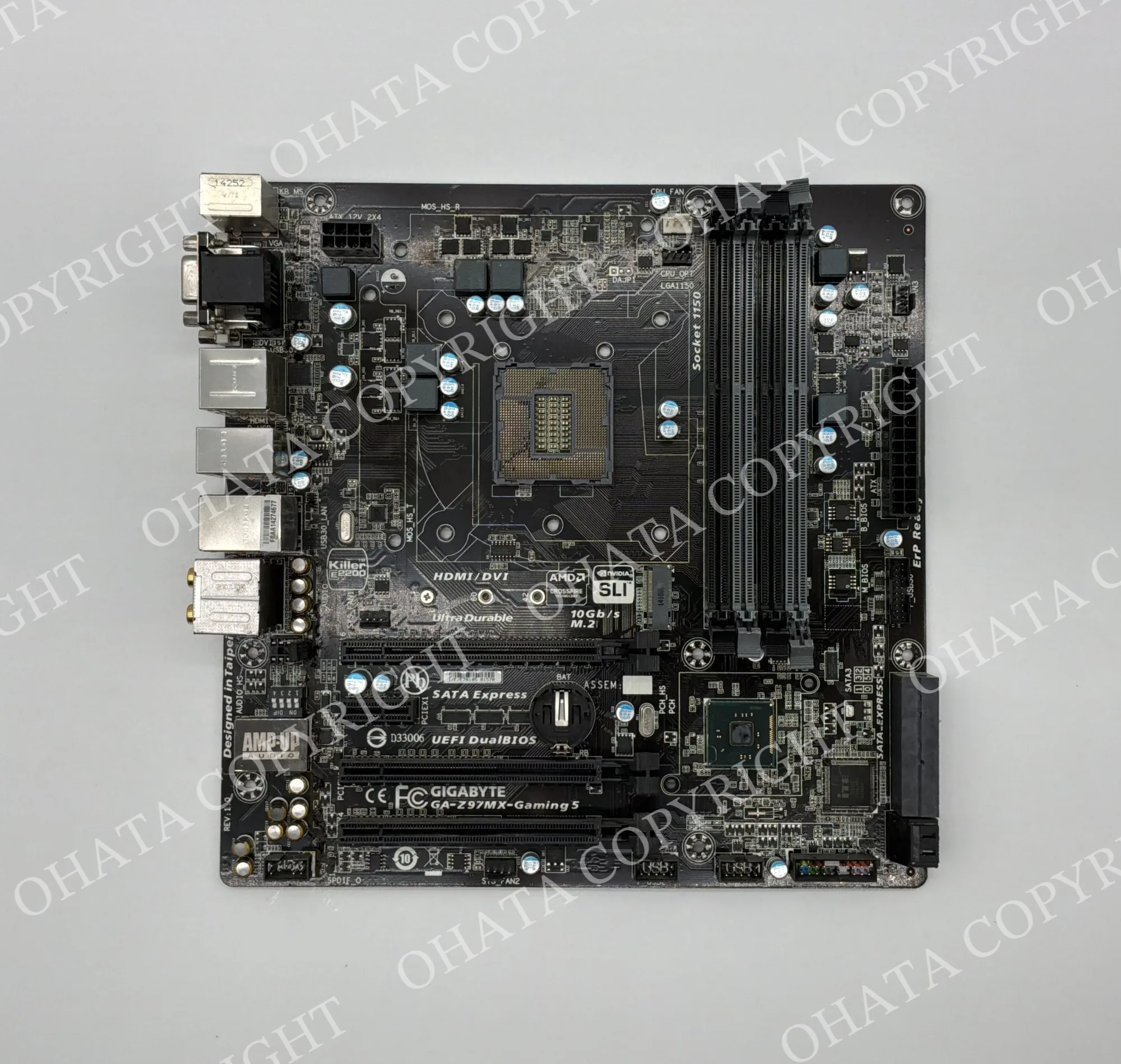
If you think you are preparing a GIGABYTE GA-Z97MX-Gaming 5 motherboard for recycling, the easiest way to identify it is by the GA-Z97MX-Gaming 5 and REV: 1.0 markings printed directly on the PCB.
This compact micro-ATX gaming motherboard was designed around Intel’s Z97 platform. It uses an LGA1150 CPU socket and supports compatible fourth- and fifth-generation Intel Core processors.
Unlike a basic office motherboard, it includes multi-GPU expansion support, gaming-oriented Ethernet, upgraded audio circuitry, M.2 storage, and SATA Express connectivity.
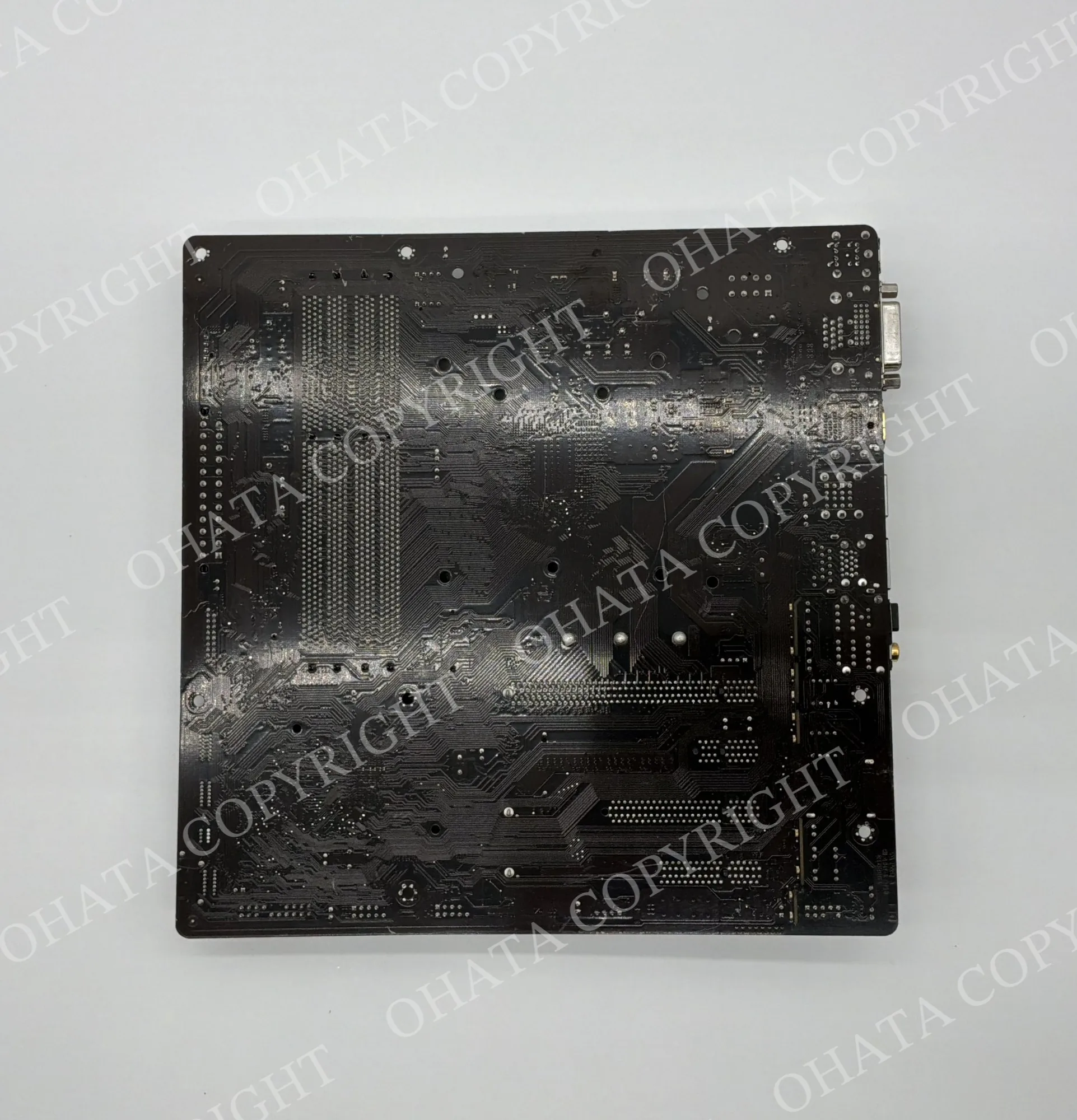
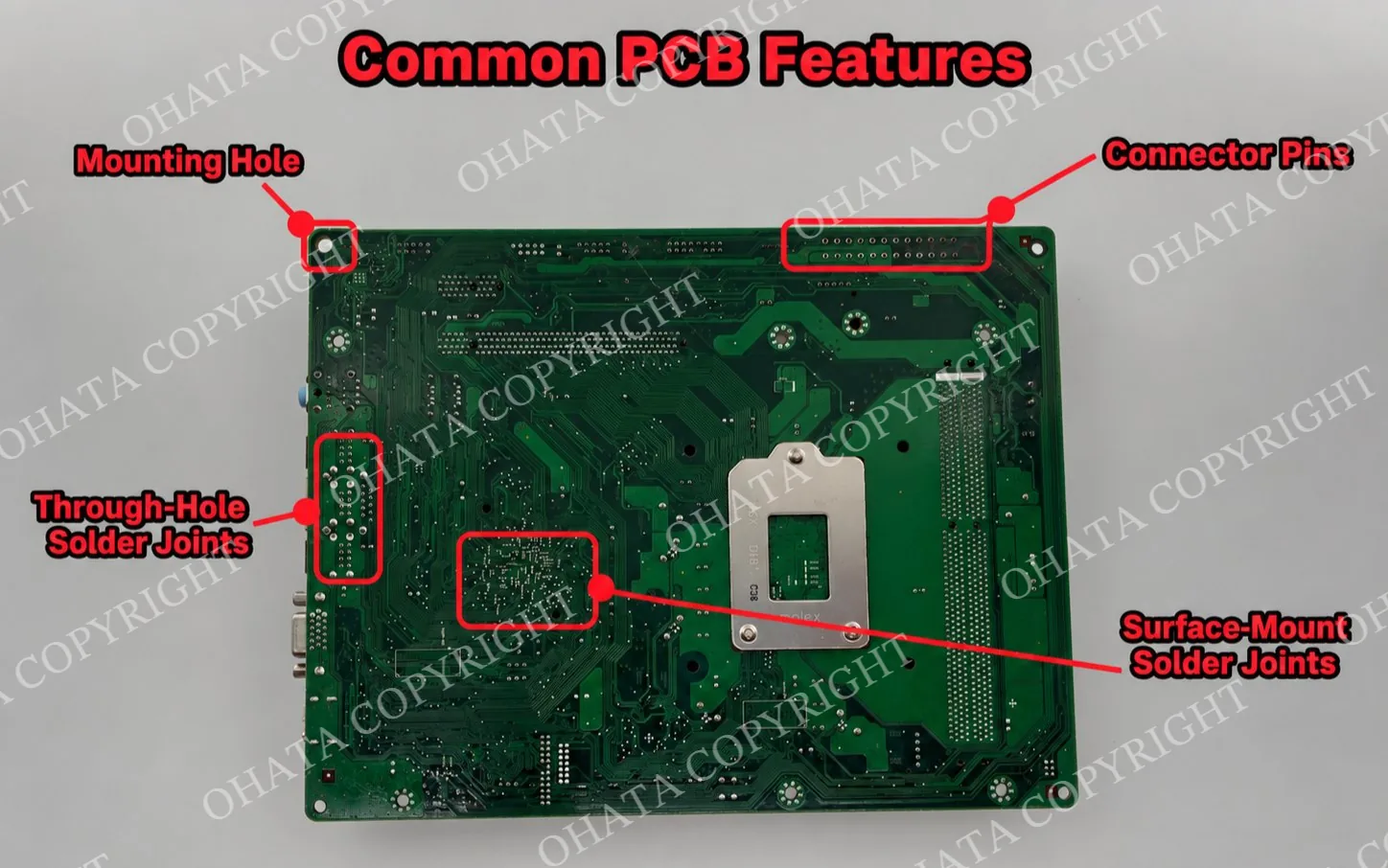
Photographs of both sides are helpful because the rear may show corrosion, staining, damaged traces, or repair work that is not easy to see from the front.
Key Components & Features
Identifying Features:
Intel LGA1150 CPU socket
Intel Z97 Express chipset
Four DDR3 memory slots
Multiple PCI Express expansion slots
M.2 storage connector
SATA Express connector
AMP-UP Audio section
Killer Ethernet controller
GIGABYTE DualBIOS
Components That Affect Identification and Condition:
The following components help identify the motherboard and assess its completeness and recycling condition:
Intel Z97 chipset
CPU socket
Memory slots
Networking controller
Audio controller
BIOS chips
Power-management components
Expansion slots
Rear I/O connectors
Gold-plated contact areas
Some connectors and contacts may use plated materials. However, the actual recoverable content depends on the board’s construction and the recycling process.
Ohata Grade Classification
Under the Ohata Board Scrap Classification System, this motherboard is classified as D Grade Board Scrap. It receives this grade because it is a modern consumer desktop motherboard with a metal-framed Intel LGA CPU socket. Its gaming features, original retail price, or technical performance do not independently raise its recycling grade. The motherboard does not need to be functional.
Preferred Selling Condition
For the best evaluation, it should remain:
Complete and identifiable
Dry and reasonably clean
Kept as one whole PCB
Structurally intact
Supplied with its major soldered ICs and Intel Z97 chipset
Supplied with its CPU socket, slots, connectors, and rear I/O intact
Separated from other board grades when practical
A missing CPU does not change the board’s D Grade classification. However, a compatible CPU may be evaluated as an additional recyclable item when included.
Conditions That May Lead to Downgrade or Rejection
Boards may be downgraded if they have:
Missing CPU or memory
Missing heatsinks
Bent CPU-socket contacts
Broken slots or connectors
Light corrosion
Dirt or staining
Thermal-compound residue
Minor PCB damage
Mixed board grades
Minor damage may still be reviewed, but the final condition must be confirmed during inspection.
Boards may be rejected if they have:
Missing major soldered ICs
Missing Intel Z97 chipset
Severe burn damage
Heavy corrosion
Chemical contamination
Battery leakage
Large broken or cut PCB sections
Heavy mud, oil, or debris
Drilled or heavily stripped PCBs
Household garbage or unrelated waste mixed into the lot
Final grade, acceptance, and purchasing value are confirmed after physical inspection.
Introducing Ohata.ai Vision
If you're unsure whether you've identified your board correctly, upload clear photos to Ohata.ai Vision. Our AI-assisted platform helps individuals and businesses identify eligible motherboards and other electronic scrap before a professional evaluation.
For the best identification result, upload:
A full front photo
A full rear photo
A close-up of the model name
A close-up of the revision marking
Clear photos of any missing or damaged areas
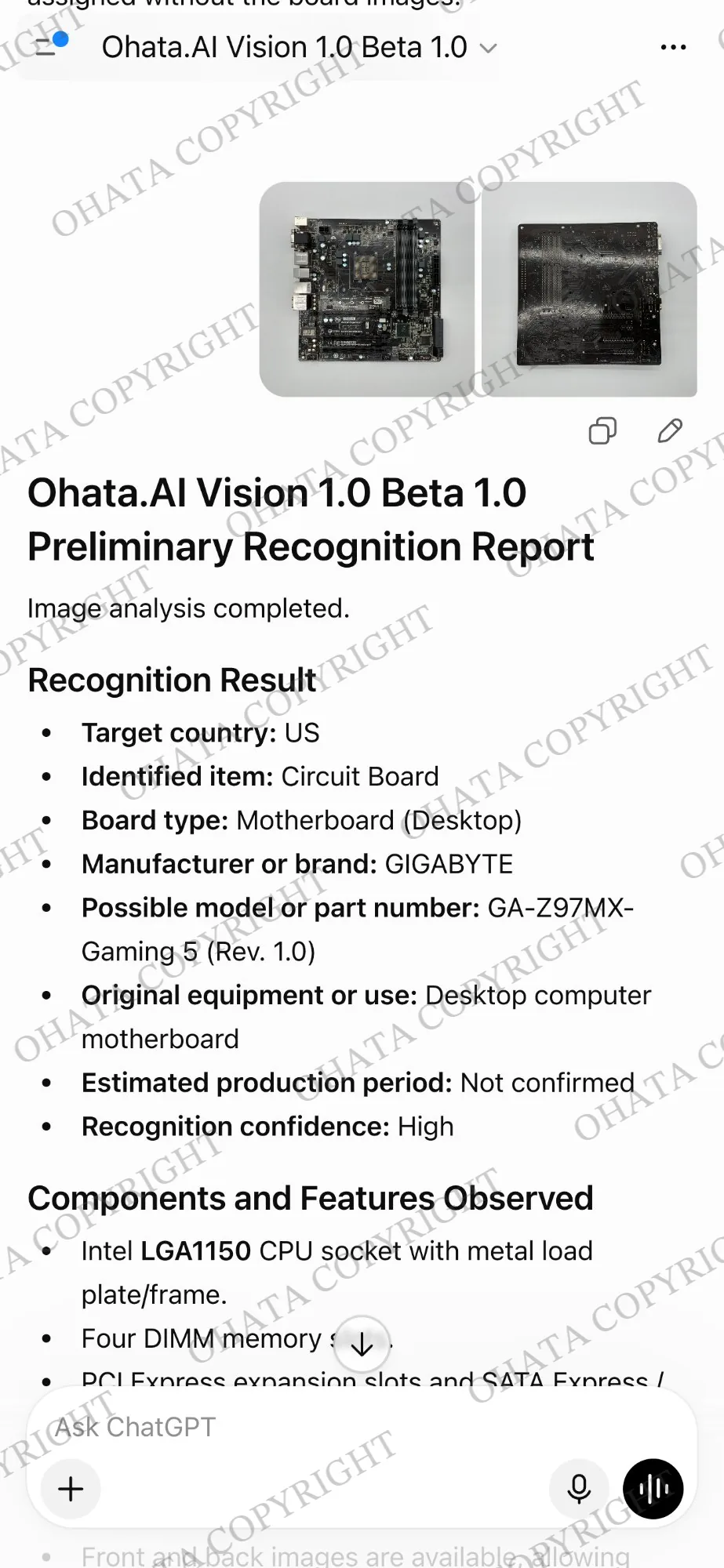
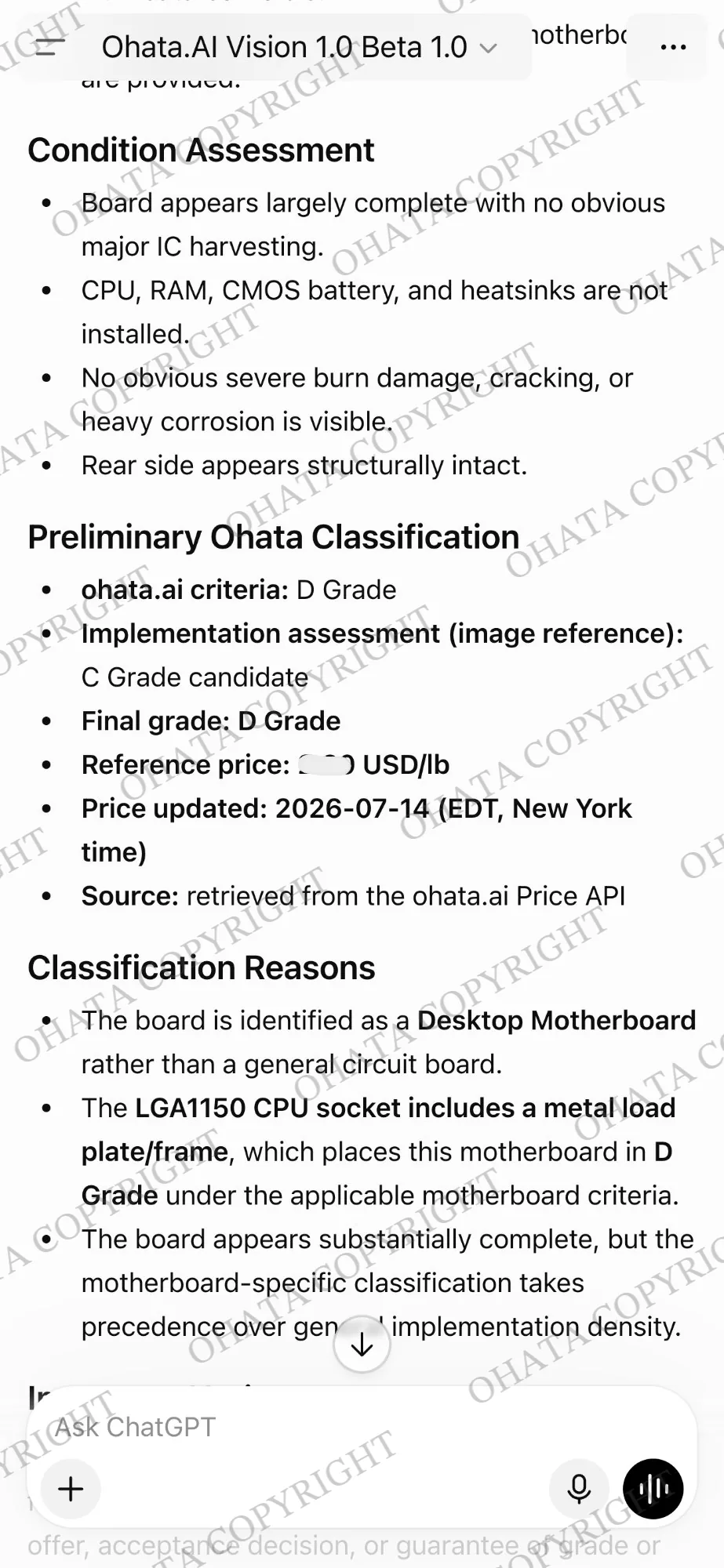
Ohata.ai Vision provides identification and reference information. It should not be treated as a guarantee of the final purchasing category, acceptance decision, or price.
Photographs cannot always show the complete condition of an item. Final evaluation may still depend on physical inspection, verified weight, missing components, contamination, current purchasing conditions, and the material actually received.
Try Ohata.ai Vision
Ohata Shoji America Seattle Yard
Ohata Shoji America operates an e-scrap purchasing yard serving the Seattle area.
Ohata Shoji America Inc.
423 S Horton St, Unit B
Seattle, WA 98134
USA
Phone: +1 (206) 602-9022
Email: info@ohata.ai
Website: https://ohata.ai/us/en
The yard handles eligible electronic materials from individuals and businesses, subject to current purchasing categories and receiving conditions. Walk-in customers are welcome during normal business hours. Businesses with larger quantities should contact the Seattle Yard in advance.
Frequently Asked Questions
1. Does the motherboard need to work?
No. It does not need to boot or function. Evaluation is based on its condition, completeness, construction, and recoverable materials.
2. Is a CPU required?
No. A missing CPU does not change the motherboard’s D Grade classification. A CPU may be evaluated separately when included.
3. Can damaged boards still be evaluated?
Minor damage may still be reviewed. Severe corrosion, burn damage, large broken sections, or missing major ICs may result in a downgrade or rejection.
4. Should I remove chips or connectors?
No. Major soldered chips, connectors, and other principal components should remain attached whenever possible.
5. Can I mix this board with other motherboard grades?
Different board grades should be separated when practical. Mixed materials may require additional sorting and may receive a different overall evaluation.
6. What is the minimum purchasing quantity?
The minimum purchasing quantity for this item is 1 lb.

Comments
0 comments