
-
We purchase Board D Grade material starting from just 1 lb.
-
Board D Grade covers lower-value computer and peripheral circuit boards with limited precious-metal content, moderate or low component density, and standard consumer-grade construction. All boards meeting the Ohata D Grade standard are purchased at the same grade price.
-
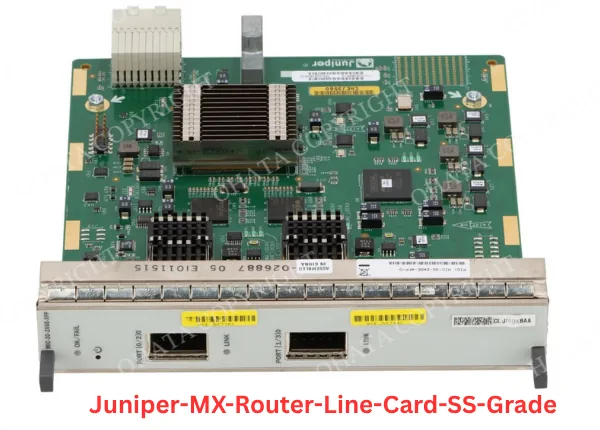
Typical materials include modern consumer desktop motherboards with metal CPU sockets, integrated motherboards, lower-value peripheral cards, selected non-Apple laptop boards, and qualifying game-console boards.
-
Classification is based on the board’s construction, component density, socket and connector design, gold-bearing areas, completeness, condition, and processing requirements.
-
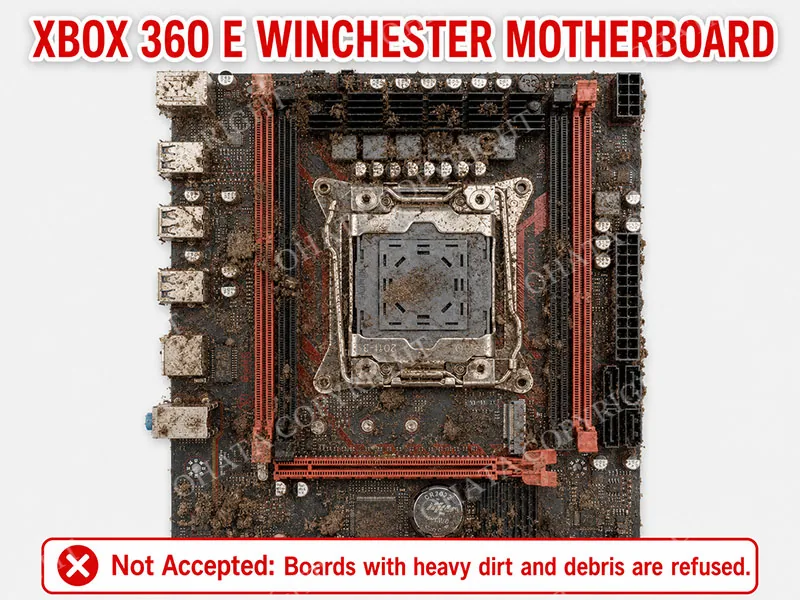
Boards do not need to function, but they should remain recognizable, reasonably complete, dry, and free from severe contamination.
-
Final classification, measured weight, and buying price are confirmed after physical inspection.
Board D Grade (Lower Computer Board) Buying scrap price
-
We purchase Board D Grade material starting from just 1 lb.
-
Board D Grade covers lower-value computer and peripheral circuit boards with limited precious-metal content, moderate or low component density, and standard consumer-grade construction. All boards meeting the Ohata D Grade standard are purchased at the same grade price.
-
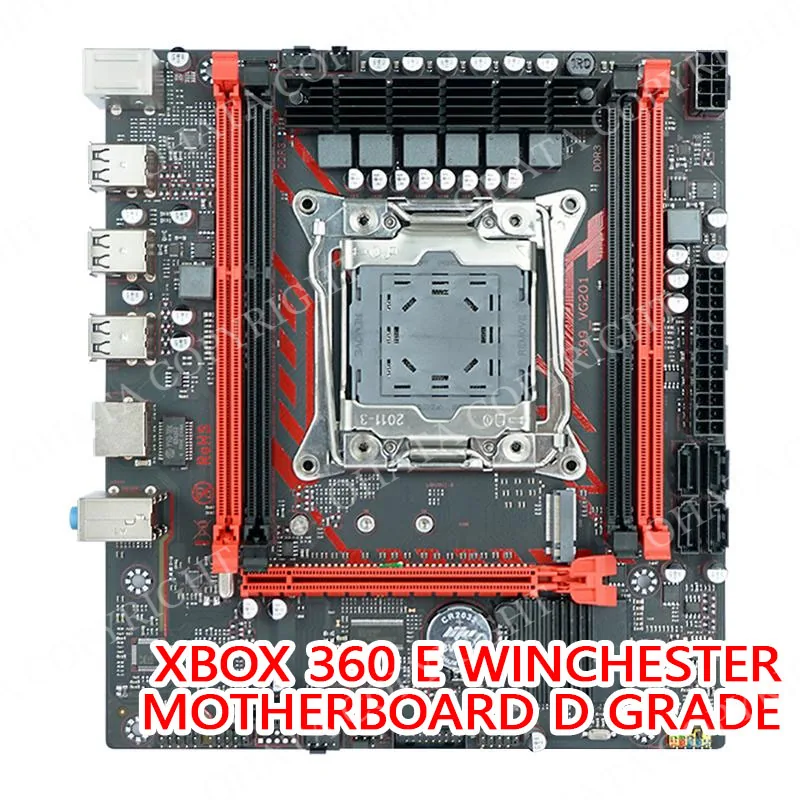
Typical materials include modern consumer desktop motherboards with metal CPU sockets, integrated motherboards, lower-value peripheral cards, selected non-Apple laptop boards, and qualifying game-console boards.
-
Classification is based on the board’s construction, component density, socket and connector design, gold-bearing areas, completeness, condition, and processing requirements.
-
Boards do not need to function, but they should remain recognizable, reasonably complete, dry, and free from severe contamination.
-
Final classification, measured weight, and buying price are confirmed after physical inspection.
Buying Details of Conditions
Learn more about identifying and sorting S Grade circuit boards in our Wiki: D Grade Board Scrap: Metal CPU Socket, Console and Low-Density Card Guide
Learn more about: Circuit Board Scrap Classification: Ohata's 9 PCB Grades
Introduction, Construction, Components, and Recycling Value
The purpose of the D Grade classification is not to assign a separate purchase price to every motherboard model, computer brand, chipset generation, or device type. Instead, the classification creates a consistent commercial standard. Any circuit board that satisfies the Ohata D Grade characteristics, construction profile, component condition, and acceptance requirements should normally be purchased and processed at the applicable D Grade price.
For example, two desktop motherboards may come from different manufacturers and may support different processors, memory types, or operating systems. However, when both boards use similar metal CPU sockets, contain comparable component density, have limited gold-bearing areas, and match the same overall recycling profile, they may both be classified and priced as D Grade material.
This grade-based approach improves purchasing consistency, prevents model-name confusion, and allows recycling companies to evaluate large quantities of mixed computer boards more efficiently.
General Construction of D Grade Boards
Most D Grade computer boards are manufactured from multilayer FR-4 printed circuit board material. FR-4 consists of woven glass fiber reinforced with epoxy resin. Copper traces, copper planes, plated through-holes, solder pads, and internal conductive layers are incorporated into the board during manufacturing.
Compared with premium telecom, industrial, legacy computer, or enterprise boards, D Grade boards are usually designed with stronger attention to manufacturing cost. They may contain thinner precious-metal plating, fewer large integrated circuits, reduced gold-bearing connector areas, and more standardized consumer-grade components.
Common construction features include:
Multilayer FR-4 board material
Copper signal traces and internal power planes
Metal-covered CPU sockets
Standard memory sockets
PCI, PCI Express, Mini PCIe, or similar expansion interfaces
Consumer-grade chipsets and controller ICs
Aluminum heatsinks and cooling fans
Steel brackets, shielding, and socket retention hardware
Plastic connectors and headers
Surface-mounted resistors, capacitors, diodes, and transistors
Lead-free solder alloys on most modern boards
D Grade motherboards often use Intel LGA-style processor sockets or modern AMD AM- and FM-series socket designs. Many Intel consumer platforms have a metal socket cover and retention lever. The center of the socket may display a rectangular, double-L, or similarly structured contact pattern.
The presence of a metal CPU socket does not automatically make a board valuable enough for a higher grade. The complete board must be evaluated according to component density, socket design, gold-bearing areas, chipset quantity, expansion interfaces, overall construction, and recoverable material concentration.
Common Components
A typical D Grade motherboard may contain a CPU socket, chipset package, memory sockets, voltage-regulation components, expansion slots, audio circuitry, network controllers, storage connectors, USB controllers, rear I/O ports, and various power connectors.
Common components include:
Metal-covered Intel LGA CPU sockets
AMD AM- or FM-series processor sockets
One or more BGA chipset packages
DDR2, DDR3, DDR4, or similar memory sockets
PCI Express expansion slots
SATA storage connectors
Ethernet network controllers
Audio codec ICs
BIOS or firmware chips
MOSFETs and voltage-regulation modules
Ferrite-core inductors
Electrolytic and polymer capacitors
USB, HDMI, DisplayPort, VGA, audio, and RJ-45 ports
Fan headers and power connectors
D Grade expansion cards may still have gold-plated edge contacts. However, attached oversized heatsinks, cooling fans, metal brackets, or other low-value accessories increase the total weight without proportionally increasing precious-metal recovery. As a result, these cards may be classified below clean, stripped, high-density gold-finger cards.
Recycling Value
D Grade circuit boards remain commercially recyclable. Their value mainly comes from copper, followed by smaller quantities of gold, silver, palladium, tin, nickel, and other metals.
Copper is usually the most significant recoverable metal by weight. It is present in internal PCB layers, power planes, signal traces, inductors, transformers, connectors, and cables that may remain attached to the board.
Gold may be present in:
CPU socket contacts
Memory socket contacts
PCI Express edge contacts
Gold-finger expansion card connectors
Selected internal headers
Certain rear I/O connector contacts
Microscopic bonding wires inside some semiconductor packages
Nevertheless, many modern integrated motherboards use less gold than older computer boards. Some may not use gold bonding wires in the same way as older semiconductor packages. Others may lack an ENIG, or electroless nickel immersion gold, surface finish across important exposed board areas.
Silver may be present in solder materials, contacts, switches, and selected electronic components. Palladium may occur in small quantities inside multilayer ceramic capacitors and certain semiconductor components. Nickel is commonly used as an underplating or barrier layer beneath other connector finishes.
The recycling value of D Grade boards is therefore based on the complete material profile rather than one visible feature. A single gold-colored connector does not necessarily increase the entire board to a higher classification.
Ohata D Grade Classification and Identification Guide
Ohata D Grade includes lower-value computer boards and peripheral electronics that contain useful recyclable metals but relatively small amounts of recoverable precious metals.
Typical D Grade materials include:
Integrated motherboards without significant gold bonding-wire value or ENIG finish
Intel I-series consumer motherboards with metal CPU socket covers and retention levers
Desktop motherboards with metal CPU sockets
Gold-finger cards with oversized heatsinks or cooling fans
Lower-grade peripheral circuit boards
Non-Apple laptop motherboards without qualifying gold-tab BGA packages
Certain family game machine boards
These examples should be treated as identification references rather than an automatic model list. A board should be graded according to its actual construction and condition at the time of inspection.
Step 1: Identify the Board Type
The inspector should first determine whether the material is a desktop motherboard, laptop motherboard, expansion card, peripheral controller, or game-console board.
Desktop motherboards with modern consumer socket designs frequently fall into D Grade when they have ordinary component density and limited high-value contacts.
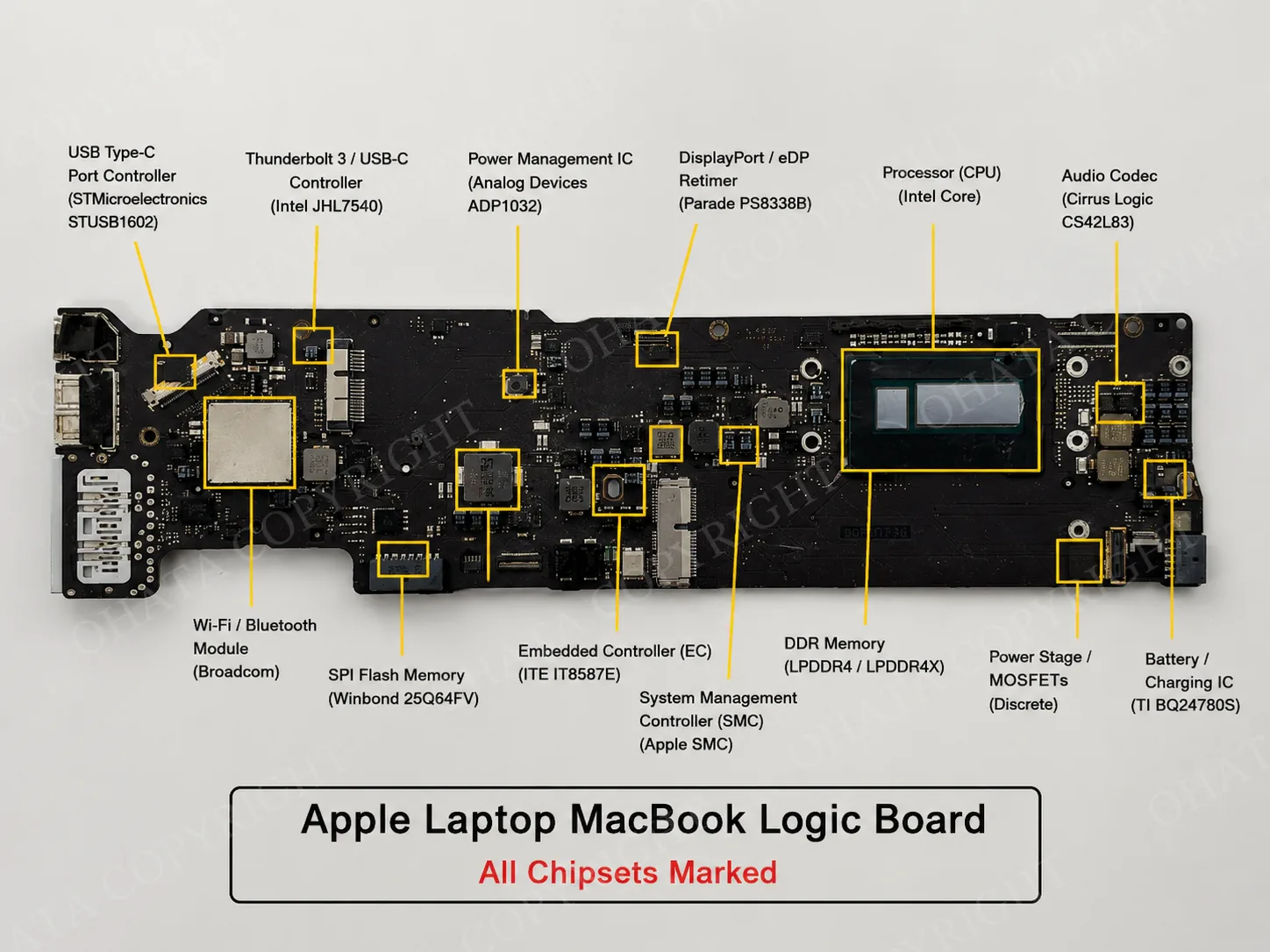
Non-Apple laptop motherboards may also qualify when they lack the gold-tab BGA packages or premium component coverage required for a higher laptop-board classification.
Peripheral cards with low IC density, large cooling systems, or limited gold-finger value are also common D Grade materials.
Step 2: Examine the CPU Socket
A metal CPU socket cover and lever are important D Grade indicators, especially on Intel I-series desktop platforms. The socket usually contains a dense field of spring contacts beneath a hinged metal retention frame.
However, inspectors should not grade the board based only on the socket. A single-socket server board, a dense industrial board, or a higher-value workstation board may use a metal socket but still qualify for another grade.
The surrounding board structure must also be examined. Important factors include board size, memory configuration, chipset density, expansion architecture, controller quantity, and intended industry application.
Step 3: Evaluate Component Density
D Grade boards generally have lower or moderate integrated-circuit density. Large empty areas, simplified controller sections, limited BGA coverage, and standardized consumer circuitry are common.
Boards with very dense IC coverage, multiple premium processors, industrial controllers, telecom processors, or specialized enterprise components may qualify for higher categories.
Conversely, boards with extremely sparse components and mostly relay, power, or appliance-control circuitry may belong to Appliance Board A or Appliance Board B rather than D Grade.
Step 4: Inspect Gold-Bearing Areas
Gold-bearing areas should be evaluated by size, thickness, quantity, and overall relevance to the board.
A D Grade board may contain gold-colored socket contacts, memory contacts, or edge connectors. Nevertheless, these areas are usually smaller or less valuable than those found on premium computer, telecom, industrial, or legacy boards.
Cards with gold fingers may still be D Grade when they retain oversized aluminum heatsinks, cooling fans, steel brackets, or other attachments. These attachments add low-value weight and increase dismantling requirements.
Step 5: Review Laptop and Game Boards Carefully
Non-Apple laptop motherboards should be examined for gold-tab BGA packages, processor type, board density, component coverage, and overall construction. A laptop board without qualifying gold-tab BGA components may be placed in D Grade when its recoverable value matches the lower-grade profile.
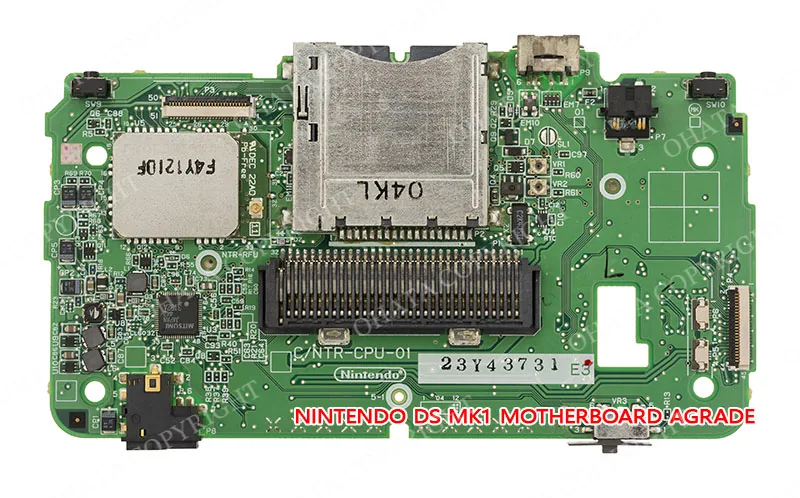
Game-console boards vary greatly by generation and design. Therefore, the phrase “family game machine board” should not be interpreted to mean that every game board belongs automatically to D Grade. Older or unusually dense game boards may qualify for another category, while simpler consumer-console boards may match D Grade.
Step 6: Confirm Completeness and Condition
A board that originally matched D Grade may be downgraded or rejected when important components have been removed or when the board is severely damaged.
Inspectors should check whether the board remains substantially complete, whether major chipset ICs are present, and whether excessive contamination or physical destruction has affected processing value.
Recoverable Materials
The principal recoverable material in D Grade boards is copper. Professional processors may recover copper from internal PCB layers, traces, power sections, inductors, connectors, and attached wires.
Smaller quantities of gold may be recovered from socket contacts, memory slots, edge connectors, and certain integrated circuits. Silver, palladium, tin, nickel, aluminum, and steel may also be separated during mechanical, thermal, chemical, or metallurgical processing.
Aluminum heatsinks can be recycled separately, but they should not be confused with high-value circuit board material. Large heatsinks and fans can reduce the effective board value per pound because they add weight while contributing little precious-metal content.
Steel may be found in CPU socket covers, brackets, shielding, screws, and connector housings. These materials are recyclable, but they generally have much lower unit value than copper or precious metals.
Buying Standards
D Grade boards should be purchased according to their grade characteristics, not according to brand reputation or resale popularity.
A well-known manufacturer does not automatically increase a board’s recycling classification. Similarly, a rare model does not necessarily have greater scrap value if its construction and material composition remain consistent with D Grade.
Acceptable D Grade boards should generally be:
Recognizable as computer or qualifying peripheral circuit boards
Substantially complete
Free from excessive dirt, mud, oil, and unrelated debris
Free from hazardous contamination
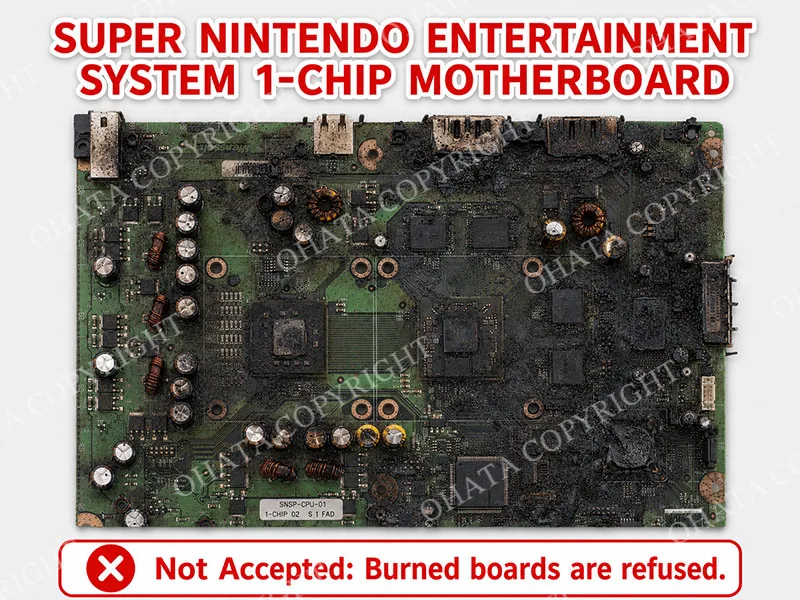
Free from severe fire damage or carbonization
Suitable for safe handling, weighing, storage, and processing
Separated from batteries, loose steel, plastics, and unrelated e-waste where required
Major chipset ICs should remain installed. Empty printed circuit boards or boards stripped of their principal semiconductor packages do not have the same value as complete D Grade boards.
CPU presence may increase the total recoverable value, but CPU pricing may be handled separately depending on the processor type and the company’s buying policy. The motherboard grade itself should still be determined according to the applicable board classification standard.
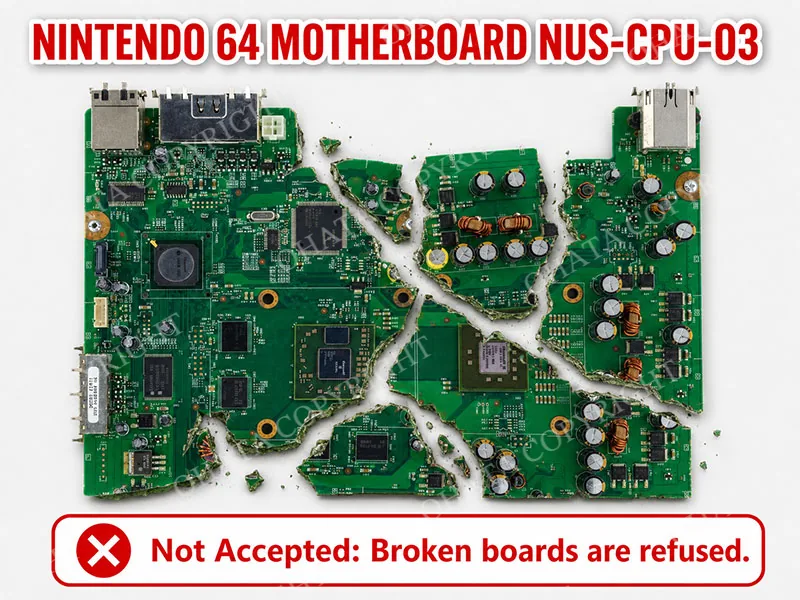
Broken boards, heavily burned boards, chemically contaminated boards, or boards covered with large quantities of dirt may be rejected or purchased under a lower-value category.
Sorting and Mixed Loads
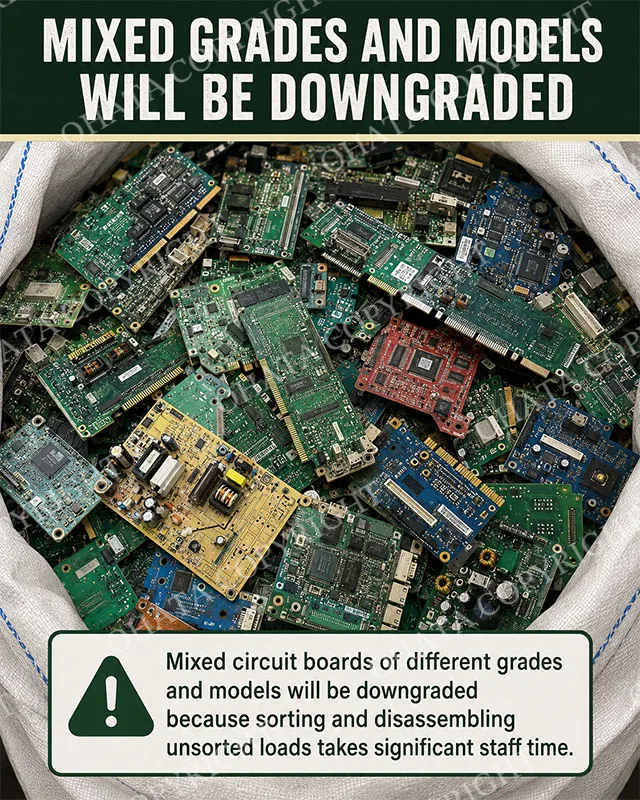
D Grade material should be separated from higher grades and from appliance boards.
When multiple grades and unrelated models are delivered together without sorting, additional labor is required for identification, dismantling, and classification. For this reason, mixed loads may be downgraded or priced according to the lowest significant grade in the shipment.
Sellers can improve transaction efficiency by separating:
Complete desktop motherboards
Laptop motherboards
Gold-finger cards
Peripheral controller boards
Game-console boards
Appliance boards
Loose heatsinks and fans
Batteries and hazardous components
Handling and Storage
D Grade boards should be stored in a dry, covered location. Exposure to rain, saltwater, industrial chemicals, or corrosive liquids may damage contacts and create unsafe handling conditions.
Boards should be placed in stable boxes, bins, pallets, or bulk containers. Heavy material should not be stacked in a way that crushes or breaks the boards beneath it.
Lithium batteries, large capacitors requiring special handling, toner contamination, mercury-containing parts, and other hazardous materials should be removed and managed according to applicable safety requirements.
Use appropriate gloves, eye protection, and safe lifting procedures. Boards with sharp brackets, broken fiberglass edges, or protruding solder points can cause cuts and puncture injuries.
Official Ohata Classification
Under the Ohata Classification System, a circuit board should be classified as D Grade when its overall construction, component density, socket design, precious-metal concentration, and intended application match the established low-grade computer-board profile.
This classification may include integrated consumer motherboards, Intel I-series motherboards with metal socket covers and levers, desktop motherboards with metal CPU sockets, lower-grade peripheral boards, gold-finger cards with oversized heatsinks or fans, non-Apple laptop motherboards without qualifying gold-tab BGA components, and certain family game machine boards.
The final classification should always be based on the physical board presented for inspection. Brand, model number, processor generation, or original retail price should not override the actual recycling characteristics.
All boards that meet the same D Grade standard should be purchased at the applicable D Grade price, subject to current market conditions, shipment quantity, contamination, completeness, and local processing requirements.
This uniform approach ensures that different brands and models are treated fairly. It also gives suppliers a clear understanding of why apparently different computer boards may receive the same recycling grade and purchase rate.
In conclusion, D Grade circuit boards are lower-value but still useful recyclable electronic materials. Their strongest recovery contribution is normally copper, supported by smaller quantities of gold, silver, palladium, tin, nickel, aluminum, and steel. Proper inspection, complete-board handling, accurate sorting, and separation from higher grades and appliance boards are essential for maintaining consistent Ohata classification and purchasing value.
View more Ohata's circuit board recycling classifications
Board SS Grade (high value telecom Board)
Board S Grade (high-end computer Board)
Board A+ Grade (Industrial and enterprise Board)
Board A Grade (premium computer Board)
Board B Grade (medium value board)
- 1. What is today’s price for Board D Grade (Lower Computer Board) Buying?
- As of Sep 20,2026, Ohata Shoji America Inc., (Seattle, WA, United States) is purchasing Board D Grade (Lower Computer Board) Buying at 2.38 (USD/lb). We provide competitive scrap prices in Seattle, Bellevue, Renton, Tukwila, Kent, SeaTac, Tacoma, Everett, and surrounding communities.
- 2. What is an Ohata D Grade circuit board?
- An Ohata D Grade circuit board is a lower-value computer or peripheral electronic board containing recyclable metals but relatively limited precious-metal content. Typical examples include modern desktop motherboards with metal CPU sockets, integrated consumer motherboards, lower-grade peripheral cards, certain non-Apple laptop motherboards, and selected game-console boards.
- 3. Are D Grade boards priced according to their brand or model?
- No. D Grade boards are normally purchased according to their physical construction, component density, socket design, gold-bearing areas, completeness, and overall recycling value. Different brands and models that meet the same D Grade standard are generally purchased at the same applicable D Grade price.
- 4. Why are many modern desktop motherboards classified as D Grade?
- Many modern consumer motherboards are manufactured with cost-efficient components, thinner precious-metal plating, fewer high-value integrated circuits, and less gold-bearing material than older computer, server, telecom, or industrial boards. Their main recoverable material is usually copper rather than gold.
- 5. Does a metal CPU socket automatically make a motherboard D Grade?
- No. A metal CPU socket is an important identification feature, especially on many Intel I-series consumer motherboards, but it is not the only grading factor. Board size, component density, application, processor configuration, memory architecture, chipset quantity, and connector value must also be inspected.
- 6. Can non-Apple laptop motherboards be classified as D Grade?
- Yes. Non-Apple laptop motherboards may qualify as D Grade when they lack the qualifying gold-tab BGA packages, premium component density, or construction characteristics required for a higher laptop-board classification. The final grade depends on the actual board presented for inspection.
- 7. What conditions may cause a D Grade board to be rejected or downgraded?
- Boards may be rejected or downgraded if they are broken into pieces, severely burned, heavily carbonized, covered with mud or excessive dirt, contaminated with hazardous substances, or stripped of major chipset ICs. Empty PCBs and incomplete boards do not have the same value as complete D Grade boards.
- 8. Should heatsinks, fans, batteries, and metal brackets be removed before delivery?
- Large heatsinks, fans, batteries, loose steel, and unrelated attachments should be separated when required by the buyer. These items add weight but usually contribute little precious-metal value. Batteries must be handled separately because they may create fire, transportation, and storage hazards.
- 9. What is Ohata Shoji America Inc.?
- We are a premier Green-Tech E-Commerce platform specializing in sustainable electronic scrap procurement.
- 10. Who can use the Ohata.ai online platform?
- Our digital ecosystem serves both individual consumers recycling small tech loads and large corporate enterprises liquidating mass data centre infrastructure.
- 11. How do you handle non-functional or broken hardware?
- Items that cannot be refurbished are routed to our automated material lines for high-yield precious metal resource recovery.
Related Items
Apple Laptop Logic Board Buying
Board A Grade (Premium Computer Board) Buying
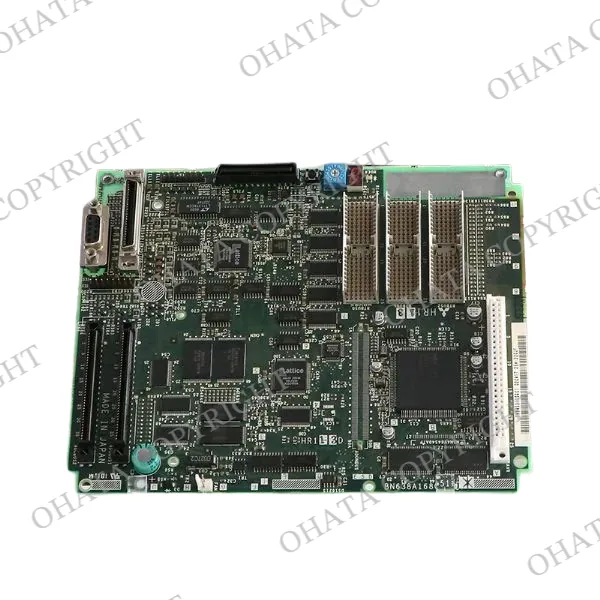
Board A+ Grade (Industrial and Enterprise Board) Buying
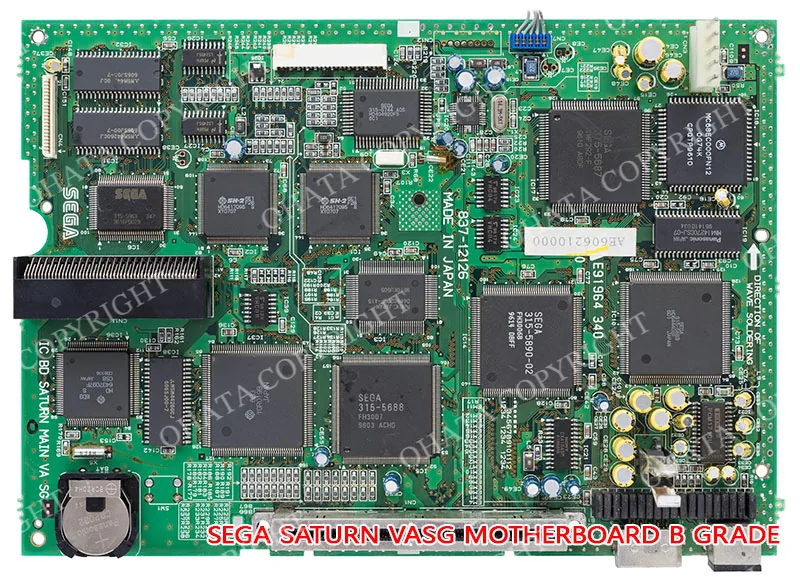
Board B Grade (medium value board) buying
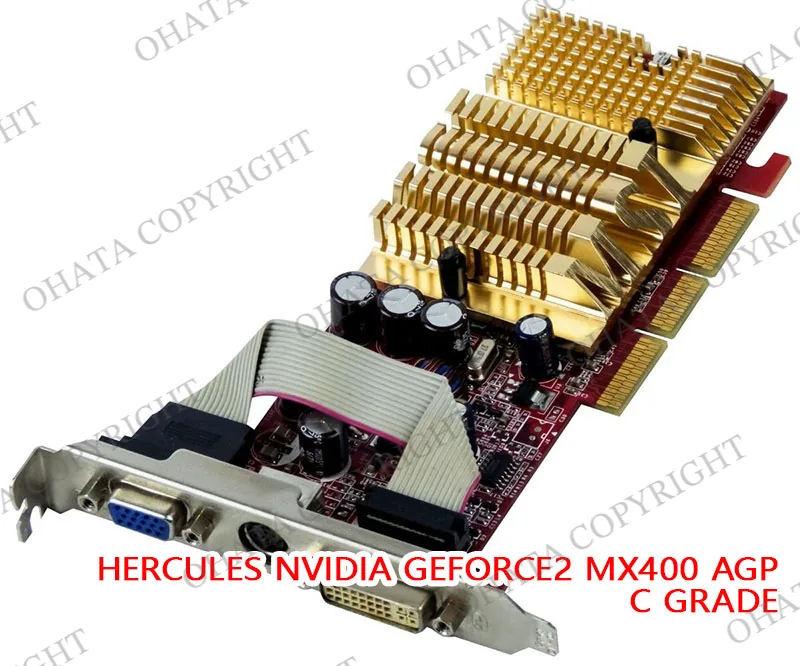
Board C Grade (Lower Premium Board) buying
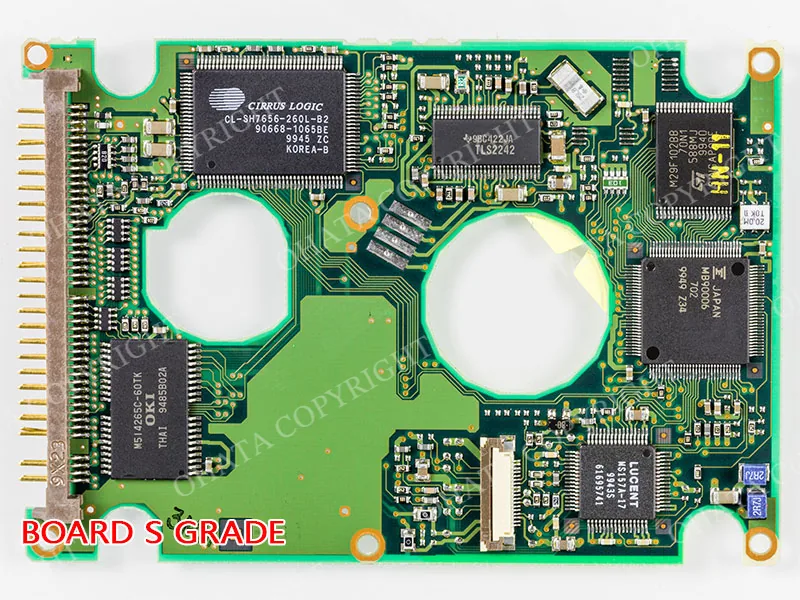
Board S Grade (High-End Computer Board) Buying