
-
We buy Power Supply with Wire from a minimum of 1 lb.
-
Power Supply with Wire covers complete computer power supplies that retain their principal output wiring and major internal components. All units meeting the Ohata Power Supply with Wire standard are purchased at the same grade price.
-
Qualifying units should retain the enclosure, internal circuit board, transformers, coils, heat sinks, and substantial output wiring. Units with removed wires, missing internal components, or empty enclosures belong in other recycling categories.
-
Buying value is based on construction, recoverable-material composition, completeness, attached wiring, condition, and processing requirements, not brand, model, wattage, or original selling price.
-
Different brands and wattages may remain together when all units meet the same standard. Other power supply grades are accepted but may require separate inspection, sorting, weighing, and pricing. Severely burned, hazardous, extensively dismantled, or heavily contaminated units may be rejected after inspection.
Power Supply with Wire Buying scrap price
-
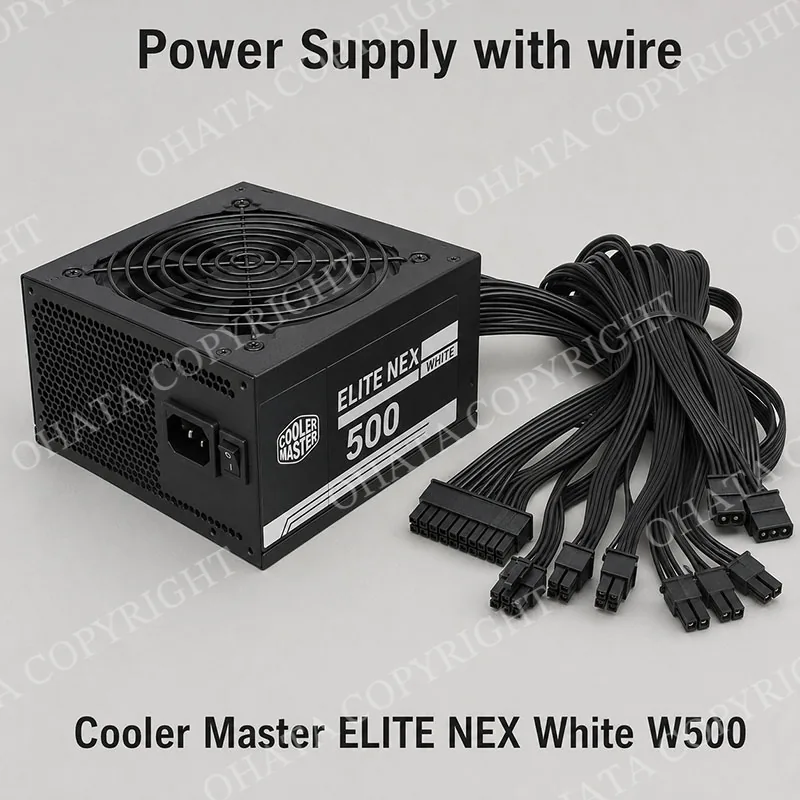
We buy Power Supply with Wire from a minimum of 1 lb.
-
Power Supply with Wire covers complete computer power supplies that retain their principal output wiring and major internal components. All units meeting the Ohata Power Supply with Wire standard are purchased at the same grade price.
-
Qualifying units should retain the enclosure, internal circuit board, transformers, coils, heat sinks, and substantial output wiring. Units with removed wires, missing internal components, or empty enclosures belong in other recycling categories.
-
Buying value is based on construction, recoverable-material composition, completeness, attached wiring, condition, and processing requirements, not brand, model, wattage, or original selling price.
-
Different brands and wattages may remain together when all units meet the same standard. Other power supply grades are accepted but may require separate inspection, sorting, weighing, and pricing. Severely burned, hazardous, extensively dismantled, or heavily contaminated units may be rejected after inspection.
Buying Details of Conditions
Introduction, Construction, Components, and Recycling Value
As long as a power supply satisfies the official Power Supply with wire acceptance standard, it is valued according to the price of this recycling grade. A brand name or high wattage rating does not automatically create a higher scrap grade. Ohata evaluates the physical construction, material composition, completeness, attached wiring and condition of the unit.
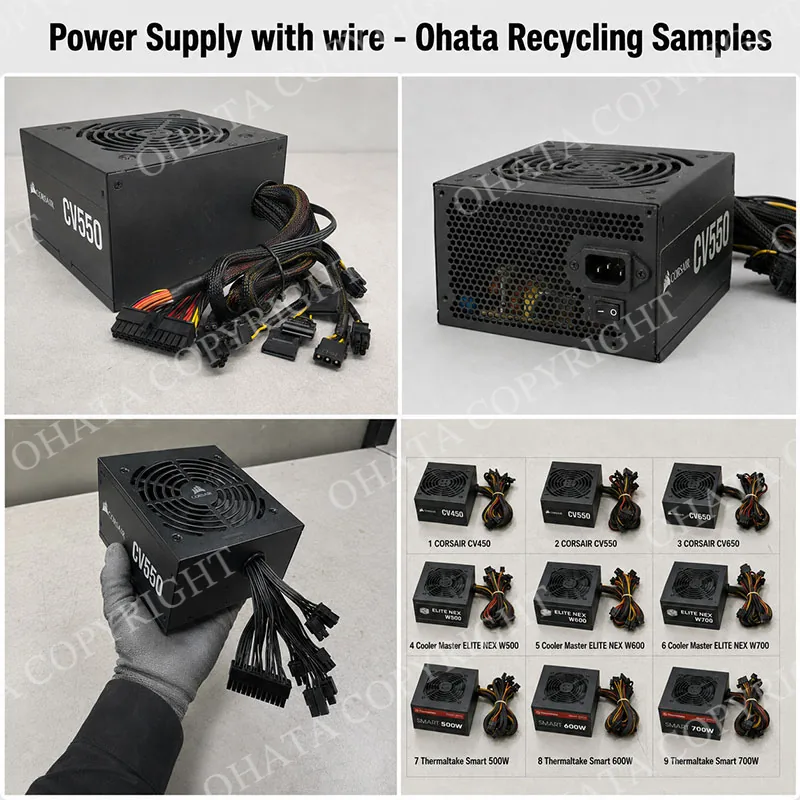
A computer power supply converts incoming AC electricity into regulated DC voltages used by motherboards, processors, storage devices, graphics cards and other components. Most desktop ATX power supplies consist of:
A painted or galvanized steel enclosure
An internal printed circuit board
Copper transformers, inductors and coils
Aluminum heat sinks
Cooling fans and electric motors
Capacitors, rectifiers, MOSFETs and control ICs
An AC inlet, power switch and internal fuse
Insulated copper output wires
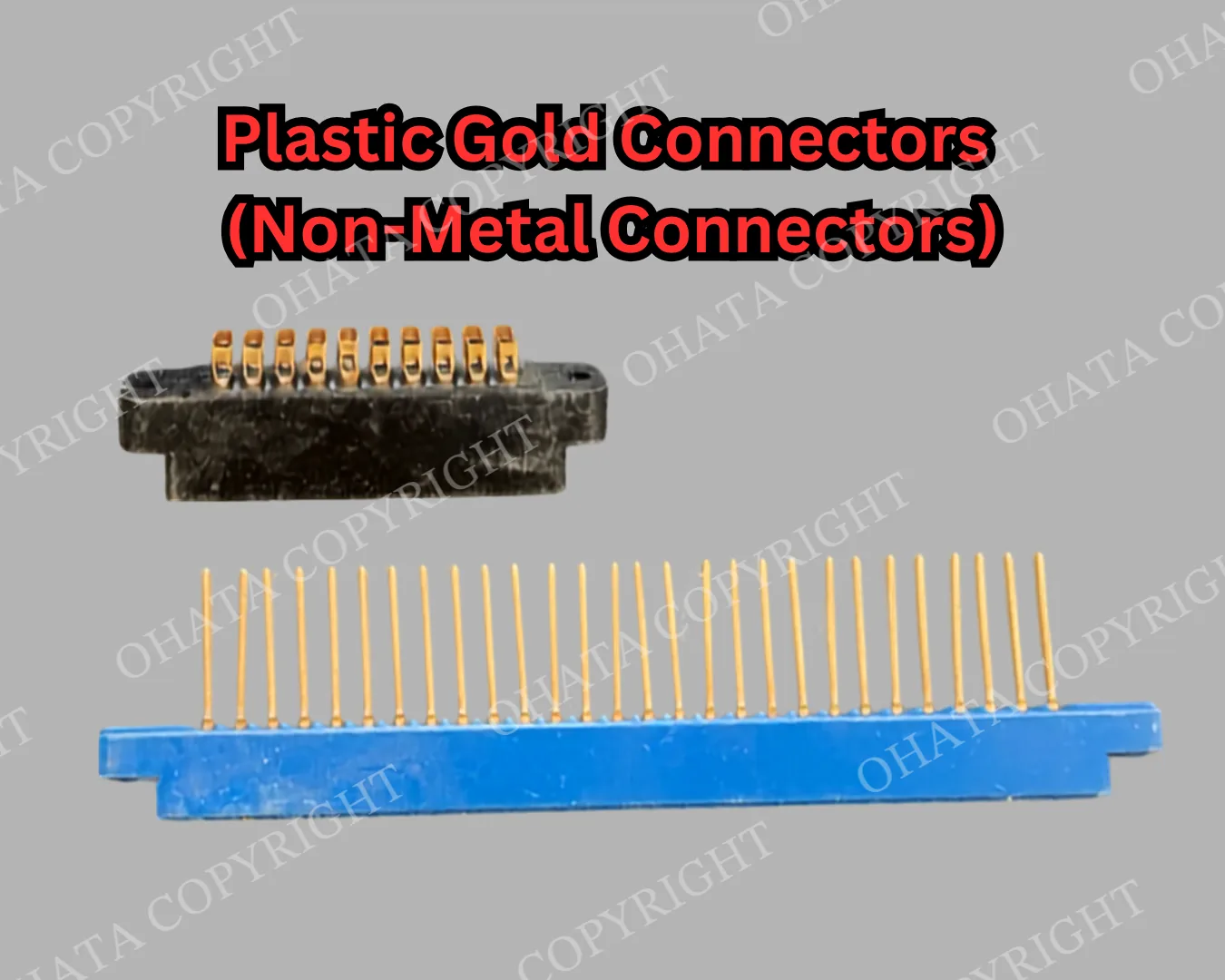
Plastic ATX, CPU, PCIe, SATA and peripheral connectors
The steel enclosure normally represents a considerable part of the gross weight. However, the main recycling value comes from the insulated copper wiring, copper-bearing transformers and coils, aluminum heat sinks, circuit board and smaller quantities of other recoverable metals.
Attached wires improve the material composition of this grade because they contain insulated copper conductors. The actual recovery value varies with wire gauge, cable length, transformer size, internal component density and the proportion of steel and plastic. For commercial purchasing, these variations are averaged within the Ohata classification. Qualifying units are therefore purchased at the Power Supply with wire grade price instead of being individually valued according to brand or wattage.
Power supplies may contain charged capacitors and other electrical hazards. They must never be opened, crushed or manually dismantled by untrained personnel. Units should be disconnected from electricity before handling and delivered intact whenever possible.
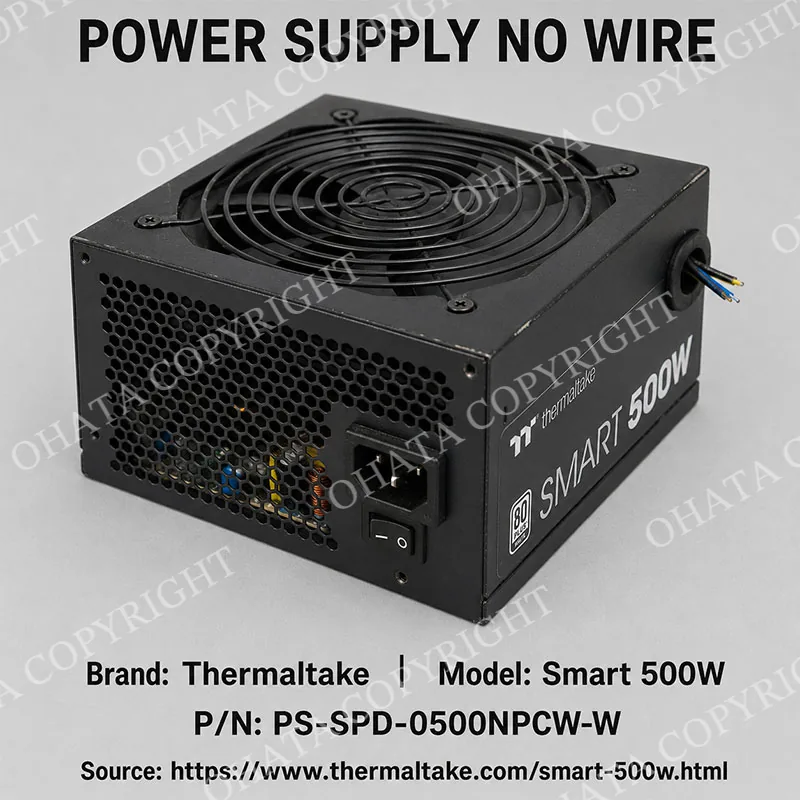
Power Supply no wire is classified under different buying conditions.
Ohata Power Supply with Wire Classification and Identification Guide
A qualifying Power Supply with wire unit should be recognizable as a computer or compatible electronic power supply with its principal output cable assembly still present.
The following characteristics normally identify this grade:
Complete power supply enclosure: The steel case, internal circuit board, transformer, heat sinks and other major components should remain inside the unit.
Attached output wiring: The unit must retain its original or substantial output wire assembly. Common connectors include 20-pin or 24-pin ATX, 4-pin or 8-pin CPU, 6+2-pin PCIe, SATA and four-pin peripheral connectors.
Recoverable internal components: The transformer, copper coils, internal circuit board and aluminum heat sinks must not have been removed.
Identifiable power supply construction: Desktop ATX units, proprietary OEM desktop supplies, certain workstation supplies and similar wired power supplies may qualify when their construction and recoverable composition meet the standard.
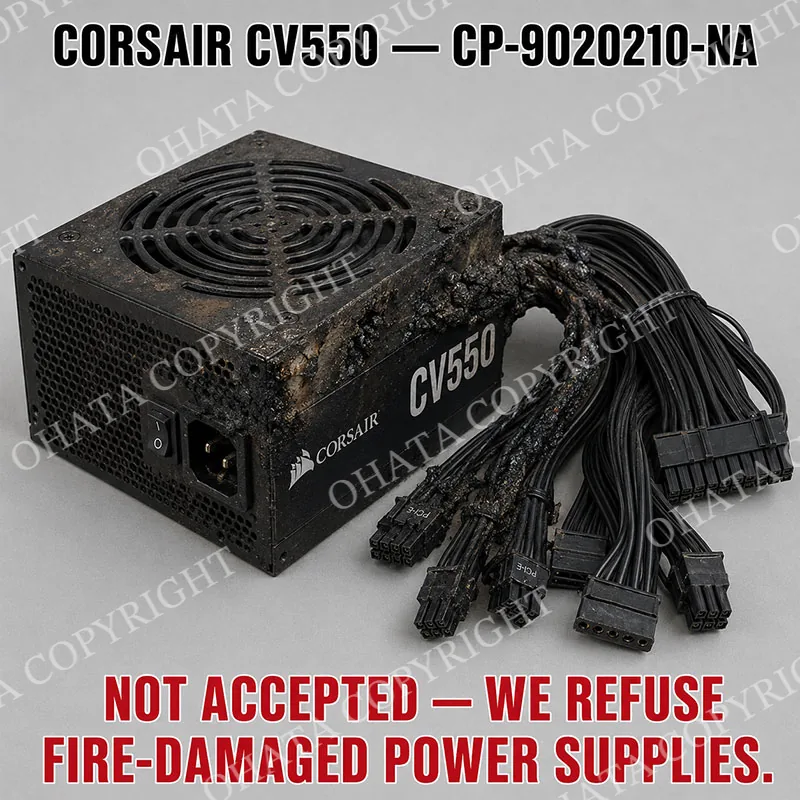
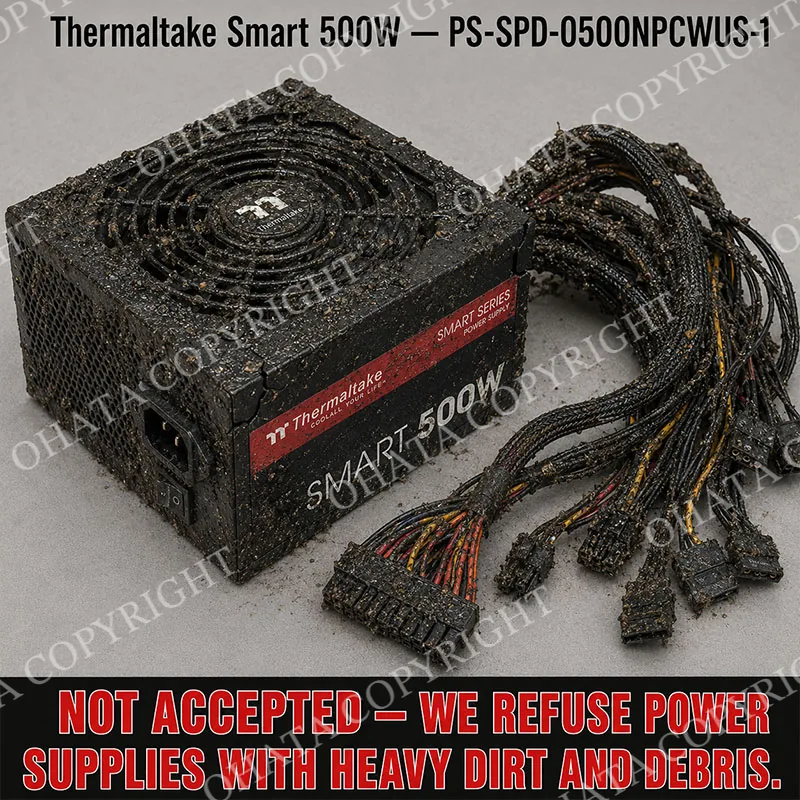
Acceptable physical condition: Ordinary scratches, light dust, faded labels and normal signs of use are generally acceptable. Severe burning, heavy contamination or destructive dismantling may result in rejection or separate evaluation.
Non-modular power supplies are the easiest examples to identify because their cable bundles pass directly through the enclosure and cannot be disconnected externally. Some semi-modular or modular units may require separate inspection. If their removable cables are missing, they should not automatically be represented as complete Power Supply with wire material.
Inspectors should use the following procedure:
Confirm that the object is a power supply rather than an empty metal enclosure.
Check that the main output wiring is present.
Verify that the internal PCB, transformer and major coils have not been removed.
Look for fire damage, chemical contamination, water saturation or excessive mud.
Confirm that unrelated objects have not been added to increase shipment weight.
Separate units without wires, empty cases, adapters, chargers and other grades.
Keep qualifying material sorted before weighing and settlement.
Manufacturer labels are useful for identification, but the recycling classification is determined by the physical unit—not by the label alone. A 300W OEM power supply and a 700W retail power supply may receive the same grade price when both meet the same Ohata standard.
Recoverable Materials, Buying Standards, and Handling
The principal recoverable materials in this grade include:
Copper: Copper is found in output wires, transformer windings, inductors, coils, motor windings and portions of the internal circuit board. It is one of the most important value-bearing materials in this category.
Aluminum: Aluminum is commonly used for internal heat sinks. Some designs contain several heat sinks around high-temperature switching components.
Steel: The enclosure, screws, fan guard and certain structural parts are normally made from ferrous metal. Steel contributes significant weight but has a lower unit value than copper.
Printed circuit board material: The internal PCB carries ICs, capacitors, resistors, diodes, MOSFETs, connectors and solder. It may contain small recoverable quantities of copper, tin, silver and other metals.
Plastic and insulated material: Connector housings, wire insulation, fan blades and structural parts contain plastic. These materials usually require separation during mechanical processing.
Ohata buying standards generally require the following:
The power supply must contain its internal board and major components.
A substantial original wiring assembly must remain attached or included as required.
The load must be reasonably clean and free from excessive mud, oil and foreign debris.
Units must not be filled with stones, steel pieces, water or unrelated material.
Severely burned, carbonized, smashed or hazardous units must be declared separately.
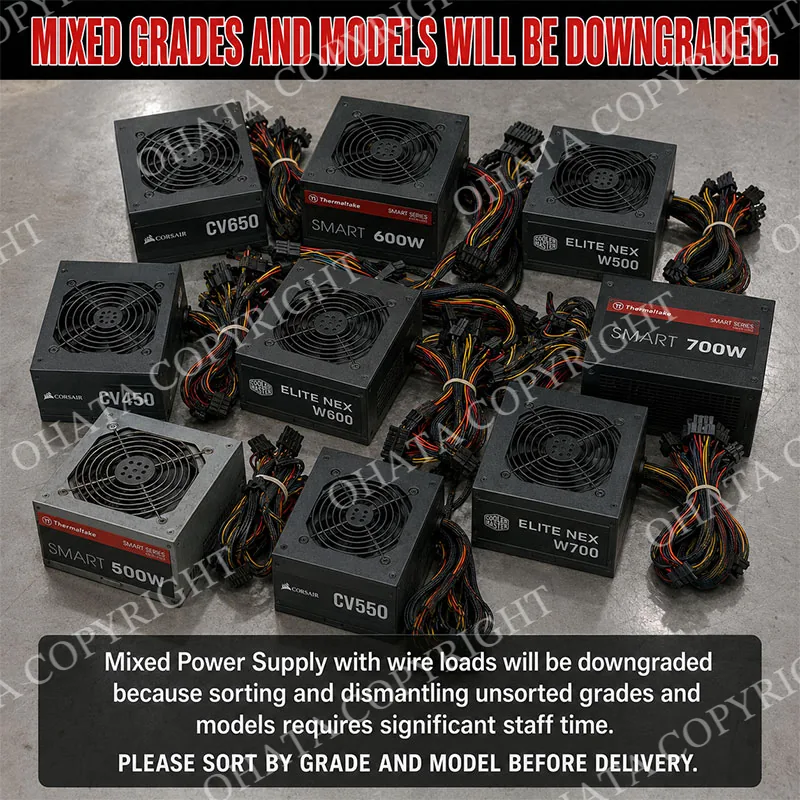
Different recycling grades should be separated before delivery.
Batteries and unrelated electronic equipment should not be mixed into the load.
For safe storage, keep power supplies dry and protected from rain. Use strong containers because steel housings are heavy and their edges may damage bags. Do not lift units by a single small wire or connector. Large quantities should be palletized or placed in durable boxes, cages or bulk containers.
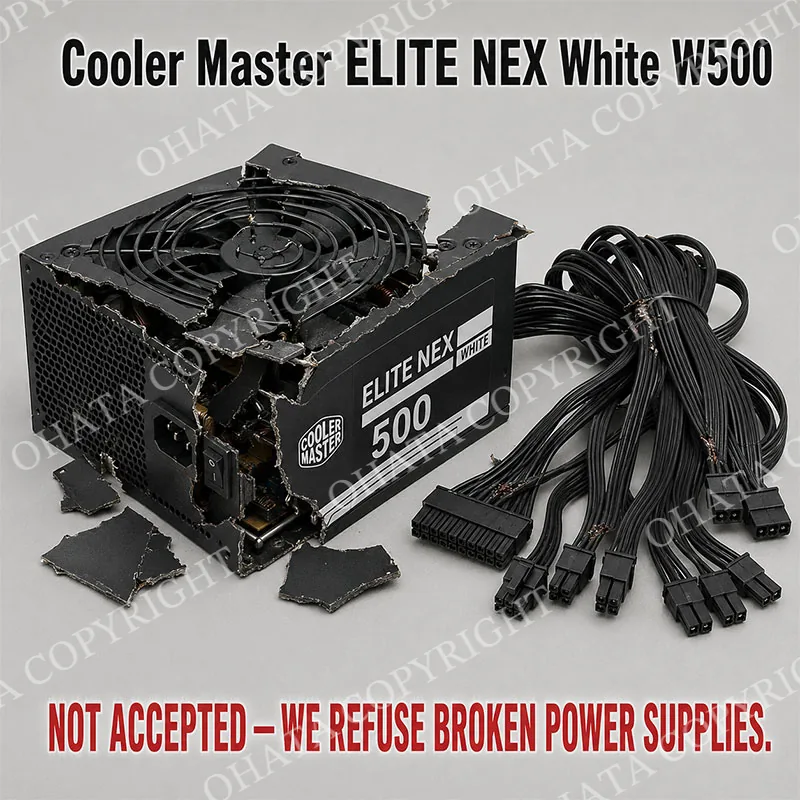
Power supplies should not be intentionally broken open before delivery. Uncontrolled dismantling may expose charged capacitors, sharp steel edges, lead-bearing solder and contaminated dust. It may also remove recoverable components and cause the material to lose its original classification.
Comparison and Official Ohata Classification
The most important distinction is between a complete unit with wiring and other power supply-related materials.
Classification
Identification
Power Supply with wire
Complete PSU with internal components and substantial output wiring present
Power Supply no wire
Power supply body remains, but the principal output cable assembly has been removed
Empty power supply case
Metal enclosure with internal PCB, transformer and other valuable components removed
Power supply circuit board
Internal PCB removed from the housing and evaluated as board material
Loose insulated wire
Detached cable processed or purchased under an insulated-wire category
AC adapter or charger
External laptop, phone or equipment adapter; evaluated separately
Burned or contaminated PSU
Requires separate inspection and may be rejected
Broken or stripped PSU
Missing major parts or physically destroyed; may be downgraded or rejected
A unit should not be classified as Power Supply with wire merely because a few short wires remain. The principal cable assembly must be present in a quantity sufficient to identify the item as a wired power supply. Conversely, different brands, wattages and connector configurations do not need to be separated when they all genuinely meet the same grade standard.
Combining complete wired units with wire-removed supplies, empty cases, adapters or dismantled boards creates additional inspection and sorting work. Mixed shipments may therefore be downgraded, reclassified or settled by their actual separated composition.
Under the official Ohata classification principle, all accepted power supplies that meet the Power Supply with wire standard are purchased at the corresponding grade price.
Final classification follows the Official Ohata Classification and is confirmed through physical inspection. Missing internal components, insufficient wiring, severe fire damage, hazardous contamination, or deliberately added foreign material may affect acceptance and buying value. Confirmed classification, measured weight, and buying value are determined after inspection.
- 1. What is today’s price for Power Supply with Wire Buying?
- As of Oct 06,2026, Ohata Shoji America Inc., (Seattle, WA, United States) is purchasing Power Supply with Wire Buying at 0.46 (USD/lb). We provide competitive scrap prices in Seattle, Bellevue, Renton, Tukwila, Kent, SeaTac, Tacoma, Everett, and surrounding communities.
- 2. What is classified as Power Supply with wire?
- Power Supply with wire refers to a complete computer power supply that retains its main output cable assembly, internal circuit board, transformers, coils, heat sinks and other major components.
- 3. Do different brands receive different recycling prices?
- No. Brand alone does not determine the grade price. CORSAIR, Cooler Master, Thermaltake, Dell, HP, Delta, FSP and other brands receive the same Power Supply with wire price when they meet the same Ohata classification standard.
- 4. Does the wattage affect the recycling grade?
- Not normally. A 300W OEM unit and a 700W retail unit may receive the same grade price if both meet the Power Supply with wire standard. Classification is based primarily on completeness, wiring and recoverable composition.
- 5. What wiring must remain on the power supply?
- A substantial output cable assembly should be present. Typical connectors include 20-pin or 24-pin ATX, 4-pin or 8-pin CPU, 6+2-pin PCIe, SATA and four-pin peripheral connectors.
- 6. How is Power Supply with wire different from Power Supply no wire?
- Power Supply with wire retains its principal output wiring. Power Supply no wire has had the main cable assembly removed or cut away. These are separate recycling classifications and may have different prices.
- 7. Are modular power supplies accepted in this grade?
- They require individual inspection. A modular power supply without its removable cables should not automatically qualify as Power Supply with wire. The supplied cables, internal completeness and Ohata buying requirements must be verified.
- 8. Which materials can be recovered from these power supplies?
- Recoverable materials include copper wires and windings, aluminum heat sinks, steel enclosures, fan-motor copper and printed circuit boards. Smaller quantities of tin, silver and other metals may also be recovered during professional processing.
- 9. What is a Green-Tech E-Commerce company?
- A Green-Tech E-Commerce company uses digital technology to promote environmentally responsible business practices. Ohata Shoji America Inc. combines online commerce, AI-assisted services, and electronics recycling to help recover valuable resources from surplus and end-of-life electronic equipment.
- 10. Why is electronic waste recycling important?
- Electronic waste contains valuable metals and reusable materials. Responsible recycling helps conserve natural resources, reduce landfill waste, and support a more sustainable circular economy.
- 11. How does digital commerce improve the recycling process?
- Digital commerce makes the recycling process more convenient by providing online information, simplifying communication, improving transparency, and helping customers connect with recycling services more efficiently.
Related Items
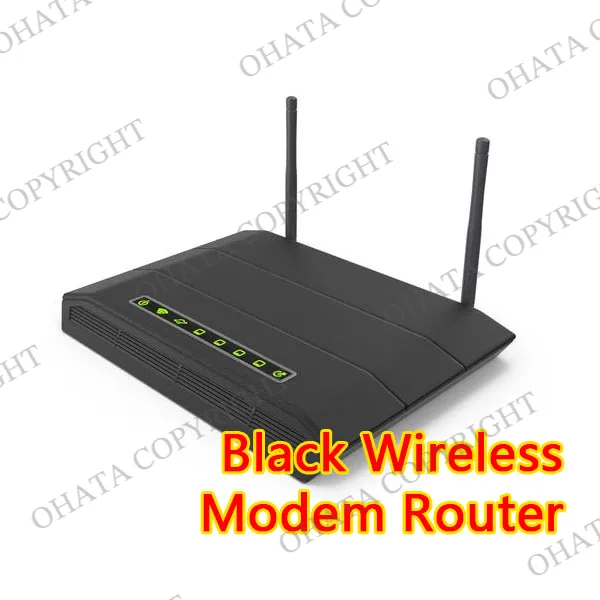
Modems Routers Buying
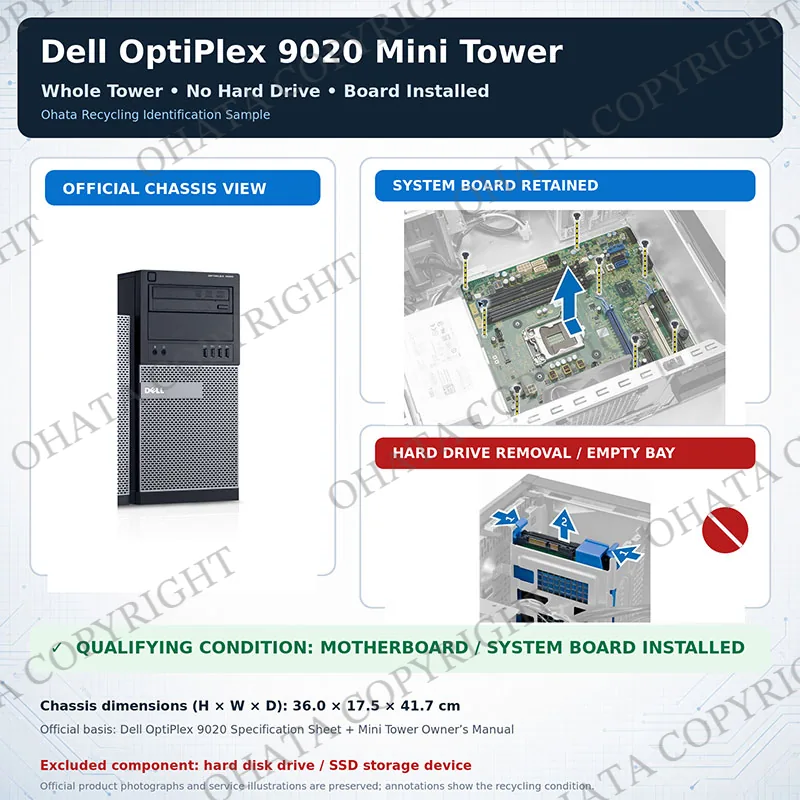
Whole Tower (Desktop Computer) No Hard Drive with board
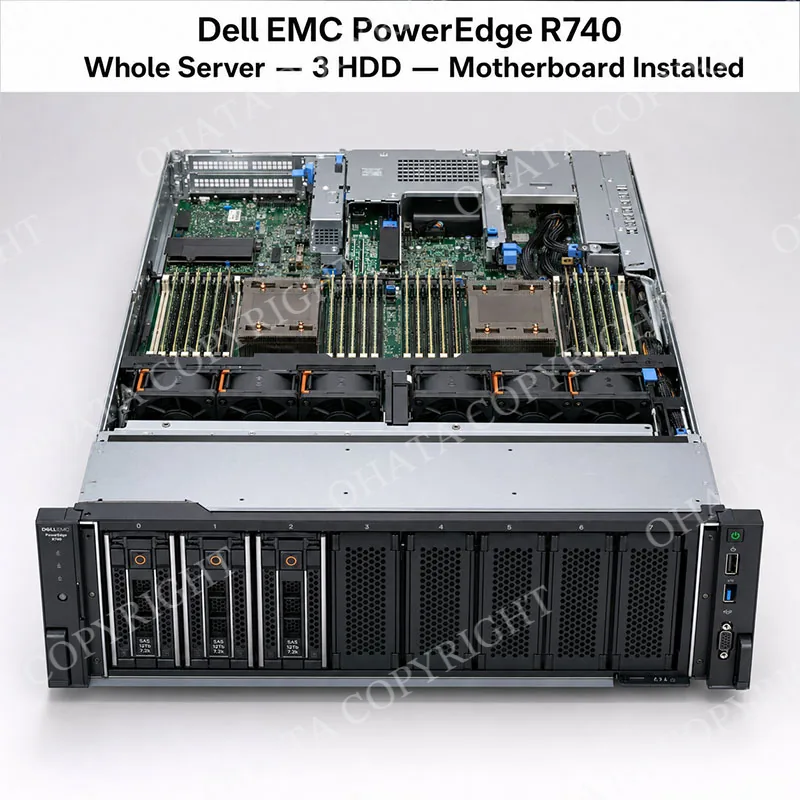
Whole Server With 3 Hard Drive with board buying
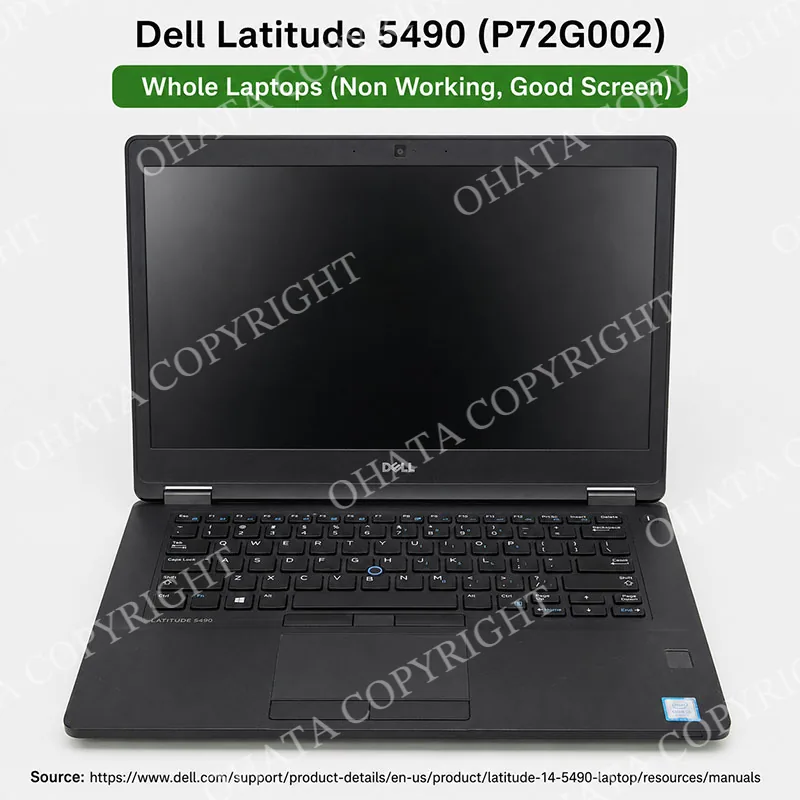
Whole Laptops (Non Working, Good Screen) buying
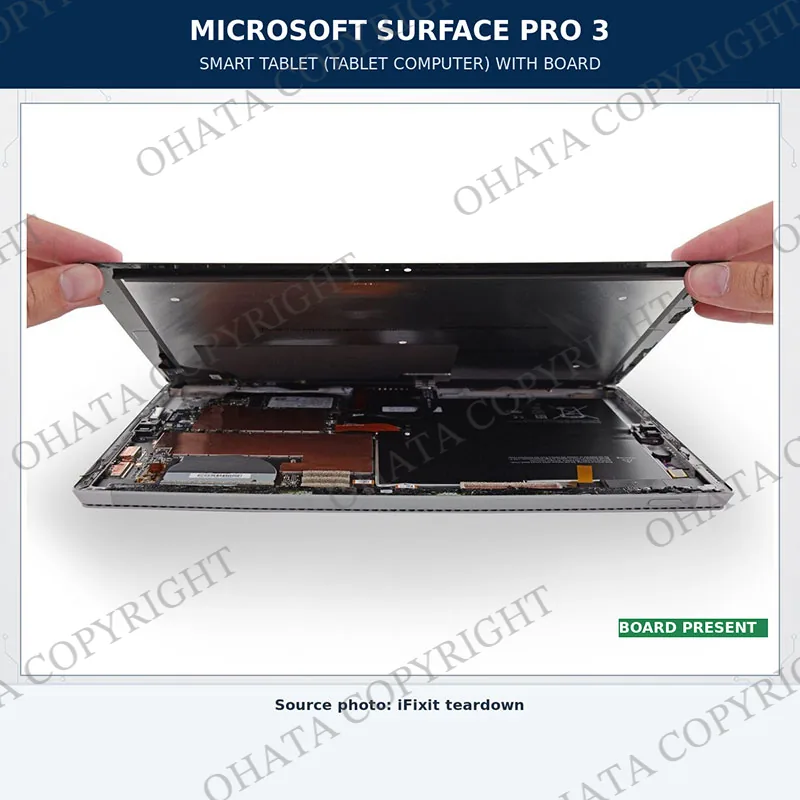
Smart Tablet ( Tablet Computer) with board buying

Smart phone (Non-cell phone) No Battery with board buying
Power Supply No Wire Buying
Plastic Gold Connectors (Non-Metal Connectors) Buying