

Hello! I’m Tomona Hamada from Ohata Resource Canada Inc. Richmond Yard. It’s Tuesday, August 11, 2026, and Richmond’s forecast is sunny at about 18°C this morning, with an afternoon temperature near 23°C.
I noticed that Richmond’s Bike Repair Café is scheduled for Saturday, August 22, from 10:00 a.m. to 1:00 p.m. at West Richmond Community Centre. I like its practical message: repair something while it has useful life, then sort it carefully at end of life. That thinking fits appliance electronics too.
Have a board from a washer, refrigerator, HVAC unit, printer, copier, television, or UPS? Let me show you whether it may be Appliance A and how its published buying price works.
What an Appliance A Board Looks Like
An Appliance A board is a mid-grade printed circuit board (PCB), the rigid board connecting electronic components. It often combines controls with power handling: integrated circuits (ICs, the small electronic “brains”), relays, transformers, coils, heat sinks, capacitors, and wire-harness connectors.
Watch YouTube Video: Appliance A Board Identification
See how Ohata Resource Canada identifies common Appliance A components and compares Appliance A with Appliance B.
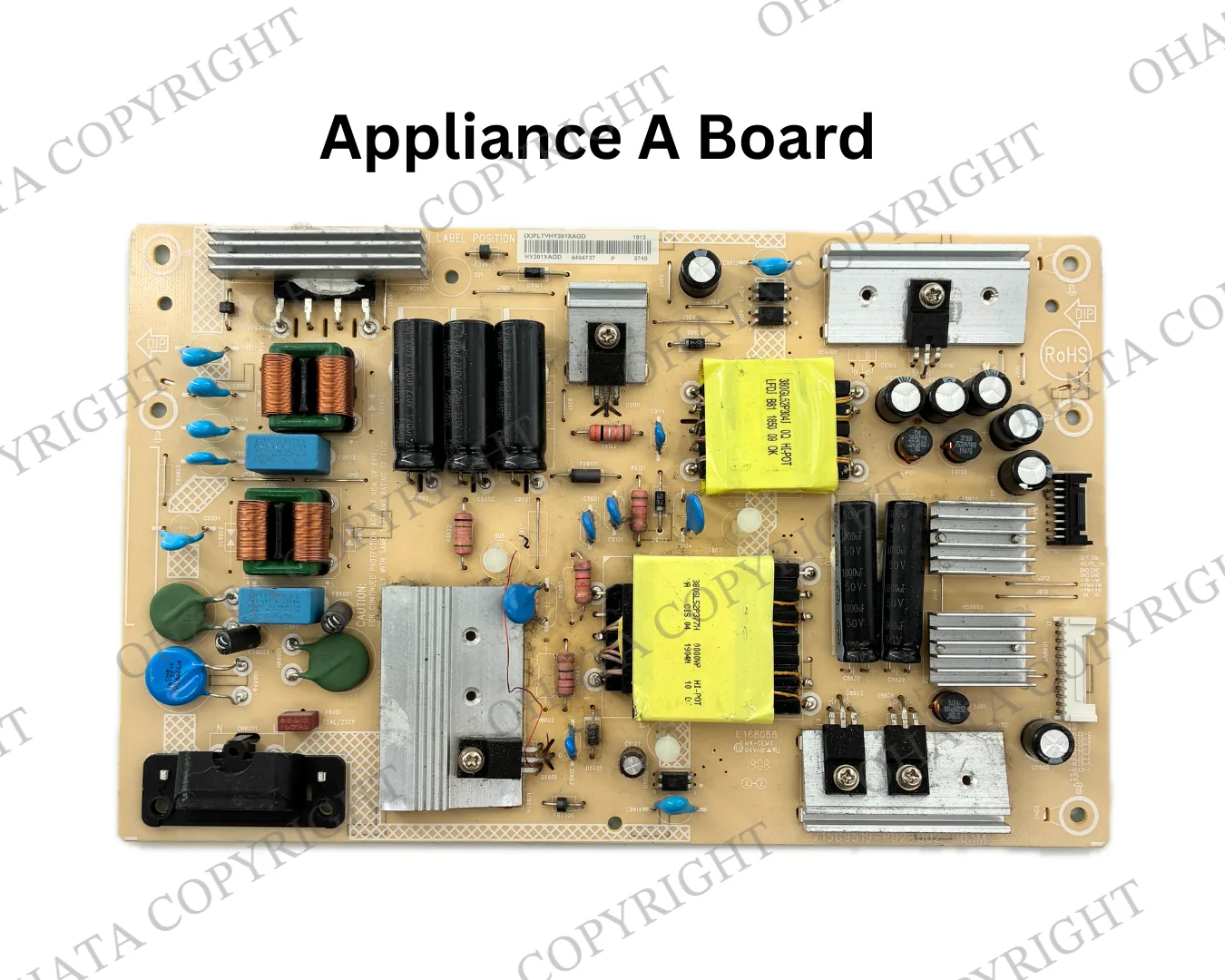
These Boards Look Similar, but A and B Aren’t the Same
Here’s the quickest way I separate them. Appliance A usually has moderate IC density and more substantial power or control sections, such as larger relays, transformers, coils, heat sinks, thick traces, and sturdy connectors. An Appliance B board generally has fewer ICs, more open board space, and simpler circuitry found in timers, LED drivers, chargers, display panels, and small appliances.
As of August 12, 2026, the published reference prices were CAD $0.70 per lb for Appliance A and CAD $0.23 per lb for Appliance B. One relay or transformer doesn’t determine the category—the complete board must be evaluated.
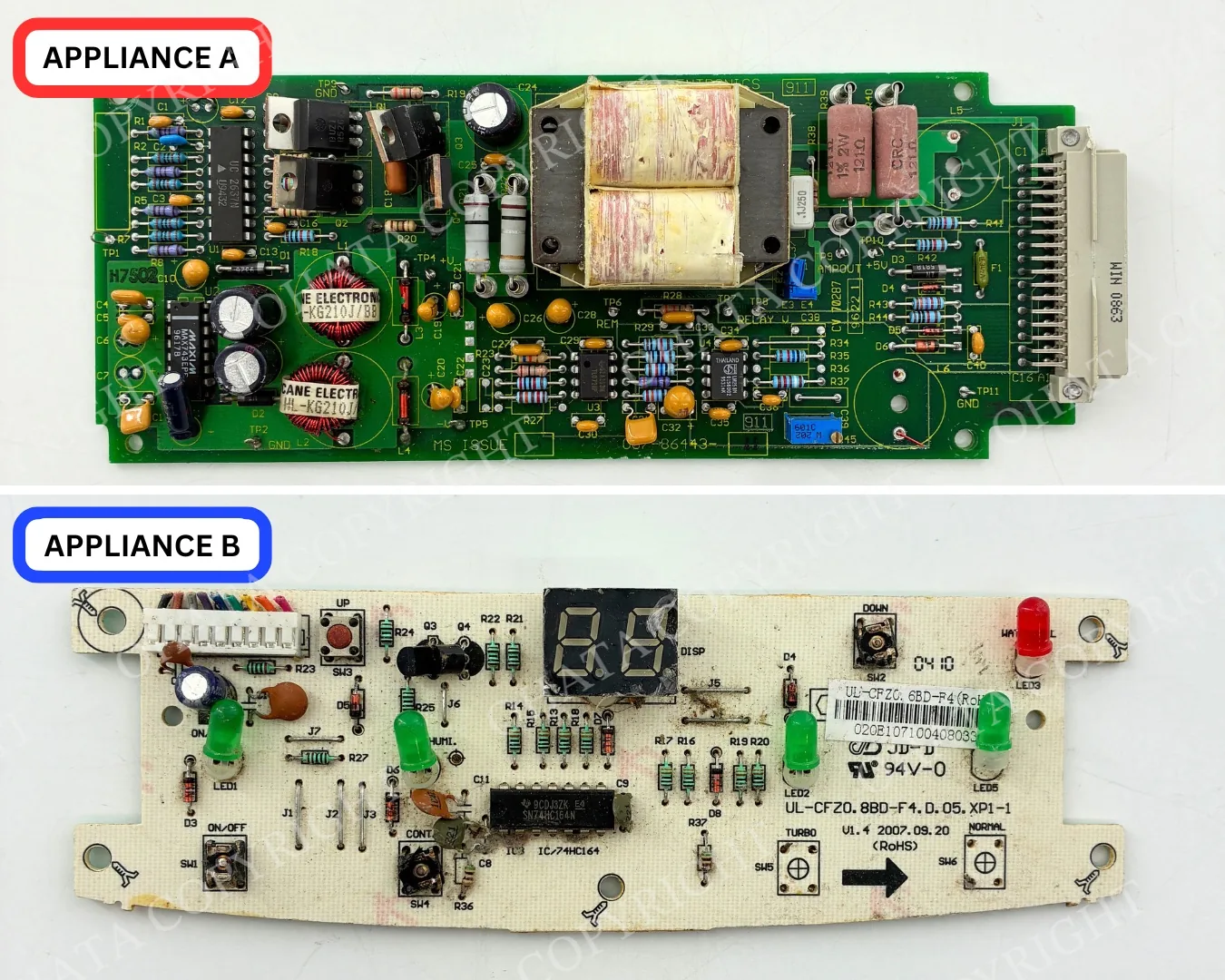
Let Me Show You the Features I Check First
I check markings and the model number for context, then study the complete board. Moderate IC density, thick traces, relays, copper coils, motor-control devices such as MOSFETs, and large harness connectors can support Appliance A identification.
I also look for intact double-sided or multilayer construction and complete components. One transformer or gold-coloured contact proves nothing by itself; colour doesn’t confirm metal content or value.
Here’s How Ohata.AI Helps with a First Look
Ohata.AI can analyze a photograph and suggest a possible item type or buying category by comparing visible patterns with reference information. Use one complete board, good light, an overhead angle, a plain surface, minimal glare, and no overlaps.
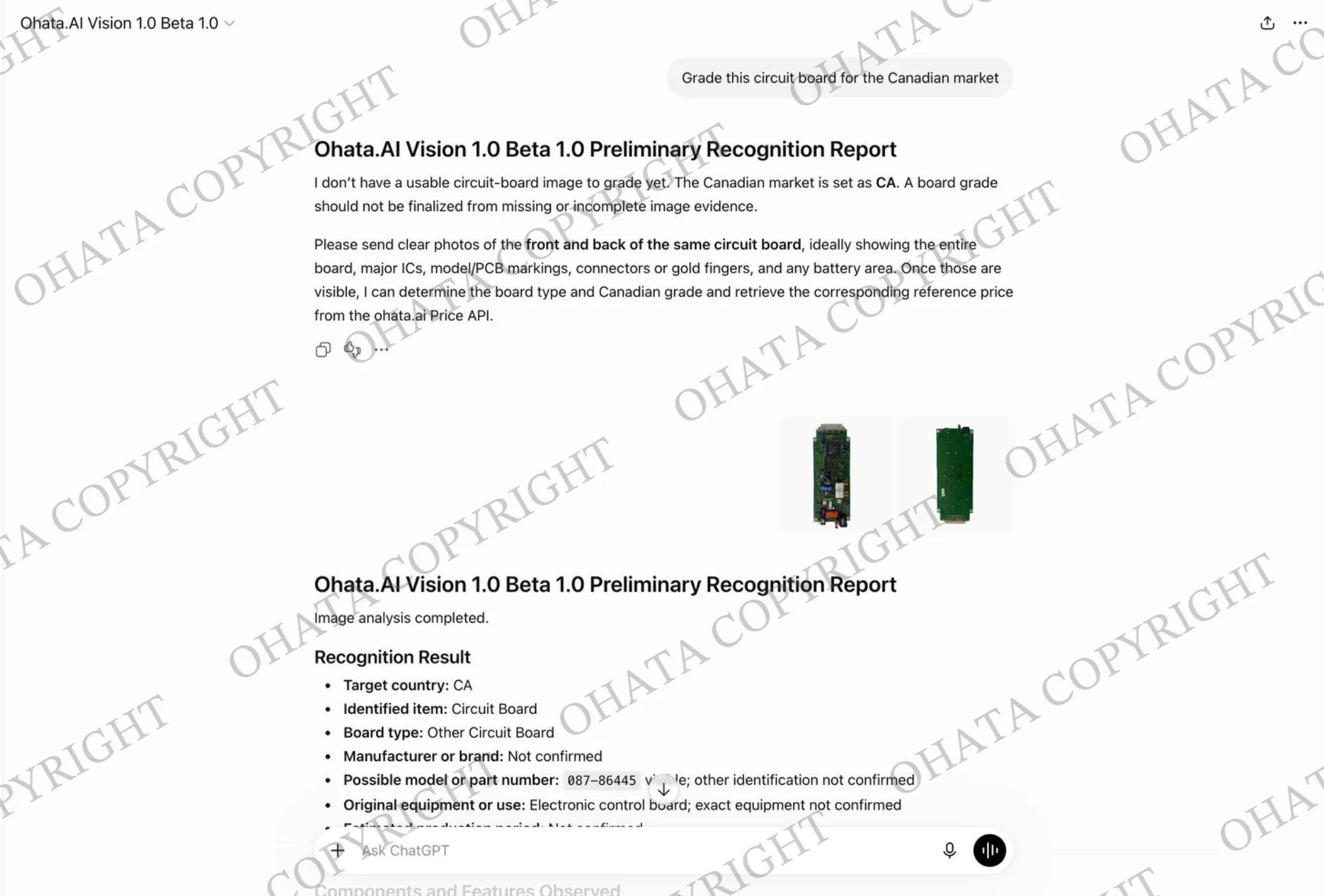
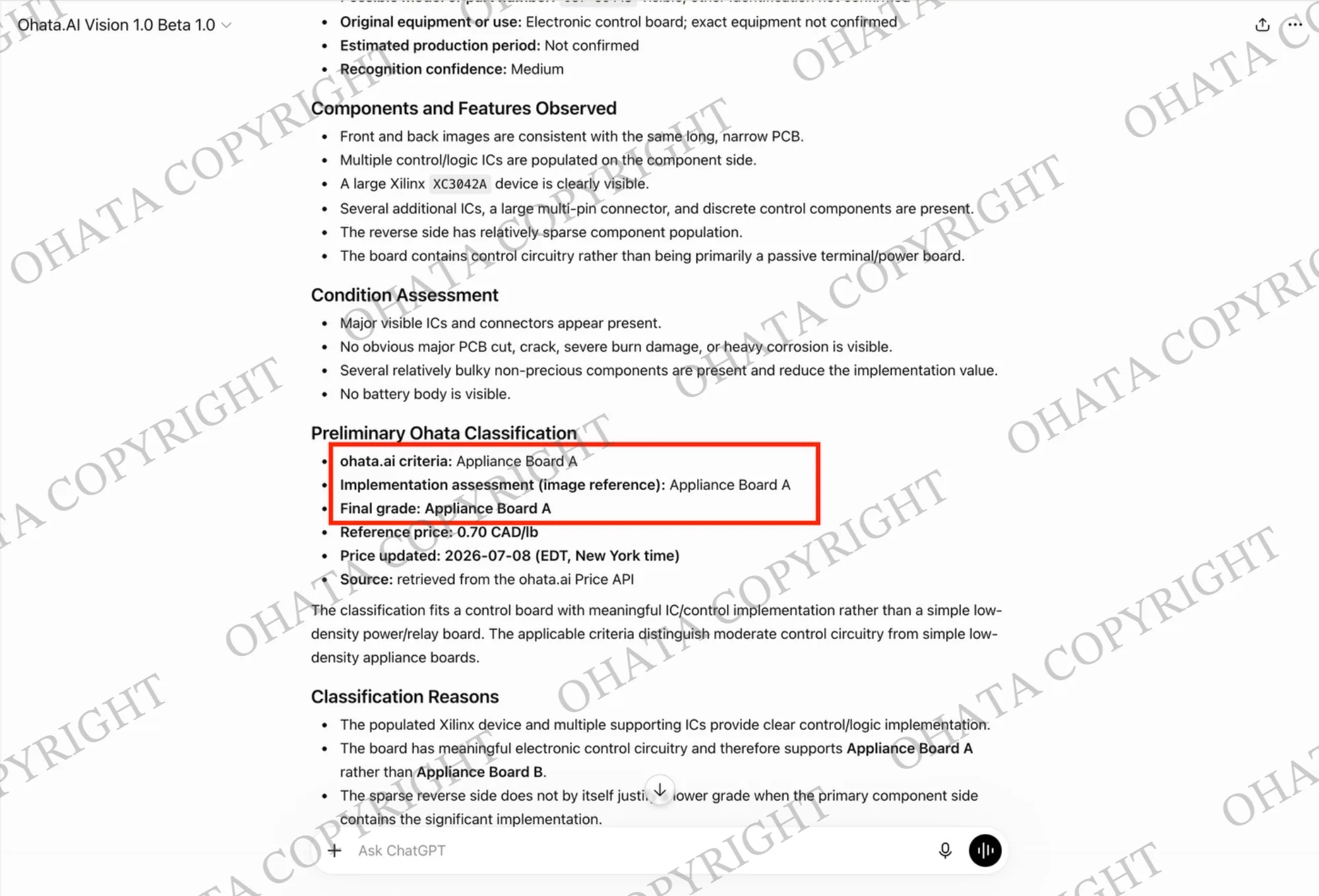
Ohata.AI is an identification aid. Final acceptance, classification, and buying price depend on physical inspection, weight, completeness, condition, and current buying requirements.
The Published Price Isn’t the Final Grade
The Richmond price page listed Appliance A boards at CAD $0.70 per lb, updated August 12, 2026. Reference prices can change with market conditions and may consider international raw-material markets and pricing algorithms, so check the current page before visiting.
Two boards with the same model can be evaluated differently. Complete, dry, sorted boards with major parts remaining support value; cutting, stripping, corrosion, fire or water damage, dirt, and mixed grades may reduce it. Inspection confirms the category, weight, condition, and final price.
Clear Photos and Simple Preparation Help
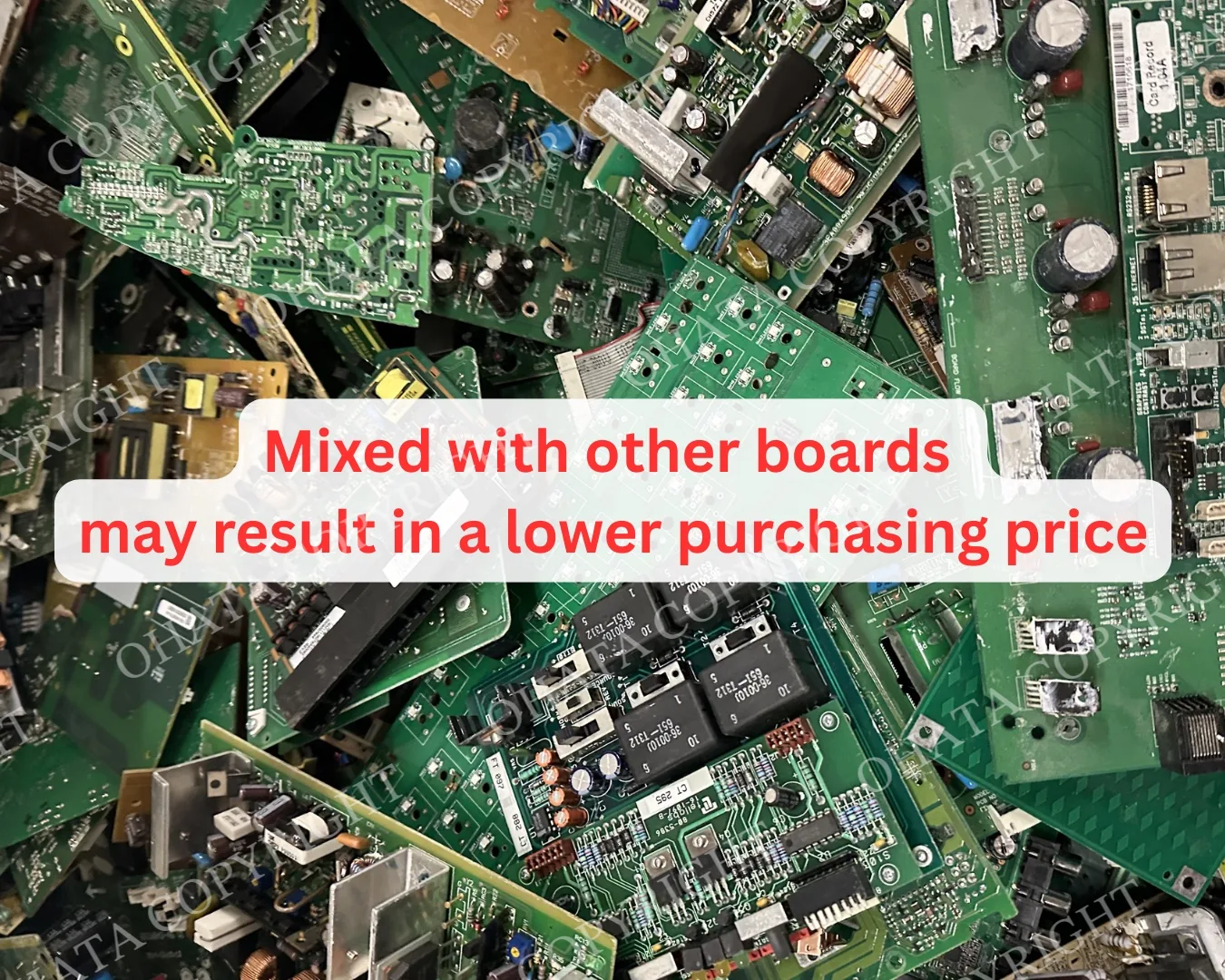
Take clear front and back photos plus all four edges. Avoid blur, glare, steep angles, cropping, and overlaps. Keep types separated and dry, don’t cut boards or remove major ICs and connectors, and prepare an approximate weight.
If batteries are present, don’t puncture, crush, bend, or damage them. Back up and erase personal data from any storage devices. The minimum for Appliance A boards is generally 1 lb (about 450 g); mixed loads are accepted but may receive a lower buying value after sorting.
Planning to Visit the Richmond Yard?
Ohata Resource Canada Inc. is a C2B e-scrap buying business serving individuals and businesses across Metro Vancouver.
Address: Unit 7, 11220 Voyageur Way, Richmond, BC V6X 3E1
Telephone: +1 (236) 888-1086
Hours: Monday–Friday, 8:00 a.m.–5:00 p.m.; Saturdays, Sundays and holidays closed
Drop-offs: No appointment for most visits; call ahead for large or palletized loads
Minimum: Generally 1 lb (about 450 g) of Appliance A boards
Check the official Richmond contact page before travelling.
Frequently Asked Questions
How is Appliance A different from Appliance B?
Appliance A generally has denser controls, stronger construction, and more substantial power circuitry; Appliance B is usually simpler and lower-density.
Must the board work?
No. Material recovery doesn’t require operation, but the board should be recognizable and substantially complete.
Can Ohata.AI work without a model number?
It may suggest a category from visible features, but markings and clear front-and-back photos improve context. Inspection remains final.
Should I remove attached parts?
Keep major electronics in place. Remove only practical non-PCB items such as loose wiring, covers, or mounting hardware.
Do gold-coloured contacts raise the grade?
Not alone. Colour doesn’t prove precious-metal content; the complete board determines the grade.
Can I bring mixed boards?
Yes, but separate them when practical. Mixed sorting can reduce value and slow inspection.

Comments
0 comments