

Hi! I’m Tomona from Ohata Resource Canada Inc. Richmond Yard. It’s Wednesday, August 12, 2026. The Richmond forecast is sunny and hazy, with a high near 24°C. If you’re transporting circuit boards in an open vehicle, a covered tote helps keep road dust and other material away from them.
Before turning to boards, I also want to acknowledge the serious wildfire situation in British Columbia. The province declared a state of provincial emergency on August 8 because of regional wildfires, and official alerts remain active in several areas. If you’re travelling from an affected region, please check the latest emergency information first, the boards can wait until the trip is safe.
Yesterday, I wrote about the Appliance A board buying price. You may have finished that article with the obvious next question: What does Appliance B look like, and how do I actually tell A and B apart?
Is a board automatically B because it has fewer parts? Can it still have a relay or transformer? Those are exactly the questions I’ll answer here.
Let’s Begin with the Appliance B Buying Price
The Appliance B price page listed a Richmond reference price of CAD $0.23 per lb, updated August 12, 2026. The general minimum quantity is 1 lb, and prices may change without notice as buying conditions change.
If you’re comparing several kinds of circuit boards, check the current Richmond e-scrap buying prices before preparing your load. This helps you see the latest published reference information for Appliance B and other accepted e-scrap categories.
The published number isn’t a guaranteed quotation for every board. The material must still be inspected to confirm its category, weight, completeness, condition, and final buying price.
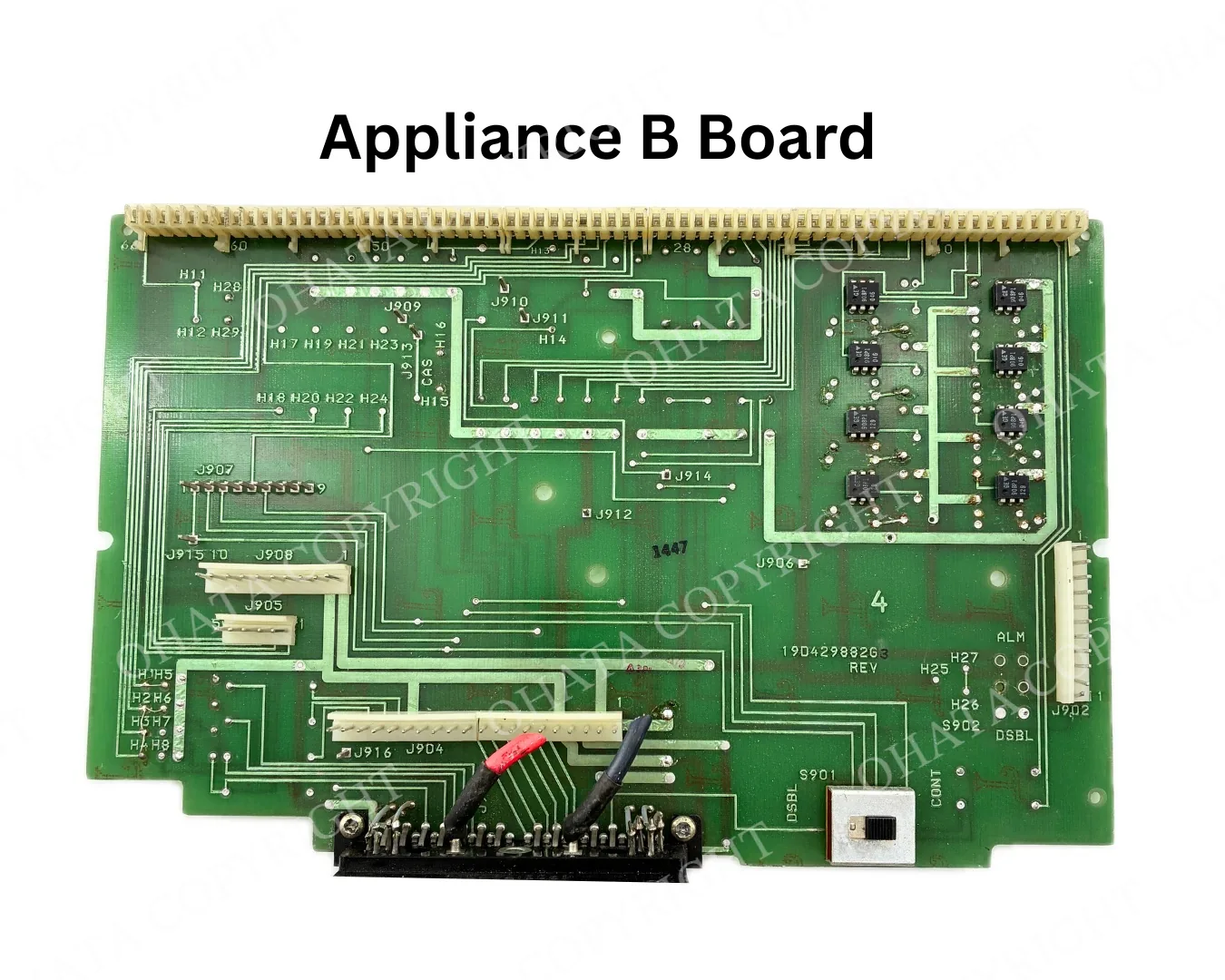
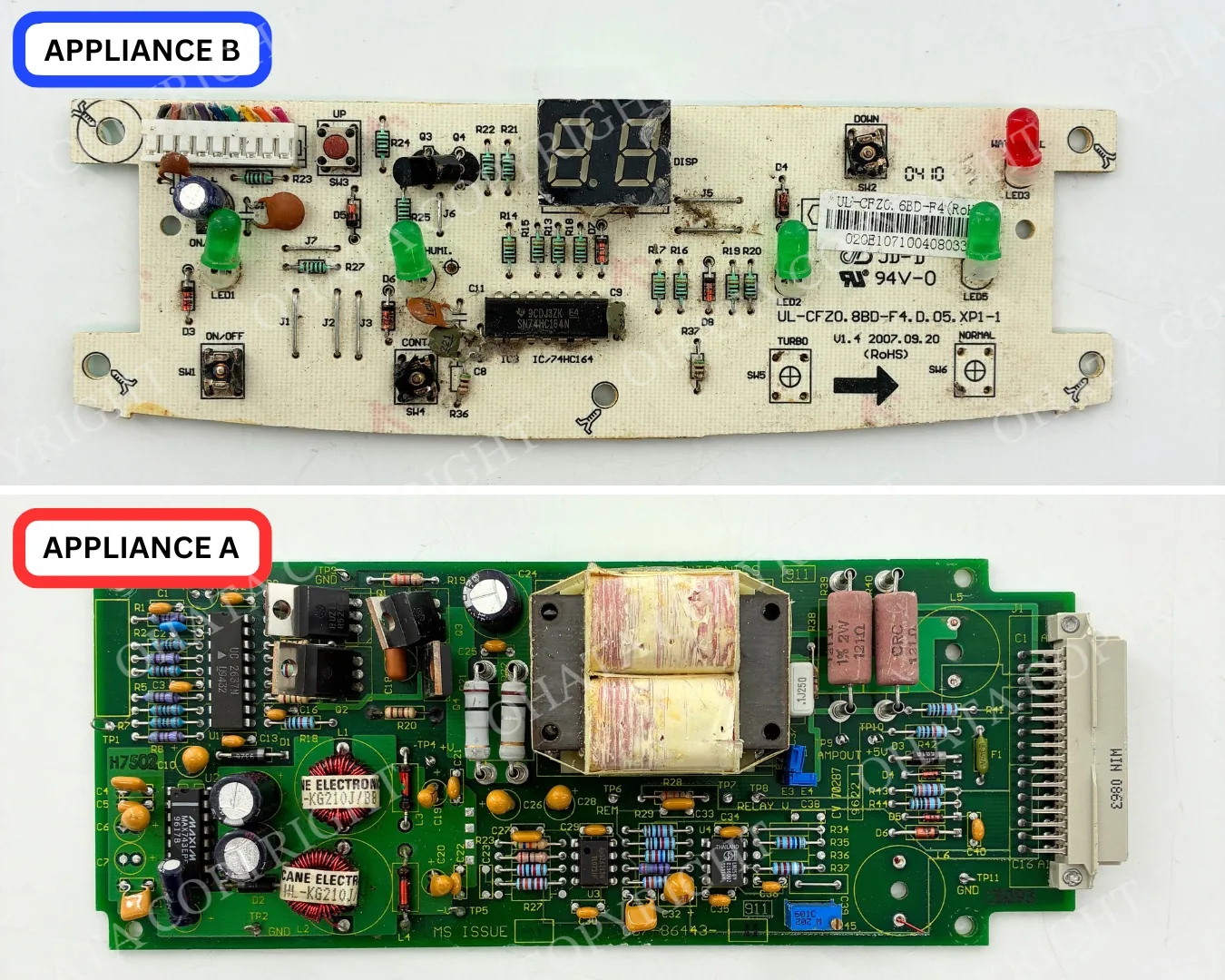
What Does an Appliance B Board Actually Look Like?
An Appliance B board is an entry-level printed circuit board, or PCB—the rigid board that connects electronic components. Common examples include LED driver boards, charger boards, timer modules, display interfaces, keypad boards, consumer power-supply boards, and controllers from smaller appliances.
The Appliance B identification and sorting guide provides detailed examples, but the main visual pattern is relatively simple: fewer integrated circuits, more open PCB space, basic power components, and standard connectors.
Watch: What Is an Appliance B Board? Identification & A vs. B on YouTube
You may find these boards in rice cookers, electric kettles, fans, humidifiers, air purifiers, LED lighting, battery chargers, digital clocks, display panels, and other everyday products. The appliance name gives me context, but it doesn’t determine the classification by itself.
Appliance A and B Look Related—Here’s the Practical Difference
The two categories can come from similar products, so I don’t classify them by appliance name alone.
Feature | Appliance B | Appliance A |
|---|---|---|
IC density | Generally low | Generally moderate |
PCB layout | Simpler, with more open space | Denser or more complex |
Power section | Basic or limited | More substantial |
Heat sinks and transformers | Usually small or absent | Often larger or more numerous |
Common functions | Timers, displays, lighting, charging | Motor control, power management, mixed control |
Aug. 7 reference price | CAD $0.23/lb | CAD $0.70/lb |
A physically large board can still have simple, low-density circuitry. Likewise, a small board isn’t automatically Appliance B. I evaluate the complete structure rather than relying on size, colour, brand, or one noticeable component.
What Can Support or Reduce the Buying Value?
A complete, dry, reasonably clean, and correctly sorted board is easier to evaluate. Keeping the main ICs, transformers, relays, connectors, and original power components attached supports an accurate classification.
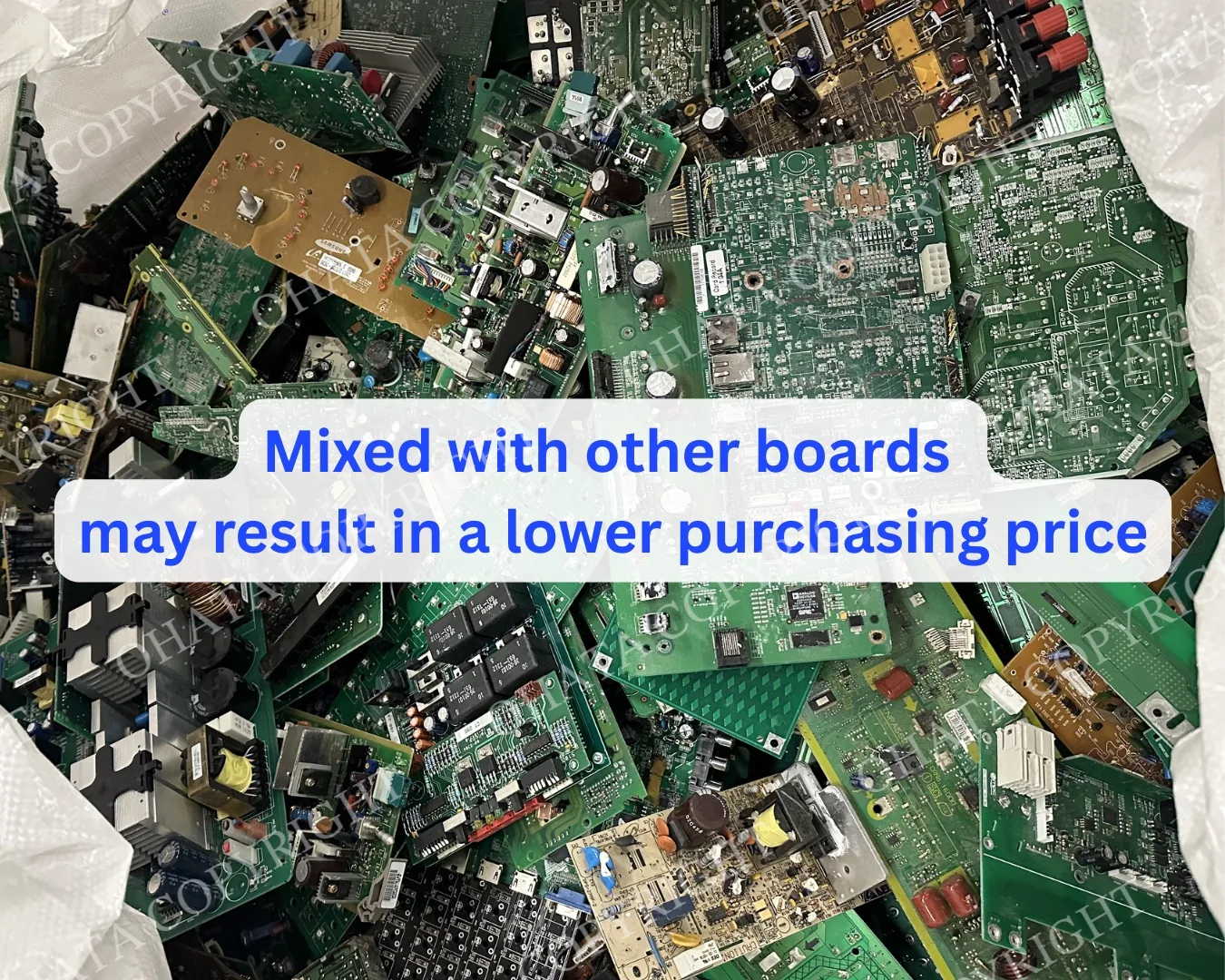
Missing components, broken or cut PCB sections, heavy corrosion, burn damage, water or oil contamination, and excessive foreign material may reduce the buying value. Mixing Appliance B with stripped boards, plastic, metal frames, or lower-value material may also require extra sorting and affect the final price.
Two boards carrying the same model number can be evaluated differently when their completeness or condition isn’t the same. Gold-coloured contacts don’t prove precious-metal content or establish a higher grade.
Here’s How Ohata.AI Can Help with Your First Look
Ohata.AI can analyze a photograph and suggest a possible item type or buying category by comparing visible patterns with reference information. A complete, directly overhead photograph gives it more useful visual information than a cropped or angled image.
Use good lighting, a plain surface, and minimal glare. Photograph one board at a time and don’t overlap it with other material.
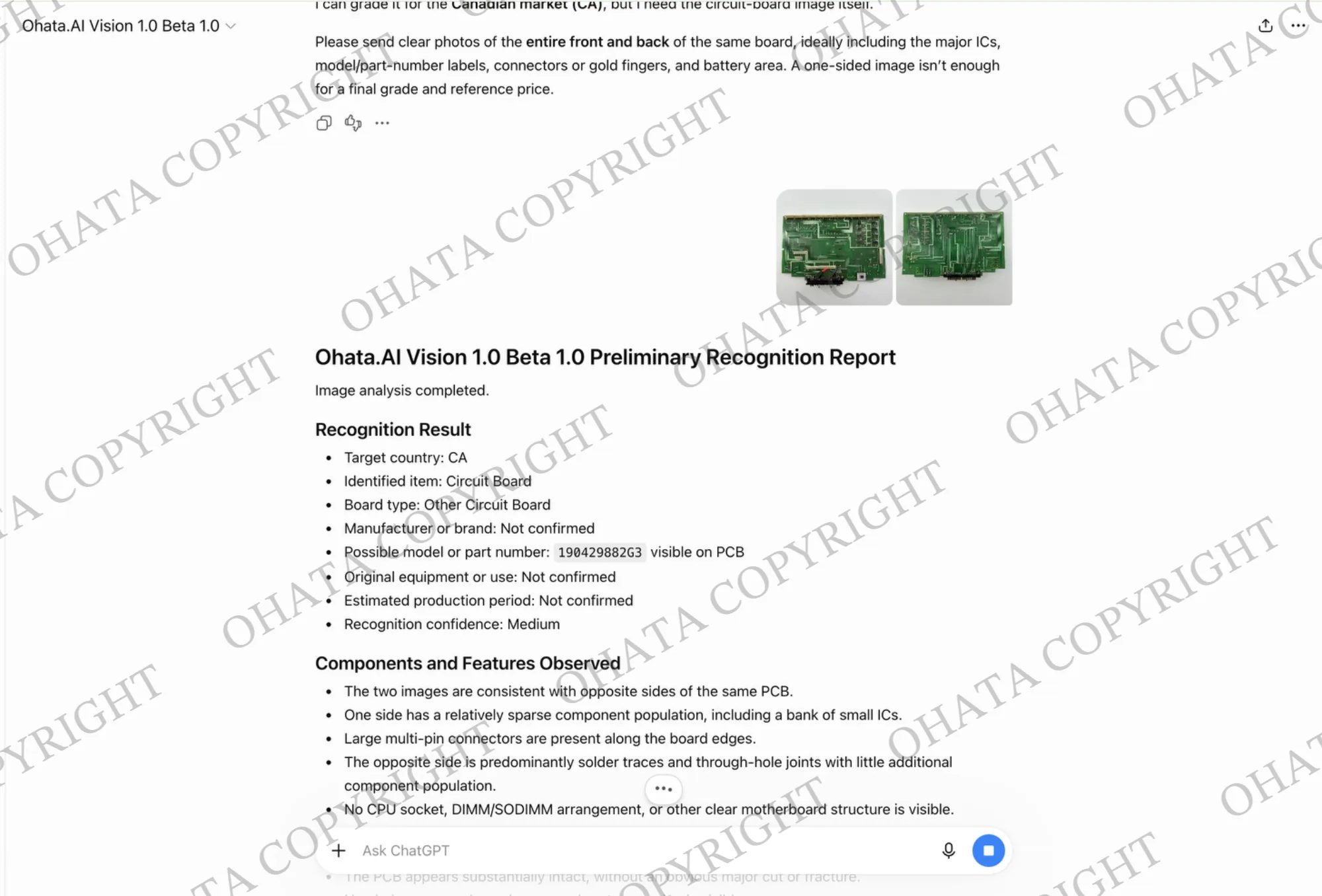
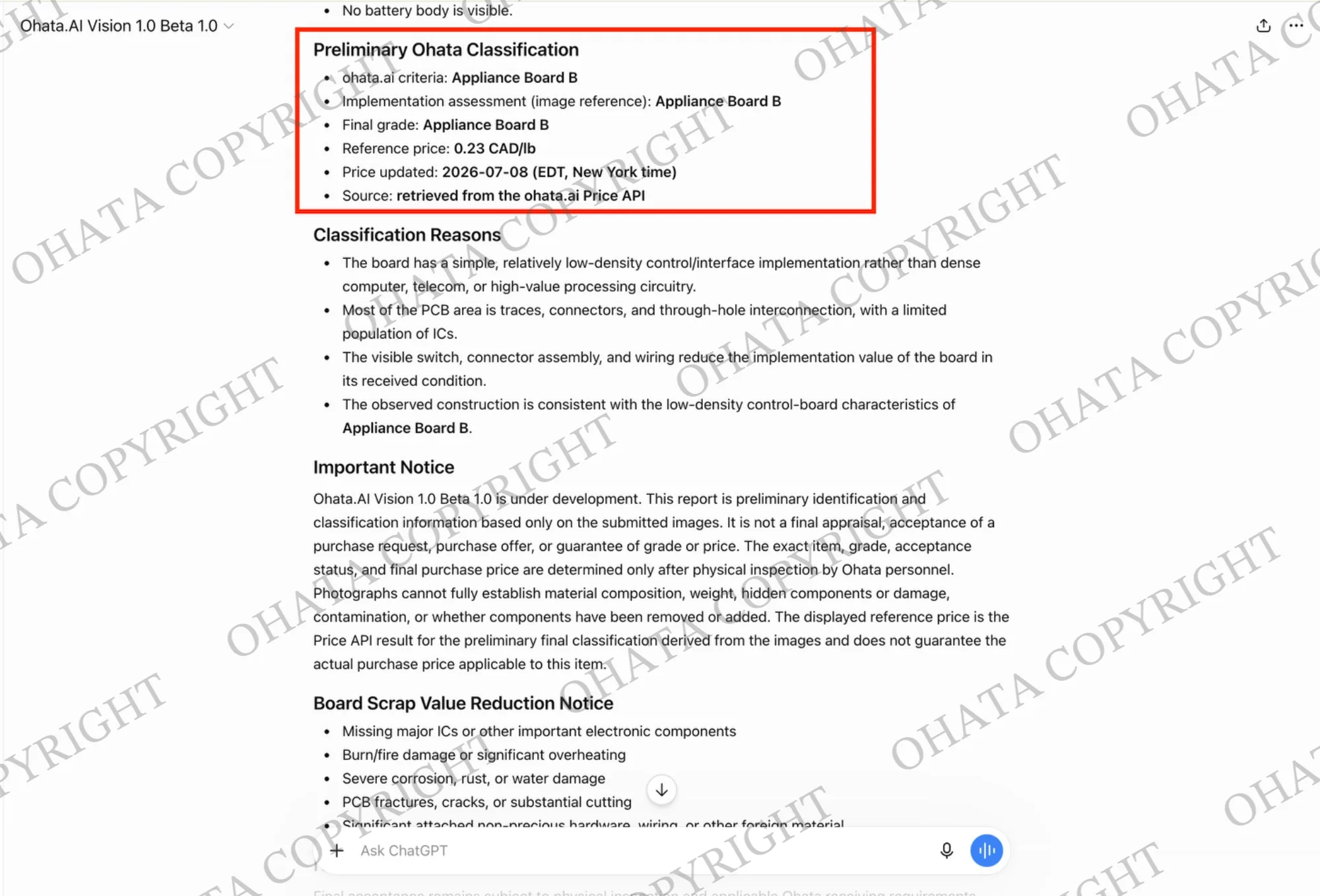
Ohata.AI is an identification aid. Final acceptance, classification, and buying price depend on physical inspection, weight, completeness, condition, and current buying requirements.
Visiting the Richmond Yard
Ohata Resource Canada Inc. is a C2B e-scrap buying business serving individuals and businesses across Metro Vancouver.
Address: Unit 7, 11220 Voyageur Way, Richmond, BC V6X 3E1
Telephone: +1 (236) 888-1086
Hours: Monday–Friday, 8:00 a.m.–5:00 p.m.; Saturdays, Sundays and holidays closed
Appointments: Not required for most deliveries; contact the yard before bringing a large or commercial load
Minimum: Generally 1 lb of qualifying Appliance B boards
Identification: Bring valid government-issued photo identification when selling e-scrap
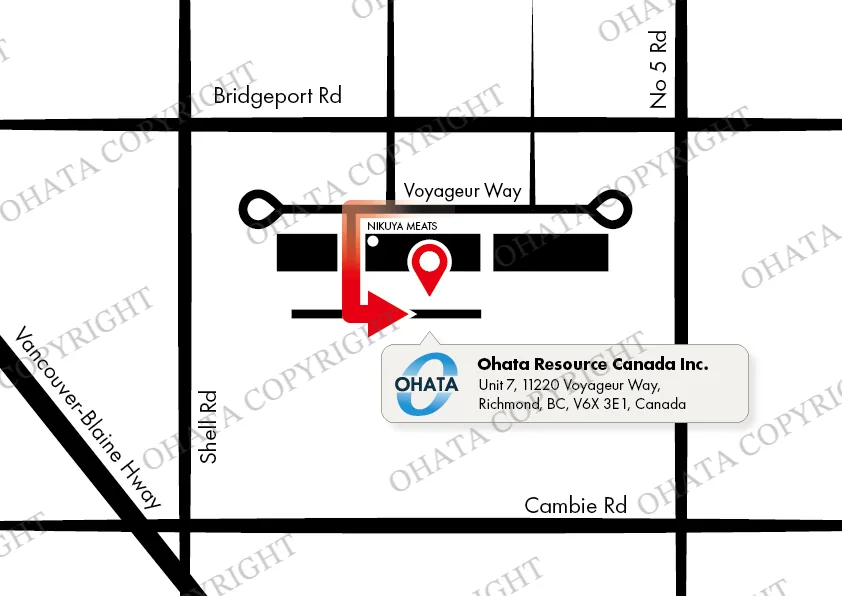
Please check the official Richmond contact page before travelling.
Your Appliance B Questions, Answered
Can a large circuit board be Appliance B?
Yes. Physical size doesn’t determine the grade. A large board can still have low IC density and simple circuitry.
Can an Appliance B board have a relay or transformer?
Yes. Small relays and transformers are common on some B boards. One component doesn’t decide the category.
Does the board need to work?
No. It may still qualify when non-working, provided it remains recognizable and substantially complete.
Should I remove the attached parts?
Keep the main electronic components in place. Remove only practical external items such as a plastic housing, loose wiring, or mounting hardware.
Can I mix Appliance A and B boards?
Mixed loads are accepted, but separating the grades can make inspection easier. Mixed or contaminated material may receive a lower buying value.
Can Ohata.AI determine the final price?
No. It can assist with preliminary identification, but physical inspection determines the final classification and price.
Do I need an appointment?
Most deliveries don’t require one. Please contact the yard first for large, palletized, or commercial loads.
What is the minimum quantity?
The published minimum for Appliance B boards is generally 1 lb, subject to current buying conditions.

Comments
0 comments