

- Purchases start from just 1 lb of eligible iPod, MP3 player, and e-reader material.
- This category includes recognizable devices with their original main circuit boards present.
- The classification and buying price are determined by the device’s board construction, component density, completeness, condition, and recoverable material content, not by its brand, model, age, storage capacity, or original purchase price alone.
- Different brands and models may receive the same category price when they meet the same Ohata classification and buying conditions.
- Keep the original mainboard and its major integrated circuits attached. Undamaged batteries should remain safely contained inside the device.
- Please separate complete devices from empty housings, loose screens, accessories, loose batteries, phones, tablets, and unrelated circuit boards.
- Devices with missing or stripped boards, severe fire damage, hazardous contamination, or unsafe battery damage may receive a different classification or may be rejected.
iPod/MP3 Players/e-Readers with Board buying scrap price
Key Buying Introduction
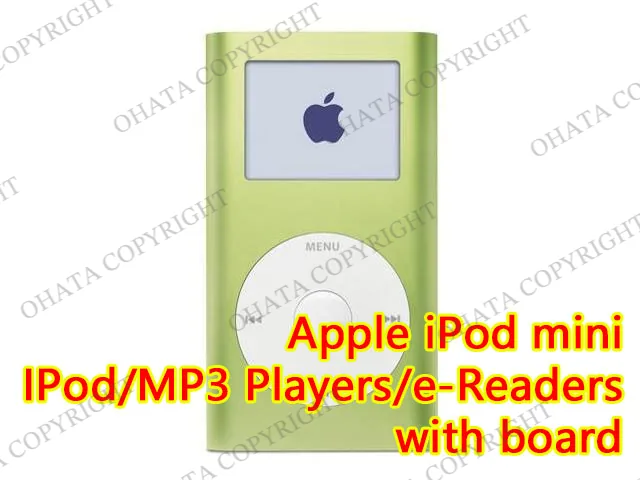
Key Buying Introduction
- Purchases start from just 1 lb of eligible iPod, MP3 player, and e-reader material.
- This category includes recognizable devices with their original main circuit boards present.
- The classification and buying price are determined by the device’s board construction, component density, completeness, condition, and recoverable material content, not by its brand, model, age, storage capacity, or original purchase price alone.
- Different brands and models may receive the same category price when they meet the same Ohata classification and buying conditions.
- Keep the original mainboard and its major integrated circuits attached. Undamaged batteries should remain safely contained inside the device.
- Please separate complete devices from empty housings, loose screens, accessories, loose batteries, phones, tablets, and unrelated circuit boards.
- Devices with missing or stripped boards, severe fire damage, hazardous contamination, or unsafe battery damage may receive a different classification or may be rejected.
Buying Details of Conditions
Introduction, Construction, Components, and Recycling Value
This category includes iPods and other portable digital audio players, MP3 players, and electronic reading devices such as Amazon Kindle, Kobo, Barnes & Noble Nook, and Sony Reader models. Classification is based on the device’s construction, installed circuit board, completeness, and condition rather than its brand or model alone. Devices that meet the same Ohata classification requirements may receive the same category price.
The main circuit board is generally the most important electronic component for evaluation. Depending on the device, it may contain a processor, memory and storage chips, audio or display controllers, wireless communication components, charging and power-management circuits, connectors, and other surface-mounted components. The type, density, and condition of these components contribute to the device’s classification and recycling value.
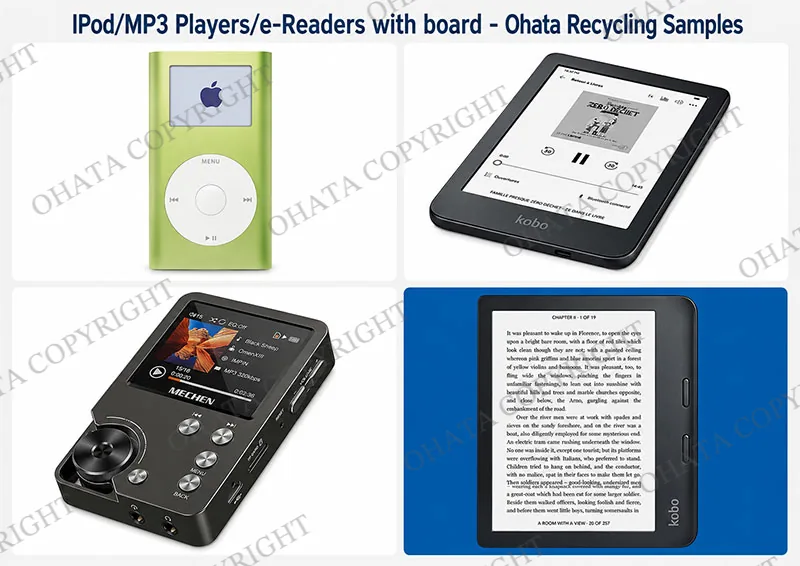
The printed circuit boards used in these devices are generally small but densely populated. Their compact construction requires multilayer copper routing and fine-pitch semiconductor packages. Gold may be present in connector contacts, board-to-board connections, flexible-cable terminals, and microscopic bond wires inside integrated circuits. Copper is found in internal PCB layers, charging circuits, inductors, cables, speakers, and battery connections. Additional recoverable materials may include silver, tin, nickel, aluminum, steel, and trace quantities of palladium in multilayer ceramic capacitors.
Recycling value depends on more than the total weight of the device. A lightweight media player with a dense and complete logic board may provide better electronic recovery value than a larger device containing a simple low-density circuit. However, the battery, screen, casing, and accessories also affect handling cost. Final purchasing value is therefore based on inspection, classification, completeness, contamination, and the amount of recoverable electronic material.
Customers looking to recycle iPod/MP3 Players/e-Readers with Board can also browse our related buying categories.
Ohata iPod, MP3 Player, and e-Reader Classification Guide
This category includes recognizable iPods, MP3 players, and e-readers with their original main circuit boards present. Different brands and generations may receive the same grade when their construction, component density, material composition, completeness, and condition meet the same classification requirements.
A qualifying device will generally have:
Its original main circuit board installed or securely supplied with the device
A recognizable media-player or e-reader design
A display, navigation controls, or touchscreen
Charging, audio, speaker, or data connections
Major processors, memory chips, controllers, and connectors still attached
An undamaged battery safely contained inside the device
Internal construction varies considerably. Some iPods and digital audio players contain small, densely populated boards with several memory and control components. Basic MP3 players may contain simpler boards with fewer components. E-readers usually have larger screens and housings, but their main circuit boards may occupy only a small portion of the device.
Physical size, brand, model, age, and original purchase price do not determine recycling value by themselves. A large e-reader is not automatically more valuable than a smaller media player. Evaluation considers the circuit board, installed components, material composition, completeness, physical condition, and processing requirements.
Recoverable Materials, Buying Conditions, and Handling
The circuit board is the main source of recoverable electronic material in this category. Copper is found in the board layers, flexible cables, charging circuits, coils, connectors, and speaker components. Small quantities of gold may be present in plated contacts, connectors, and semiconductor components.
Other recoverable materials may include silver, tin, nickel, aluminum, and steel. These materials can be found in solder, switches, housings, shielding, brackets, screws, and other internal parts. Certain electronic components may also contain trace quantities of palladium.
Devices do not need to function. Non-working iPods, MP3 players, and e-readers may still qualify when they are recognizable and retain their original main circuit boards and major components.
For the best evaluation, please keep:
The original main circuit board with its major chips attached
The housing intact or the disassembled device recognizable
Undamaged batteries safely contained inside the device
Devices reasonably clean, dry, and separated from unrelated material
Swollen, punctured, leaking, overheated, or loose lithium batteries require separate handling. Keep these devices away from regular material and contact the Seattle Yard before bringing them in.
Missing mainboards, removed processors or memory chips, cracked circuit boards, broken connectors, extensive corrosion, severe water or fire damage, crushed housings, or substantial contamination may affect the classification and buying price. Material with leaking batteries, severe fire damage, chemical contamination, hazardous residue, or extensive fragmentation may be rejected after inspection.
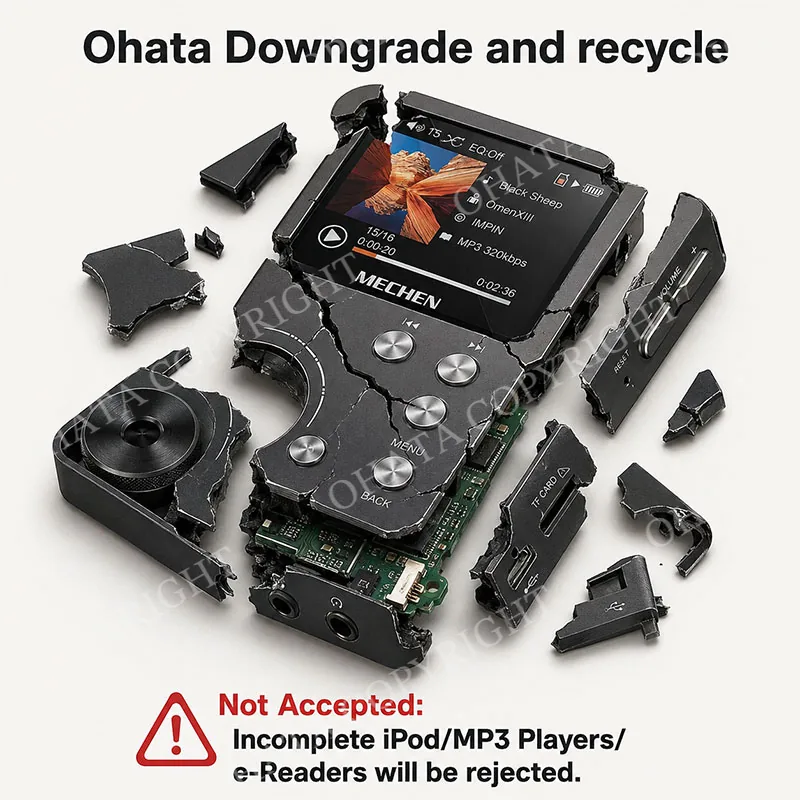
Suppliers should keep this category separate from cell phones, tablets, laptop computers, loose batteries, household garbage, wires, chargers, plastic scrap, and unrelated electronic boards. Sorting complete devices from empty housings and accessories reduces inspection time and supports more accurate pricing.
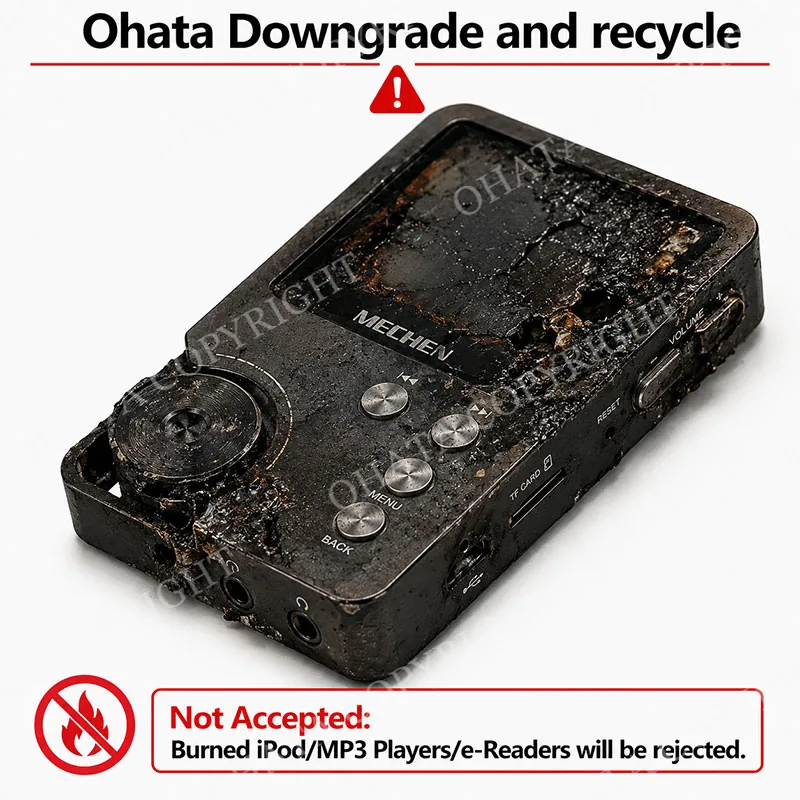
Store the devices indoors in a dry environment. Avoid crushing, dropping, or stacking excessive weight on e-readers because damaged lithium batteries and broken displays may create safety risks. Do not burn, cut, drill, or manually heat the boards. Batteries should only be removed by trained personnel using appropriate safety procedures.
Comparison and Official Ohata Classification
Compared with smartphones and tablets, most traditional MP3 players have simpler communication hardware, smaller circuit boards, and fewer advanced radio-frequency components. Smartphones usually contain denser boards, cellular modems, multiple cameras, and more complex processors. For this reason, phones should normally remain in their own recycling category.
Compared with laptop or desktop motherboards, iPod, MP3 player, and e-reader boards are much smaller and contain fewer large connectors, expansion sockets, and power components. Their value is derived from compact semiconductor density rather than large PCB area. They should not be mixed with computer motherboards, appliance control boards, power-supply boards, or telecommunications boards.
E-readers also differ from tablets. An e-reader commonly uses an electronic-ink display and a relatively small main board designed for low power consumption. A tablet generally has a more powerful processor, larger memory capacity, advanced wireless functions, and a higher-density logic board. Although the external shapes may be similar, the two product groups should be identified separately whenever possible.
Devices do not need to function, but their mainboards and major components should remain attached. Evaluation considers board construction, component density, material composition, completeness, physical condition, and contamination rather than brand or model alone.
FAQ
- 1. What is today’s price for iPod/MP3 Players/e-Readers with Board buying?
- As of Oct 06,2026, Ohata Shoji America Inc., (Seattle, WA, United States) is purchasing iPod/MP3 Players/e-Readers with Board buying at 0.25 (USD/lb). We provide competitive scrap prices in Seattle, Bellevue, Renton, Tukwila, Kent, SeaTac, Tacoma, Everett, and surrounding communities.
- 2. Does Ohata buy used iPods, MP3 players, and e-readers?
- Yes. Ohata buys recyclable iPods, portable MP3 players, digital audio players, and electronic book readers from various brands and generations. The devices are evaluated according to their internal circuit boards, completeness, physical condition, and recoverable material content.
- 3. Do the devices need to be working?
- No. Working condition is generally not required. Non-working devices can still have recycling value as long as they are recognizable, contain their original main circuit boards, and are free from severe burning, hazardous contamination, or unsafe battery damage.
- 4. Are all brands and models purchased at different prices?
- Not necessarily. Ohata does not determine recycling value only by brand or exact model. Devices that meet the same recycling-grade requirements may be purchased at the same corresponding grade price, even when their manufacturers, generations, storage capacities, or original retail prices are different.
- 5. What parts make an iPod, MP3 player, or e-reader valuable for recycling?
- The main circuit board is usually the most important component. It may contain processors, NAND flash memory, RAM, power-management ICs, audio controllers, display controllers, wireless chips, connectors, and other surface-mounted components containing recoverable metals.
- 6. What materials can be recovered from these devices?
- Recoverable materials may include copper, gold, silver, tin, nickel, aluminum, steel, and trace quantities of palladium. Copper is found in circuit boards, cables, coils, and connectors, while small amounts of precious metals may be present in contacts, chips, and ceramic components.
- 7. Will a missing or stripped circuit board reduce the purchasing value?
- Yes. Devices with missing main boards, removed processors, stripped memory chips, scraped IC areas, or cut connector sections may be downgraded. Empty plastic housings and loose screens without their original circuit boards should not be presented as complete devices.
- 8. Can iPods, MP3 players, and e-readers be mixed with other electronics?
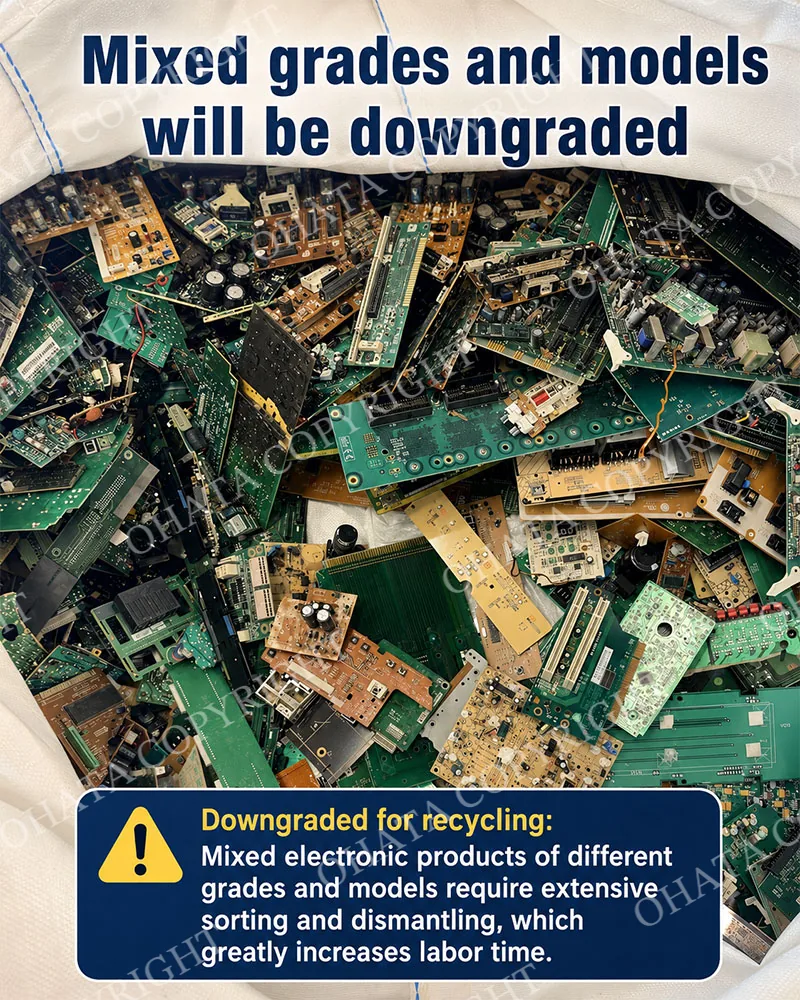
- We recommend keeping them separate from cell phones, tablets, laptops, loose batteries, chargers, wires, plastic scrap, and household waste. Mixed shipments require additional sorting and may reduce the final purchasing value.
- 9. What conditions may cause the devices to be downgraded?
- Common downgrade conditions include missing circuit boards, removed major chips, cracked PCBs, broken connectors, extensive water damage, corrosion, heavy oxidation, crushed housings, missing sections, incomplete assemblies, and excessive attached non-electronic material.
- 10. How does the company transform electronic waste into valuable resources?
- We process electronic scrap to extract precious metals and securely refurbish functional hardware for secondary online marketplaces.
- 11. Can I sell loose electronic components and scrap parts?
- Yes, we actively buy printed circuit boards (PCBs), hard drives, networking gear, and assorted electronic scrap via our digital storefront.
Related Items

Contact us by phone or email