
ohata.ai
Ohata Shoji America Inc.

Appliance Board A Grade (mid-grade mixed boards) Buying scrap price

Back to Circuit Board price list
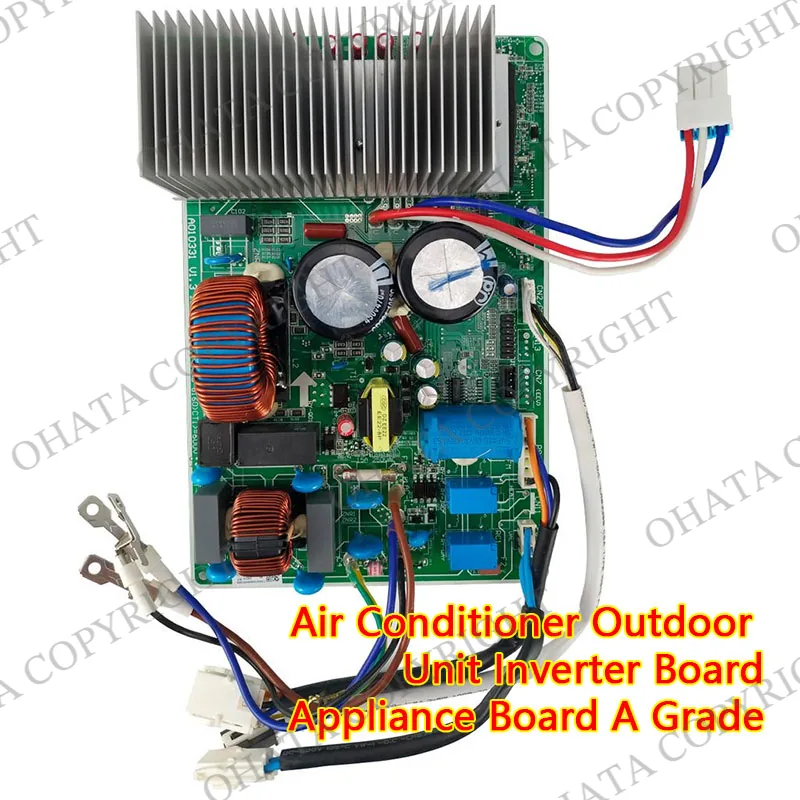
Air Conditioner Outdoor Unit Inverter Board Appliance Board A Grade
Air Conditioner Inverter Power Control Board Alliance A Board Grade
Siemens Washing Machine Inverter Motor Control Board Alliance A Board Grade
Updated: Aug 06,2026

0.60 USD / lb

The Price is buying by Yard of Seattle, WA, United States.

Key Buying Introduction
  1. We buy Appliance Board A Grade (mid-grade mixed boards) from a minimum quantity of 1 lb.

  2. Appliance Board A Grade represents higher-value household appliance circuit boards classified according to their recoverable material content, power-control components, PCB construction, and overall completeness.

  3. Typical boards in this category contain transformers, copper-wound inductors, relays, power semiconductors, wide copper traces, large connectors, and aluminum heatsinks. The classification is based on recycling value rather than repairability, operating condition, appliance brand, or second-hand market demand.

  4. Any household appliance circuit board that meets the official Ohata Appliance Board A Grade requirements may be purchased at the applicable A Grade price.

Buying Details of Conditions

Part 1 – Introduction, Construction, Components, and Recycling Value

Appliance Board A Grade is Ohata's higher-value household appliance circuit board category. It includes qualifying control boards from washing machines, refrigerators, air conditioners, microwave ovens, dishwashers, dryers, ovens, commercial coffee machines, HVAC equipment, vending machines, and similar appliances.

Classification is based on the board's construction, recoverable materials, component completeness, and condition. Working condition, appliance brand, model, and retail value are not part of the grading decision. The purpose of this classification is material recovery.

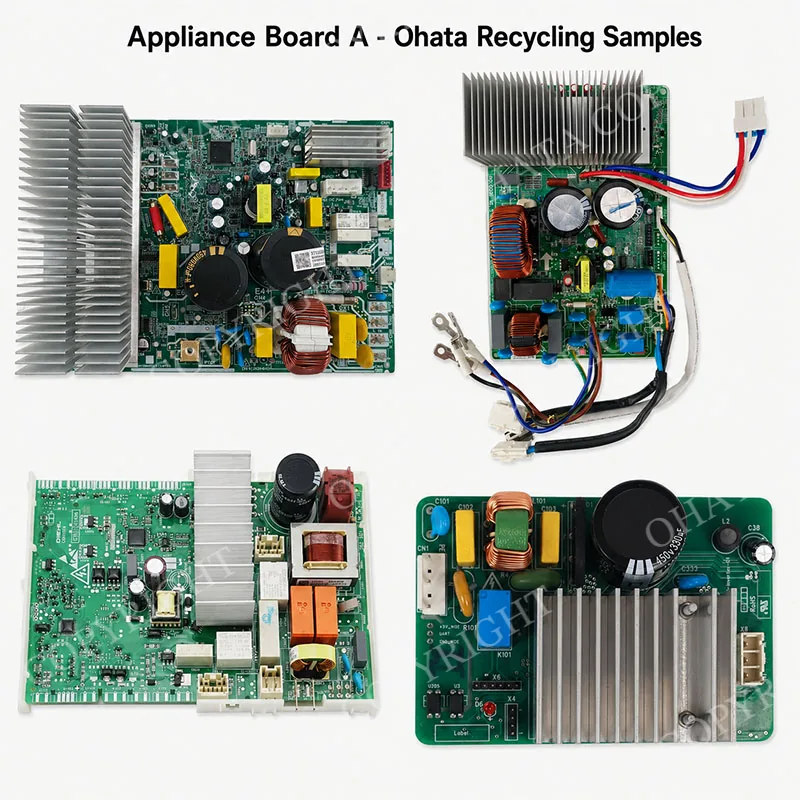
Appliance Board A Ohata Recycling Samples

Appliance Board A boards combine digital control circuits with power electronics. Common components include microcontrollers, memory devices, relays, transformers, inductors, MOSFETs, triacs, motor drivers, rectifiers, capacitors, and communication ICs.

Most boards use durable double-sided or multilayer fiberglass PCBs with wide copper traces, reinforced solder joints, and high-current connectors designed to control motors, compressors, pumps, heaters, valves, and fans.

Copper is the primary recoverable metal, with additional aluminum, tin, nickel, silver, limited gold, and trace palladium. Although gold content is generally lower than computer or telecommunications boards, Appliance Board A remains valuable because of its copper, power components, and consistent processing volume.

Part 2 – Ohata Appliance Board A Grade Classification, Identification Guide

Appliance Board A is classified by the complete board rather than any single component. Inspectors evaluate the PCB construction, component density, recoverable materials, and completeness.

Important identification characteristics include:

  • One or more embedded microcontrollers or control ICs

  • Relay assemblies for motors, heaters, compressors, pumps, or valves

  • Transformers, switching power supplies, copper coils, or inductors

  • Triacs, MOSFETs, power transistors, rectifiers, or motor-driver devices

  • Wide copper traces and large high-current solder pads

  • Durable double-sided or multilayer fiberglass PCB construction

  • Multiple sensor, motor, power-input, and wire-harness connectors

  • Moderate component density with limited empty PCB space

  • Retention of the principal power and control components

Typical examples include washing machine, refrigerator, air conditioner, microwave, dishwasher, dryer, inverter appliance, and other appliance power-control boards. Classification is based on the physical board rather than the appliance, manufacturer, or retail value. Appliance Board A typically appears as a complete power-and-control assembly instead of a simple display, keypad, timer, or interface board.

Part 3 – Recoverable Materials, Buying Standards, and Handling

Ohata purchases Appliance Board A primarily for material recovery. The board does not need to function, but major control and power components should remain attached.

Preferred material should be:

  • Structurally complete

  • Clean and dry

  • Free from severe corrosion or hazardous contamination

  • Retaining the main microcontroller and power components

  • Retaining principal connectors

  • Free from major PCB damage

Remove batteries, plastic housings, brackets, loose wiring, and other unnecessary non-PCB materials before delivery.

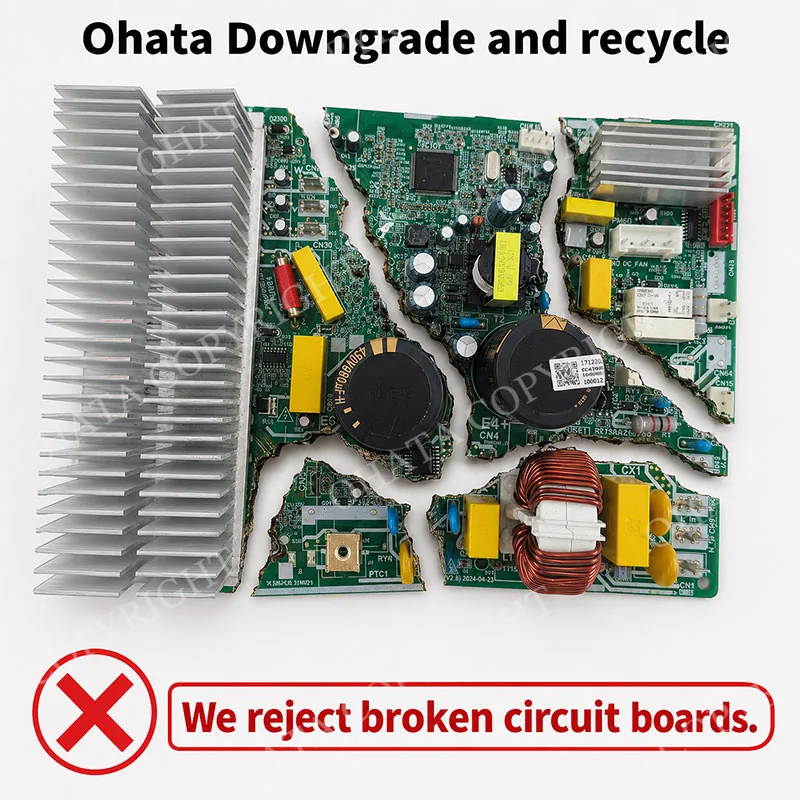
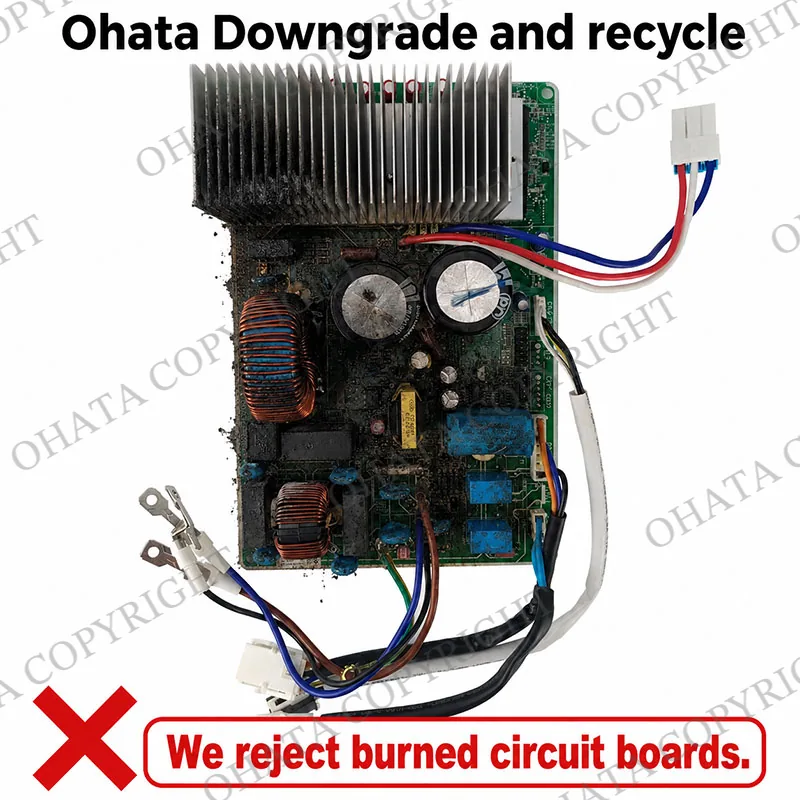
Boards may be downgraded if major control or power components have been removed, or if they have severe corrosion, contamination, battery leakage, burn damage, extensive water damage, or large missing PCB sections.

Appliance Board A Board Ohata Downgrade and recycle Broken Not Accepted

Severe corrosion, battery leakage, extensive water damage, burned PCB sections, heavy oil contamination, chemical contamination, large cuts, and broken boards with missing material may also reduce the purchase value or require separate evaluation.

Appliance Board A Board Ohata Downgrade and recycle Ohata Downgrade and recycle Burned Not Accepted

Minor dust, cosmetic wear, faded labels, and light discoloration generally do not affect the grade. Appliance Board A should be sorted separately from computer motherboards, telecommunications boards, Appliance Board B, LED drivers, timer boards, and mixed electronic scrap.

Part 4 – Comparison, and Official Ohata Classification

Appliance Board A differs from Appliance Board B primarily in electronic complexity, copper content, PCB construction, component density, and power-handling capability.

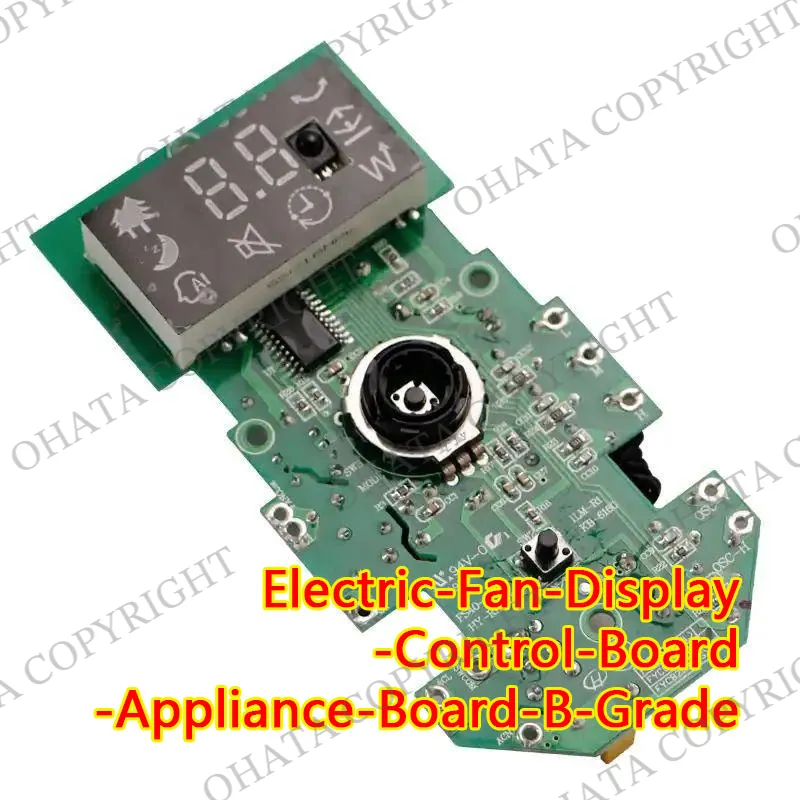
Appliance Board A typically contains larger power-management sections, heavier copper traces, stronger PCB construction, and more substantial control circuitry. Appliance Board B generally consists of simpler timer boards, display boards, LED drivers, fan controllers, and other low-density control boards. Unlike computer motherboards, Appliance Board A emphasizes power conversion, motor control, relay switching, and sensor management rather than CPUs, memory, and chipsets.

Official Ohata Classification

Classification: Appliance Board A Grade
Material Type: Higher-value household and commercial appliance control boards
Primary Recoverable Metal: Copper
Additional Recoverable Materials: Aluminum, tin, nickel, silver, small quantities of gold, and trace palladium
Typical Construction: Double-sided or multilayer fiberglass PCB with mixed analog, digital, and power-control circuitry
Typical Components: Microcontrollers, relays, transformers, inductors, MOSFETs, triacs, motor drivers, rectifiers, capacitors, and wire-harness connectors
Functional Requirement: The board does not need to operate
Condition Requirement: The board should remain identifiable, reasonably clean, safe, and substantially complete
Pricing Principle: All circuit boards that meet the official Appliance Board A Grade standard are purchased according to the applicable Appliance Board A price, regardless of brand or exact model.

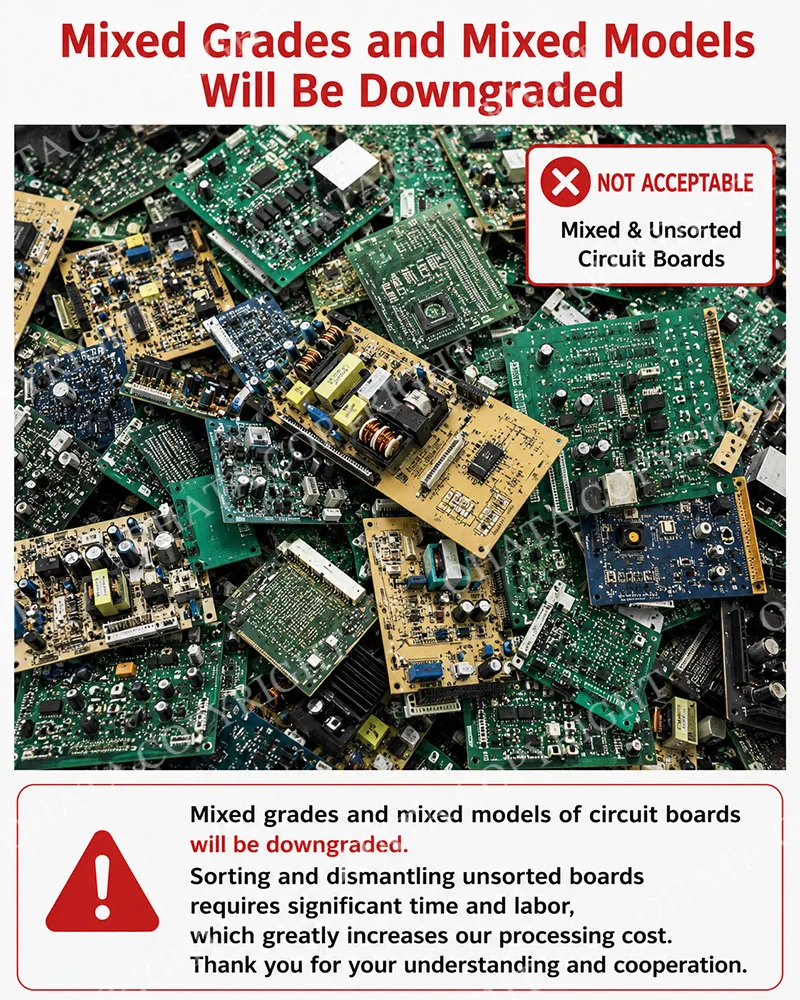
Appliance Board A Grade Different Grades and Models mixed

The final classification is determined by the physical characteristics and recoverable material content of the circuit board. Original appliance cost, repairability, operating condition, and second-hand market demand are not used as the primary grading basis.

About OHATA's classification for Appliance circuit boards:

Appliance Board A Grade (mid-grade mixed boards)

Appliance Board B Grade (Auto boards)

FAQ
1. What is today’s price for Appliance Board A Grade (mid-grade mixed boards) Buying?
As of Aug 06,2026, Ohata Shoji America Inc., (Seattle, WA, United States) is purchasing Appliance Board A Grade (mid-grade mixed boards) Buying at 0.60 (USD/lb). We provide competitive scrap prices in Seattle, Bellevue, Renton, Tukwila, Kent, SeaTac, Tacoma, Everett, and surrounding communities.
2. What is an Appliance Board A Grade circuit board?
An Appliance Board A Grade circuit board is a higher-value household or commercial appliance control board with substantial power-control circuitry and recoverable metal content. It commonly contains transformers, copper coils, relays, wide copper traces, power semiconductors, heavy-duty connectors, and aluminum heatsinks.
3. Which household appliance boards may qualify as A Grade?
Common examples include main control boards and power boards from air conditioners, washing machines, refrigerators, dryers, dishwashers, microwave ovens, heat pumps, large ovens, and similar appliances. However, every board is evaluated individually because not all boards from these appliances qualify as A Grade.
4. Does the circuit board need to be working?
No. Operational condition is not normally required because Appliance Board A Grade material is purchased for recycling and metal recovery. A non-working board may still qualify if it remains identifiable, safe, reasonably clean, and substantially complete.
5. Is the grade determined by the appliance brand or model?
No. The brand, model, original retail price, and market reputation of the appliance do not determine the recycling grade. Ohata grades the physical circuit board according to its construction, components, metal content, completeness, and processing value.
6. What components increase the recycling value of an appliance board?
Components that may increase recycling value include copper-wound transformers, inductors, relay coils, aluminum heatsinks, wide copper traces, large power connectors, motor-control devices, MOSFETs, triacs, rectifiers, and substantial power-supply sections. The entire board structure must still be evaluated rather than relying on one component.
7. Are all washing machine and air-conditioner boards A Grade?
No. A washing machine or air conditioner may contain several different boards. A complete inverter, motor-drive, or main power-control board may qualify as A Grade, while a simple display, button, sensor, or remote-receiver board may belong to a lower grade.
8. Can Appliance Board A Grade be mixed with other circuit boards?
It is better to keep Appliance Board A Grade separate from Appliance Board B, computer motherboards, telecommunications boards, LED drivers, display boards, household waste, batteries, wires, fans, and plastic scrap. Mixed loads require additional sorting and may receive a lower overall purchase value.
9. What is the mission of Ohata Shoji America Inc.?
Our mission is to transform electronic waste into valuable resources by combining AI-powered digital commerce with responsible recycling, helping businesses and individuals contribute to a more sustainable and circular economy.
10. Can I use your online platform before visiting your location?
Yes. Customers can explore our website, review buying information, and submit inquiries online before visiting or contacting our team.
11. How does your business help reduce electronic waste?
By encouraging the reuse and recycling of electronic equipment, we help divert usable materials from disposal and recover valuable resources that can re-enter the manufacturing supply chain.
12. Does AI determine the final buying price?
AI may assist with product identification and information processing, but final buying prices are determined based on the material type, condition, quantity, completeness, and current market conditions.

Related Items

Browse all Circuit Board items
AI Scrap Grading Ohata.AI Vision 1.0 Beta 1.0 Upload board photos for grade and reference price