

-
We buy Board B Grade (medium value board) from a minimum of 1 lb.
-
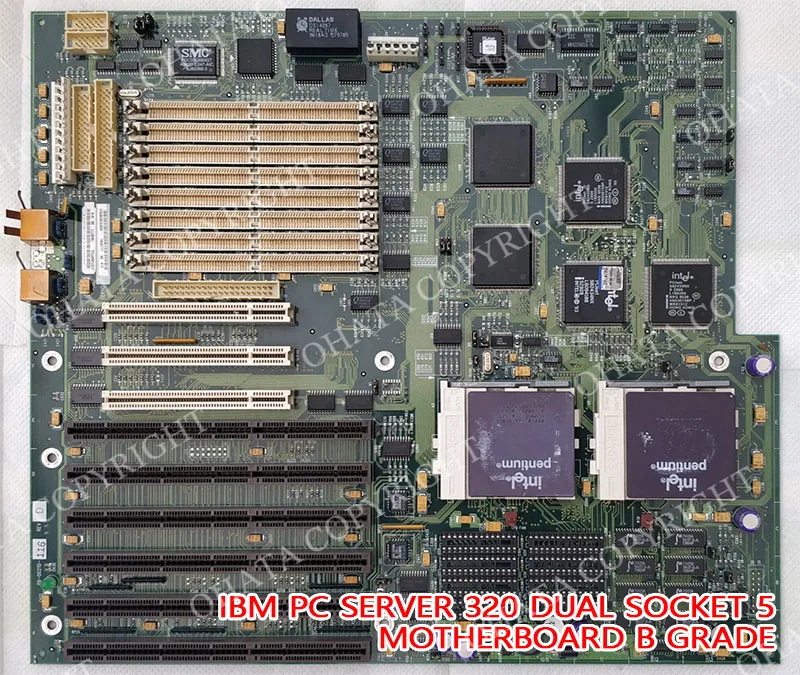
Typical Ohata B Grade products include:Low-grade telecommunications boards,Metal multi-socket server motherboards.
-
Depending on the application, a B Grade board may include:Plastic or metal CPU sockets,Soldered BGA processors or controller chips.
-
The following conditions may cause rejection or downgrading:Empty or heavily stripped PCB boards,Removed chipset ICs.
-
No single B Grade board should be valued only by the appearance of one gold-coloured connector. Professional grading considers the board as a complete recycling unit.
-
Clean, dry, and properly sorted boards receive faster inspection, accurate Ohata B Grade classification, and competitive buying prices.
Board B Grade (medium value board) buying scrap price
Key Buying Introduction
Key Buying Introduction
-
We buy Board B Grade (medium value board) from a minimum of 1 lb.
-
Typical Ohata B Grade products include:Low-grade telecommunications boards,Metal multi-socket server motherboards.
-
Depending on the application, a B Grade board may include:Plastic or metal CPU sockets,Soldered BGA processors or controller chips.
-
The following conditions may cause rejection or downgrading:Empty or heavily stripped PCB boards,Removed chipset ICs.
-
No single B Grade board should be valued only by the appearance of one gold-coloured connector. Professional grading considers the board as a complete recycling unit.
-
Clean, dry, and properly sorted boards receive faster inspection, accurate Ohata B Grade classification, and competitive buying prices.
Buying Details of Conditions
Learn more about B Grade Boards
Introduction, Construction, Components, and Recycling Value
This grade-based approach is important in professional circuit-board recycling. A recycler does not determine value only by reading a model number or identifying the original retail price of the equipment. Instead, the board is inspected according to its physical construction, CPU socket design, integrated-circuit density, connector type, recoverable metal content, completeness, cleanliness, and overall processing characteristics.
Typical Ohata B Grade products include:
Low-grade telecommunications boards
Metal multi-socket server motherboards
Plastic multi-socket server motherboards
Higher-grade peripheral and interface boards
Desktop motherboards using selected non-metal plastic CPU sockets
Non-Apple laptop motherboards with one qualifying gold-tab BGA area
Expansion cards without a qualifying gold-tab BGA and without an iron bracket
Xbox and Sega Saturn family game-machine boards
Boards with qualifying plastic connector ends
These products contain recoverable materials and useful electronic components, but their overall precious-metal concentration is normally lower than that of A Grade, A+ Grade, S Grade, or SS Grade circuit boards. They may have fewer high-value BGA packages, less extensive gold plating, smaller gold-contact areas, lower semiconductor coverage, or simpler multilayer construction.
Nevertheless, B Grade boards remain commercially important. Large quantities can provide meaningful recovery of copper, gold, silver, palladium, nickel, tin, and other industrial materials. Their value is created not by one visible component but by the combined recoverable content of the entire board.
General Construction
Most B Grade circuit boards are built on rigid multilayer FR-4 material. FR-4 is a glass-fibre-reinforced epoxy laminate commonly used in computer, server, telecommunications, peripheral, and consumer-electronics applications. Conductive copper traces and power planes are embedded between the laminate layers, while electronic components are mounted on one or both external surfaces.
Depending on the application, a B Grade board may include:
Plastic or metal CPU sockets
Soldered BGA processors or controller chips
Memory sockets
Chipset packages
Voltage-regulation circuits
Power connectors
Peripheral expansion slots
Network and communication controllers
Audio and video processors
Plastic edge connectors
Gold-plated contact points
Capacitors, resistors, inductors, and transformers
Input/output ports
Soldered shielding and small metal structures
The component layout may be less dense than that of premium telecommunications or industrial-control boards. Large areas of exposed PCB may be visible between components. Gold fingers may be absent, shortened, lightly plated, or limited to selected connectors. Some boards may rely more heavily on plastic connectors and standard commercial components than on high-value ceramic processors or densely populated semiconductor packages.
CPU Socket Characteristics
The CPU socket is an important identification feature, but it must be considered together with the entire board.
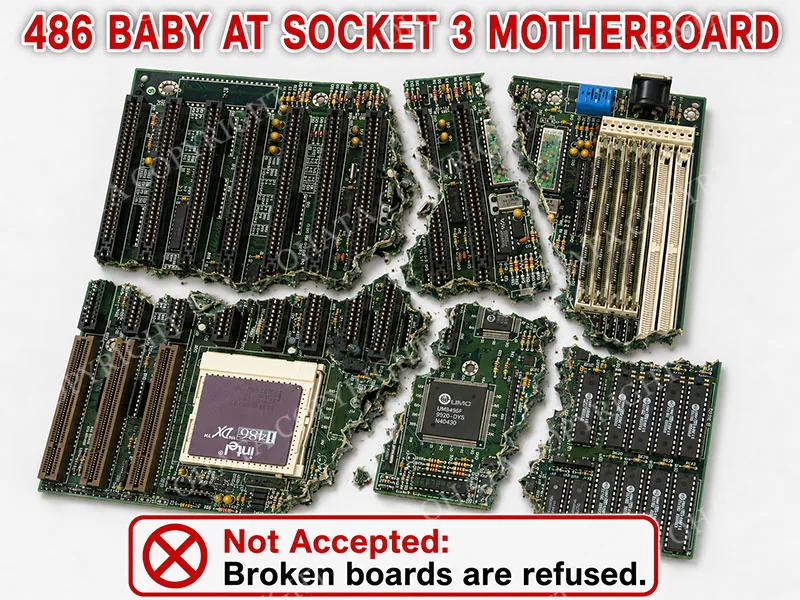
Selected legacy desktop motherboards using non-metal plastic Socket 1, Socket 3, Socket 5, or Socket 8 designs may qualify as B Grade under the Ohata system. These sockets are generally associated with older computer platforms and are visually different from modern metal-covered LGA sockets.
B Grade may also include qualifying multi-socket server motherboards. Some use plastic processor sockets, while others use metal retention structures. However, the presence of two sockets alone does not automatically establish the grade. Socket size, processor package type, board density, application, connector quality, and recoverable component coverage must also be inspected.
Large multi-socket PGA server boards with premium construction may qualify for A+ Grade instead. Large single-socket server boards may fall under A Grade. Modern low-density consumer motherboards with metal CPU sockets may be assigned to D Grade. Therefore, socket count must never be used as the only grading rule.
Recycling Value
The recycling value of B Grade material comes primarily from its copper-bearing PCB structure and its distributed precious-metal content.
Copper is generally the largest recoverable metal by weight. It is found in internal circuit layers, power planes, grounding layers, traces, inductors, transformers, connector structures, and voltage-regulation sections.
Gold may be present in CPU socket contacts, memory-slot contacts, edge connectors, communication ports, plated pins, contact pads, and microscopic bonding wires inside certain integrated circuits. However, B Grade boards usually contain less gold-bearing surface area than higher grades.
Silver may be found in solder alloys, contacts, switches, and selected component materials. Palladium may be present in some multilayer ceramic capacitors and other specialised components. Nickel is commonly used as an underlying plating or barrier layer beneath gold and other finishes. Tin is found extensively in solder and terminal coatings.
No single B Grade board should be valued only by the appearance of one gold-coloured connector. Professional grading considers the board as a complete recycling unit.
Ohata B Grade Classification and Identification Guide
The Ohata classification process focuses on material characteristics rather than exact model identity. A board does not need to match a specific reference photograph perfectly. It must instead display the construction, component density, socket design, product application, and recoverable-material profile expected of B Grade material.
1. Low-Grade Telecommunications Boards
Lower-grade telecommunications boards may contain network processors, communication controllers, transformers, relays, ports, and multiple plastic connectors. They are less densely populated than premium switching, optical-transmission, cellular-base-station, or enterprise-network boards.
A telecommunications board should not automatically be classified as B Grade merely because it came from telecom equipment. High-density switching boards may qualify for SS or A+ Grade, while simple power, fan, or connector boards may fall below B Grade.
2. Metal Multi-Socket Server Motherboards
Some multi-processor server motherboards with metal socket assemblies are accepted as B Grade. These boards may include multiple memory banks, server-control chips, expansion slots, power-management circuits, and enterprise connectors.
The board must still be assessed for overall density and socket type. A premium, large-format multi-PGA server board with strong semiconductor coverage may qualify for A+ Grade. A lower-density board using metal retention sockets and more ordinary commercial construction may remain B Grade.
3. Plastic Multi-Socket Server Motherboards
Legacy server and workstation boards with two or more plastic CPU sockets are representative B Grade materials when their overall design matches the medium-value profile. These boards may contain multiple memory sockets, chipset packages, voltage-regulation modules, and long peripheral slots.
Plastic socket construction alone does not guarantee B Grade. The sockets must be part of a genuine populated motherboard, and the board must retain its original major components.
4. Selected Plastic-Socket Desktop Motherboards
Legacy desktop motherboards with qualifying non-metal plastic Socket 1, 3, 5, or 8 designs may be classified as B Grade. These boards often include ISA, PCI, VLB, or other older expansion systems, along with removable processors, memory sockets, chipset packages, and numerous through-hole components.
Different legacy socket numbers may be assigned to different grades under the Ohata system. Therefore, graders must identify the actual socket design rather than treating every white or beige plastic socket as equivalent.
5. Non-Apple Laptop Motherboards with One Gold-Tab BGA
A qualifying non-Apple laptop motherboard with one recognised gold-tab BGA area may fall within B Grade. These boards commonly contain soldered processors, chipsets, graphics controllers, memory interfaces, storage connectors, and dense low-profile components.
The motherboard must not be confused with an Apple logic board, which may fall into A+ Grade. A non-Apple laptop board with two qualifying gold-tab BGA areas may qualify for A Grade, while one without the required gold-tab feature may be classified as D Grade.
6. Peripheral and Expansion Boards
Certain higher-grade peripheral boards may qualify for B Grade when they contain useful controller ICs, copper-rich construction, quality connectors, and meaningful component coverage.
PC expansion cards without a qualifying gold-tab BGA may also be accepted as B Grade when the iron mounting bracket has been removed. Cards with premium gold-tab BGA packages may qualify for A Grade, while low-density cards, heavily stripped cards, or cards carrying oversized cooling assemblies may receive a lower classification.
7. Xbox and Sega Saturn Boards
Xbox and Sega Saturn family game-machine motherboards are specifically recognised B Grade examples. These boards typically use soldered processors, graphics chips, memory devices, power-management components, controller interfaces, and plastic connectors rather than large removable CPU sockets.
Other game-console boards should not automatically receive the same grade. Their construction varies significantly by generation. Some may have lower semiconductor coverage, fewer recoverable contacts, or extensive cooling hardware and may therefore receive another classification.
8. Plastic Connector-End Boards
Boards with qualifying plastic connector ends may be accepted as B Grade when the remaining circuit-board section contains sufficient electronic components and recoverable material. A small connector strip with minimal circuitry should not automatically be treated as B Grade.
Grade-Based Pricing Principle
All qualifying boards are paid according to the B Grade category, not according to brand reputation or original retail value. An IBM server board, an older desktop motherboard, a telecommunications interface board, and an Xbox motherboard may look completely different, but they may receive the same B Grade rate when they satisfy the same recovery standard.
Conversely, two boards carrying the same brand or product family may receive different grades when their sockets, IC coverage, completeness, contamination, or attached materials differ.
The previously supplied market-trend reference of USD 4.90 per pound should be treated as an indicative category reference rather than a permanent guaranteed price. Actual purchasing rates may change with commodity markets, downstream refining costs, shipment condition, quantity, location, and inspection results.
Recoverable Materials, Buying Standards, and Handling
Recoverable Materials
B Grade circuit boards may contain:
Copper: Internal PCB layers, traces, coils, inductors, transformers, grounding planes, power circuits, and connector bodies.
Gold: CPU contacts, memory contacts, edge contacts, selected connector pins, plated pads, and microscopic IC bonding wires.
Silver: Solder, switches, contacts, relays, and selected component structures.
Palladium: Certain multilayer ceramic capacitors and specialised electronic components.
Nickel: Connector plating, component leads, socket structures, and the barrier layer beneath gold finishes.
Tin: Solder joints, terminal coatings, and plated component leads.
Aluminium and steel: Heatsinks, shielding, brackets, socket retainers, and mechanical structures. These materials are recyclable but may reduce the net circuit-board value when excessive attachments remain.
Buying Standards
Boards should be delivered complete, reasonably clean, and recognisable. Major chipset ICs, soldered processors, BGA packages, memory interfaces, connectors, and valuable contact sections should remain attached.
The following conditions may cause rejection or downgrading:
Empty or heavily stripped PCB boards
Removed chipset ICs
Removed soldered CPU or GPU packages
Missing high-value connector sections
Broken, crushed, or fragmented boards
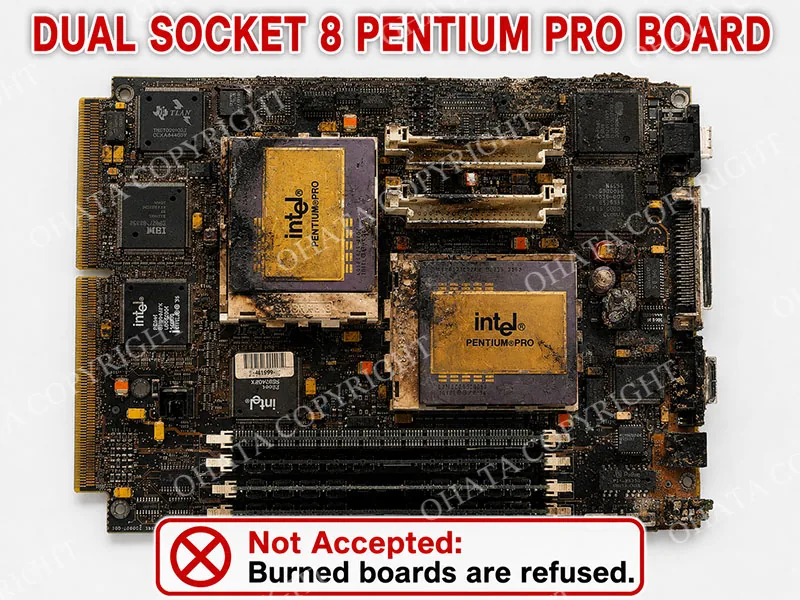
Severe fire damage or extensive carbonisation
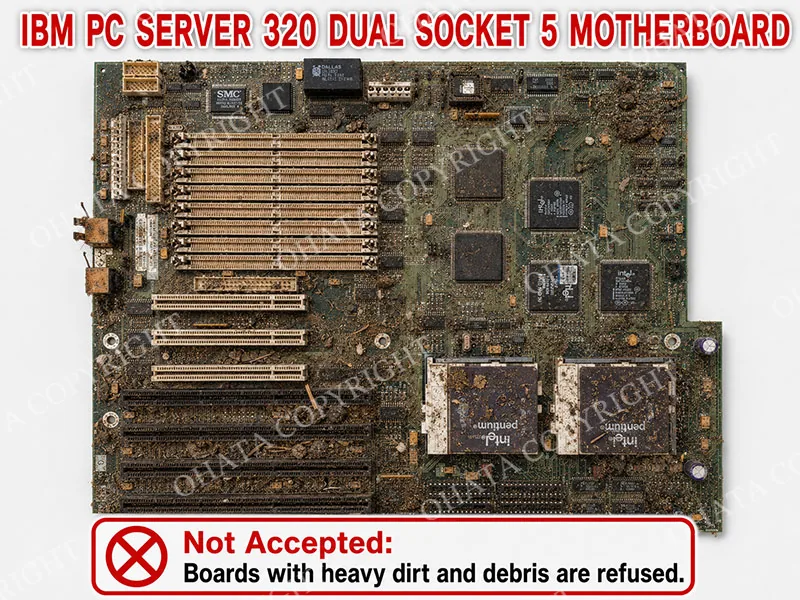
Heavy mud, oil, dirt, or mixed debris
Hazardous chemical or biological contamination
Excessive batteries, steel covers, fans, or heavy heatsinks
Mixed lower-grade appliance boards
Unsorted loads containing several different grades
Moisture or packaging that artificially increases weight
A board does not need to function electrically. Non-working boards may still be accepted because the purchase value is based primarily on recoverable material rather than operational performance. However, physical completeness remains important.
Sorting and Handling
B Grade boards should be separated from A Grade, A+ Grade, C Grade, D Grade, and appliance-grade boards before delivery. Mixed material requires additional inspection and sorting time and may be downgraded or purchased according to the lowest significant grade present.
Remove loose steel brackets, oversized cooling assemblies, batteries, cables, plastic housings, and unrelated electronic waste when required. Do not damage the PCB or remove valuable soldered components during preparation.
Boards should be stored in a dry area and packed in strong boxes, bins, or pallet containers. Heavy server motherboards should be laid flat to reduce cracking. Laptop and expansion boards should be protected from bending. Different grades should be labelled clearly.
Comparison and Official Ohata Classification
B Grade occupies the middle section of the Ohata classification system.
Compared with A+ Grade, B Grade usually has lower IC density, fewer premium connectors, less extensive semiconductor coverage, and lower precious-metal concentration. A+ Grade commonly includes industrial-control boards, PLC CPU boards, CNC controllers, Apple logic boards, medical-control boards, high-density telecom boards, and premium large multi-socket PGA server boards.
Compared with A Grade, B Grade generally has fewer qualifying gold-bearing BGA packages, less valuable gold-finger coverage, smaller or less valuable processor arrangements, and lower overall component density. A Grade may include clean gold-finger cards, non-Apple laptop boards with two gold-tab BGA areas, large single-socket server motherboards, and higher-value backplane or optical-drive boards.
Compared with C Grade, B Grade generally provides stronger component coverage, more valuable socket or connector construction, and a better recoverable-material profile. C Grade may include trimmed gold-finger cards, cards with fans or heatsinks attached, and desktop motherboards using socket categories assigned below the qualifying B Grade socket group.
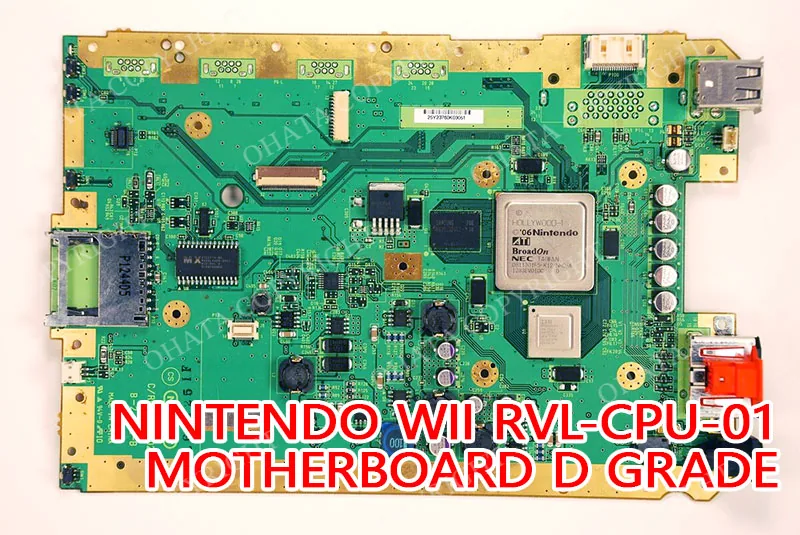
Compared with D Grade, B Grade normally has more favourable legacy construction, stronger connector value, better component coverage, or a recognised product application such as qualifying server, telecom, laptop, peripheral, or game-console equipment. D Grade commonly includes modern low-density consumer motherboards, metal-socket desktop boards, lower-grade peripherals, and non-Apple laptop boards without qualifying gold-tab BGA features.
Official Classification Statement
Under the Ohata Board Scrap Classification System, a circuit board may be officially assigned to:
Ohata B Grade Board Scrap
when its product application, CPU socket construction, component density, connector design, semiconductor coverage, recoverable-metal profile, completeness, and physical condition collectively satisfy the B Grade standard.
This classification applies to all qualifying boards regardless of their specific manufacturer or model. The purpose of the grade is to establish a consistent recycling category based on expected recoverable value and processing requirements.
A product name alone does not guarantee classification. Final grading must be completed through physical inspection. Missing components, contamination, fire damage, attached non-board materials, mixed-grade loading, or incorrect preparation may change the final purchase category.
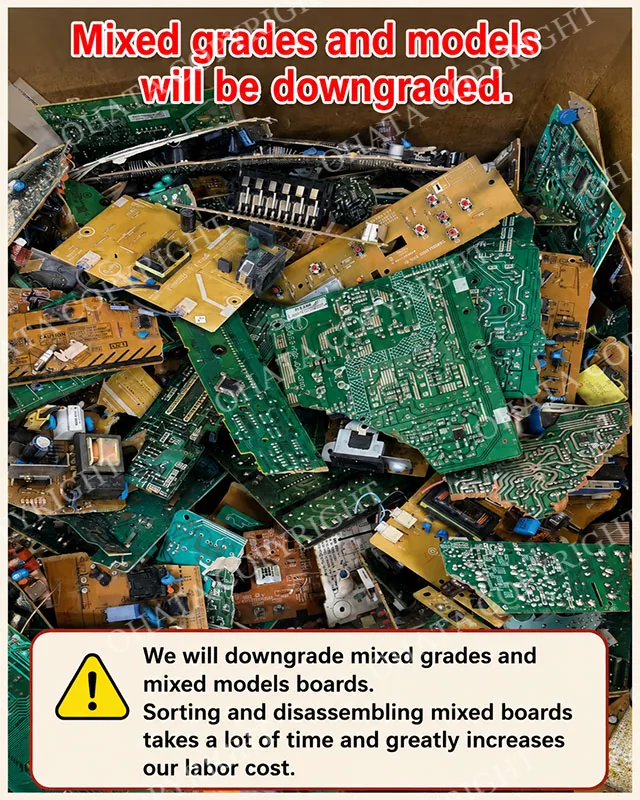
When boards are complete, clean, correctly sorted, and consistent with the recognised B Grade examples, they are purchased at the applicable Ohata B Grade price. This ensures that different electronic products with comparable recovery characteristics are evaluated fairly under one transparent and repeatable standard.
Ready to Sell B Grade Boards in Richmond?
Once you believe your processors match the item's characteristics, you don’t need to confirm the final grade yourself. The next step is simply to check the current buying information, keep the processors intact and prepare them for inspection.
STEP 1 – Check Today’s Buying Prices and Sort Your Materials
Before visiting our Richmond yard, please review the latest Canadian e-scrap buying prices and identification guides in the Ohata Scrap Wiki.
You can also use Ohata.AI Vision 1.0 Beta 1.0 to investigate an unfamiliar circuit board. Upload a clear photograph, and the tool can analyze visible features, such as the board’s shape, CPU socket, integrated circuits, connectors and component layout, to suggest what type of board it may be.
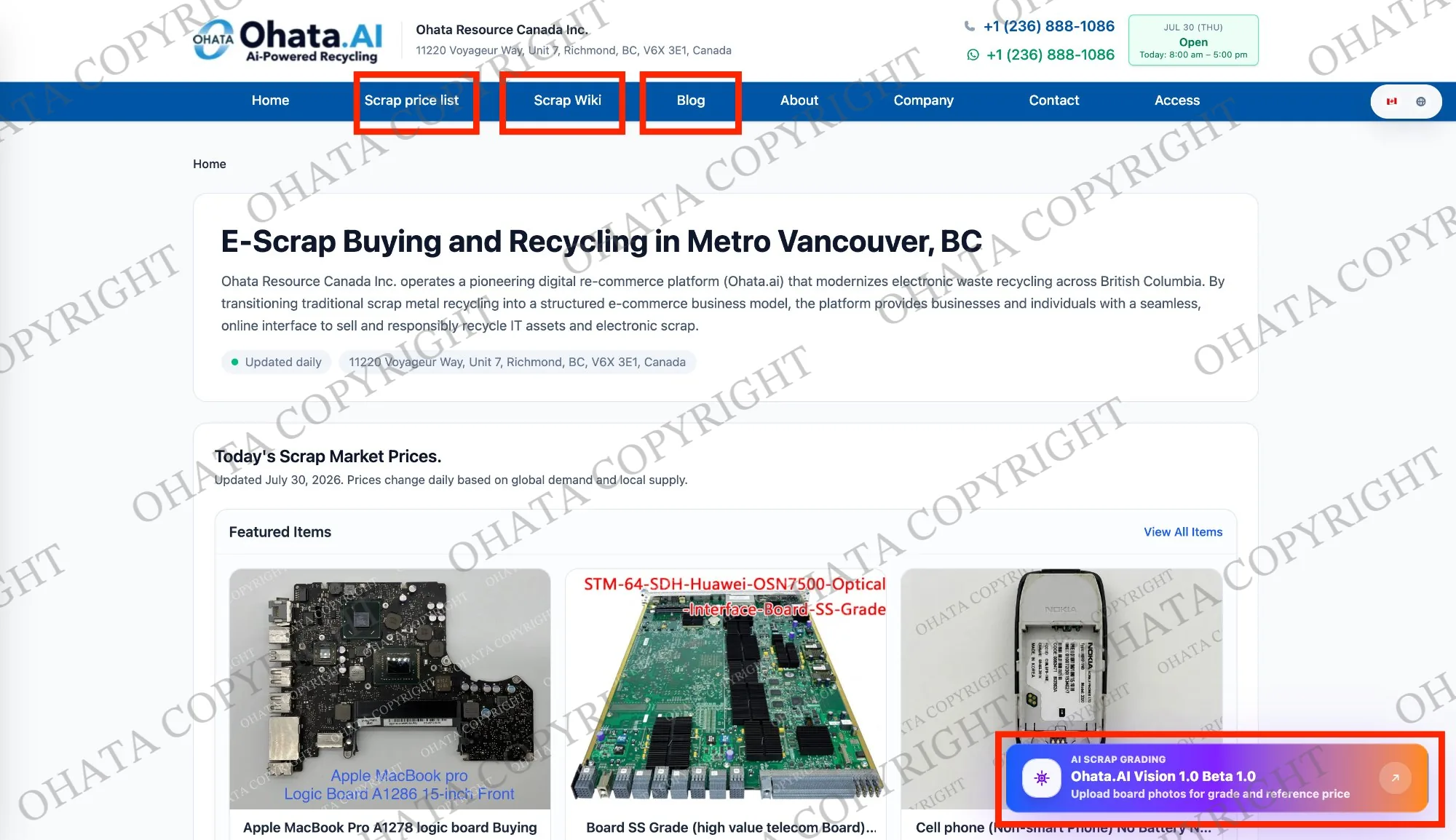
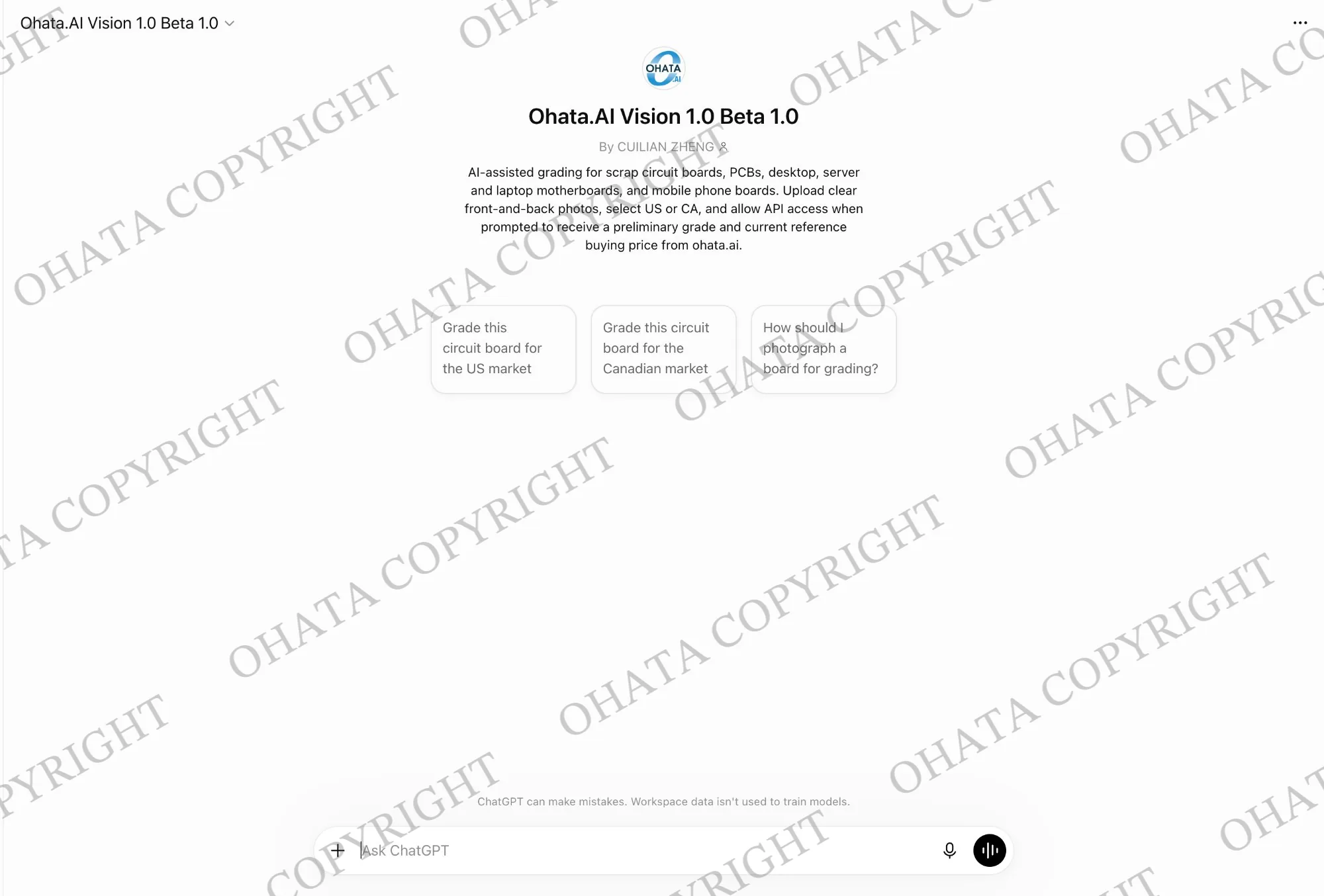
Buying prices and conditions may change with the market, so checking the applicable item page before you leave can help you understand how your material should be prepared.
Whenever practical, separate your e-scrap into groups such as:
Server boards
Laptop motherboards and logic boards
Telecommunications boards
CPUs and memory modules
Other or uncertain electronic scrap
You don’t need to assign every item a final grade yourself. If something is unfamiliar, keep it in an “uncertain” group and use Ohata.AI for a preliminary photo-based identification.
Walk-ins are welcome during regular business hours, and no appointment is required for most ordinary drop-offs.
If you have a large commercial load, palletized shipment or an unusual type of material, please contact the Richmond team before visiting so we can prepare for your arrival.
STEP 2 – Bring Your E-Scrap and Valid Government-Issued Photo ID
Please bring your electronic scrap together with a valid government-issued photo ID.
Examples may include:
British Columbia Driver’s Licence
BC Identification Card
BC Services Card with photo
Canadian passport
Permanent Resident Card
Other valid government-issued photo identification
Business sellers may also be asked to provide company information or supporting documentation when applicable.
Clearly separated and labelled material is usually quicker to inspect. If possible, prepare the approximate weight and quantity for each group before visiting.
Please also remember that computers, servers, hard drives and solid-state drives may contain personal or business information. Back up anything you need and follow your own data-security requirements before the equipment leaves your control.
STEP 3 – Visit Our Richmond E-Scrap Buying Yard
Our Richmond yard is located at 11220 Voyageur Way, Unit 7, Richmond, BC, V6X 3E1. Before leaving, you can check the route and current traffic information through Google Maps.
1. Look for the Ohata sign
When you arrive at the property, first look for the Ohata Resource Canada Inc. sign on the building. Once you find it, continue around to the rear of the building, where our warehouse entrance is located.
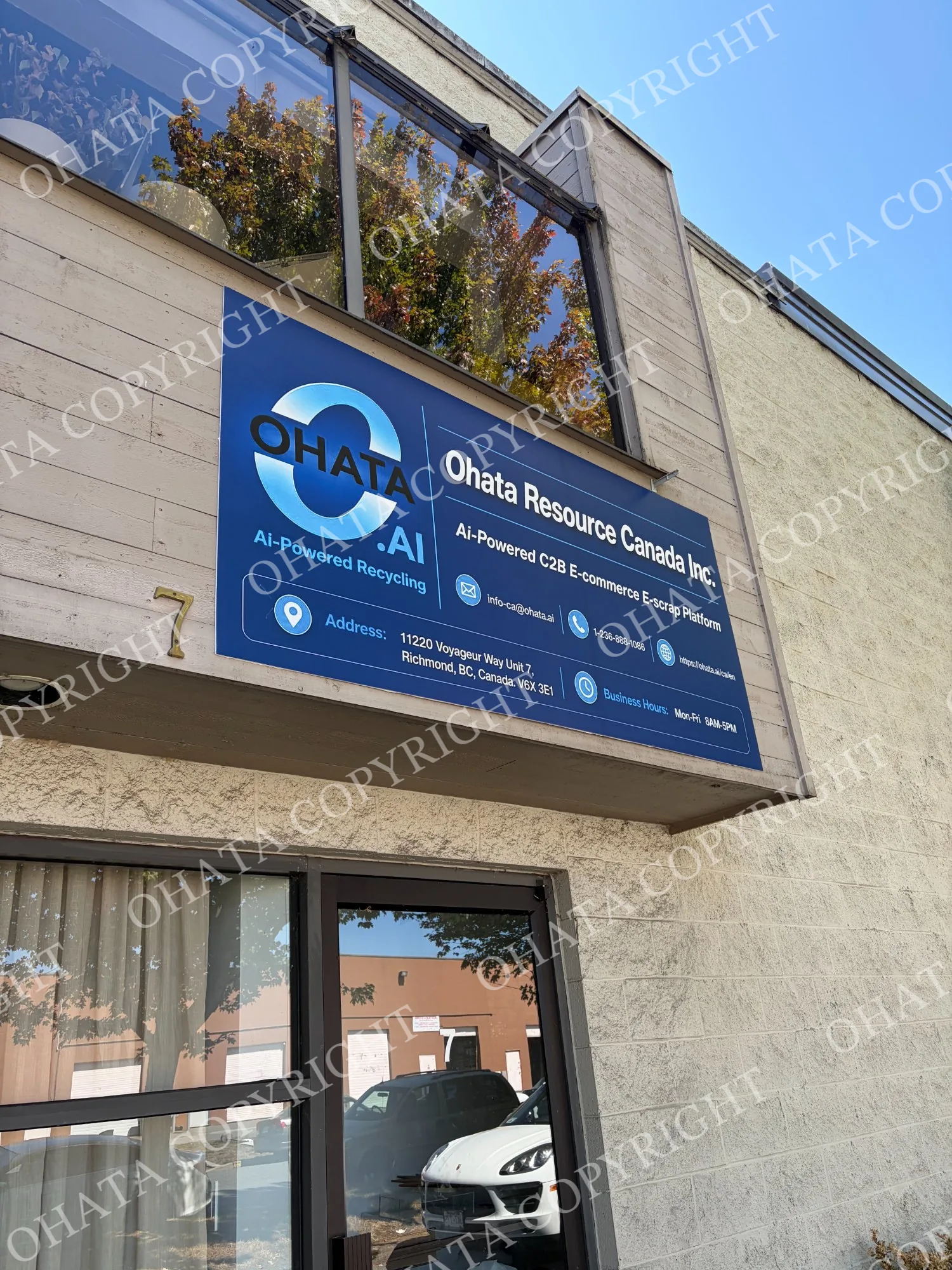
When you see this sign, continue around to the rear of the building.
2. Continue to the Rear Warehouse Entrance
Drive carefully around the building and look for the vertical Ohata sign beside the rear entrance. This vertical sign is the easiest landmark for finding our receiving warehouse.
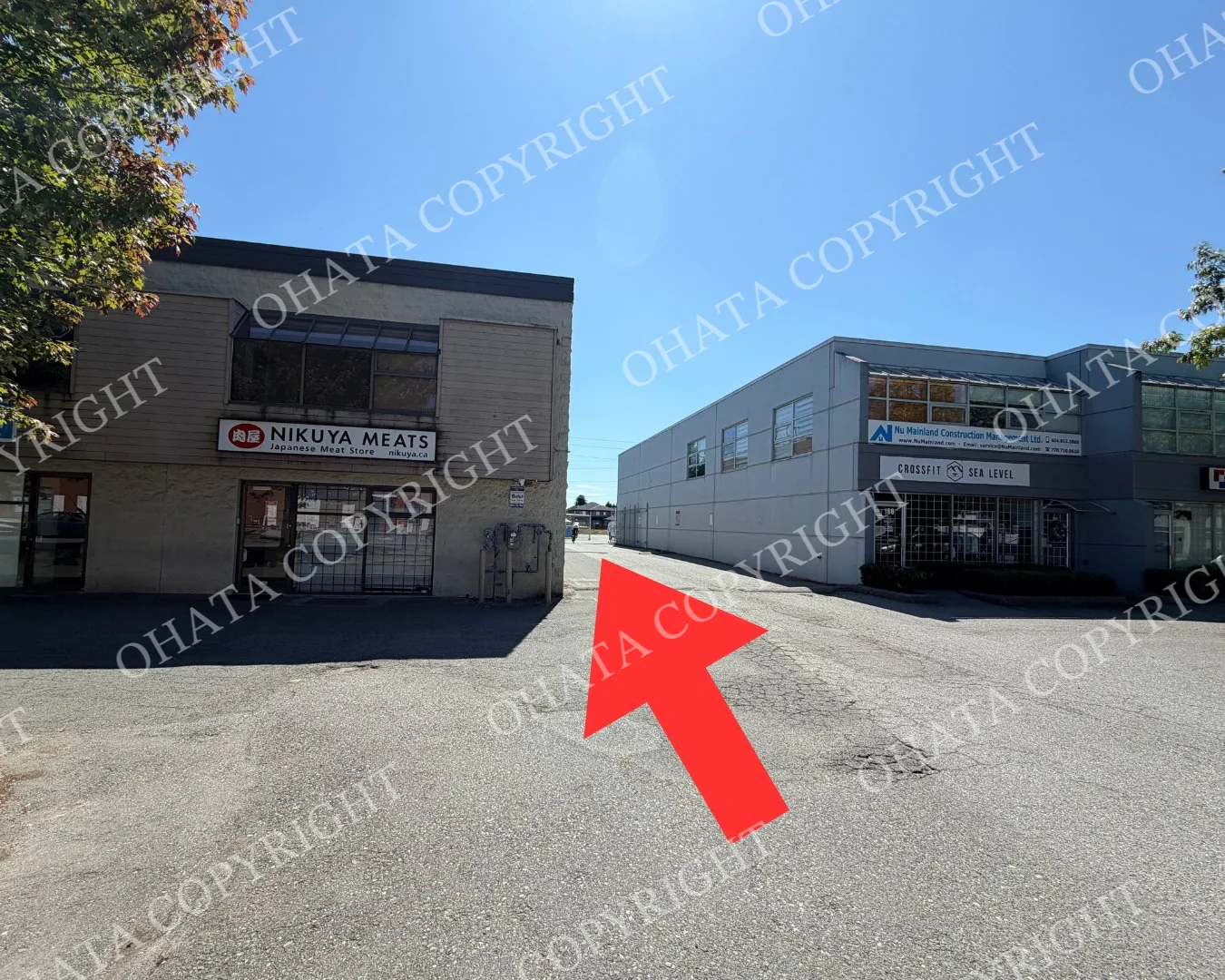
Follow the route around the building to reach the warehouse.
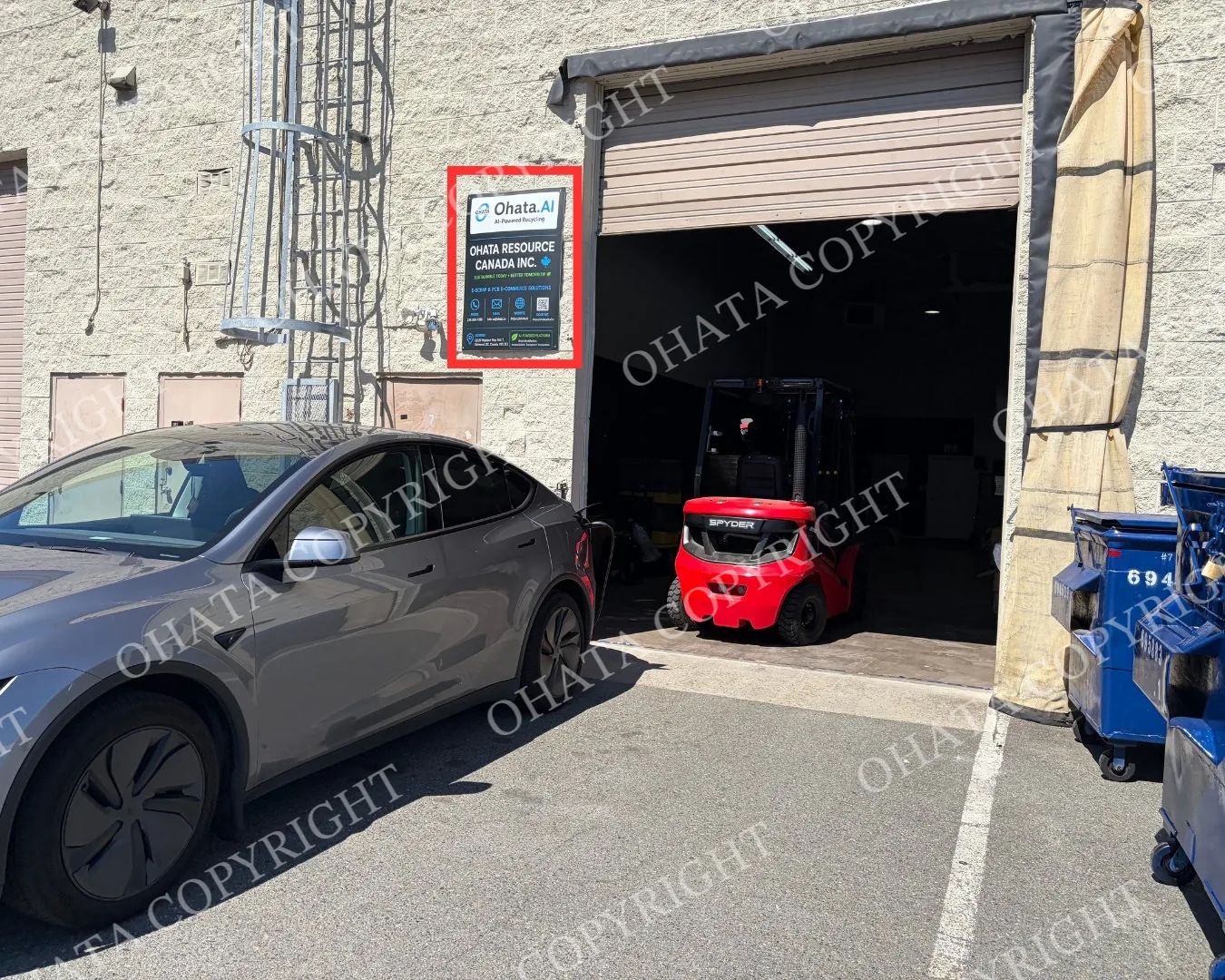
The vertical Ohata sign identifies the correct warehouse entrance.
3. Park Directly in Front of the Warehouse
If you arrive by car, you may park directly in front of the Ohata warehouse entrance while your e-scrap is being received.
Once you reach the warehouse, please park and wait there. A member of our team will come to assist you with your material.
If you have difficulty finding the rear entrance, please call or message us:
Telephone and WhatsApp: +1 (236) 888-1086
For large commercial loads or palletized shipments, please contact the Richmond team before visiting so we can prepare for unloading.
When you arrive:
Bring smaller quantities to the receiving area.
Ask a staff member for assistance with heavy or larger loads.
Our team will inspect, sort and weigh the material.
The applicable buying category and condition will be confirmed.
The final buying price will be determined after physical inspection.
Payment will be processed according to the current purchasing policy.
Walk-in customers are welcome during regular business hours. Most visits don’t require an appointment, but advance contact is recommended for commercial, palletized or unusually large loads.
You can review directions, parking and visitor information on the Richmond yard access page.
Helpful Tips Before Your Richmond Visit
Check the current Canadian buying prices before travelling.
Use Ohata.AI when you need help identifying an unfamiliar item.
Take clear front-and-back photographs before requesting an initial review.
Separate different board and equipment categories whenever practical.
Keep damaged, wet, burned, corroded or contaminated items separate.
Remove unrelated garbage and unnecessary packaging.
Don’t cut boards or remove major components unless you understand how the separated materials will be evaluated.
Back up and erase data-bearing devices according to your requirements.
Bring valid government-issued photo identification.
Contact Ohata Resource Canada Inc. before bringing a large commercial or palletized load.
Published online prices are references and may change. Final acceptance, classification, measured weight and buying price are determined after physical inspection.
View more Ohata's circuit board recycling classifications
Board SS Grade (high-end computer Board)
Board S Grade (high-end computer Board)
Board A+ Grade (high-end computer Board)
Board A Grade (high-end computer Board)
Board B Grade (high-end computer Board)
常见问题
- 1. What is today’s price for Board B Grade (medium value board) buying?
- As of Oct 26,2026, Ohata Resource Canada Inc., (Richmond, BC, Canada) is purchasing Board B Grade (medium value board) buying at 5.25 (CAD/lb). We provide competitive scrap prices in Delta, Surrey, Richmond, and across the Greater Vancouver area.
- 2. What is an Ohata B Grade circuit board?
- An Ohata B Grade circuit board is a medium-value electronic board containing commercially recoverable copper, gold, silver, palladium, nickel, tin, and other materials. B Grade boards generally have lower precious-metal concentration and component density than A Grade or A+ Grade boards but remain suitable for professional electronic-scrap recovery.
- 3. Are all B Grade circuit boards purchased at the same grade price?
- Yes. Different brands and models that meet the Ohata B Grade classification standards are normally evaluated at the applicable B Grade price. The original retail price, manufacturer, or equipment brand does not automatically increase the recycling grade.
- 4. What types of circuit boards are commonly classified as B Grade?
- Common examples include low-grade telecommunications boards, qualifying metal or plastic multi-socket server motherboards, selected legacy plastic-socket desktop motherboards, non-Apple laptop motherboards with one qualifying gold-tab BGA, certain peripheral cards, Xbox boards, Sega Saturn boards, and qualifying plastic connector-end boards.
- 5. Are all multi-socket server motherboards classified as B Grade?
- No. Some plastic or metal multi-socket server motherboards may qualify for B Grade, but premium large multi-socket PGA server boards may be classified as A+ Grade. The final grade depends on socket construction, board size, IC density, connector quality, semiconductor coverage, and expected recovery value.
- 6. Can a non-working B Grade circuit board still be sold?
- Yes. A circuit board does not normally need to function electrically because its recycling value is primarily based on recoverable materials. However, it should remain complete, recognisable, reasonably clean, and free from severe physical or hazardous contamination.
- 7. What conditions can cause a B Grade board to be rejected?
- Boards may be rejected when they are empty, severely stripped, heavily broken, crushed, burned, carbonised, contaminated with hazardous materials, or covered with excessive mud, oil, or debris. Boards with removed chipset ICs or soldered CPU and GPU packages may also be refused.
- 8. Can B Grade boards be mixed with other circuit-board grades?
- They should be kept separate whenever possible. Mixing B Grade boards with C Grade, D Grade, appliance boards, or unrelated electronic waste increases sorting and inspection time. A mixed shipment may be downgraded or purchased according to the lowest significant grade present.
- 9. What role does AI play in your e-commerce platform?
- We use AI to run our dynamic digital valuation engines, matching global commodity markets to give users instant, transparent pricing.
- 10. Can I sell loose electronic components and scrap parts?
- Yes, we actively buy printed circuit boards (PCBs), hard drives, networking gear, and assorted electronic scrap via our digital storefront.
- 11. Which Metro Vancouver municipalities can use your online booking tool?
- Our digital platform coordinates logistics, local drop-offs, and commercial pick-ups across Richmond, Vancouver, Burnaby, Surrey, Delta, New Westminster, and Coquitlam.
相关项目
UP↑
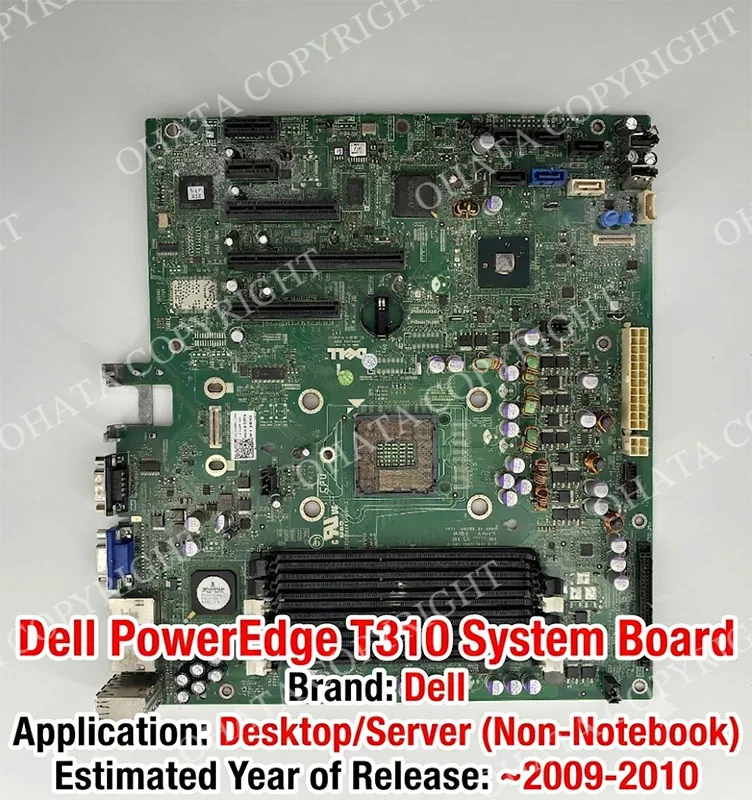
Dell PowerEdge T310 Server Motherboard Buying
7.35
CAD / lb
UP↑
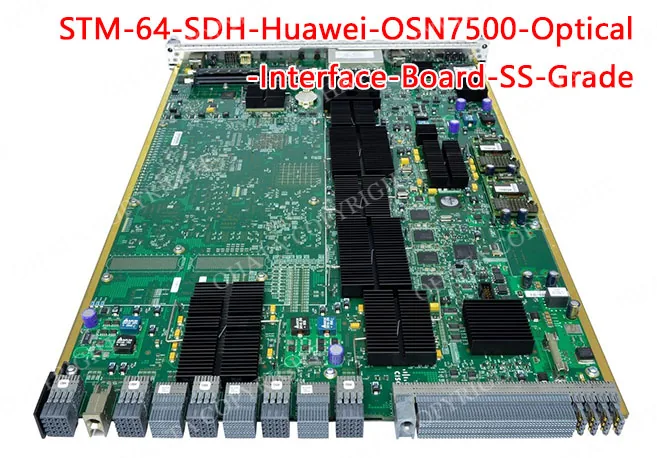
Board SS Grade (high value telecom Board) buying
22.05
CAD / lb
UP↑
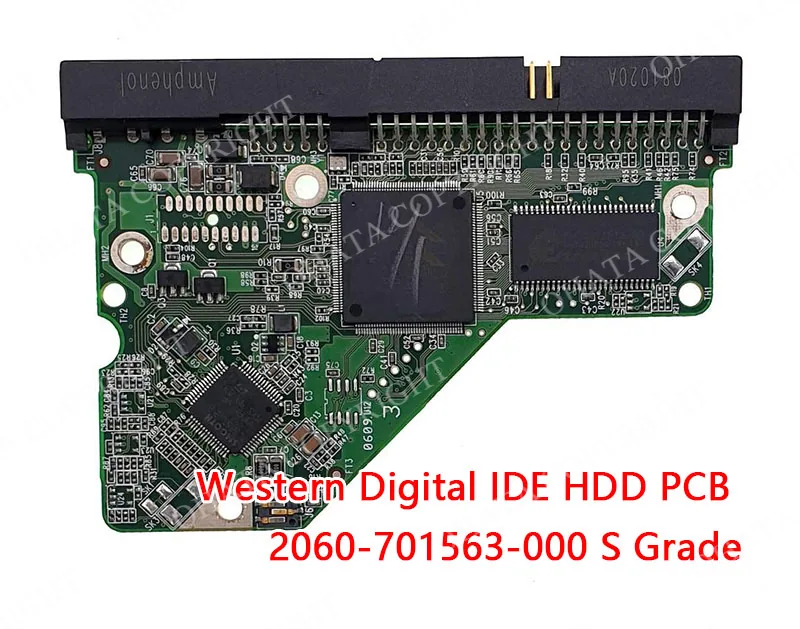
Board S Grade (high-end computer Board) buying
19.95
CAD / lb
UP↑
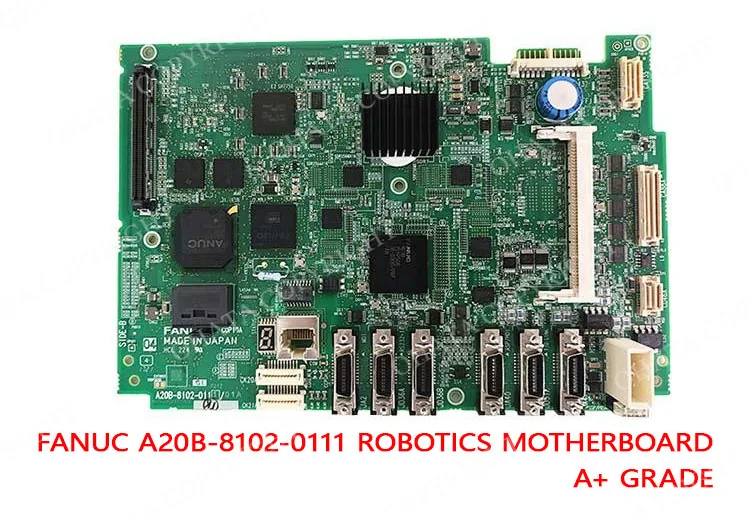
A+ Grade Industrial and Enterprise Circuit Boards
11.55
CAD / lb
UP↑
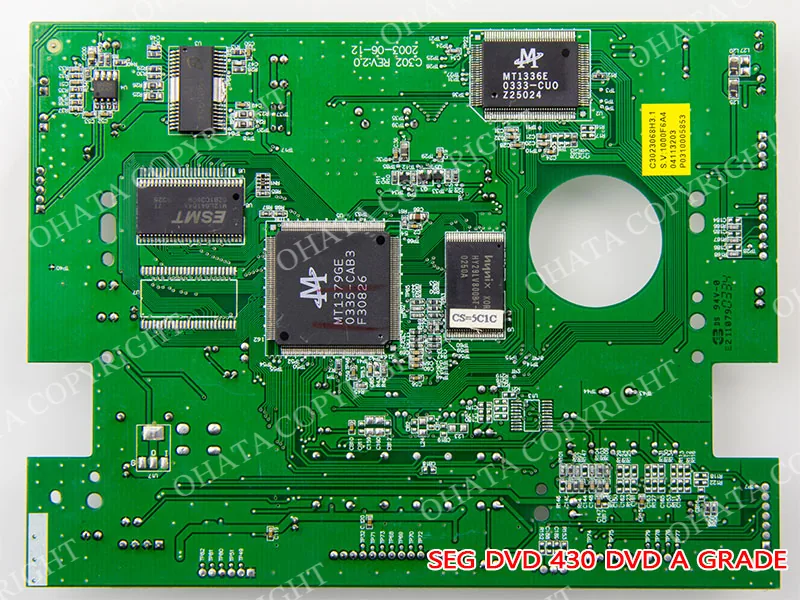
Board A Grade (premium computer Board) buying
7.35
CAD / lb
UP↑
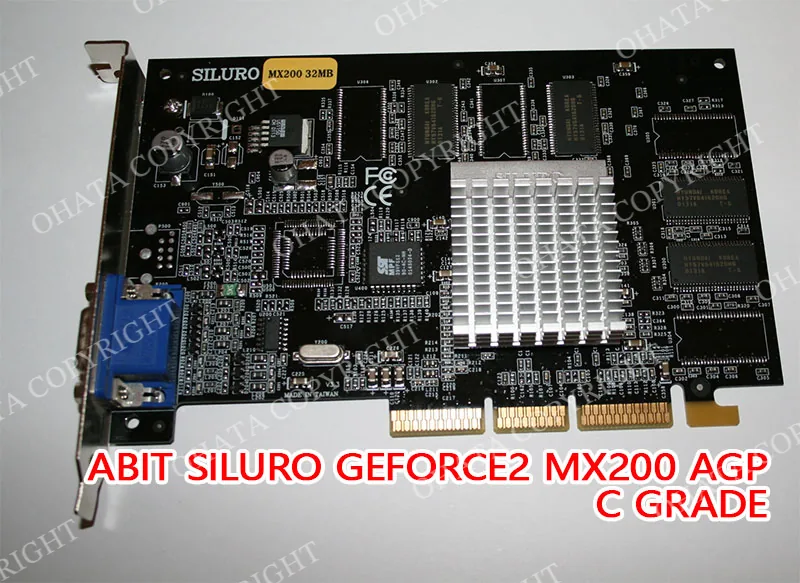
Board C Grade (Lower Premium Board) buying
4.73
CAD / lb
UP↑
Board D Grade (Lower computer Board) buying
2.52
CAD / lb