
-
We buy Cell Phones with Batteries from a minimum of 1 lb.
-
This category includes complete or substantially complete mobile phones with an installed battery, regardless of brand, model, age, storage capacity, or operating condition.
-
Qualifying basic phones, feature phones, flip phones, senior-friendly phones, and smartphones may be accepted when they meet the current Cell Phone with Battery buying standard.
-
Phones with removable or built-in batteries may qualify. Do not handle or attempt to remove a swollen, leaking, punctured, burned, unusually hot, or otherwise damaged battery. Contact the Seattle yard before transporting the device.
-
Keep cell phones separate from loose batteries, chargers, cables, empty housings, dismantled components, garbage, and unrelated electronic scrap whenever practical. Mixed categories may require separate inspection, sorting, weighing, and pricing.
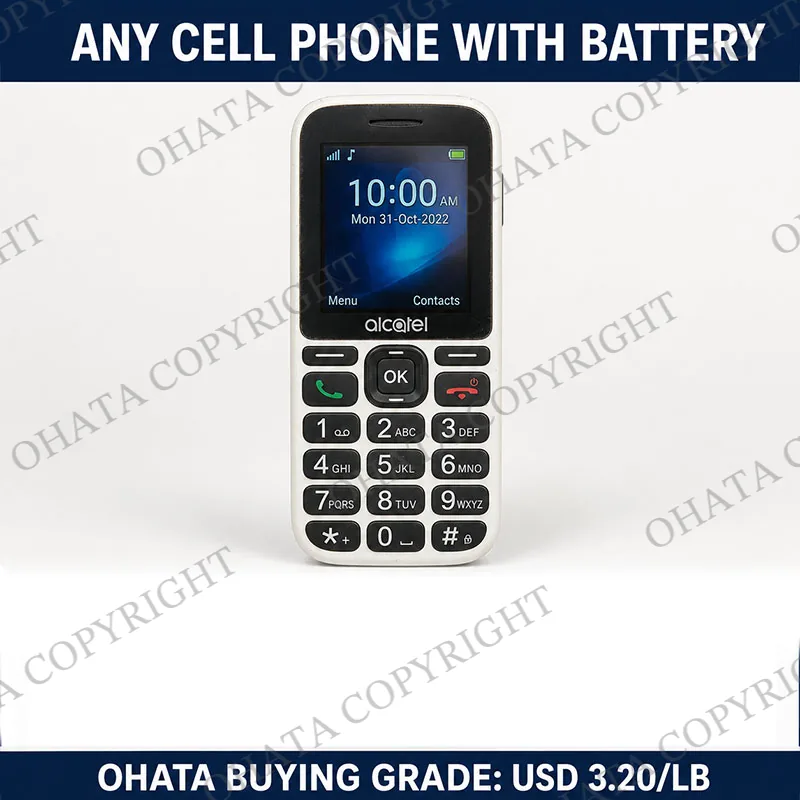
Non-Smart Phone With Battery buying scrap price
-
We buy Cell Phones with Batteries from a minimum of 1 lb.
-
This category includes complete or substantially complete mobile phones with an installed battery, regardless of brand, model, age, storage capacity, or operating condition.
-
Qualifying basic phones, feature phones, flip phones, senior-friendly phones, and smartphones may be accepted when they meet the current Cell Phone with Battery buying standard.
-
Phones with removable or built-in batteries may qualify. Do not handle or attempt to remove a swollen, leaking, punctured, burned, unusually hot, or otherwise damaged battery. Contact the Seattle yard before transporting the device.
-
Keep cell phones separate from loose batteries, chargers, cables, empty housings, dismantled components, garbage, and unrelated electronic scrap whenever practical. Mixed categories may require separate inspection, sorting, weighing, and pricing.
Buying Details of Conditions
Introduction, Construction, Components, and Recycling Value
Typical examples include elderly phones, basic keypad phones, feature phones, flip phones, older smartphones, touchscreen phones, and other cellular handsets with an installed battery. Nokia, Doro, Alcatel, Samsung, Motorola, LG, ZTE and comparable brands may all qualify. The model name does not determine the recycling grade by itself. Physical condition, completeness, battery presence, contamination and safety are more important.
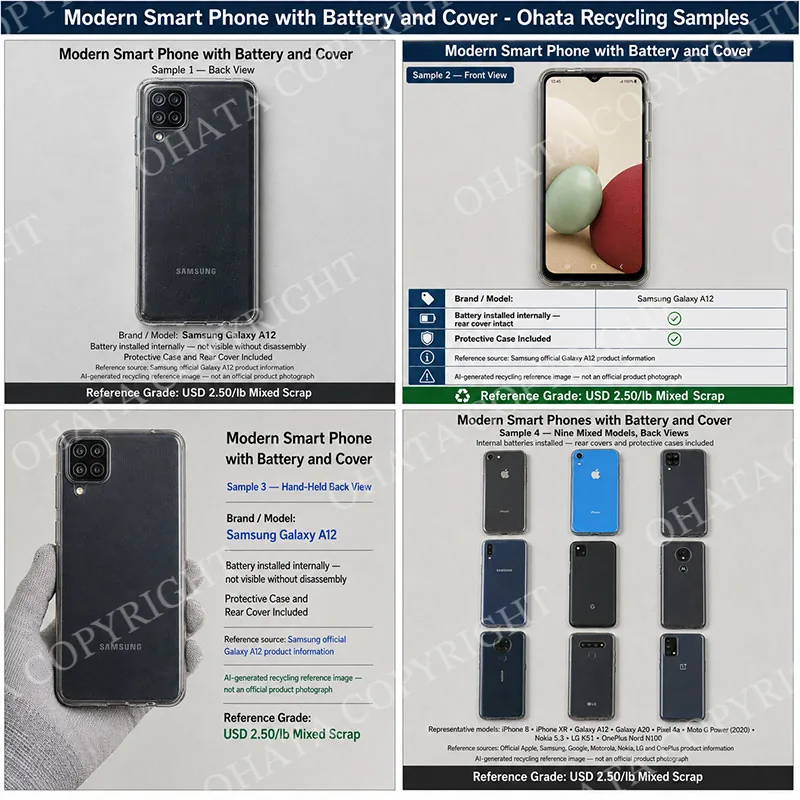
A mobile phone normally contains the following principal parts:
Plastic, aluminum, steel or glass housing
Display assembly and touchscreen
Main printed circuit board
Rechargeable lithium-ion or nickel-based battery
Cameras, speakers and microphones
Charging port and other connectors
Keypad, buttons, vibration motor and antennas
Semiconductor chips and memory devices
Gold-plated contacts and connector surfaces
Its main circuit board may contain copper conductors, gold-plated contacts, silver-bearing solder and small quantities of palladium and other valuable metals. The battery contains recoverable materials such as lithium, cobalt, nickel, copper, aluminum and graphite, depending on its chemistry.
However, the value of this grade is calculated from the complete mixed handset rather than the theoretical value of individual components. Plastic housings, glass, displays and batteries add considerable weight but generally have a lower recoverable value than the populated circuit board. Consequently, complete phones with batteries must not be priced as clean, separated, high-grade mobile-phone circuit boards.
The battery also creates additional storage, transportation and processing requirements. Recyclers must inspect phones for swelling, punctures, overheating, leakage and fire damage. Safe battery management is therefore an important part of the buying price.
Customers looking to recycle Any Cell Phone With Battery can also browse our related buying categories.
Ohata Any Cell Phone With Battery Classification and Identification Guide
A phone should be classified as Any Cell Phone With Battery when it satisfies the following core requirements:
It is identifiable as a cellular or mobile telephone.
A battery remains installed inside the device.
The phone is complete or substantially complete.
Its housing and battery compartment remain reasonably secure.
It is not severely burned, crushed, fragmented or contaminated.
It does not present an obvious battery-fire or leakage hazard.
The battery does not need to hold a charge, and the phone does not need to power on. Network compatibility, activation status, SIM-lock status, memory capacity and cosmetic scratches normally do not affect classification when the device is purchased strictly as electronic scrap.
Both removable and built-in batteries qualify. For a traditional feature phone, the inspector may check that the rear cover is attached and the battery is present underneath it. A smartphone with a sealed housing is normally treated as having its battery installed unless the enclosure has been opened or there is evidence that the battery was removed.
Common qualifying examples include:
Complete elderly phones with large buttons
Complete candy-bar feature phones
Complete flip phones with batteries
Obsolete 2G, 3G or 4G handsets
Non-working smartphones containing batteries
Phones with worn buttons or cracked cosmetic surfaces
Mixed brands meeting the same physical standard
A model should not receive a higher scrap grade merely because it was originally expensive. Likewise, an old or inexpensive model is not automatically downgraded if it satisfies the grade requirements. All qualifying units are settled at the same Any Cell Phone With Battery grade price.
Inspectors should distinguish ordinary wear from disqualifying damage. Scratches, faded labels, minor dents and worn keypads may be acceptable. Phones broken into several pieces, burned by a battery fire, heavily covered with mud, or missing major assemblies require rejection or separate classification.
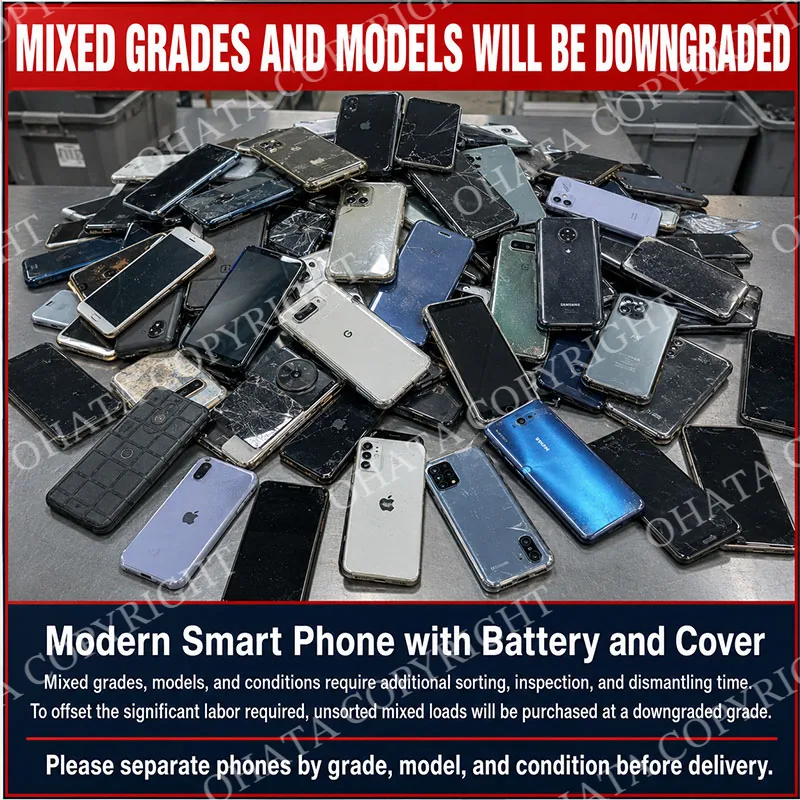
Lots should be sorted before delivery. Mixing this grade with battery-free phones, loose batteries, bare circuit boards or other grades increases inspection and dismantling time. Ohata may downgrade mixed and disorderly shipments when accurate separation requires excessive labor.
Recoverable Materials, Buying Standards, and Handling
The principal recoverable material in a mobile phone is copper. It is found in circuit-board tracks, wires, charging coils, speakers, vibration motors and battery connections. Aluminum and steel are present in frames, shields and enclosures.
Small quantities of precious metals may be recovered from populated circuit boards:
Gold from connector contacts, board finishes and semiconductor bonding
Silver from solder, contacts and electronic components
Palladium from selected capacitors and electronic assemblies
Copper from circuit boards, cables, coils and batteries
Nickel, cobalt and lithium from certain rechargeable batteries
Actual metal content varies significantly among models. Older feature phones may have small circuit boards and large plastic housings, while smartphones may contain larger displays, more shielding and integrated batteries. These differences do not necessarily create separate prices within this grade.
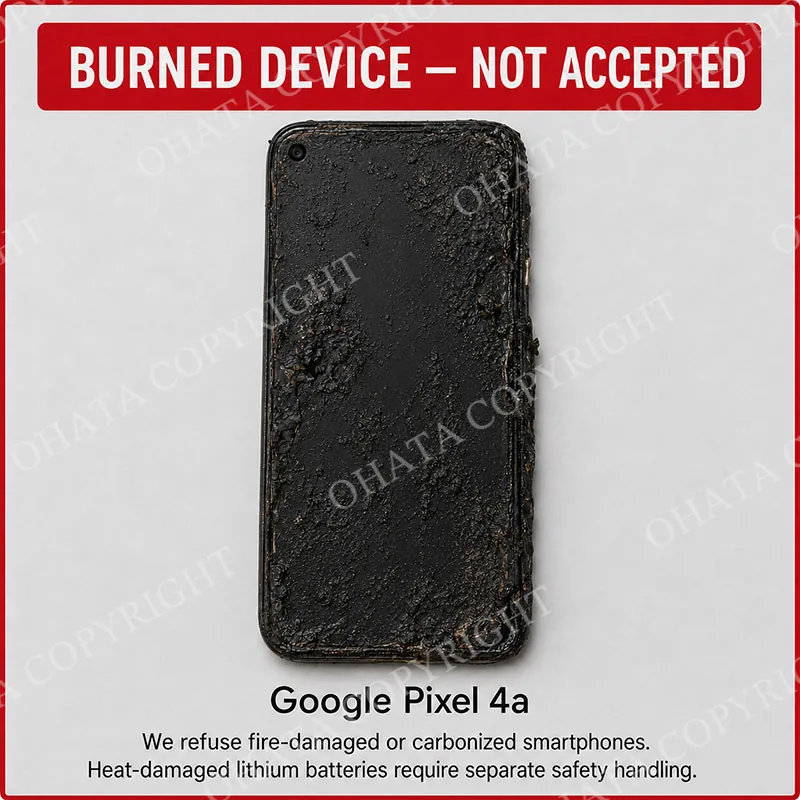
Phones should be stored in a cool, dry area away from heat, water and flammable materials. Terminals must be protected where they could short-circuit. Devices should not be crushed, drilled, bent or dismantled without appropriate battery-handling procedures.
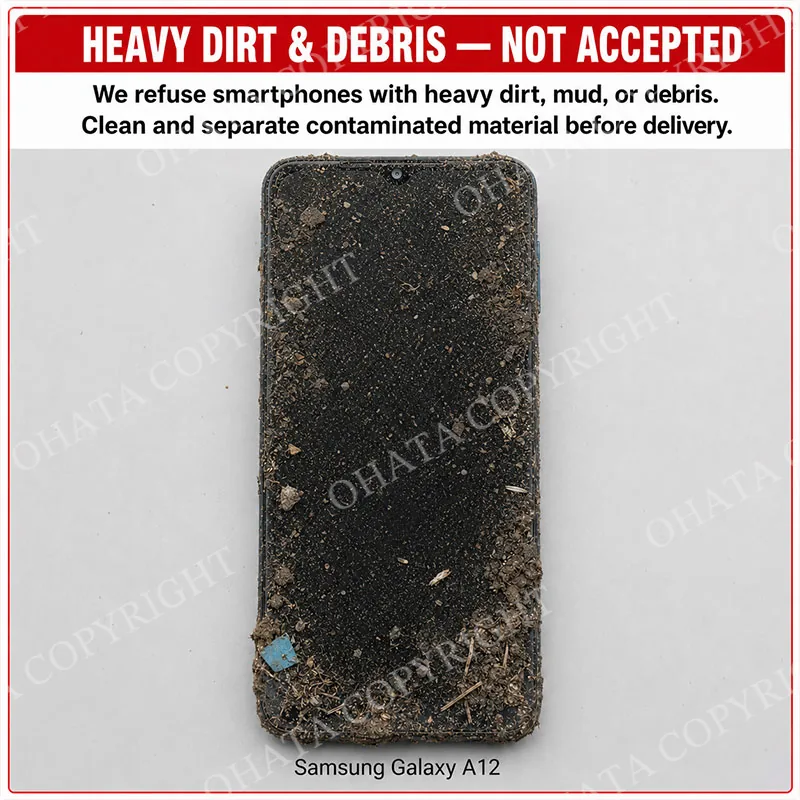
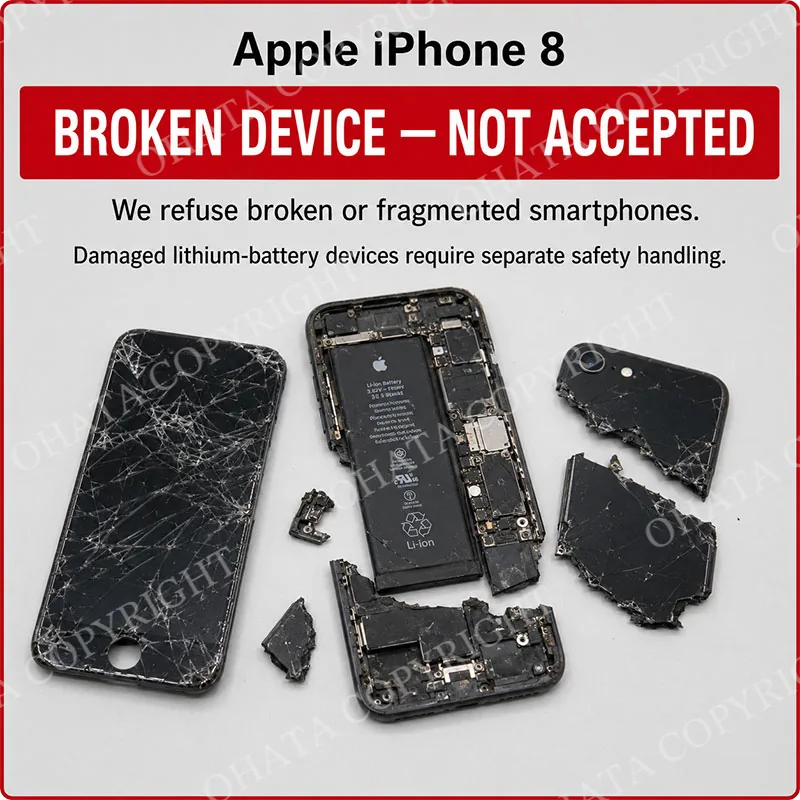
Ohata’s normal buying standard accepts complete scrap phones with installed batteries, including non-working and obsolete devices. The following conditions are generally rejected or separately reviewed:
Swollen, leaking, punctured or smoking batteries
Phones damaged by battery explosions
Burned, melted or heavily carbonized devices
Phones broken into multiple pieces
Heavy mud, oil, chemical residue or embedded debris
Wet or water-filled devices
Loads mixed with loose batteries or unrelated electronic scrap
Suppliers should separate phones by grade and general type. Each container should be clearly labeled. Large commercial shipments should be discussed in advance so that packaging, weight and battery-transport requirements can be confirmed.
Comparison and Official Ohata Classification
The Any Cell Phone With Battery grade must be distinguished from related recycling categories.
Category | Identification | Classification difference |
|---|---|---|
Any Cell Phone With Battery | Complete phone with installed battery | Purchased at this grade’s price |
Cell Phone Without Battery | Phone present, but battery removed | Separate grade because battery weight and handling are absent |
Loose Mobile-Phone Battery | Battery separated from handset | Battery recycling category, not complete-phone scrap |
Mobile-Phone Circuit Board | Bare or dismantled populated PCB | Assessed by board composition and precious-metal content |
Modern Smartphone With Battery and Cover | Modern smartphone meeting a separately defined standard | May require separate sorting if Ohata lists it independently |
Broken Phone Pieces | Housing and assemblies fragmented | Rejected or downgraded |
Fire-Damaged Phone | Burned, melted or carbonized | Rejected for safety and contamination reasons |
Heavily Contaminated Phone | Covered with mud, oil or debris | Rejected or subject to cleaning and downgrade |
The most important distinction is the presence of the battery inside a substantially complete handset. A battery-free shell must not be mixed with this grade, and a loose battery cannot be added separately to make an incomplete phone qualify.
Under the official Ohata classification principle, Any Cell Phone With Battery is a grade rather than a specific model list. Every mobile phone that satisfies the same construction, completeness, condition and battery-presence requirements is valued according to the same grade. Brand, age and original retail price do not override the physical inspection standard.
The final classification is therefore:
A complete or substantially complete cellular phone with its battery installed, free from severe breakage, fire damage, battery hazards and heavy contamination, qualifies as Ohata Any Cell Phone With Battery Grade and is purchased at the applicable grade price of USD 3.20/LB.
- 1. What is today’s price for Non-Smart Phone With Battery buying?
- As of Nov 21,2026, Ohata Shoji America Inc., (Seattle, WA, United States) is purchasing Non-Smart Phone With Battery buying at 2.95 (USD/lb). We provide competitive scrap prices in Seattle, Bellevue, Renton, Tukwila, Kent, SeaTac, Tacoma, Everett, and surrounding communities.
- 2. What is the Any Cell Phone With Battery recycling grade?
- It is an Ohata recycling category for complete or substantially complete mobile phones that still contain an installed battery.
- 3. What is the buying price for this grade?
- Qualified phones are purchased at the Any Cell Phone With Battery grade price of USD 3.20/LB, subject to final inspection and current Ohata buying terms.
- 4. Which types of mobile phones qualify?
- Elderly phones, keypad phones, feature phones, flip phones, older smartphones and touchscreen phones may qualify if they meet the same battery, completeness and condition standards.
- 5. Do different brands receive different prices?
- No. Brand and model do not determine the price within this grade. All qualifying phones are purchased at the same grade price.
- 6. Which conditions are rejected?
- Phones may be rejected if they are broken into pieces, severely burned, melted, heavily carbonized, covered with mud or debris, or fitted with swollen, leaking or punctured batteries.
- 7. Can different grades and models be mixed together?
- They should be separated before delivery. Mixed loads may be downgraded because sorting, model identification and battery removal require significant staff time.
- 8. How should these phones be stored and delivered?
- Keep phones cool, dry and protected from crushing or short circuits. Separate hazardous batteries, organize phones by grade and contact Ohata before delivering a large commercial shipment.
- 9. Do you purchase high-performance AI hardware?
- Yes, we specialize in the online procurement and data-secure decommissioning of complex AI servers, GPUs, and high-capacity storage.
- 10. Can I sell loose electronic components and scrap parts?
- Yes, we actively buy printed circuit boards (PCBs), hard drives, networking gear, and assorted electronic scrap via our digital storefront.
- 11. How does your digital model help reduce environmental waste?
- By streamlining tech disposal online, we intercept e-waste before landfills, feeding components back into the circular green economy.
Related Items
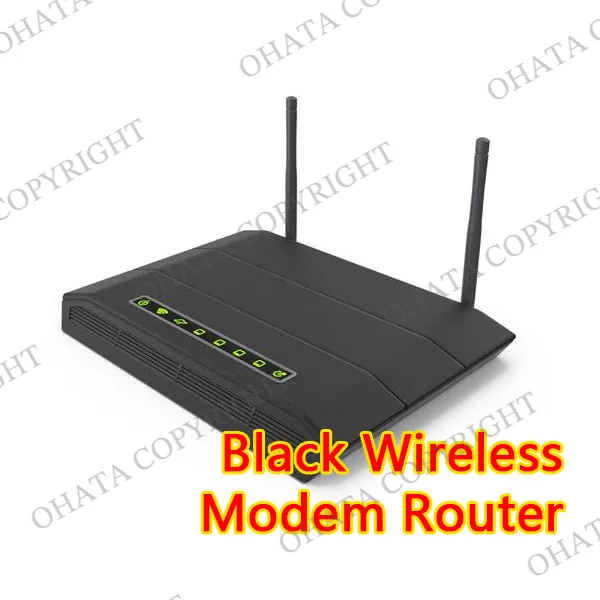
Modems Routers Buying
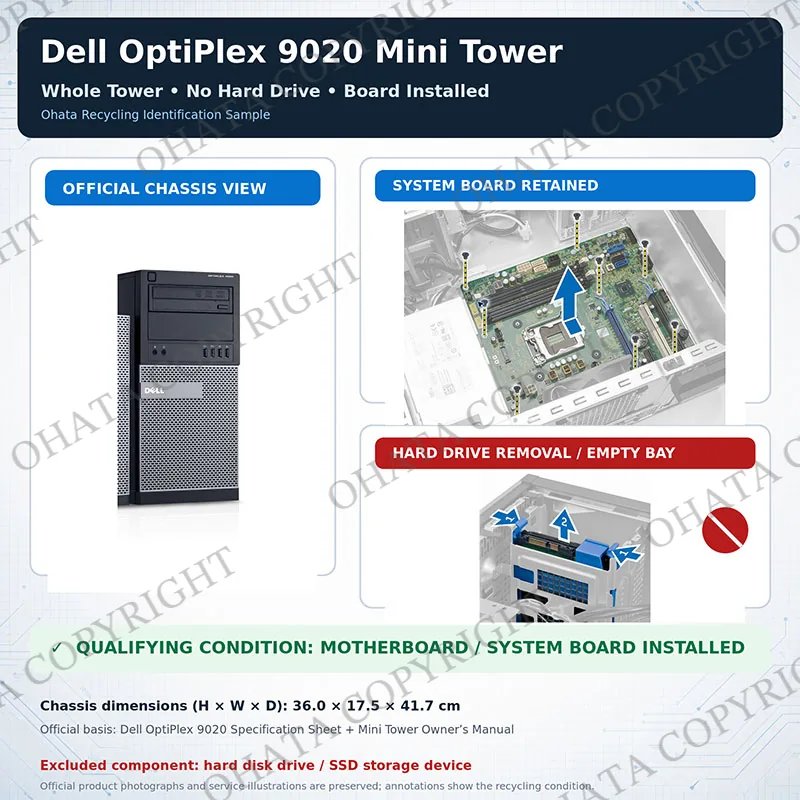
Whole Tower (Desktop Computer) No Hard Drive with board
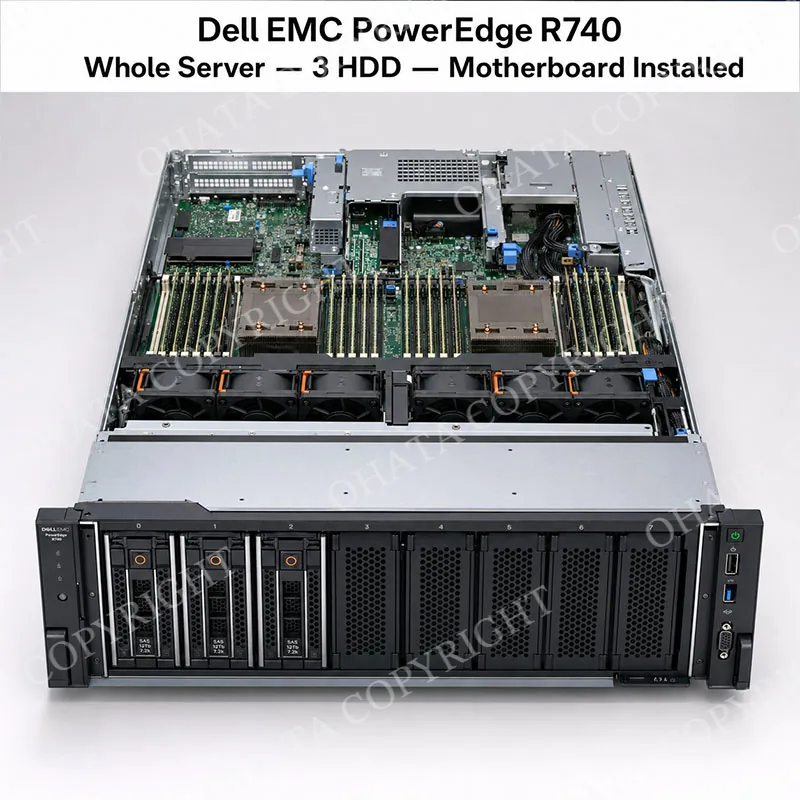
Whole Server With 3 Hard Drive with board buying
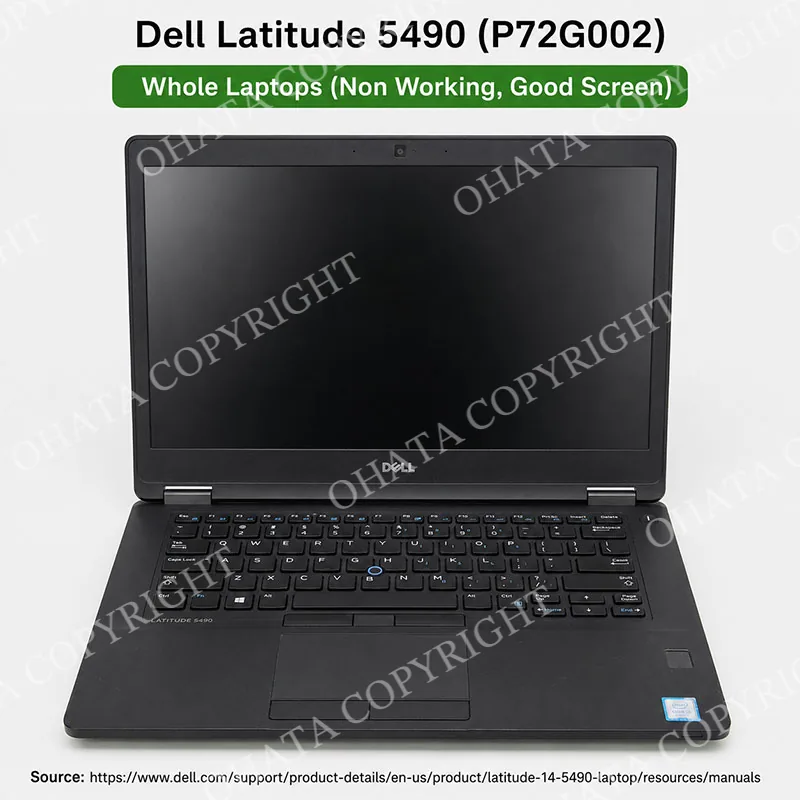
Whole Laptops (Non Working, Good Screen) buying
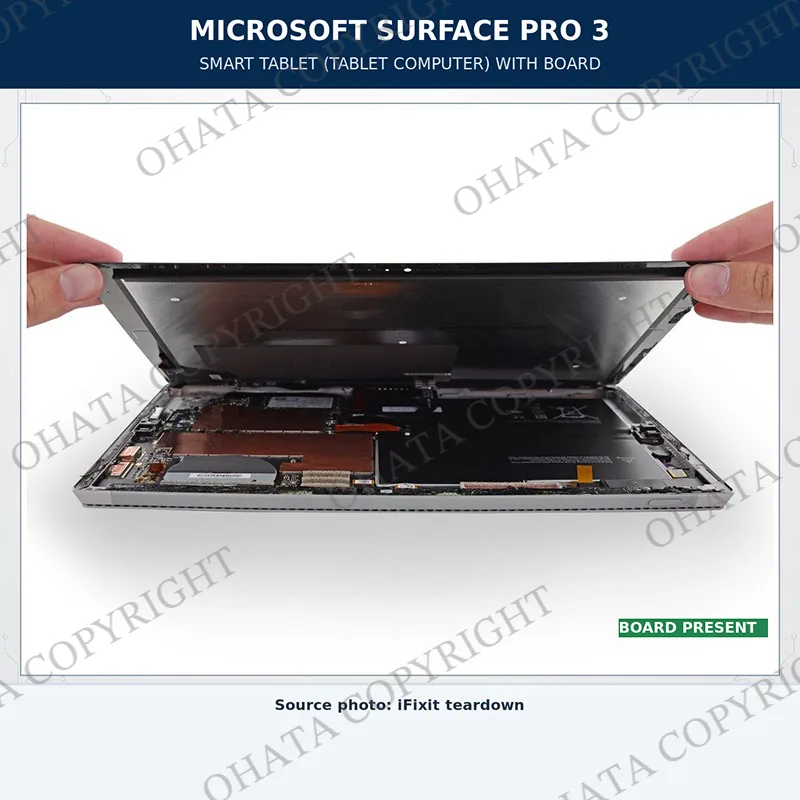
Smart Tablet ( Tablet Computer) with board buying

Smartphones Without Batteries, With Boards
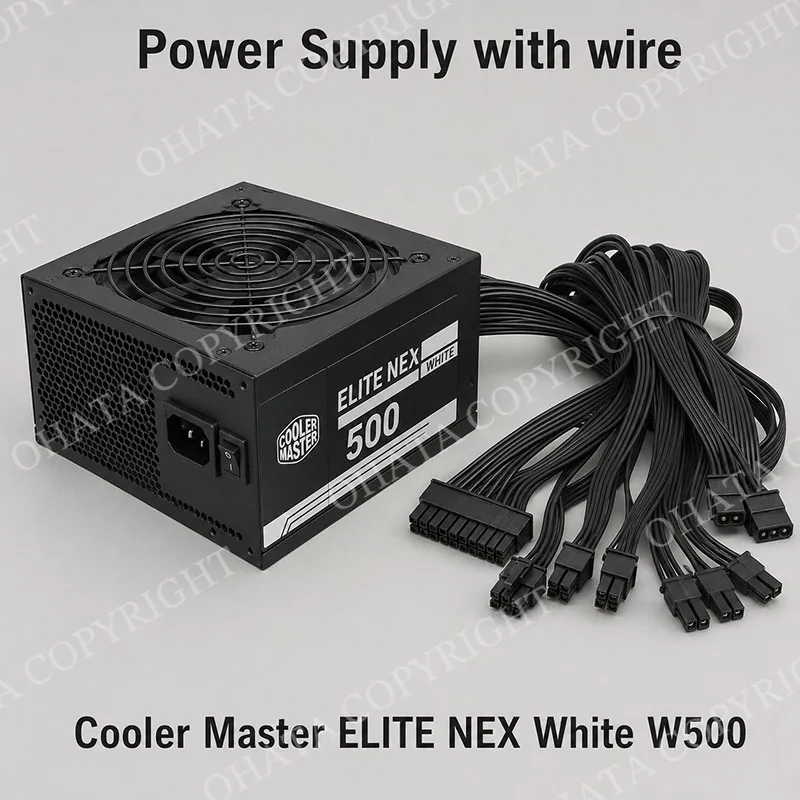
Power Supply with Wire Buying
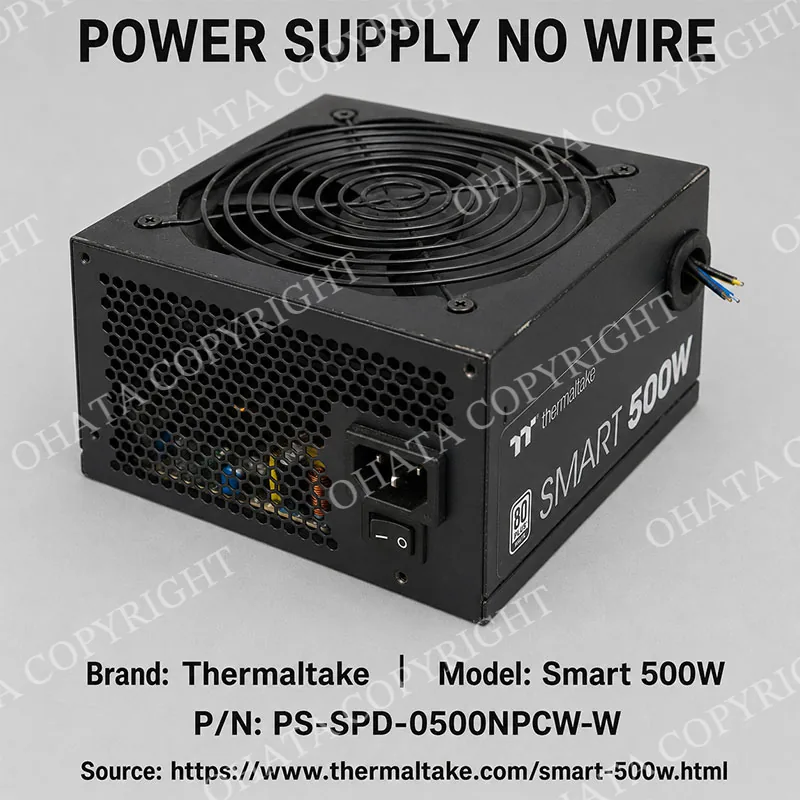
Power Supply No Wire Buying