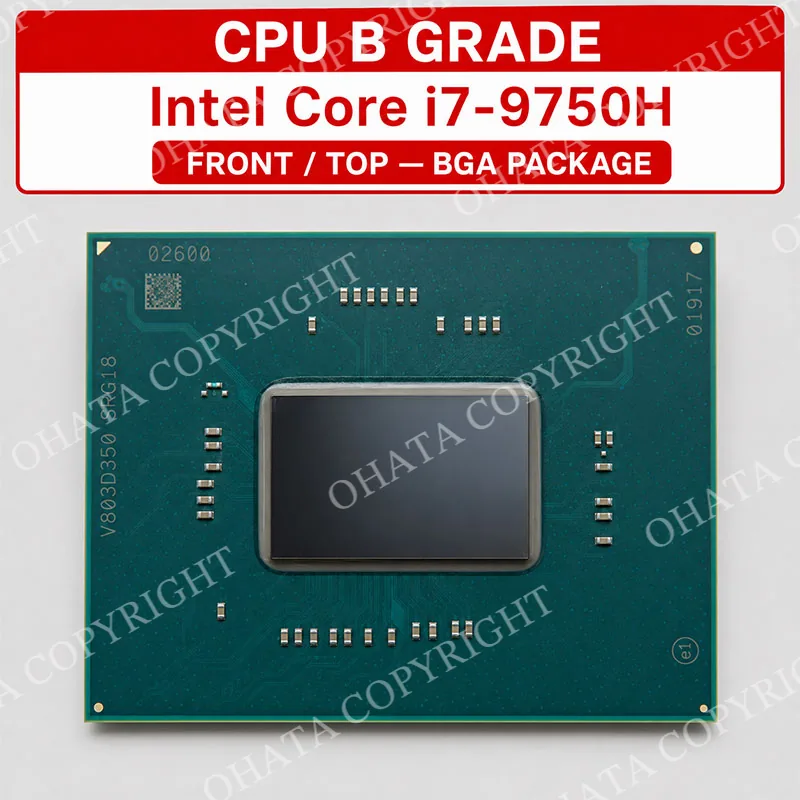

-
We purchase CPU C Grade (Fiber CPU) material starting from just 1 lb.
-
CPU C Grade covers qualifying processors with fiber or organic substrates and lower precious-metal concentrations than higher CPU grades. All CPUs meeting the Ohata C Grade standard are purchased at the same grade price.
-
Typical examples include qualifying AMD Duron, AMD Athlon XP, Intel Celeron, and comparable fiber-package processors.
-
Classification is based on the CPU’s package construction, contact design, completeness, condition, and recoverable-material profile, not its brand, model, performance, age, or original retail price.
-
Please keep processors complete, dry, reasonably clean, and separated from other CPU grades when practical.
-
Final classification, measured weight, and buying price are confirmed after physical inspection.
CPU C Grade ( Fiber CPU) Buying scrap price
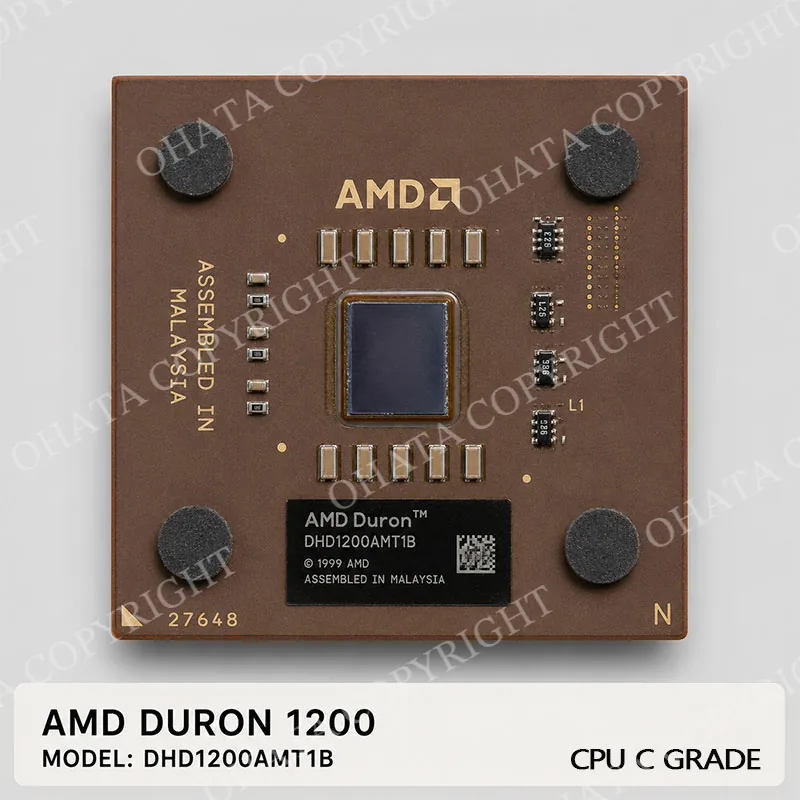
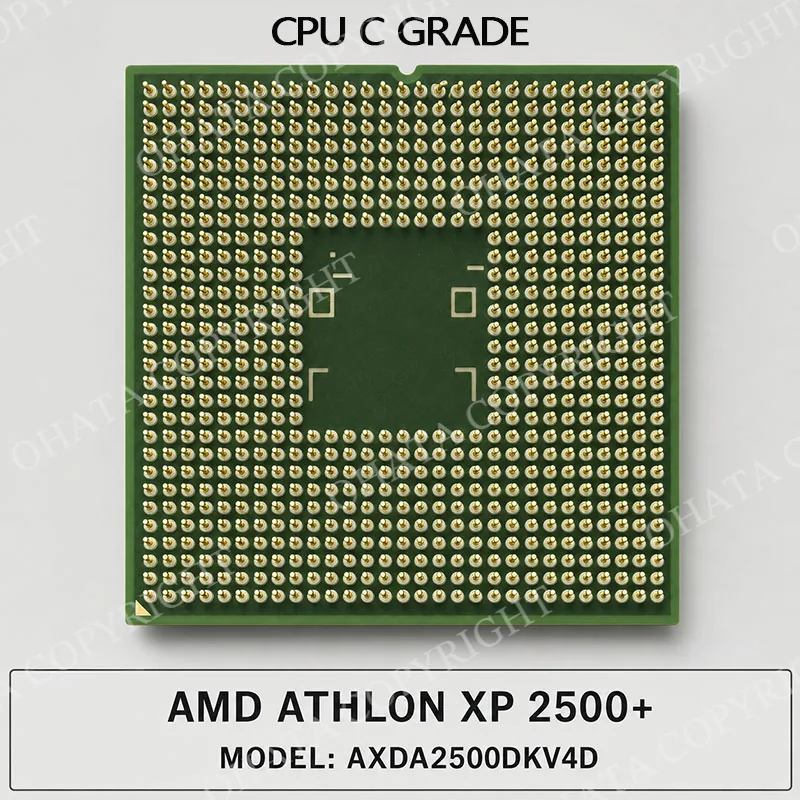
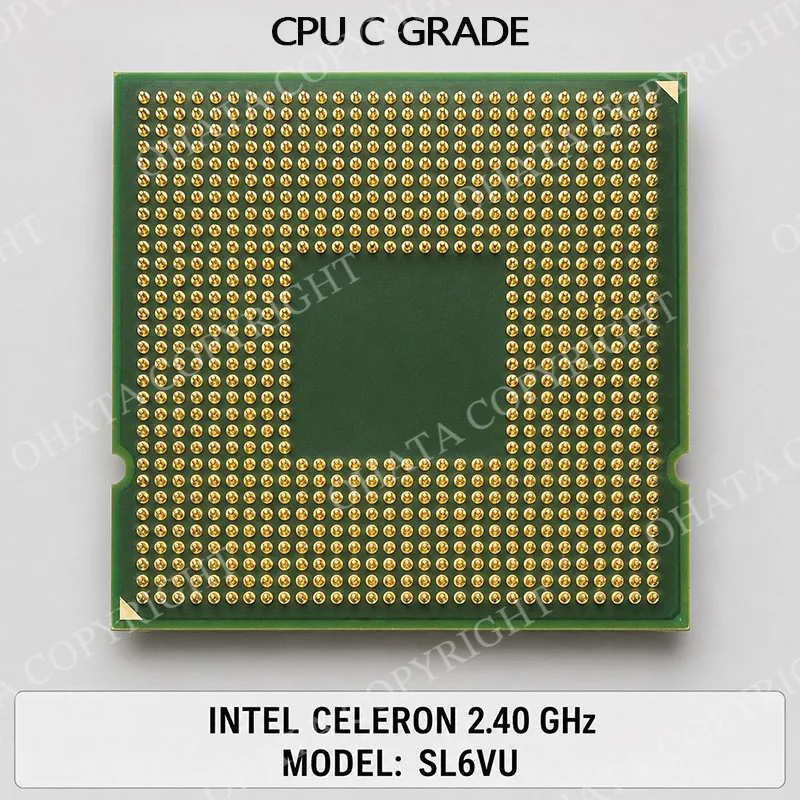
-
We purchase CPU C Grade (Fiber CPU) material starting from just 1 lb.
-
CPU C Grade covers qualifying processors with fiber or organic substrates and lower precious-metal concentrations than higher CPU grades. All CPUs meeting the Ohata C Grade standard are purchased at the same grade price.
-
Typical examples include qualifying AMD Duron, AMD Athlon XP, Intel Celeron, and comparable fiber-package processors.
-
Classification is based on the CPU’s package construction, contact design, completeness, condition, and recoverable-material profile, not its brand, model, performance, age, or original retail price.
-
Please keep processors complete, dry, reasonably clean, and separated from other CPU grades when practical.
-
Final classification, measured weight, and buying price are confirmed after physical inspection.
Buying Details of Conditions
Learn more about identifying and sorting C Grade circuit boards in our Wiki: Ohata CPU Scrap Classification Wiki
Learn more about: CPU Scrap Classification Guide: CPU-SSS to CPU-F
Introduction, Construction, Components, and Recycling Value
CPU C Grade is an Ohata recycling category for processors that meet the same approved construction, material-content, and physical-condition standards. Classification is not determined by one particular brand, model, generation, clock speed, or original retail price. Any processor that satisfies the CPU C Grade inspection criteria is purchased at the applicable C Grade price.
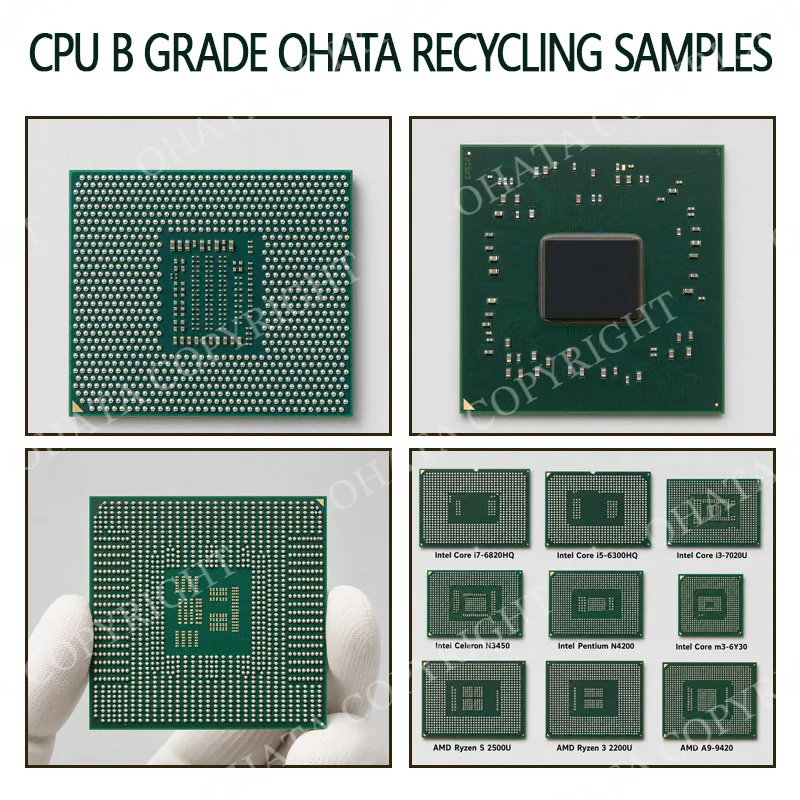
Processors in this category commonly use an organic or fiberglass-based substrate, a metal heat spreader, a silicon die, copper circuitry, solder materials, and either contact pads or pins on the underside. Their recoverable precious-metal content is generally lower than that of older ceramic, gold-cap, or visibly gold-rich processors. Nevertheless, properly sorted C Grade CPUs remain valuable recyclable materials when accumulated in commercial quantities.
Ohata CPU C Grade Classification, Identification Guide
Ohata inspectors evaluate the processor’s package construction before considering its printed model number. Identification begins with the top cover, substrate color and material, underside contact design, pin or pad arrangement, package thickness, and the presence of ceramic or gold-plated sections.
CPU C Grade can be distinguished from other categories as follows:
Higher grades, including SSS, SS, S, A, and B, normally have more valuable package constructions, greater precious-metal-bearing areas, older ceramic structures, gold-colored caps, or richer contact and internal bonding configurations.
C Grade CPUs generally have a more common, lower-yield construction with reduced recoverable precious-metal concentration.
CPUs with broken substrates, removed lids or dies, extensively missing pins, severe corrosion, burning, chemical contamination, or other major damage may be downgraded or rejected.
The final grade must always be determined from the physical processor rather than its model name alone.
Recoverable Materials, Buying Standards, and Handling
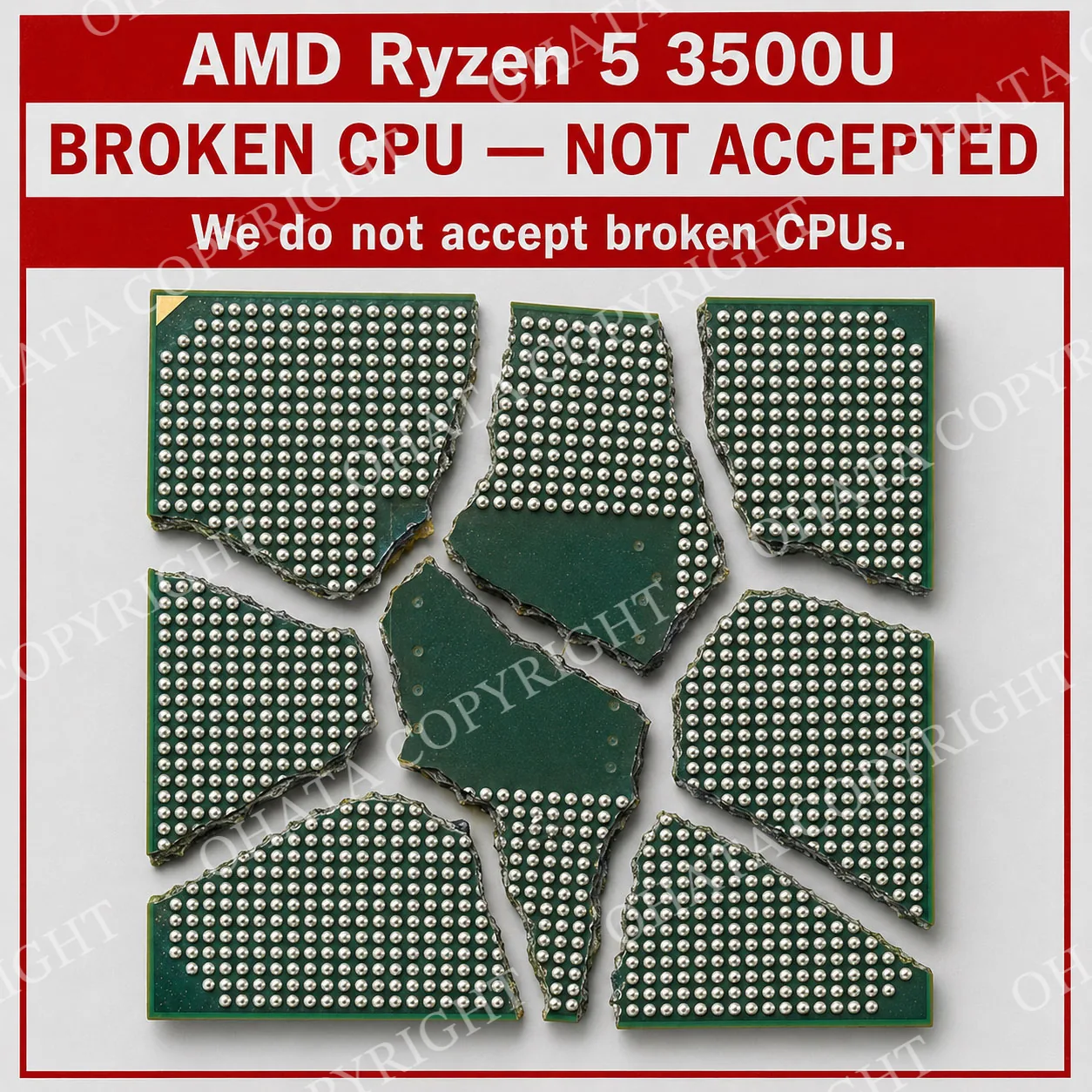
Recoverable materials in CPU C Grade may include copper from internal circuitry and heat-transfer structures, gold from contact surfaces and internal connections, silver from solder materials, palladium from selected electronic components, and nickel from protective plating. Actual recovery varies according to package design and production period.
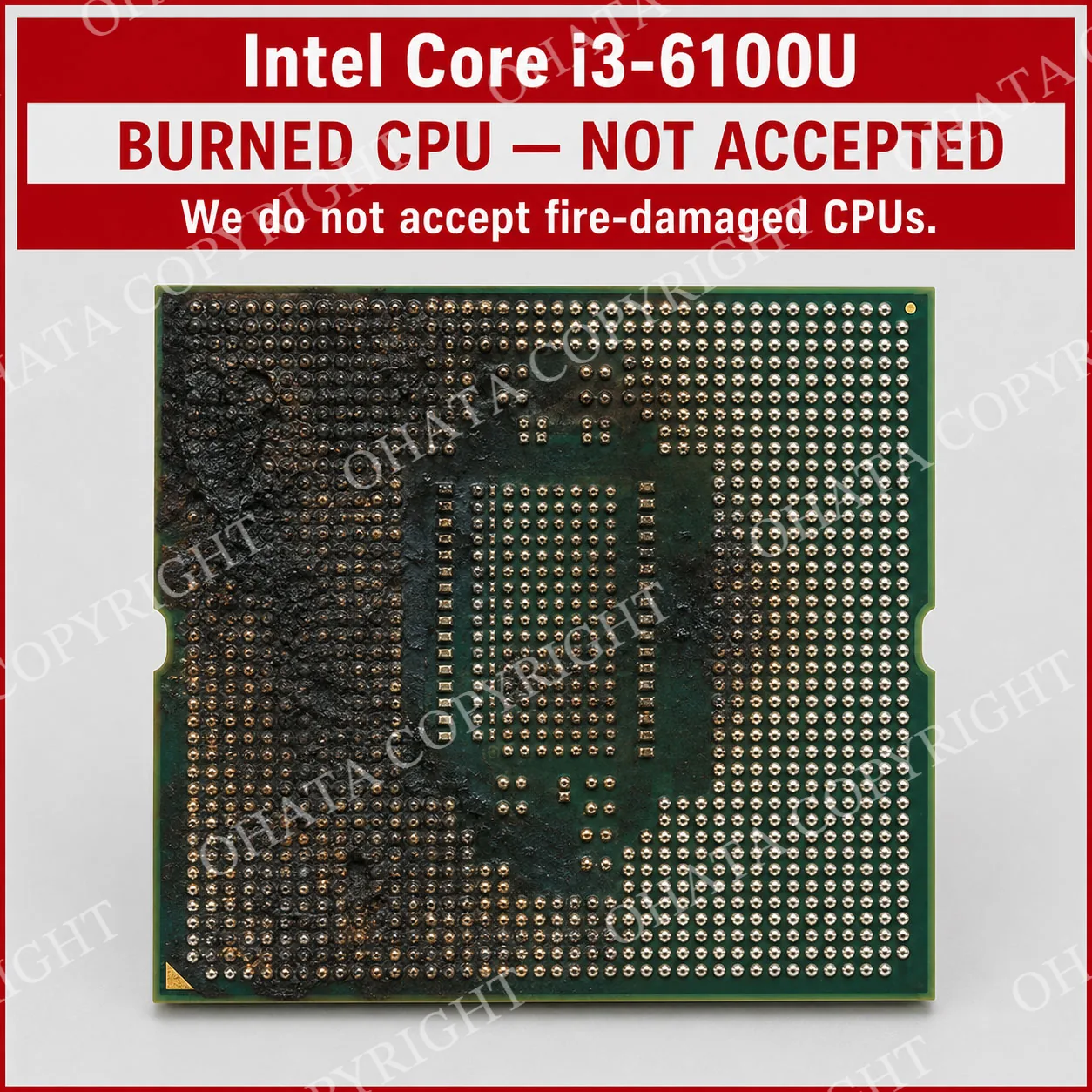
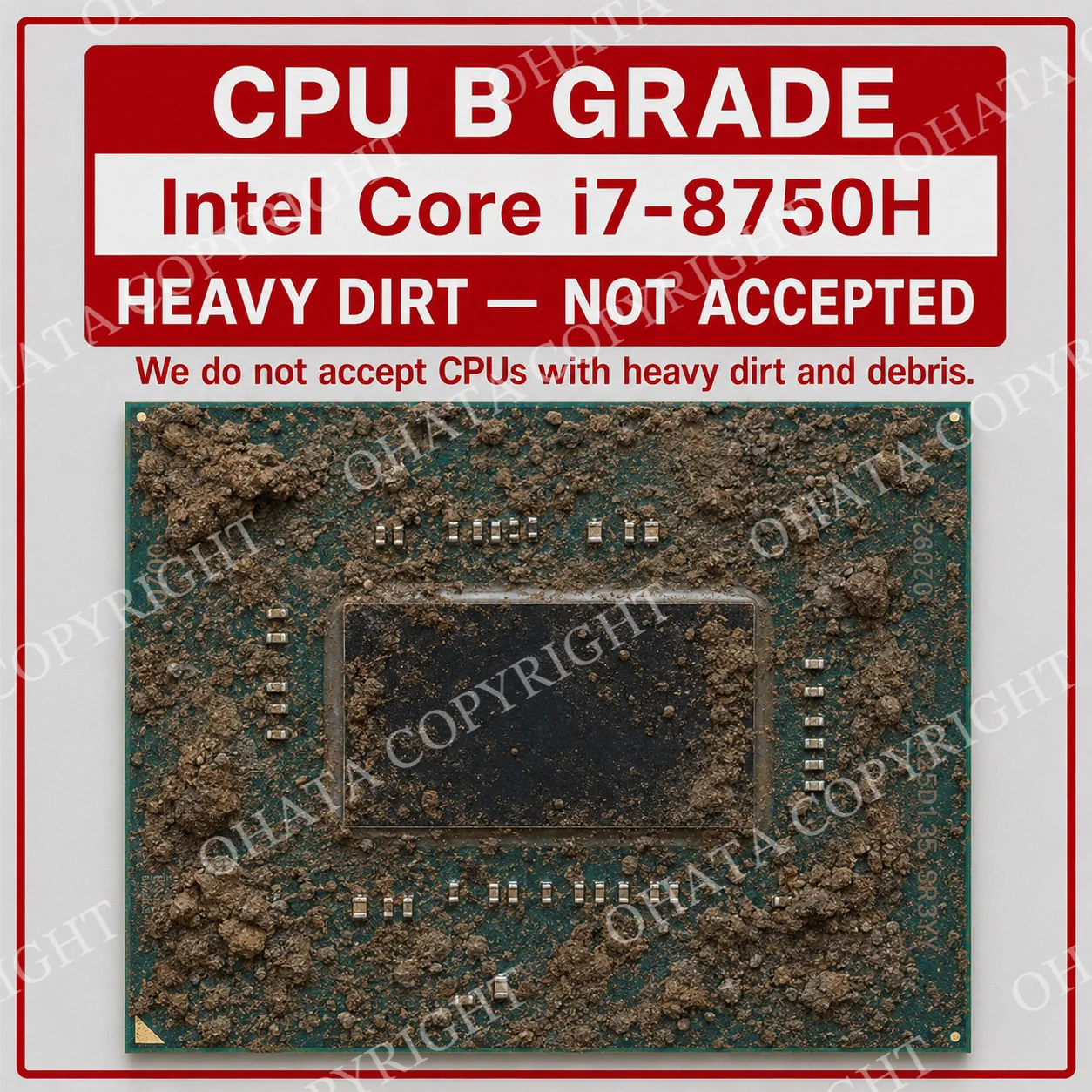
Sellers should keep C Grade processors dry, reasonably clean, and separated from higher and lower grades. CPUs must not be mixed with sockets, heatsinks, fans, motherboards, batteries, steel parts, or general electronic waste. Removing valuable sections before delivery may reduce the grade. Mixed grades and models may also require downgrade handling because additional sorting and inspection occupy considerable staff time.
Comparison, and Official Ohata Classification
CPU C Grade represents a defined recycling class, not a judgment of computing performance. A high-performance processor is not automatically a higher recycling grade, while an obsolete CPU is not automatically valuable. Recycling value depends mainly on package construction, recoverable-metal content, completeness, condition, and batch consistency.
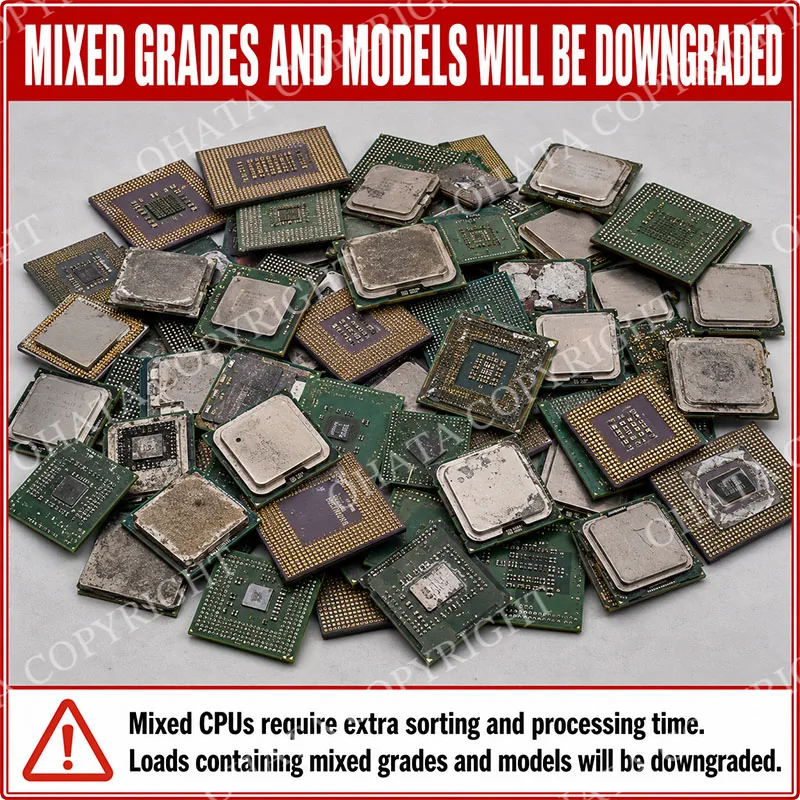
Processors meeting all Ohata CPU C Grade requirements are purchased at the C Grade price, regardless of individual brand or eligible model. CPUs showing higher-value construction should be separated for higher-grade evaluation. Units with lower-value structures, removed components, serious damage, contamination, or excessive mixed material may receive a lower classification or be refused. Final classification is confirmed by Ohata after physical inspection and comparison with the official CPU grading standard.
View more Ohata's CPU recycling classifications
CPU SS Grade ( High Grade Ceramic CPU)
CPU S Grade ( Gold Pin BGA CPU)
CPU B Grade ( BGA CPU and IC chips)
CPU D Grade ( Slot CPU/ CPU Module)
- 1. What is today’s price for CPU C Grade ( Fiber CPU) Buying?
- As of Sep 19,2026, Ohata Shoji America Inc., (Seattle, WA, United States) is purchasing CPU C Grade ( Fiber CPU) Buying at 20.00 (USD/lb). We provide competitive scrap prices in Seattle, Bellevue, Renton, Tukwila, Kent, SeaTac, Tacoma, Everett, and surrounding communities.
- 2. What is CPU C Grade?
- CPU C Grade is an Ohata recycling classification for processors that meet specific requirements for package construction, recoverable-metal content, completeness, cleanliness, and physical condition.
- 3. Is CPU C Grade determined by the processor model?
- No. Brand, model, generation, clock speed, and original retail price do not independently determine the recycling grade. Ohata primarily evaluates the CPU’s physical construction and recoverable materials.
- 4. Are all qualifying CPU C Grade processors purchased at the same grade price?
- Yes. Processors that satisfy the official CPU C Grade standard are purchased at the applicable C Grade price, regardless of their individual eligible brands or models.
- 5. How is CPU C Grade different from higher grades?
- Higher grades generally have more valuable package structures, such as ceramic bodies, gold-colored caps, larger gold-plated areas, or richer internal bonding configurations. C Grade CPUs usually have lower precious-metal concentrations.
- 6. What recyclable materials can be recovered from CPU C Grade?
- Depending on the processor’s construction, recoverable materials may include copper, gold, silver, palladium, and nickel. Actual recovery quantities vary by package design and manufacturing period.
- 7. Can damaged processors qualify as CPU C Grade?
- Minor cosmetic wear may be acceptable, but broken substrates, removed heat spreaders, missing dies, extensive pin loss, severe corrosion, burning, or chemical contamination can cause downgrading or rejection.
- 8. Does a high-performance processor automatically receive a higher recycling grade?
- No. Computing performance does not equal recycling value. A powerful modern CPU may contain fewer recoverable precious metals than an older processor with ceramic or gold-rich construction.
- 9. What is an e-commerce scrap business model?
- Unlike traditional stores that sell goods, our portal operates an inbound digital platform where users sell end-of-life electronics to us online.
- 10. What role does AI play in your e-commerce platform?
- We use AI to run our dynamic digital valuation engines, matching global commodity markets to give users instant, transparent pricing.
- 11. How do you handle non-functional or broken hardware?
- Items that cannot be refurbished are routed to our automated material lines for high-yield precious metal resource recovery.