
-
We purchase CPU D Grade (Slot CPU/CPU Module) material starting from just 1 lb.
-
CPU D Grade covers qualifying cartridge-style and board-mounted processor modules, including Slot 1 and Slot A assemblies. All CPU modules meeting the Ohata D Grade standard are purchased at the same grade price.
-
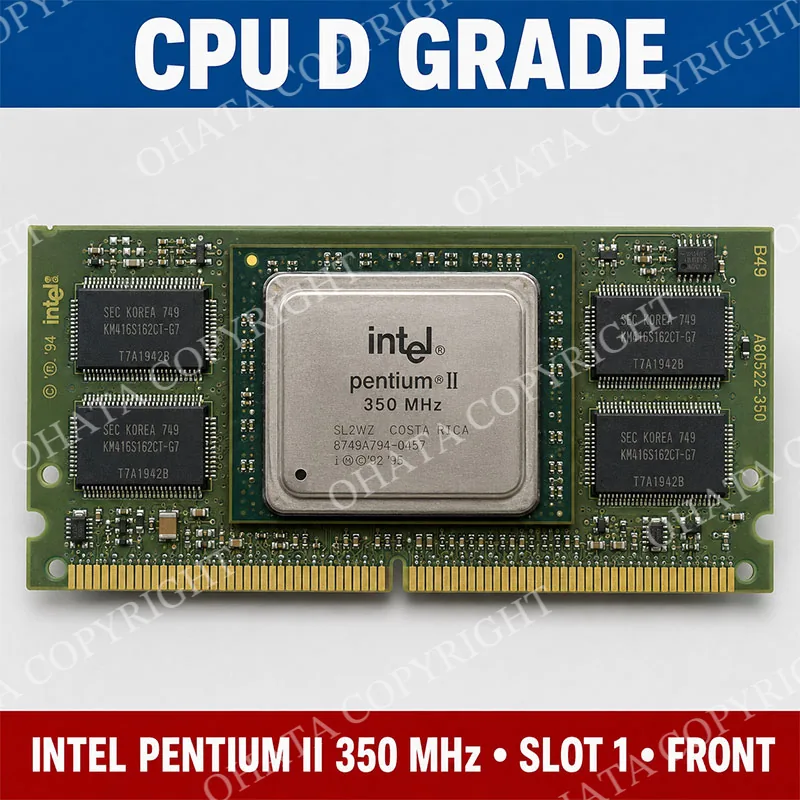
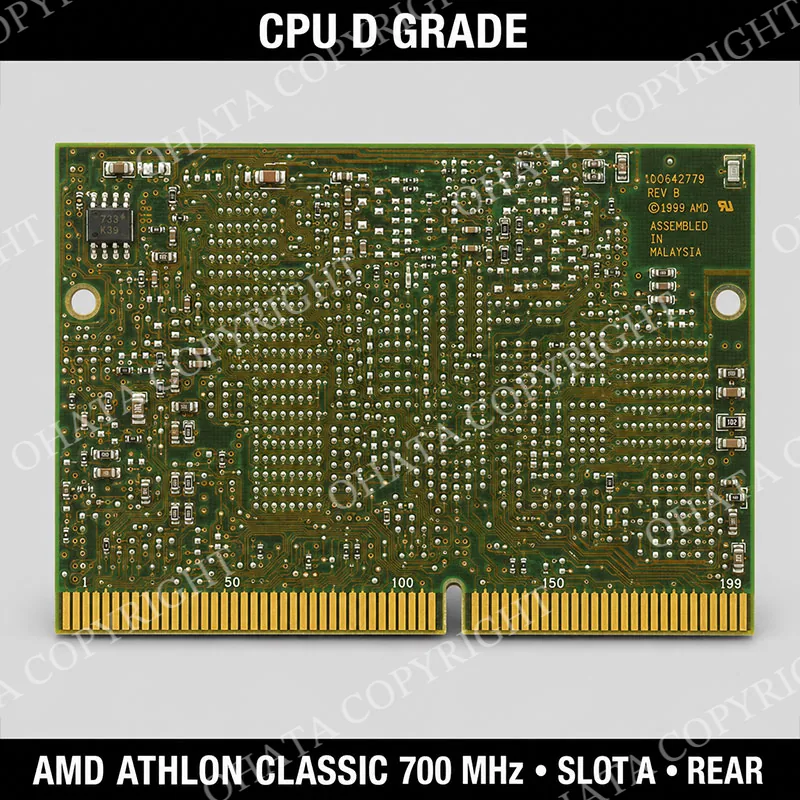
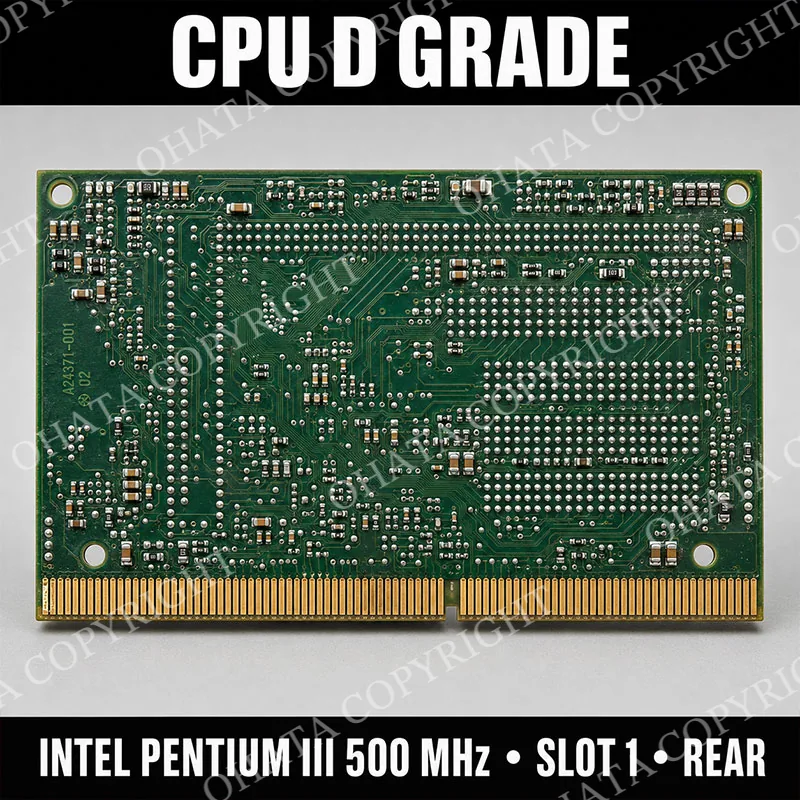
Typical examples include qualifying Intel Pentium II and Pentium III Slot 1 modules, AMD Athlon Classic Slot A modules, and comparable cartridge-style processor assemblies.
-
Classification is based on the module’s construction, internal components, edge connector, completeness, condition, attachments, and recoverable-material profile, not its brand, speed, generation, functionality, or original retail price.
-
Please keep modules complete, dry, reasonably clean, and separated from other CPU grades when practical.
-
Final classification, measured weight, and buying price are confirmed after physical inspection.
CPU D Grade ( Slot CPU/ CPU Module) buying scrap price
-
We purchase CPU D Grade (Slot CPU/CPU Module) material starting from just 1 lb.
-
CPU D Grade covers qualifying cartridge-style and board-mounted processor modules, including Slot 1 and Slot A assemblies. All CPU modules meeting the Ohata D Grade standard are purchased at the same grade price.
-
Typical examples include qualifying Intel Pentium II and Pentium III Slot 1 modules, AMD Athlon Classic Slot A modules, and comparable cartridge-style processor assemblies.
-
Classification is based on the module’s construction, internal components, edge connector, completeness, condition, attachments, and recoverable-material profile, not its brand, speed, generation, functionality, or original retail price.
-
Please keep modules complete, dry, reasonably clean, and separated from other CPU grades when practical.
-
Final classification, measured weight, and buying price are confirmed after physical inspection.
Buying Details of Conditions
Learn more about identifying and sorting D Grade circuit boards in our Wiki: Ohata CPU Scrap Classification Wiki
Learn more about: CPU Scrap Classification Guide: CPU-SSS to CPU-F
Introduction, Construction, Components, and Recycling Value
CPU D Grade is the Ohata classification for qualifying slot-style CPUs and processor modules. These assemblies differ from individual socketed processors because the processor and related components are mounted on a small circuit board and may be enclosed in a plastic or metal cartridge.
Common examples include Intel Pentium II and Pentium III Slot 1 modules, AMD Athlon Classic Slot A modules, and comparable cartridge-style processor assemblies. Different brands, speeds, and generations may receive the same grade when they satisfy the same CPU D Grade construction and condition requirements.
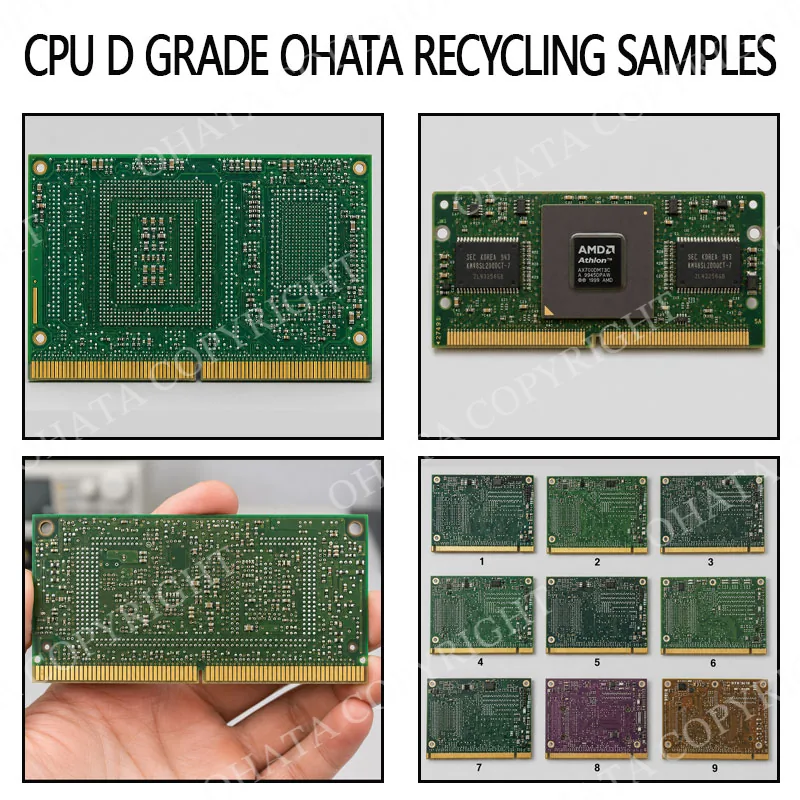
A typical CPU D Grade module may contain:
A processor die or processor package
A small multilayer circuit board
Cache-memory chips
Voltage or control components
A plated edge connector
Copper tracks and internal conductive layers
Plastic cartridge sections
Metal shielding, brackets, or heat-spreading parts
Recoverable materials may include copper from the circuit board and internal connections, plated metals on the edge connector, and smaller quantities of gold, silver, palladium, nickel, and tin. The exact composition varies by manufacturer and module design.
The original retail price, clock speed, brand, age, or operational status does not independently determine recycling value. Classification and buying price are based on the complete module’s construction, components, completeness, condition, and processing requirements.
Ohata CPU D Grade Classification
A qualifying CPU D Grade item should be recognizable as a slot-style processor or processor module. Inspectors consider the complete assembly rather than grading it from one visible component or printed model number.
Important identification features include:
Slot-style construction:
The item normally has a long edge connector designed for a Slot 1, Slot A, or comparable motherboard interface.
Processor-module assembly:
The processor, cache chips, and supporting components are mounted on a circuit board rather than supplied as one separate socketed CPU.
Recognizable cartridge or housing:
Some modules retain a plastic cartridge, metal backing plate, heatsink, or protective enclosure. Attached parts are considered during inspection.
Major components present:
The processor package, circuit board, edge connector, and major ICs should remain substantially complete. Removed processors, stripped cache chips, or extensively cut connectors may affect classification.
Condition considered:
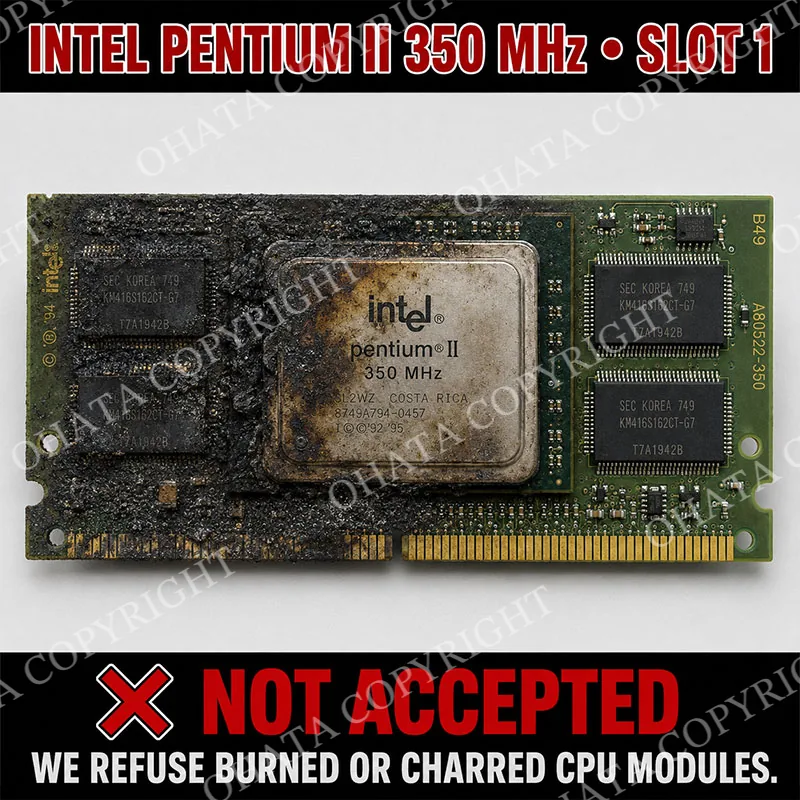
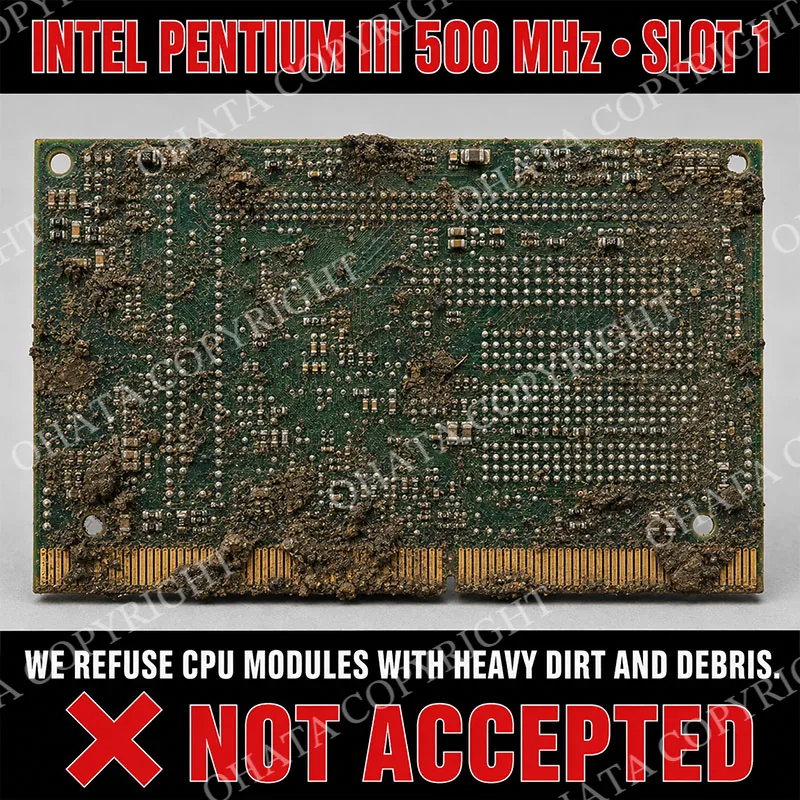
Minor wear, labels, scratches, and ordinary discoloration may be acceptable. Extensive breakage, severe burning, heavy corrosion, or substantial contamination may affect classification and buying value.
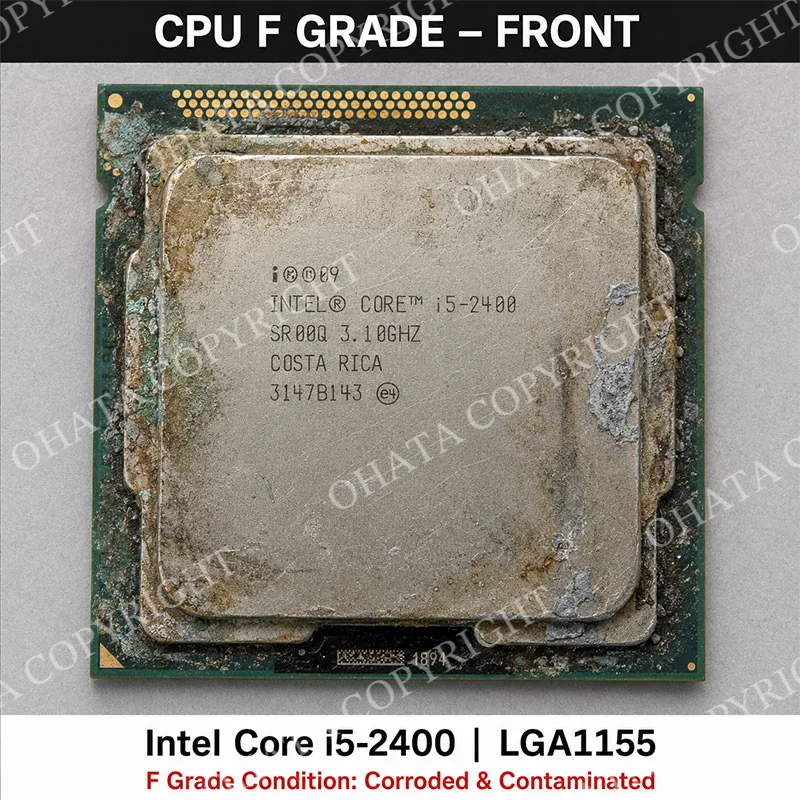
CPU D Grade should not be confused with individual ceramic CPUs, gold-pin processors, modern LGA processors, loose BGA chips, fiber CPUs, or ordinary plastic ICs. Those materials should be evaluated under their applicable CPU grades.
Recoverable Materials, Buying Standards, and Handling
CPU D Grade modules do not need to function. Operational testing is generally unnecessary because evaluation is based on physical construction and recoverable material.
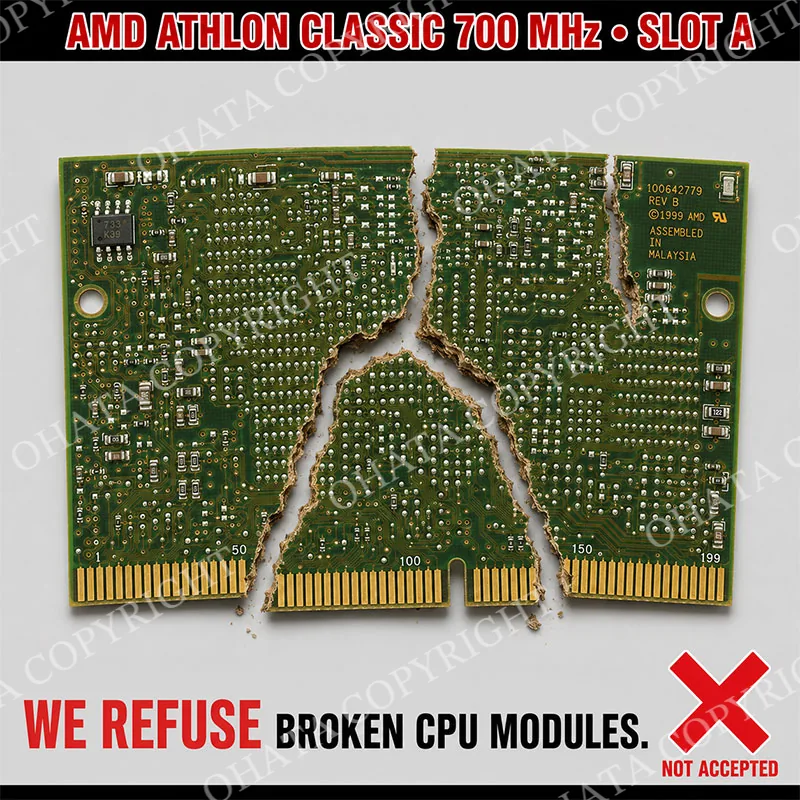
For accurate inspection, please keep the modules dry and reasonably clean. Keep loose batteries, screws, wires, motherboard fragments, unrelated electronic scrap, and foreign material separate. Avoid breaking the cartridge, cutting the circuit board, removing the edge connector, burning the assembly, or chemically treating its contacts.
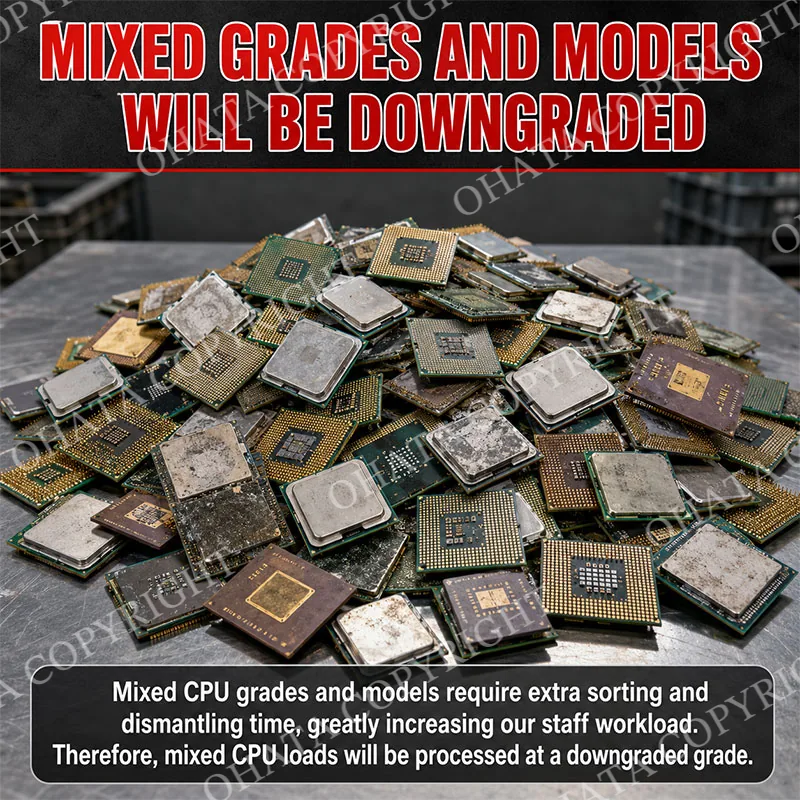
Mixed CPU grades are acceptable, but they may require separate inspection, sorting, weighing, and pricing. Different models may remain together when they genuinely satisfy the same CPU D Grade requirements.
Extensively fragmented modules may become difficult to identify and may lose components during handling. Severe burning, hazardous chemical contamination, or unidentified residue may make the material unsafe to process. Material in these conditions may be rejected after inspection.
Comparison, and Official Ohata Classification
CPU D Grade is defined by slot-style or cartridge-module construction. Higher CPU grades cover processors with different package materials, contact systems, and recoverable-material profiles. Lower categories may include ordinary plastic ICs or damaged and unidentifiable CPU scrap.
A complete and recognizable Slot 1, Slot A, or comparable processor module that meets the applicable construction and condition requirements is classified as Official Ohata CPU D Grade. All qualifying modules are purchased at the applicable CPU D Grade price regardless of individual brand, model, speed, or original market value.
View more Ohata's CPU recycling classifications
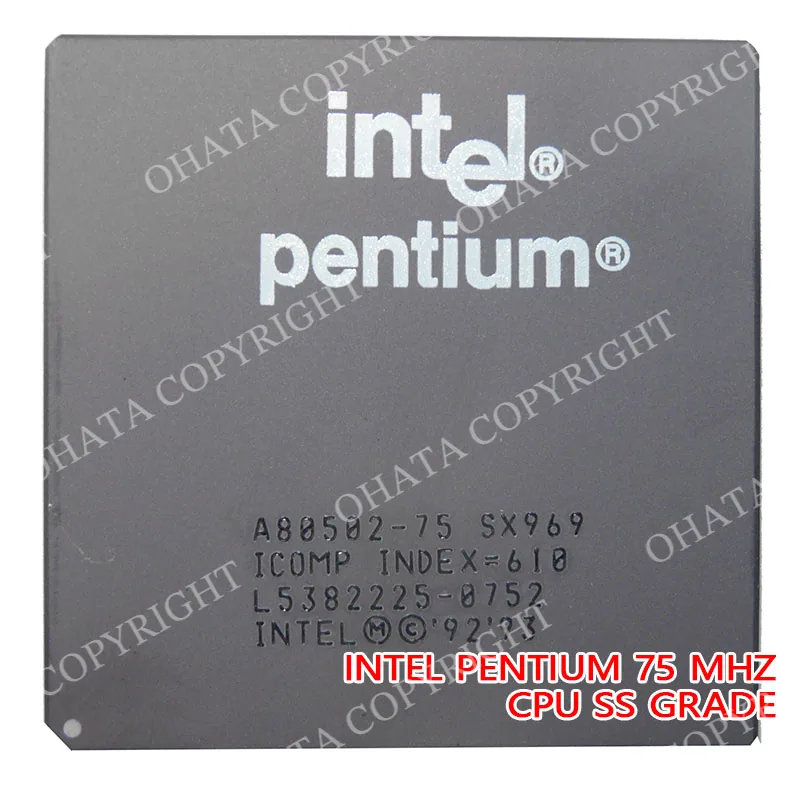
CPU SS Grade ( High Grade Ceramic CPU)
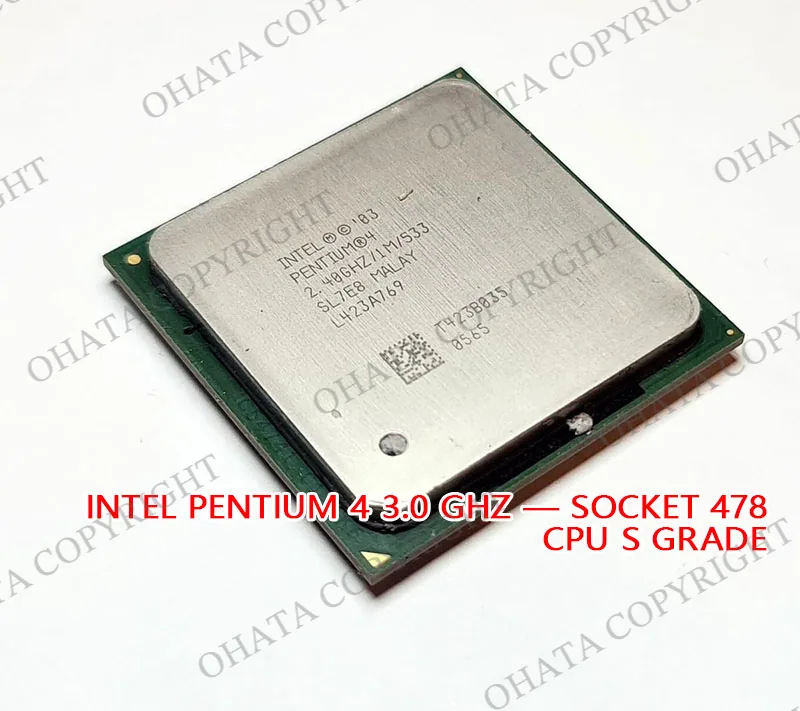
CPU S Grade ( Gold Pin BGA CPU)
CPU B Grade ( BGA CPU and IC chips)
CPU D Grade ( Slot CPU/ CPU Module)
- 1. What is today’s price for CPU D Grade ( Slot CPU/ CPU Module) buying?
- As of Sep 19,2026, Ohata Shoji America Inc., (Seattle, WA, United States) is purchasing CPU D Grade ( Slot CPU/ CPU Module) buying at 9.00 (USD/lb). We provide competitive scrap prices in Seattle, Bellevue, Renton, Tukwila, Kent, SeaTac, Tacoma, Everett, and surrounding communities.
- 2. What is CPU D Grade?
- CPU D Grade is an entry-level recoverable processor category under the Ohata CPU Scrap Classification System. These CPUs generally contain fewer precious metals and provide a lower recovery yield than higher grades.
- 3. How does Ohata identify a D Grade CPU?
- Ohata evaluates the CPU’s package material, contact structure, visible gold plating, precious-metal content, physical completeness, contamination level, and expected refining yield.
- 4. Does the CPU model affect its D Grade purchase price?
- No. Once a processor meets the D Grade standard, it is purchased at the applicable D Grade rate regardless of its model, brand, generation, clock speed, or original retail price.
- 5. Are burned or contaminated CPUs accepted as D Grade?
- Severely burned, chemically treated, heavily corroded, oil-contaminated, or otherwise hazardous CPUs may be rejected. Acceptance depends on their condition and the official Ohata inspection.
- 6. Should heatsinks and cooling fans be removed before delivery?
- Yes. Suppliers should remove heatsinks, fans, motherboard pieces, excessive thermal paste, and unrelated scrap so the processors can be inspected and weighed accurately.
- 7. Can D Grade CPUs be mixed with higher CPU grades?
- They should be separated whenever possible. Mixed grades require additional sorting and may cause the entire shipment or affected lot to be downgraded.
- 8. Who determines the final CPU grade?
- The final classification is determined by Ohata inspectors after physical examination. The decision is based on the official buying standard, construction, recoverable-metal yield, completeness, and overall condition.
- 9. How does the company transform electronic waste into valuable resources?
- We process electronic scrap to extract precious metals and securely refurbish functional hardware for secondary online marketplaces.
- 10. How do you handle non-functional or broken hardware?
- Items that cannot be refurbished are routed to our automated material lines for high-yield precious metal resource recovery.
- 11. How does Ohata Shoji America Inc. maintain its industry standards?
- We combine 25+ years of Japanese precision recycling expertise from our parent company, Ohata Shoji Inc., with modern American e-commerce logistics.
Related Items
CPU SS Grade ( High Grade Ceramic CPU) Buying
CPU S Grade (Gold-Pin PGA CPU) Buying
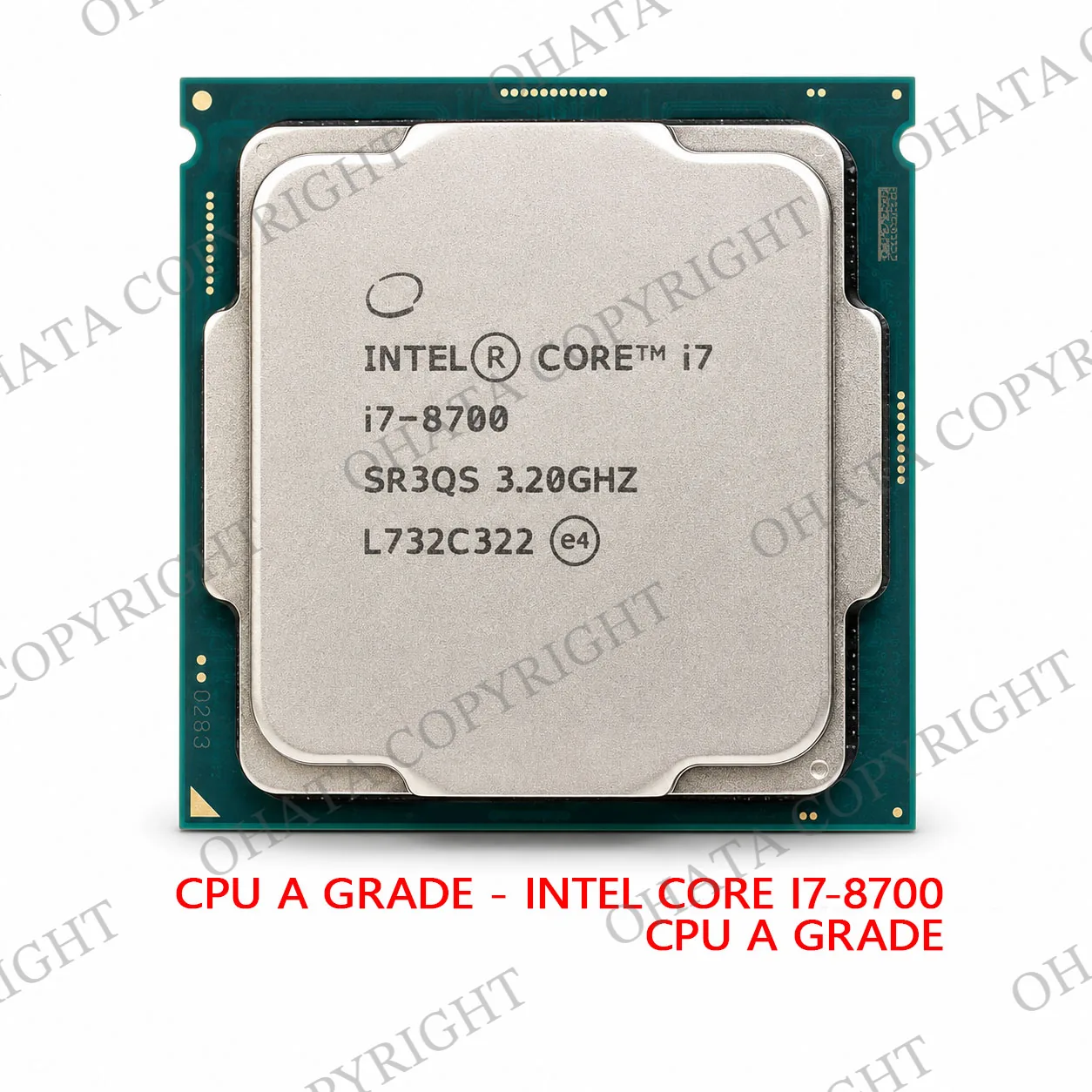
CPU A Grade ( Modern LGA CPU) Buying
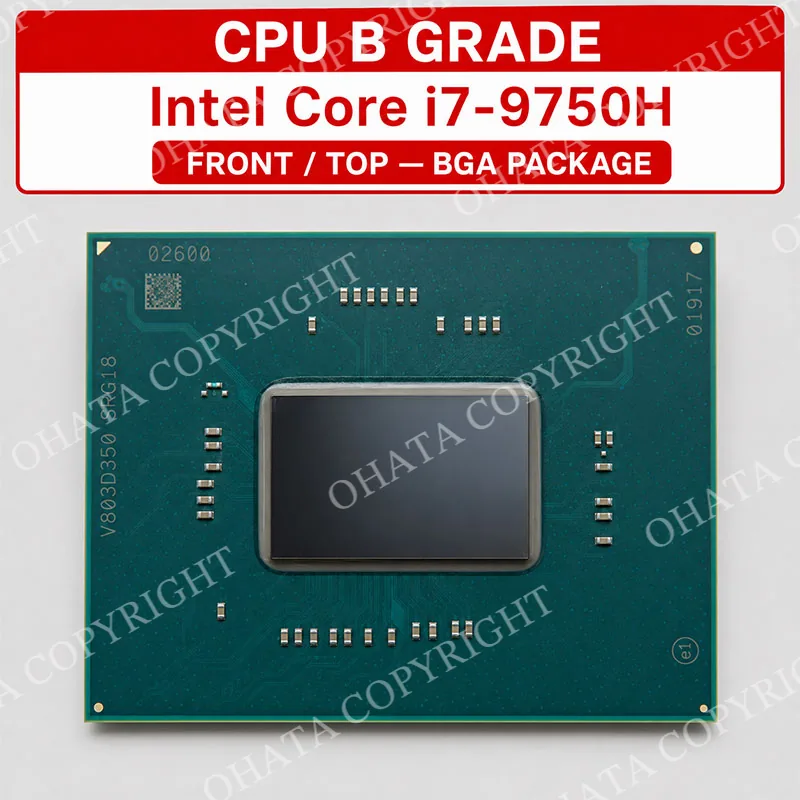
CPU B Grade ( BGA CPU and IC chips) Buying
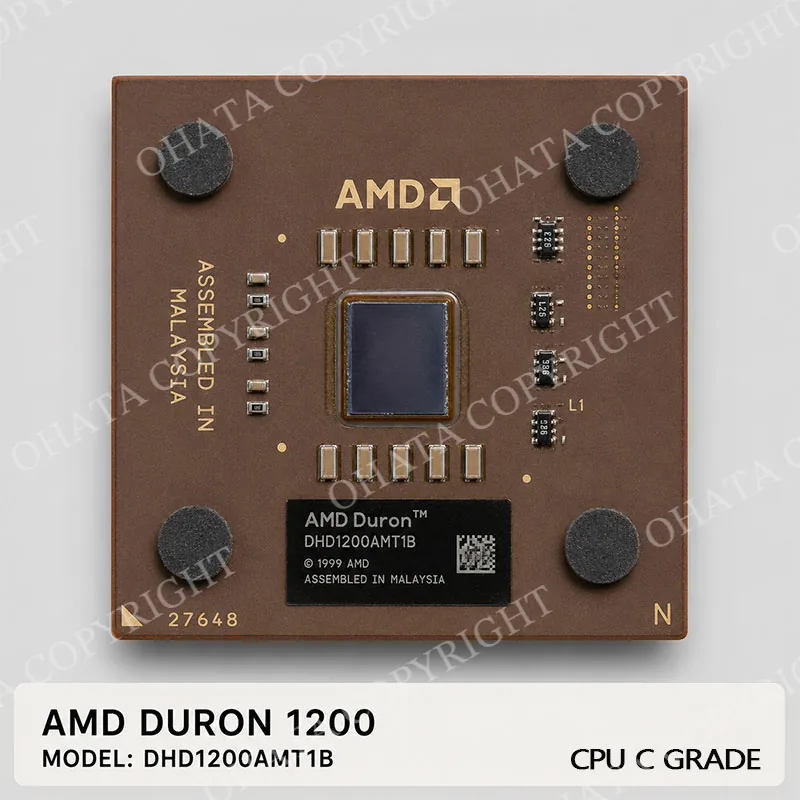
CPU C Grade ( Fiber CPU) Buying
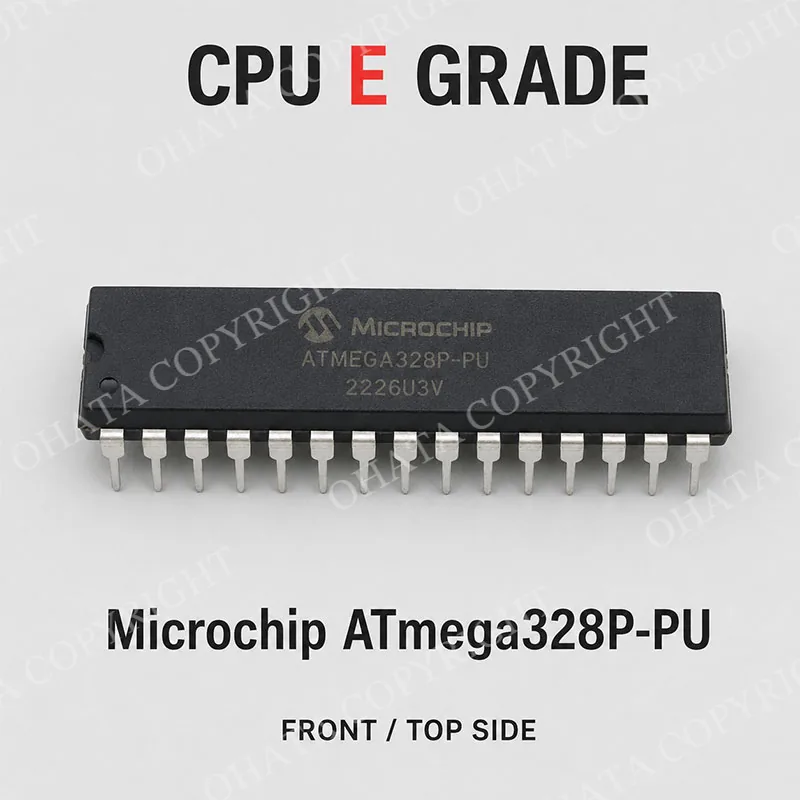
CPU E Grade ( Plastic IC and Processor Chips) Buying