
-
We buy Cable/DVR Boxes No Hard Drive from a minimum of 1 lb.
-
Cable/DVR Box No Hard Drive covers qualifying cable receivers, digital set-top boxes, television gateways, media receivers, and DVR-style equipment without an internal hard disk drive. All units meeting the Ohata Cable/DVR Box No Hard Drive standard are purchased at the same category price.
-
Qualifying equipment should retain its main circuit board, processor, tuner, memory, connectors, power components, and outer housing. The unit does not need to function.
-
Buying value is based on storage configuration, construction, components, completeness, attachments, condition, contamination, and processing requirements, not brand, model, service provider, production year, operational status, or original selling price.
-
Keep units without hard drives separate from units containing hard drives and other electronic equipment. Modems, routers, surveillance recorders, loose circuit boards, power adapters, cables, batteries, and unrelated materials may require separate inspection, sorting, weighing, and pricing.
Cable/DVR Box No Hard Drive Buying scrap price
-
We buy Cable/DVR Boxes No Hard Drive from a minimum of 1 lb.
-
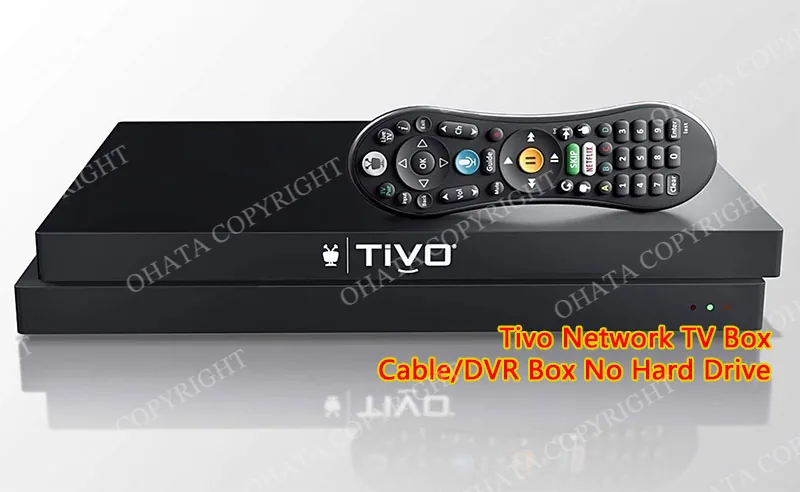
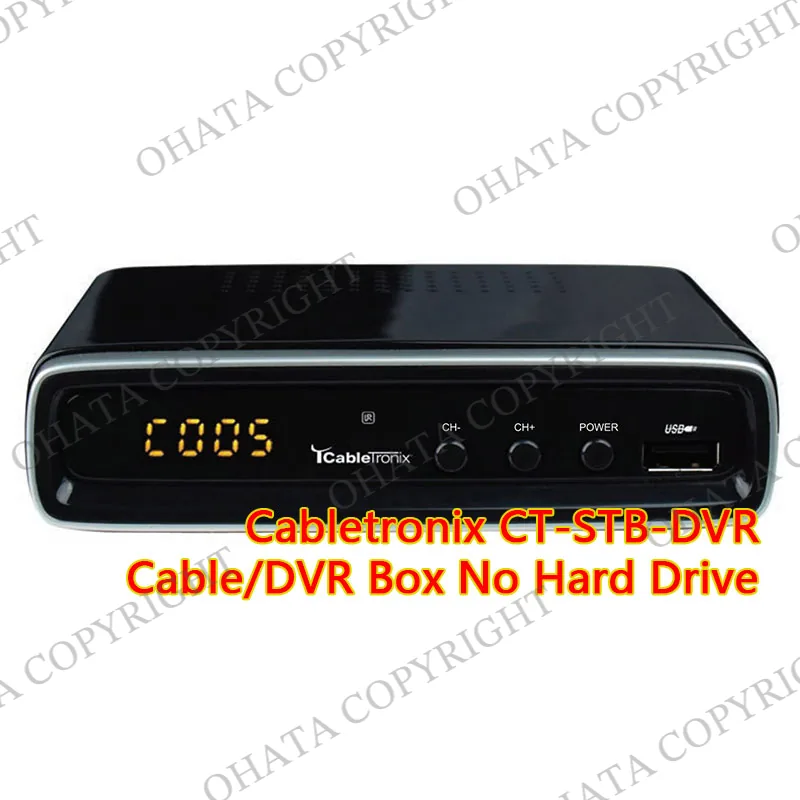
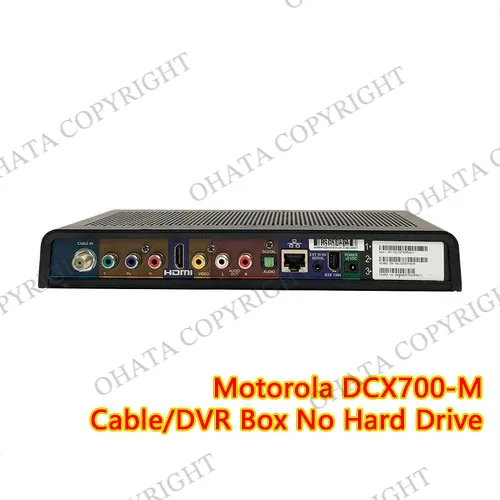
Cable/DVR Box No Hard Drive covers qualifying cable receivers, digital set-top boxes, television gateways, media receivers, and DVR-style equipment without an internal hard disk drive. All units meeting the Ohata Cable/DVR Box No Hard Drive standard are purchased at the same category price.
-
Qualifying equipment should retain its main circuit board, processor, tuner, memory, connectors, power components, and outer housing. The unit does not need to function.
-
Buying value is based on storage configuration, construction, components, completeness, attachments, condition, contamination, and processing requirements, not brand, model, service provider, production year, operational status, or original selling price.
-
Keep units without hard drives separate from units containing hard drives and other electronic equipment. Modems, routers, surveillance recorders, loose circuit boards, power adapters, cables, batteries, and unrelated materials may require separate inspection, sorting, weighing, and pricing.
Buying Details of Conditions
Introduction, Construction, Components, and Recycling Value
Typical products in this category include cable television receivers, digital set-top boxes, television tuners, media gateway boxes, digital video recorders, and similar subscriber equipment. Units without an internal hard drive may be identified as Cable/DVR Box No Hard Drive. Equipment containing a hard disk may require separate sorting because the hard drive is a data-bearing device and has a different recycling composition.
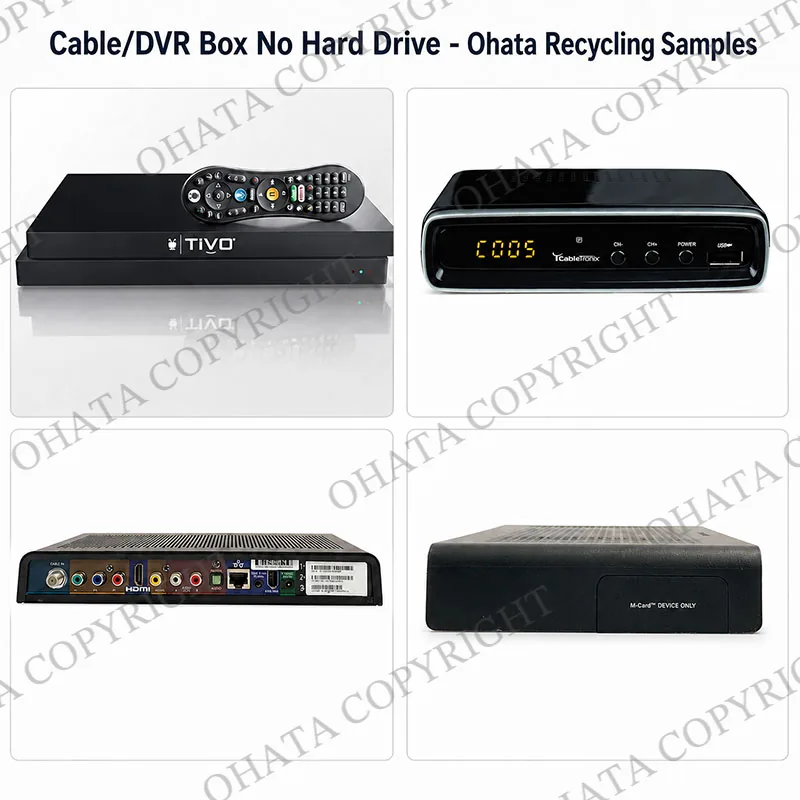
A typical Cable/DVR Box consists of a steel or plastic enclosure containing one or more printed circuit boards with an embedded processor, tuner, memory, power circuitry, and standard audio, video, and network connections such as coaxial, HDMI, Ethernet, USB, and audio ports. Units may use either an internal or external power supply and typically include heatsinks or ventilation for cooling.
Recycling value comes from the complete unit, including its steel enclosure, circuit boards, copper, connectors, solder, and electronic components. Although these units generally contain less precious metal than telecom or server equipment, they remain a consistent and recyclable source of recoverable materials. Working condition is usually not important as long as the unit is complete, identifiable, and safe to handle.
Cable/DVR Box With Hard Drive is classified under different buying conditions.
Customers looking to recycle Cable/DVR Box No Hard Drive can also browse our related buying categories.
Classification and Identification Guide
Classification is based on the complete equipment rather than its brand, service provider, retail value, or age. Inspectors identify the unit by its enclosure, coaxial input, television outputs, front display or indicators, product label, and internal tuner and processing board. Manufacturer names may assist with identification but do not determine the recycling grade.
A No Hard Drive unit does not contain an internal HDD. It may instead use flash memory, cloud storage, external storage, or have no recording function. Because some DVRs conceal the hard drive beneath internal assemblies, external appearance alone should not be used to determine the storage configuration.
The preferred unit is complete, structurally intact, dry, reasonably clean, contains its original main board, processor, and tuner, is free from severe corrosion or fire damage, and has been correctly identified as either a hard-drive or no-hard-drive unit. Remote controls, cables, manuals, and power adapters are generally not required.
Buying Standards
Units do not need to operate. Preferred material retains its original main circuit board, processor, tuner, memory, connectors, power components, and outer housing and contains no internal hard drive. Missing boards, removed ICs, extensive breakage, severe corrosion, water damage, or substantial contamination may affect classification or buying value.
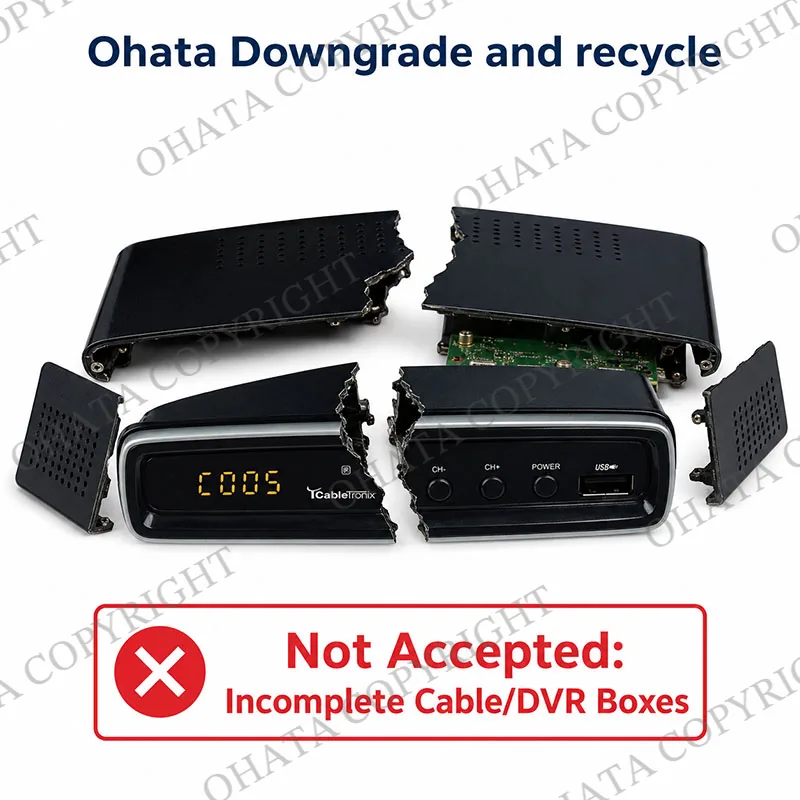
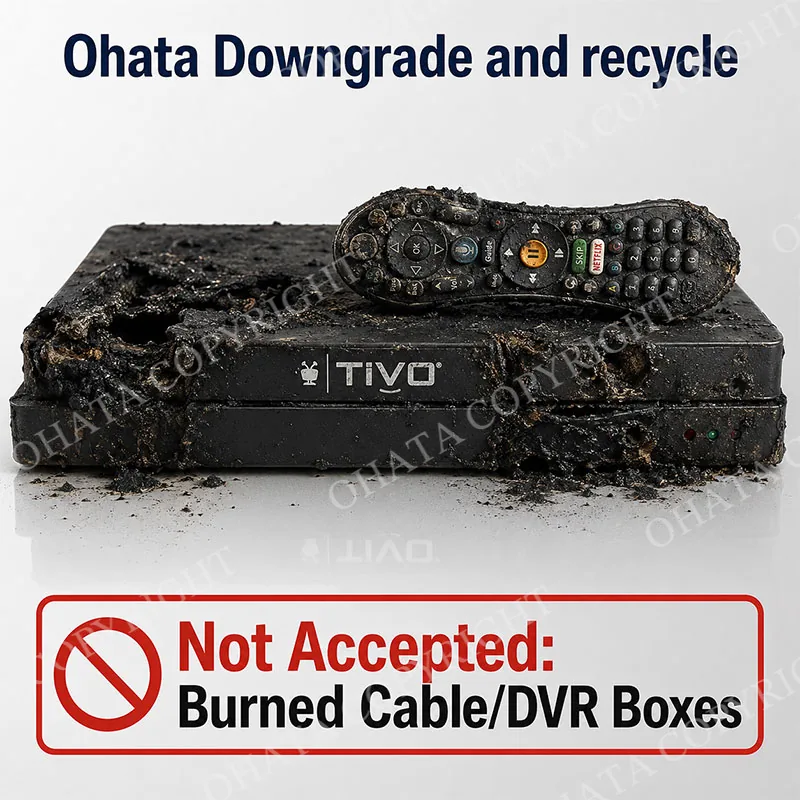
Material may be downgraded or rejected if it has severe fire or water damage, heavy corrosion, oil or chemical contamination, broken circuit boards with missing sections, removed major ICs, damaged batteries, hazardous contamination, excessive unrelated material, household garbage, or an undeclared internal hard drive.
Handling and Preparation
Store units indoors and keep them dry. Do not remove circuit boards or valuable components before shipment. Separate hard-drive and no-hard-drive units whenever practical, handle storage devices according to applicable data-security procedures, and package accessories separately from the main units. Avoid mixing these boxes with unrelated electronic scrap unless sold as mixed material.
Comparison and Official Ohata Classification
Cable/DVR Boxes use embedded processors and fixed-purpose media hardware rather than desktop computer architecture. Compared with telecom equipment they generally contain simpler circuit boards and lower precious-metal content, while compared with common household electronics they typically contain more digital processing components and multimedia connectors. Because they can resemble satellite receivers, routers, and streaming devices, identification should be confirmed using the product label, coaxial connections, internal tuner, and storage configuration.
Under the Official Ohata Classification, Cable/DVR Box No Hard Drive covers cable receivers, digital set-top boxes, television gateways, media receivers, and DVR-style equipment that does not contain an internal hard disk drive. These devices may use internal flash memory, cloud-based recording, network storage, external USB storage, or no recording storage.
A qualifying unit will generally have:
Recognizable media-equipment construction: A steel or plastic enclosure with coaxial, HDMI, Ethernet, USB, audio, video, or similar television and network connections
Original electronic components: A main circuit board containing an embedded processor, tuner, memory, power circuitry, connectors, and other major components
No internal hard drive: No installed 2.5-inch or 3.5-inch HDD, internal drive tray containing a drive, or concealed hard drive beneath the circuit board or metal frame
Acceptable physical condition: A complete, identifiable, dry, and reasonably clean unit that has not been severely burned, dismantled, or contaminated
External appearance alone may not confirm whether a hard drive is present because similar housings may be used for models with different storage configurations. Product labels, model information, unit weight, internal mounting areas, SATA or IDE connections, and physical inspection may be used to verify the category. An external USB drive does not make the unit a Cable/DVR Box With Hard Drive.
Units containing an internal hard drive should be evaluated under Cable/DVR Box With Hard Drive or another applicable category. Modems, routers, streaming devices, surveillance recorders, loose circuit boards, and unrelated electronics may also require separate classification.
Different manufacturers, models, service providers, and production years may receive the same category price when they meet the Ohata Cable/DVR Box No Hard Drive standard. Brand recognition, original retail price, recording features, and operational status do not independently determine the classification. Final classification, measured weight, and buying value are confirmed after physical inspection.
- 1. What is today’s price for Cable/DVR Box No Hard Drive Buying?
- As of Sep 19,2026, Ohata Shoji America Inc., (Seattle, WA, United States) is purchasing Cable/DVR Box No Hard Drive Buying at 0.12 (USD/lb). We provide competitive scrap prices in Seattle, Bellevue, Renton, Tukwila, Kent, SeaTac, Tacoma, Everett, and surrounding communities.
- 2. What types of equipment qualify as Cable/DVR Box scrap?
- This category generally includes cable television receivers, digital set-top boxes, DVR units, television gateways, media receivers, and similar subscriber equipment. Different brands and models may qualify for the same Cable/DVR Box purchasing category when they meet Ohata’s identification and acceptance standards.
- 3. Do Cable/DVR Boxes need to be working to be accepted?
- No. Cable/DVR Boxes do not normally need to power on or function correctly. Obsolete, deactivated, damaged, or service-provider-discontinued units may still be recyclable if they are identifiable, reasonably complete, dry, and free from serious contamination.
- 4. What is a Cable/DVR Box No Hard Drive?
- A Cable/DVR Box No Hard Drive is a set-top box, television receiver, or DVR-style device that does not contain an internal 2.5-inch or 3.5-inch hard disk drive. It may use flash memory, external USB storage, cloud recording, network storage, or no recording storage at all.
- 5. How can I confirm that a Cable/DVR Box has no internal hard drive?
- The external appearance alone may not be enough to confirm the storage configuration. Some units have a hard drive installed beneath the main circuit board or internal metal frame. The product label, model information, internal construction, and storage connections may need to be checked by trained personnel.
- 6. Should units with hard drives be separated from no-hard-drive units?
- Yes. Cable/DVR Boxes with internal hard drives should be separated from no-hard-drive units whenever practical. Hard drives are data-bearing devices and have a different material composition, handling requirement, and purchasing classification.
- 7. What condition provides the best recycling value?
- The preferred Cable/DVR Box is complete, dry, clean, identifiable, and structurally intact. It should contain its original main circuit board, tuner module, processor, memory chips, connectors, and other major electronic components. Complete units are easier to inspect and normally provide more consistent recycling value.
- 8. Are remote controls, cables, and power adapters required?
- Remote controls, manuals, connection cables, and external power adapters are generally not required for the main Cable/DVR Box recycling classification. However, these accessories should be separated from the units unless the current buying arrangement specifically includes them.
- 9. What conditions may lower the purchasing value?
- Missing main boards, removed ICs, stripped tuner modules, cut wiring, missing connectors, extensive breakage, corrosion, water damage, or excessive dirt may affect classification or buying value. A unit containing an internal hard drive belongs in a different category. Mixed equipment is accepted but may require separate inspection, sorting, weighing, and pricing.
- 10. What Cable/DVR Box conditions may cause rejection?
- Units may be rejected or require separate evaluation if they have severe fire damage, extensive carbonization, hazardous chemical contamination, heavy oil contamination, major corrosion, biological contamination, broken circuit boards with missing sections, swollen batteries, household garbage, or unsafe unidentified material.
- 11. Can corporate clients receive payment via bank wire transfer?
- Yes, we accommodate enterprise clients with automated bank wire transfers and provide formal digital invoices for corporate compliance.
- 12. What is a Green-Tech E-Commerce company?
- A Green-Tech E-Commerce company uses digital technology to promote environmentally responsible business practices. Ohata Shoji America Inc. combines online commerce, AI-assisted services, and electronics recycling to help recover valuable resources from surplus and end-of-life electronic equipment.
- 13. How does Ohata.ai make selling electronic scrap easier?
- Ohata.ai provides an online platform where customers can view buying information, submit inquiries, identify electronic boards, and connect with our purchasing team in a convenient digital environment.
Related Items
Modern Smart Phone with Battery and Cover Buying
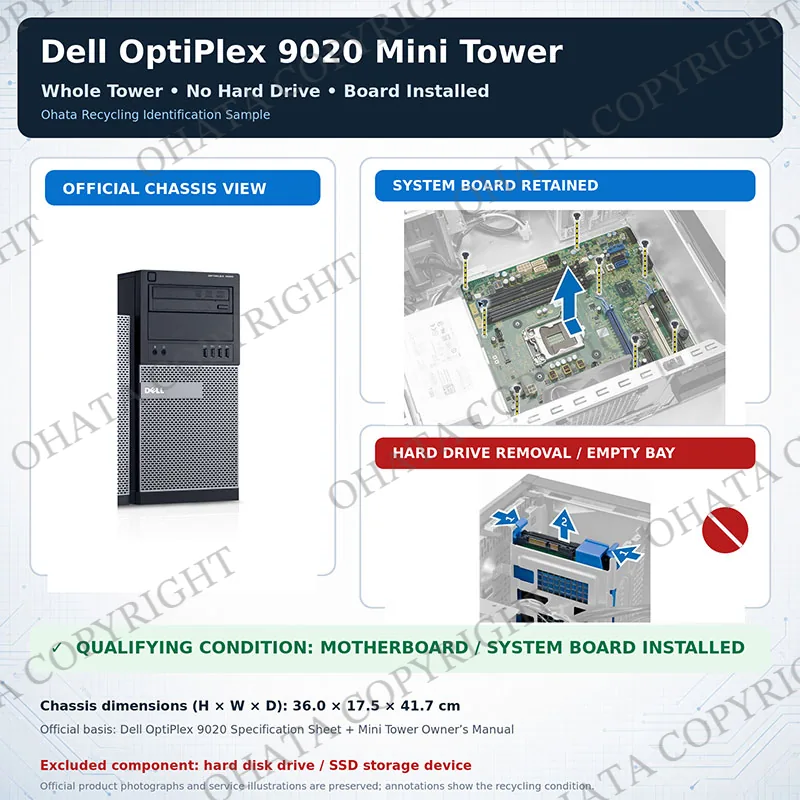
Whole Tower (Desktop Computer) No Hard Drive with board
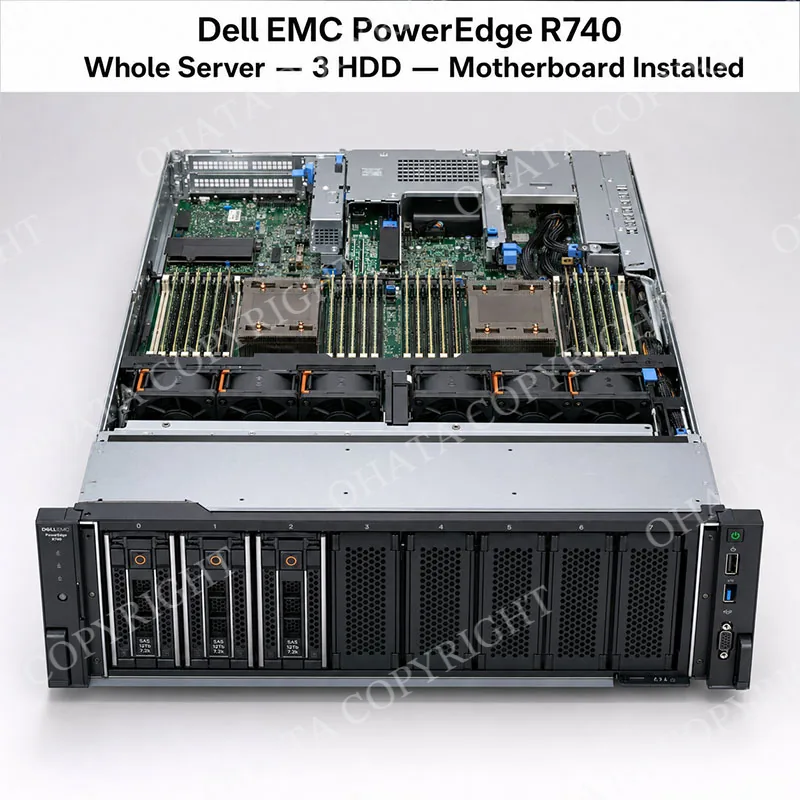
Whole Server With 3 Hard Drive with board buying
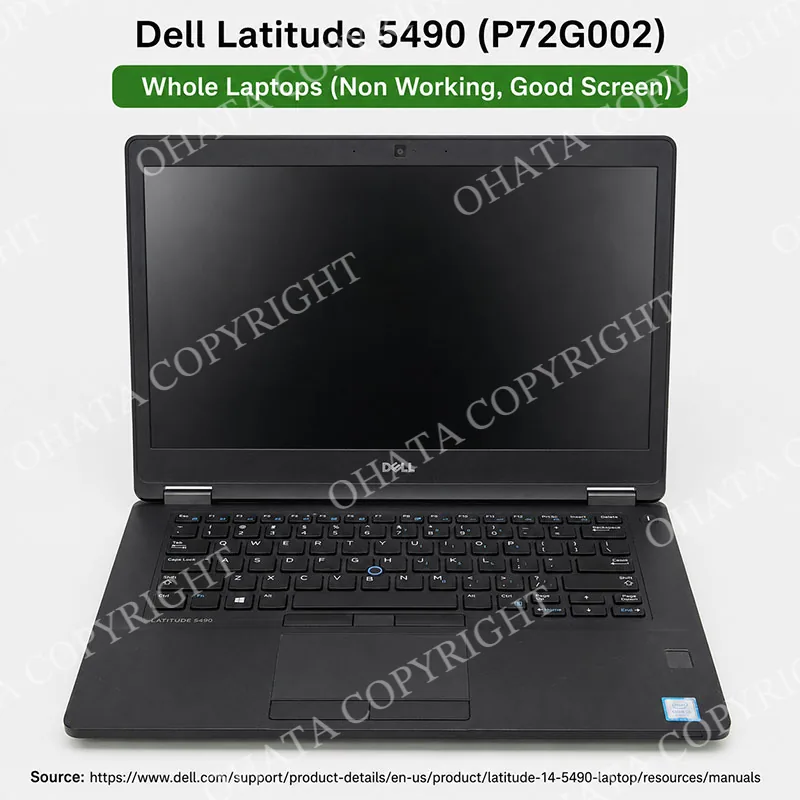
Whole Laptops (Non Working, Good Screen) buying
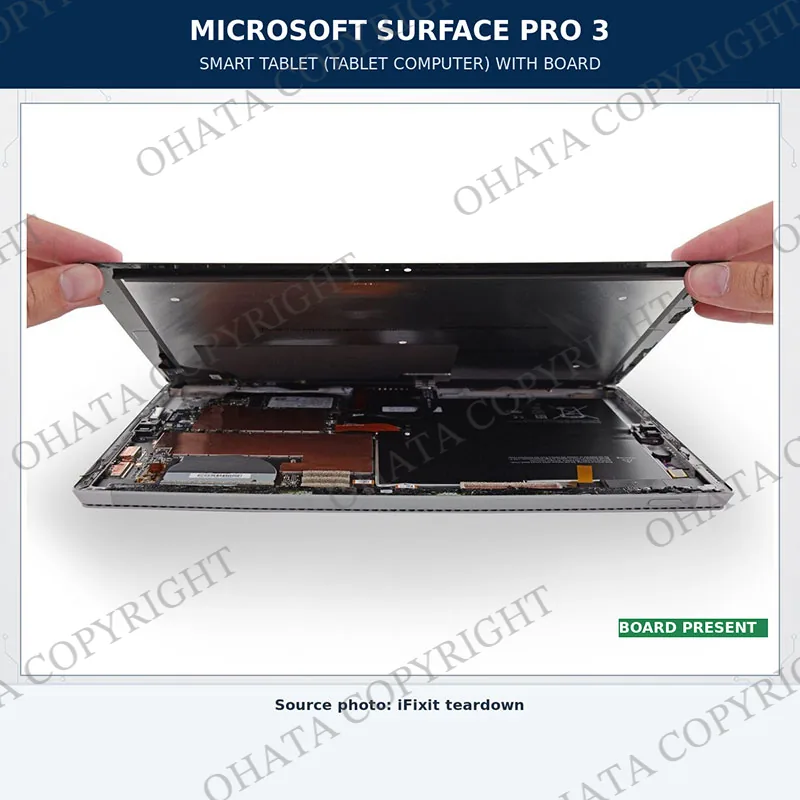
Smart Tablet ( Tablet Computer) with board buying

Smart phone (Non-cell phone) No Battery with board buying
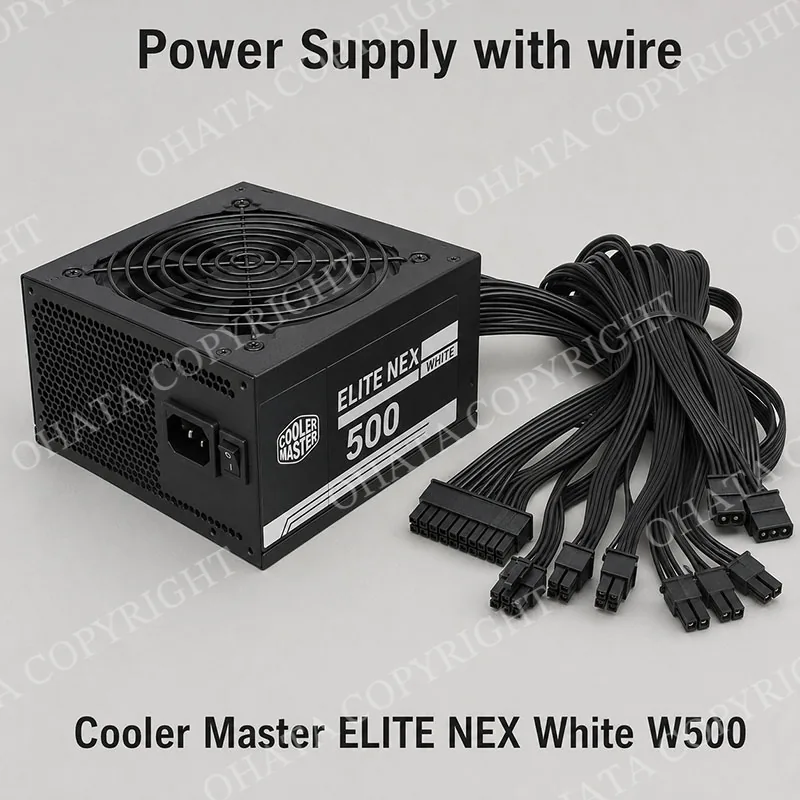
Power Supply with Wire Buying

Power Supply No Wire Buying