
-
We purchase CPU B Grade (BGA CPU and IC Chips) material starting from just 1 lb.
-
CPU B Grade covers qualifying BGA-packaged CPUs, GPUs, chipsets, and related processing ICs with solder-ball connections. All components meeting the Ohata B Grade standard are purchased at the same grade price.
-
Typical materials include qualifying laptop CPUs, graphics processors, motherboard chipsets, and comparable BGA processing chips.
-
Classification is based on the component’s package construction, contact system, completeness, condition, and recoverable-material profile, not its brand, model, performance, age, or original retail price.
-
Please keep components dry, reasonably clean, identifiable, and separated from complete circuit boards and unrelated material when practical.
-
Final classification, measured weight, and buying price are confirmed after physical inspection.
CPU B Grade ( BGA CPU and IC chips) Buying scrap price
-
We purchase CPU B Grade (BGA CPU and IC Chips) material starting from just 1 lb.
-
CPU B Grade covers qualifying BGA-packaged CPUs, GPUs, chipsets, and related processing ICs with solder-ball connections. All components meeting the Ohata B Grade standard are purchased at the same grade price.
-
Typical materials include qualifying laptop CPUs, graphics processors, motherboard chipsets, and comparable BGA processing chips.
-
Classification is based on the component’s package construction, contact system, completeness, condition, and recoverable-material profile, not its brand, model, performance, age, or original retail price.
-
Please keep components dry, reasonably clean, identifiable, and separated from complete circuit boards and unrelated material when practical.
-
Final classification, measured weight, and buying price are confirmed after physical inspection.
Buying Details of Conditions
Learn more about identifying and sorting B Grade circuit boards in our Wiki: Ohata CPU Scrap Classification Wiki
Learn more about: CPU Scrap Classification Guide: CPU-SSS to CPU-F
Introduction, Construction, Components, and Recycling Value
Ohata CPU B Grade is a recycling category primarily covering Ball Grid Array (BGA) processors and related IC chips. Typical examples include laptop CPUs, laptop or desktop GPUs, motherboard chipsets, graphics processors, and other processing chips that use solder-ball connections underneath the package.
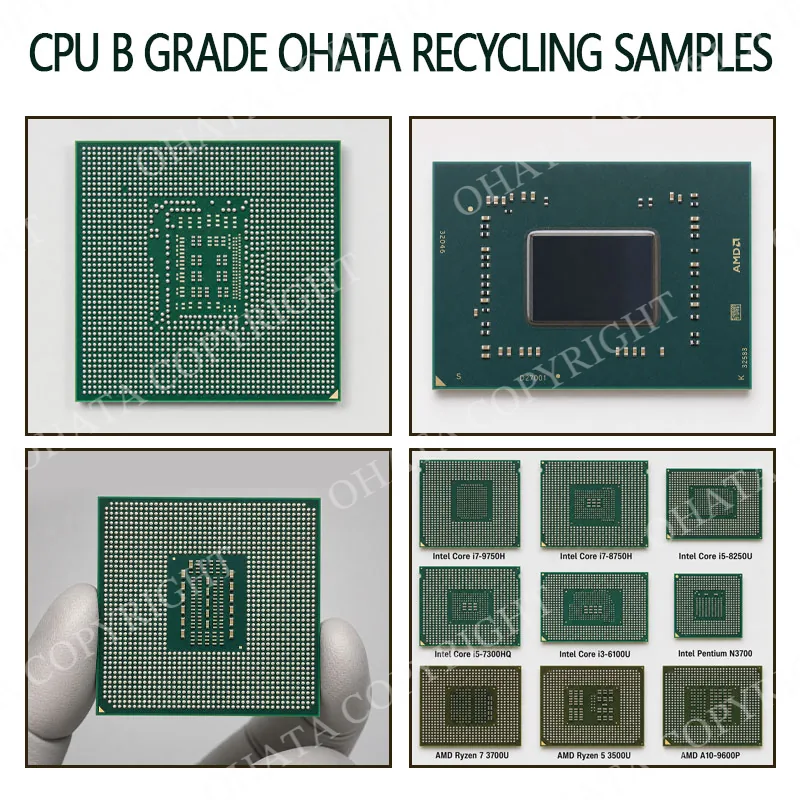
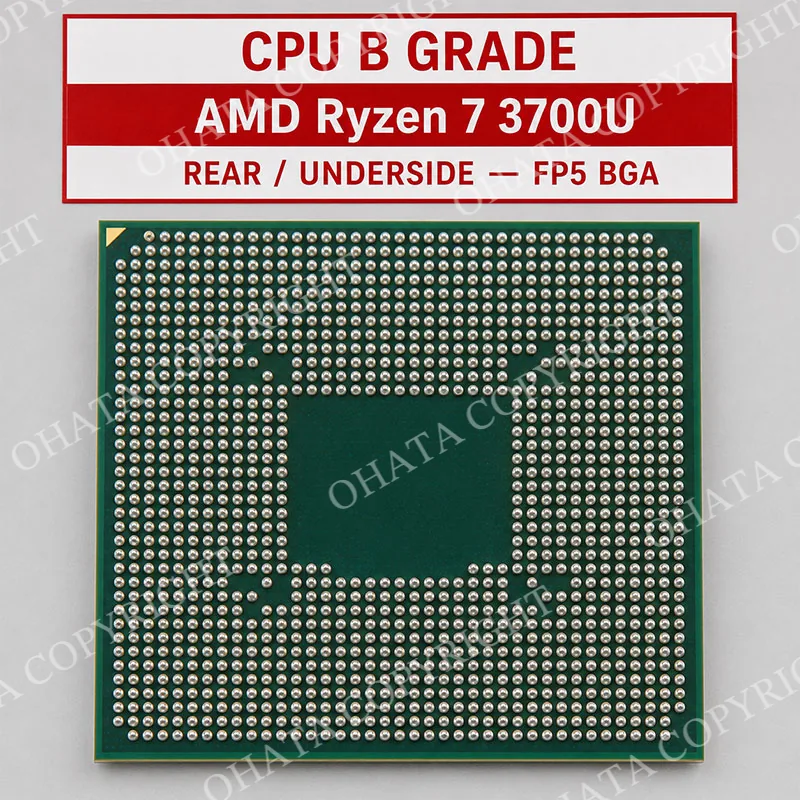
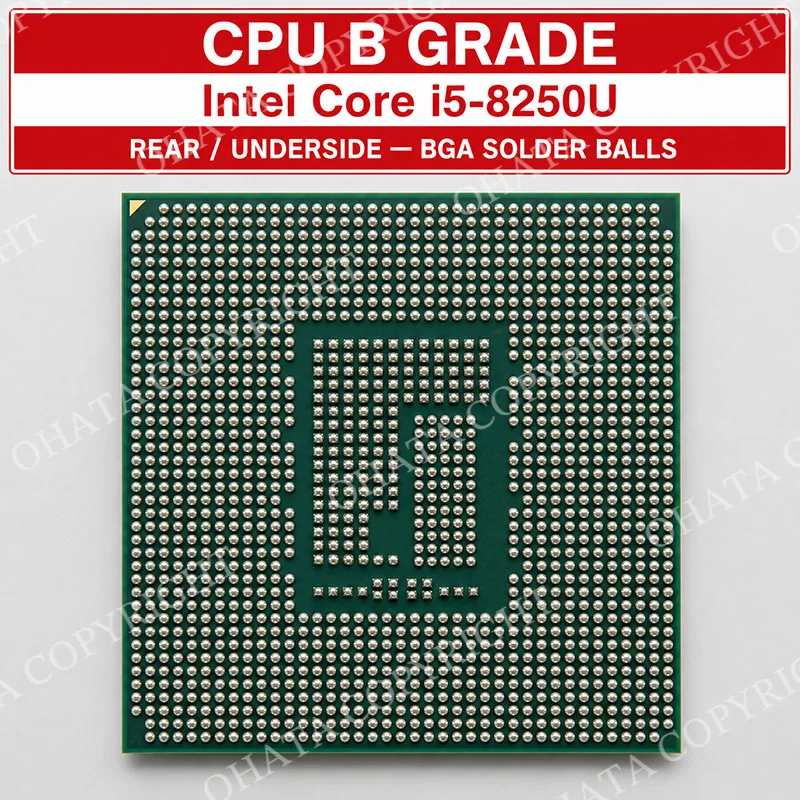
Unlike PGA processors with projecting pins or LGA processors with flat contact pads, BGA chips are designed to be soldered directly onto a circuit board. Their underside contains a grid of small solder balls instead of removable pins. The package commonly consists of a silicon die, organic or ceramic substrate, internal conductive connections, encapsulation material, and a BGA solder-ball array.
Ohata CPU B Grade Classification, Identification Guide
A component may qualify as Ohata CPU B Grade when it has the following characteristics:
It uses a Ball Grid Array package.
It is a laptop CPU, GPU, graphics chip, motherboard chipset, or comparable processing IC.
The underside originally contains an organized grid of solder balls or corresponding BGA contact positions.
It is separated from circuit boards and reasonably identifiable as a BGA processor or processing chip.
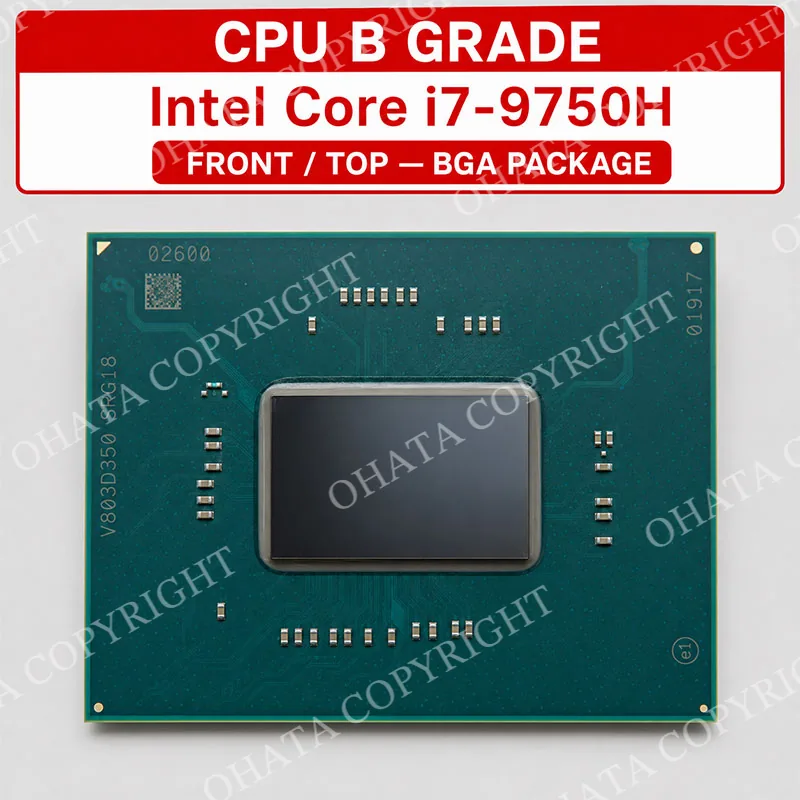
Inspectors should check both sides of the component. The upper side normally carries manufacturer markings, codes, or a protective die cover, while the underside displays the distinctive solder-ball grid. Components that merely resemble processors but are not CPUs, GPUs, chipsets, or qualifying IC chips may be classified differently.
Recoverable Materials, Buying Standards, and Handling
Recoverable materials may include copper from internal conductors and substrates, tin-based solder from the BGA balls, nickel in barrier plating, and small quantities of gold, silver, or palladium depending on the chip’s construction and manufacturing generation. Some BGA packages use gold bonding wires, while newer devices may use copper-based connections.
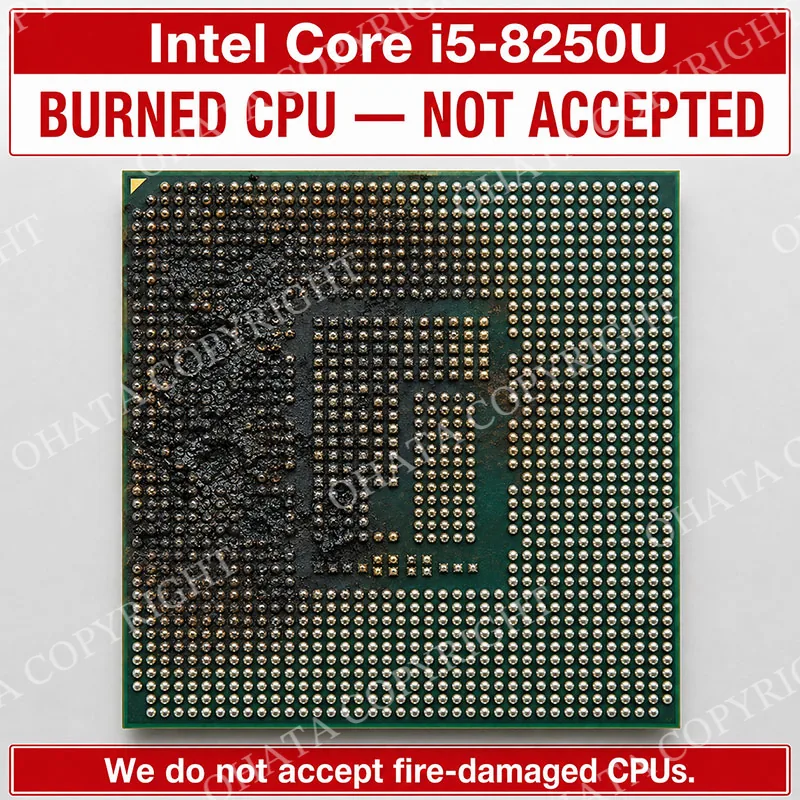
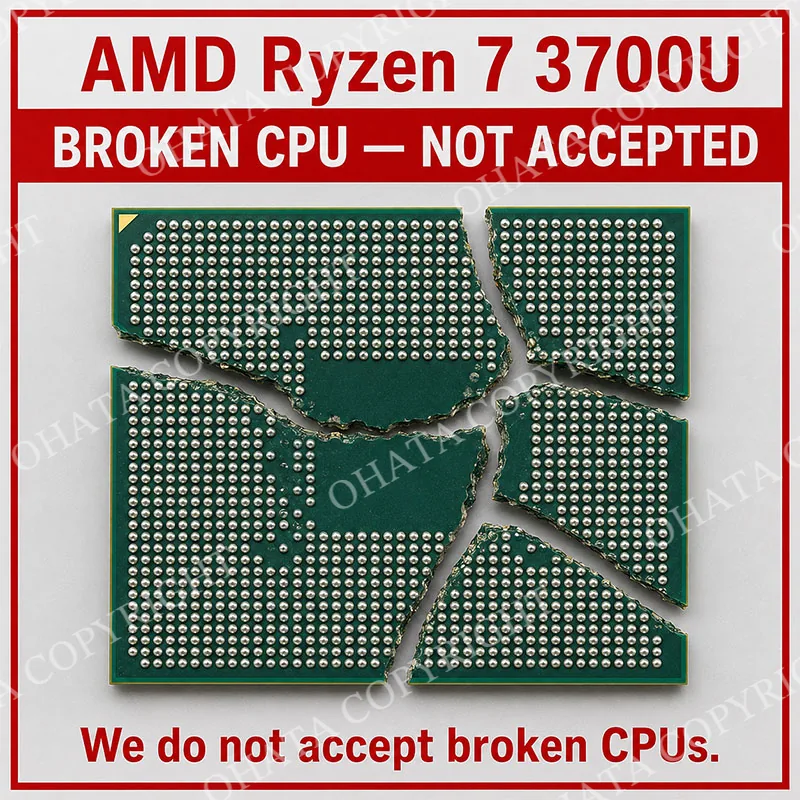
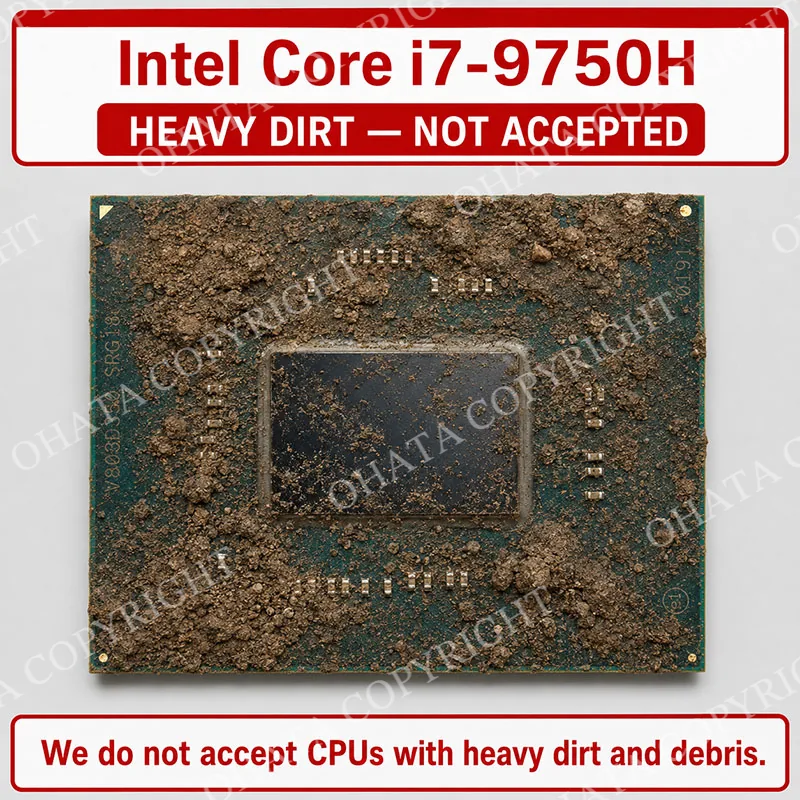
CPU B Grade material should be kept clean, dry, and separated from complete circuit boards, heatsinks, brackets, batteries, and unrelated electronic components. Avoid burning, chemical stripping, crushing, or excessive heating. Heavy contamination, corrosion, broken packages, attached heatsinks, or mixed unidentified material can cause downgrading to CPU F Grade.
Comparison, and Official Ohata Classification
CPU B Grade can be distinguished from other grades by its solder-ball connection system:
CPU SSS: ceramic CPU with a gold cap and gold-plated pins.
CPU SS: high-grade ceramic CPU without a gold cap.
CPU S: PGA CPU with projecting gold-plated pins.
CPU A: modern LGA CPU with flat gold contact pads.
CPU B: BGA CPU, GPU, chipset, or IC with solder balls underneath.
CPU C: lightweight fiber or organic-substrate CPU.
CPU D: cartridge-style Slot CPU or processor module.
CPU E: small, low-value plastic processors or ordinary IC chips.
CPU F: damaged, dirty, contaminated, mixed, or unidentified CPU scrap.
Under the official Ohata Board Scrap Classification System, qualifying BGA processors, GPUs, chipsets, and related processing ICs are classified as Ohata CPU B Grade and purchased according to the applicable CPU B Grade price.
View more Ohata's CPU recycling classifications
CPU SS Grade ( High Grade Ceramic CPU)
CPU S Grade ( Gold Pin BGA CPU)
CPU B Grade ( BGA CPU and IC chips)
CPU D Grade ( Slot CPU/ CPU Module)
- 1. What is today’s price for CPU B Grade ( BGA CPU and IC chips) Buying?
- As of Sep 19,2026, Ohata Shoji America Inc., (Seattle, WA, United States) is purchasing CPU B Grade ( BGA CPU and IC chips) Buying at 50.00 (USD/lb). We provide competitive scrap prices in Seattle, Bellevue, Renton, Tukwila, Kent, SeaTac, Tacoma, Everett, and surrounding communities.
- 2. What is Ohata CPU B Grade?
- Ohata CPU B Grade is a recycling category for Ball Grid Array (BGA) processors and related processing chips. It commonly includes laptop CPUs, GPUs, graphics processors, motherboard chipsets, and other qualifying BGA IC chips.
- 3. How can I identify a CPU B Grade chip?
- Check the underside of the component. A B Grade chip normally has a grid of solder balls or clearly visible BGA contact positions. The top may show a manufacturer name, model number, production code, or protective surface.
- 4. Are all laptop CPUs classified as CPU B Grade?
- No. Only laptop processors using qualifying BGA construction are classified as CPU B Grade. Removable PGA or LGA laptop processors must be classified according to their actual package and contact design.
- 5. Are BGA GPUs and motherboard chipsets accepted as CPU B Grade?
- Yes. Qualifying BGA GPUs, graphics chips, motherboard chipsets, and comparable processing ICs may be included in CPU B Grade when they meet the Ohata identification and condition standards.
- 6. What is the difference between CPU A Grade and CPU B Grade?
- CPU A Grade mainly includes modern removable LGA processors with flat gold contact pads. CPU B Grade components use solder balls underneath and are normally soldered directly onto a motherboard or graphics board.
- 7. How does CPU B Grade differ from CPU S Grade?
- CPU S Grade processors use a Pin Grid Array package with projecting gold-plated pins. CPU B Grade chips do not have projecting pins; they use a Ball Grid Array connection system.
- 8. What recoverable materials are found in CPU B Grade chips?
- Depending on their age and construction, BGA chips may contain copper, tin-based solder, nickel, silver, gold, or palladium. Some packages use gold bonding wires, while newer chips may use copper-based internal connections.
- 9. What is Ohata Shoji America Inc.?
- We are a premier Green-Tech E-Commerce platform specializing in sustainable electronic scrap procurement.
- 10. Who can use the Ohata.ai online platform?
- Our digital ecosystem serves both individual consumers recycling small tech loads and large corporate enterprises liquidating mass data centre infrastructure.
- 11. Do you purchase high-performance AI hardware?
- Yes, we specialize in the online procurement and data-secure decommissioning of complex AI servers, GPUs, and high-capacity storage.