
-
We purchase CPU S Grade (Gold-Pin PGA CPU) material starting from just 1 lb.
-
CPU S Grade covers qualifying processors with Pin Grid Array construction and gold-plated pins. All CPUs meeting the Ohata S Grade standard are purchased at the same grade price.
-
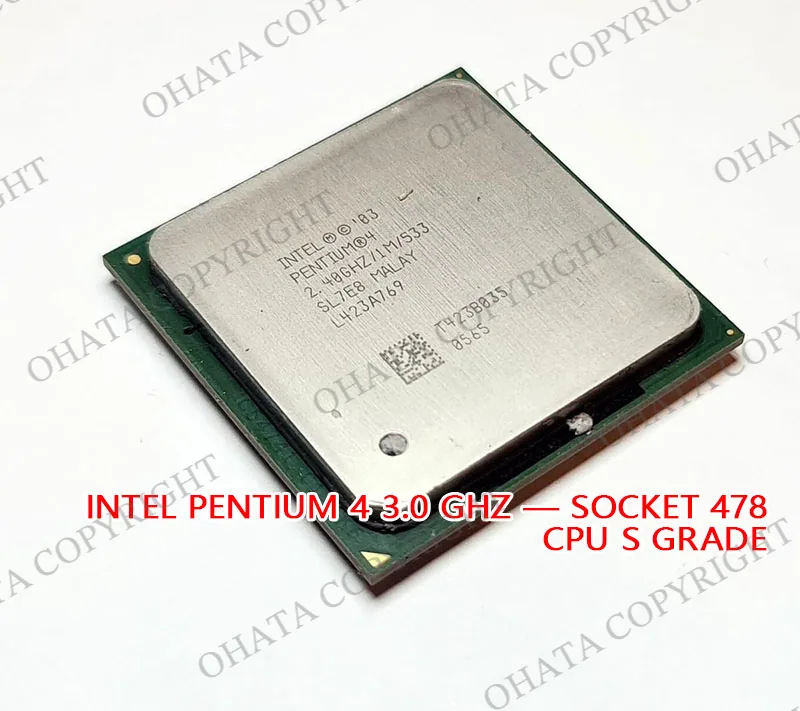
Typical examples include qualifying AMD Athlon and Opteron processors, Intel Socket 370 and Socket 478 processors, and comparable gold-pin PGA CPUs.
-
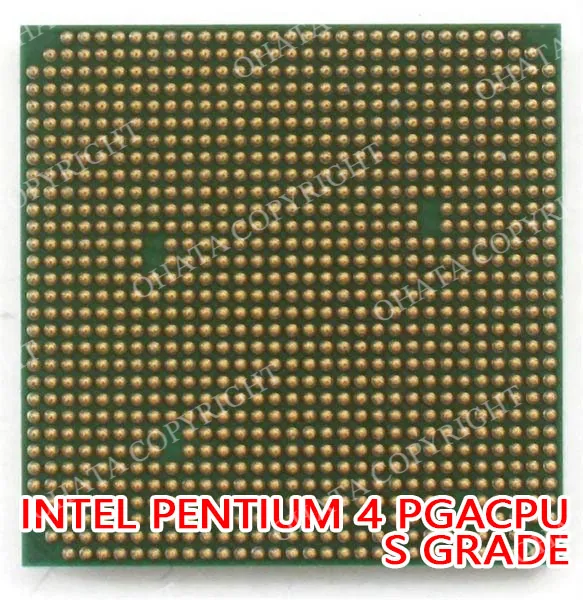
CPU S Grade processors have projecting pins on the underside. They are different from flat-contact LGA processors, BGA chips with solder-ball connections, and higher-grade ceramic CPUs.
-
Classification is based on the CPU’s package construction, contact type, completeness, condition, and recoverable-material profile, not its brand, model, performance, age, or original retail price.
-
Final classification, measured weight, and buying price are confirmed after physical inspection.
CPU S Grade (Gold-Pin PGA CPU) Buying scrap price
-
We purchase CPU S Grade (Gold-Pin PGA CPU) material starting from just 1 lb.
-
CPU S Grade covers qualifying processors with Pin Grid Array construction and gold-plated pins. All CPUs meeting the Ohata S Grade standard are purchased at the same grade price.
-
Typical examples include qualifying AMD Athlon and Opteron processors, Intel Socket 370 and Socket 478 processors, and comparable gold-pin PGA CPUs.
-
CPU S Grade processors have projecting pins on the underside. They are different from flat-contact LGA processors, BGA chips with solder-ball connections, and higher-grade ceramic CPUs.
-
Classification is based on the CPU’s package construction, contact type, completeness, condition, and recoverable-material profile, not its brand, model, performance, age, or original retail price.
-
Final classification, measured weight, and buying price are confirmed after physical inspection.
Buying Details of Conditions
Learn more about identifying and sorting S Grade circuit boards in our Wiki: Ohata CPU Scrap Classification Wiki
Learn more about: CPU Scrap Classification Guide: CPU-SSS to CPU-F
Introduction, Construction, Components, and Recycling Value
The Ohata CPU Scrap Classification System contains ten principal outcomes, ranging from CPU SSS, the highest grade, through CPU F, the lowest recognized CPU scrap grade, plus NONE for items that are not processors. The uploaded standard identifies CPU S by three central features: a PGA package, gold-plated pins, and representative processor families such as Athlon, Opteron, Socket 370, and Socket 478 processors. The system also requires the evaluator to compare material from the highest grade downward and then verify the result again from the lowest grade upward. This two-direction review reduces mistakes caused by similar package shapes or overlapping processor generations.
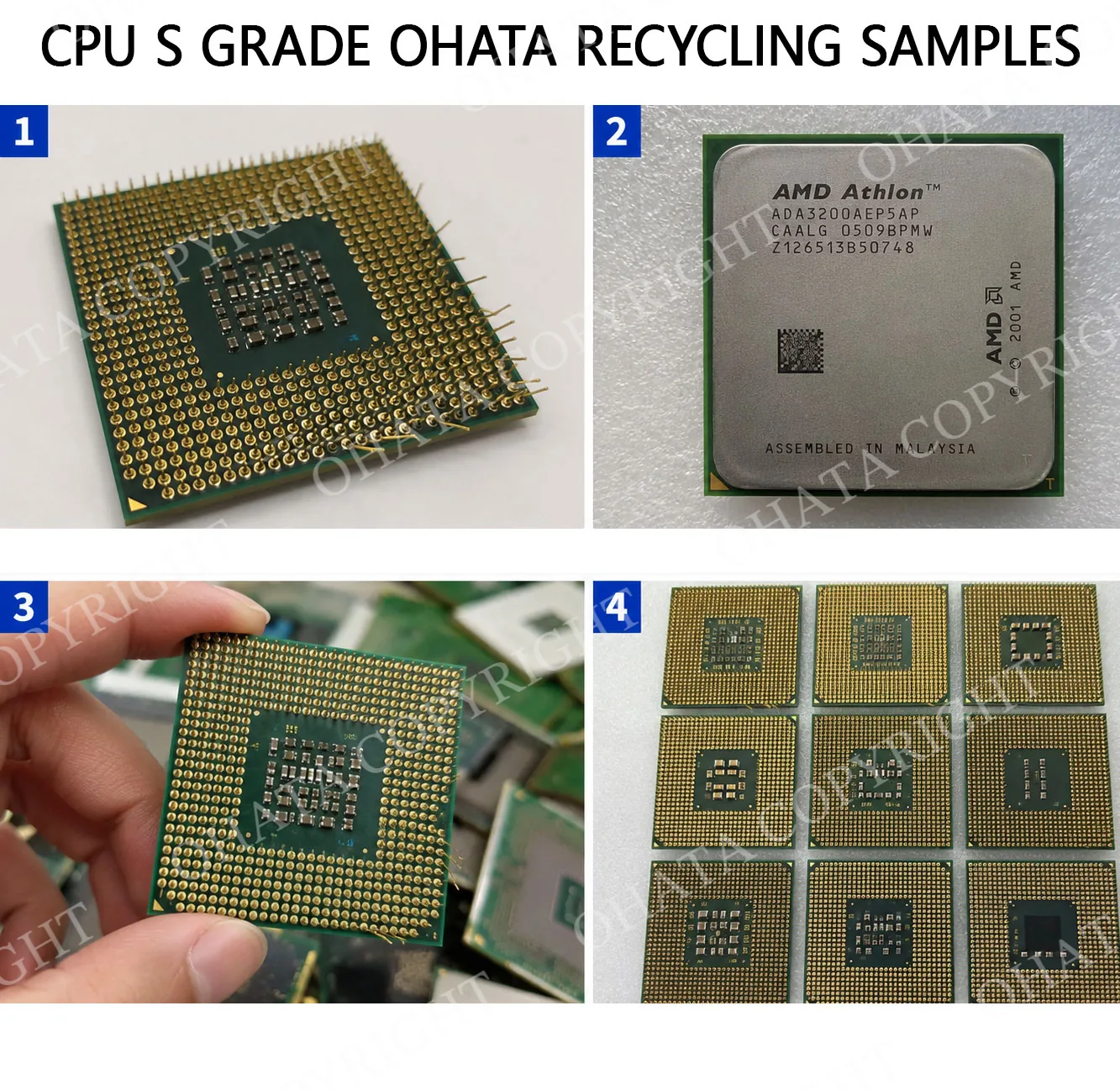
A PGA processor has a regular array of metal pins extending from the underside of the package. These pins enter matching holes in a motherboard socket. In CPU S Grade, the pins have visible gold plating or a gold-colored contact finish. The gold layer is thin, but the large number of pins creates a meaningful concentration of plated contact material compared with flat-pad or low-grade plastic devices.
Depending on the processor family, the package may use a green, brown, or other organic substrate, together with a silicon die, metal heat spreader, polymeric or ceramic elements, internal bond structures, capacitors, resistors, copper conductors, nickel barrier layers, solder, and plated external contacts.
The recycling value of CPU S Grade comes from the combined material concentration rather than from the operational performance of the processor. An obsolete or nonworking CPU may still qualify as S Grade if its package remains identifiable, its gold-pin PGA structure is present, and it is clean and substantially intact.
Conversely, a technically advanced processor does not automatically receive a higher scrap grade. Modern LGA processors may provide much greater computing performance, but their flat contact-pad construction places them in CPU A under the Ohata system. Scrap classification is determined by physical construction, recoverable material profile, processing requirements, and expected refining value—not by benchmark speed, core count, clock frequency, launch date, or original retail price.
The main recyclable fractions in CPU S Grade include:
Copper from internal traces and heat-spreading structures
Nickel from diffusion barriers and under-plating
Silver-bearing solder or joining materials in some packages
Small amounts of palladium or related metals in capacitors and internal components
The exact composition varies among manufacturers, package designs, and production periods. Therefore, the grade should be assigned according to the visible package standard rather than unsupported assumptions about the precious-metal yield of a particular processor model.
Ohata CPU S Grade Classification, Identification Guide
The fastest way to identify CPU S Grade is to inspect the underside of the processor. A qualifying item should display a dense Pin Grid Array, with many protruding pins arranged in a regular geometric pattern. The pins should have a gold-plated or clearly gold-colored contact surface.
The package must also be recognizable as a processor rather than an ordinary integrated circuit, socket adapter, connector, relay, memory module, transistor, or unrelated electronic component. If the item is not a CPU, the Ohata standard assigns it to NONE rather than forcing it into a CPU scrap grade.
Typical CPU S examples include many:
AMD Athlon processors
AMD Opteron processors
Intel Socket 370 processors
Intel Socket 478 processors
Other non-ceramic processors with gold-plated PGA pins
These examples are identification references, not an exclusive model list. A processor from another product family may still qualify as CPU S if it has the same construction. Likewise, not every processor carrying a familiar family name should be accepted automatically. The actual package, underside contact system, pin plating, and physical condition must be inspected.
Recommended Ohata Identification Sequence
First, confirm that the item is genuinely a CPU. If it is not a processor, classify it as NONE.
Second, inspect the package material and top construction to determine whether the processor qualifies for CPU SSS or CPU SS. A ceramic CPU with a gold cap belongs to SSS. A high-grade ceramic CPU without a gold cap but with gold-plated pins belongs to SS.
Third, inspect the underside. If the processor has a non-ceramic or ordinary organic package together with a PGA and gold-plated pins, it is a candidate for CPU S.
Fourth, confirm that it is not an LGA processor, BGA chip, slot cartridge, low-grade plastic IC, general lower-grade fiber processor, or damaged mixed processor.
Fifth, inspect the condition, completeness, cleanliness, and pin array before confirming the final grade.
CPU S Versus CPU SSS
CPU SSS represents the highest-value CPU category in the Ohata system. It is defined by:
Ceramic package
Gold cap
Gold-plated pins
Common association with vintage 386, 486, military, and aerospace processors
The gold cap is the easiest visual distinction. If a processor has a genuine ceramic package and a prominent gold-colored cap, it should be evaluated as CPU SSS rather than CPU S.
CPU S processors normally lack this gold cap. Their primary grading feature is the gold-pin PGA construction.
CPU S Versus CPU SS
Both CPU S and CPU SS may have gold-plated pins, so the package material becomes the decisive factor.
CPU SS is defined as a high-grade ceramic CPU without a gold cap. It often includes older ceramic Pentium, AMD, Cyrix, and similar processors.
CPU S is the general gold-pin PGA category represented by Athlon, Opteron, Socket 370, Socket 478, and comparable processors that do not meet the higher ceramic CPU definition.
Ceramic construction takes priority. When a processor clearly meets the CPU SS ceramic standard, it should not be placed in CPU S merely because it also has gold-plated pins.
CPU S Versus CPU A
The distinction between CPU S and CPU A is based mainly on the external contact system.
CPU S uses protruding processor-side pins. These pins fit into corresponding holes in a PGA or ZIF motherboard socket.
CPU A uses an Land Grid Array package. The underside has flat gold contact pads rather than long pins. Modern Intel Core i3, i5, i7, i9, Xeon, and related processors commonly fall into CPU A when they use an LGA package.
Therefore:
Gold pins protruding from the CPU indicate PGA and possible CPU S. Flat contact lands indicate LGA and CPU A.
CPU S Versus CPU B
CPU B covers BGA processors, laptop CPUs, GPUs, chipsets, and other chips using solder balls or solder-ball contact positions underneath.
A BGA device does not have the long, removable pin grid found on CPU S processors. Even when the underside displays hundreds of circular points, those points are solder-ball locations rather than PGA pins.
BGA devices are usually mounted directly onto a circuit board through soldering, while CPU S processors are generally inserted into removable sockets.
CPU S Versus CPU C
The comparison between CPU S and CPU C requires particular care because many gold-pin PGA processors also use green or brown organic substrates.
CPU C is the broader fiber CPU category. It includes lightweight processors constructed on green or brown organic substrates that do not satisfy a higher-grade definition.
When a processor clearly has a qualifying gold-plated PGA pin array, it meets the more specific CPU S standard and should be classified as S. CPU C applies when the fiber or organic construction is present but the processor does not qualify for SSS, SS, S, A, or B.
This is why the Ohata system requires evaluators to grade from highest to lowest and then verify the decision from lowest to highest. The more specific gold-pin PGA standard takes precedence over the general fiber-package description.
CPU S Versus CPU D, E, and F
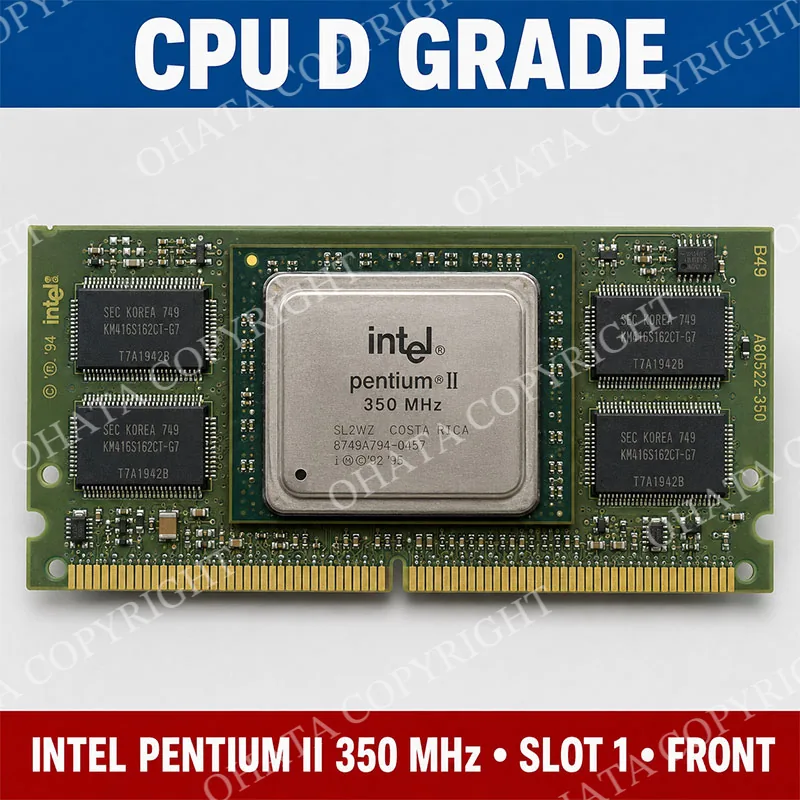
CPU D consists of cartridge-style or slot processors, including Slot 1 and Slot A modules. These units may contain a CPU die, cache chips, a small circuit board, and an edge connector inside a plastic or metal cartridge.
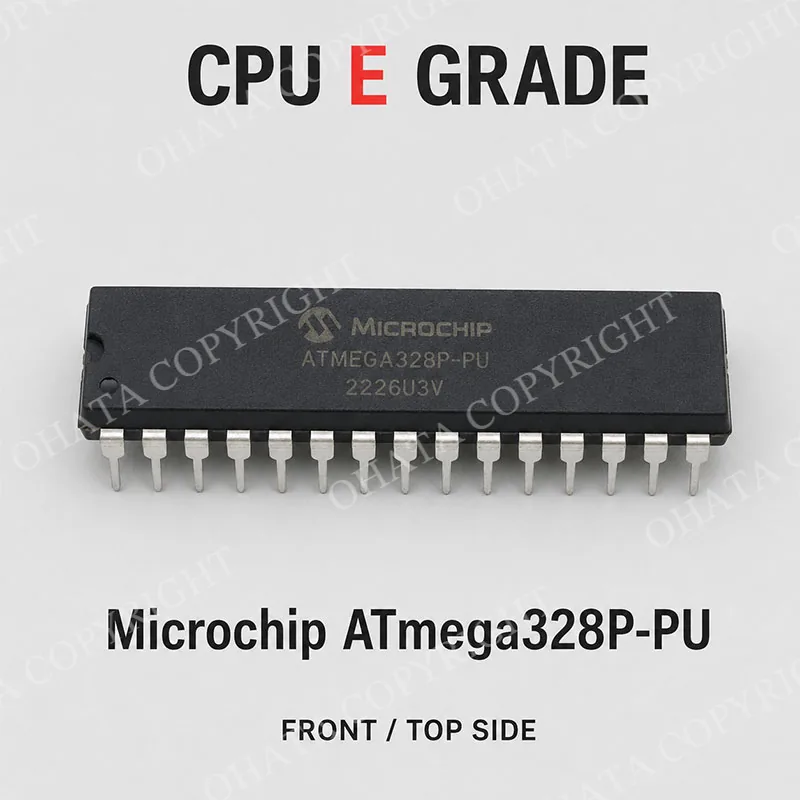
CPU E consists of low-grade plastic ICs, microcontrollers, logic chips, and small processor devices with comparatively low precious-metal content.
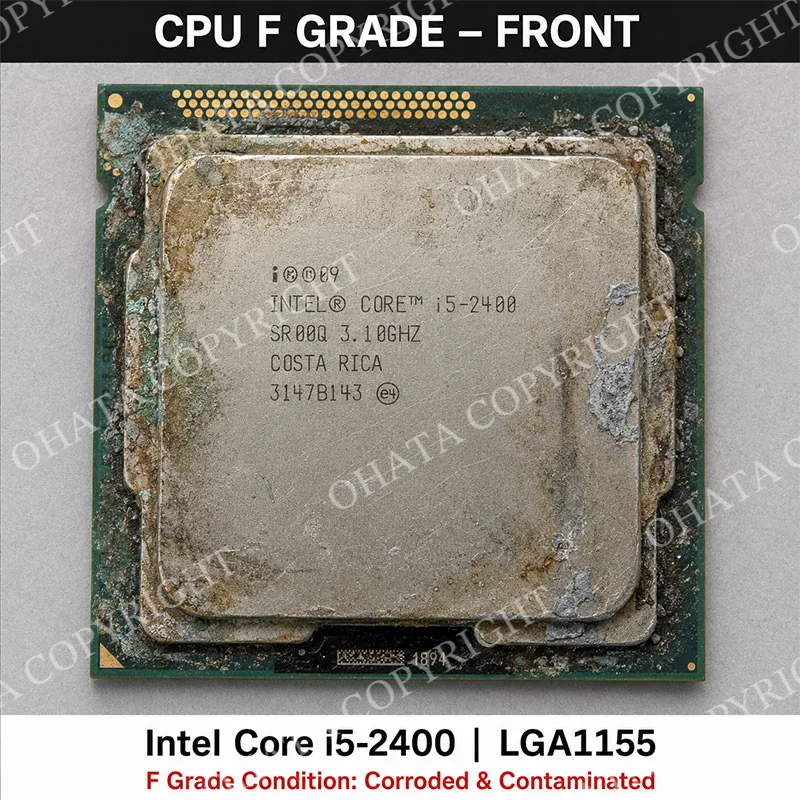
CPU F covers damaged, dirty, corroded, contaminated, mixed, unidentified, or heatsink-attached processor scrap. A CPU that originally had gold-plated PGA pins may lose CPU S status if extensive damage or contamination prevents efficient grading and processing.
Recoverable Materials, Buying Standards, and Handling
Gold is the most recognizable value-bearing material in CPU S Grade. It is primarily associated with the external PGA pin finish and may also be present in selected internal connections.
However, the visible gold color must not be interpreted as solid gold. CPU pins normally consist of a base metal, often with nickel or another barrier layer beneath a very thin gold-plated surface. The plating is applied to resist oxidation and maintain reliable electrical contact.
The recycling value of a CPU S batch depends on factors such as:
Total number of gold-plated pins
Pin density
Plating thickness
Processor package design
Batch consistency
Contamination level
Refining and processing efficiency
Copper is commonly found in the substrate traces, internal conductors, power-distribution structures, and selected heat-spreading components.
Nickel is widely used as an under-plating or diffusion-barrier material beneath gold and other surface finishes.
Silver may be present in solder alloys and internal joining materials, while small quantities of palladium may occur in multilayer ceramic capacitors or related package components.
Ohata CPU S Buying Standards
Accepted CPU S material should be clearly recognizable as gold-pin PGA processors. The processors should be clean, identifiable, and substantially complete.
The following conditions normally support CPU S acceptance:
Genuine processor package
Complete or substantially complete PGA pin array
Clearly visible gold-plated pins
No ceramic gold cap that would require SSS classification
No high-grade ceramic package requiring SS classification
No attached motherboard sections
No excessive contamination
No severe corrosion or fire damage
No large heatsink, fan, bracket, or unrelated hardware
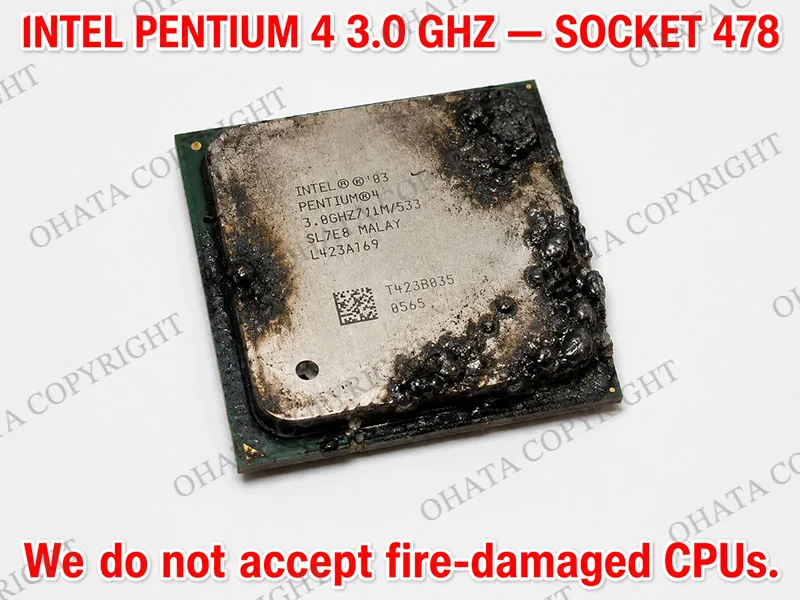
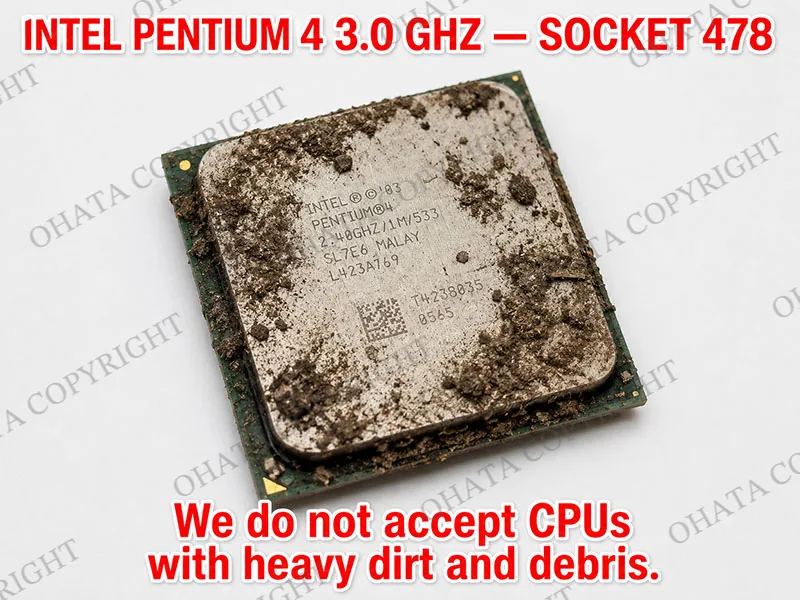
Normal cosmetic wear or light handling marks do not necessarily eliminate recycling value. However, processors with extensive pin loss, broken substrates, severe cracking, burning, heavy oxidation, mud, oil, chemical residue, or unidentified contamination should not be represented as clean CPU S material.
Damaged Pins and Downgrading
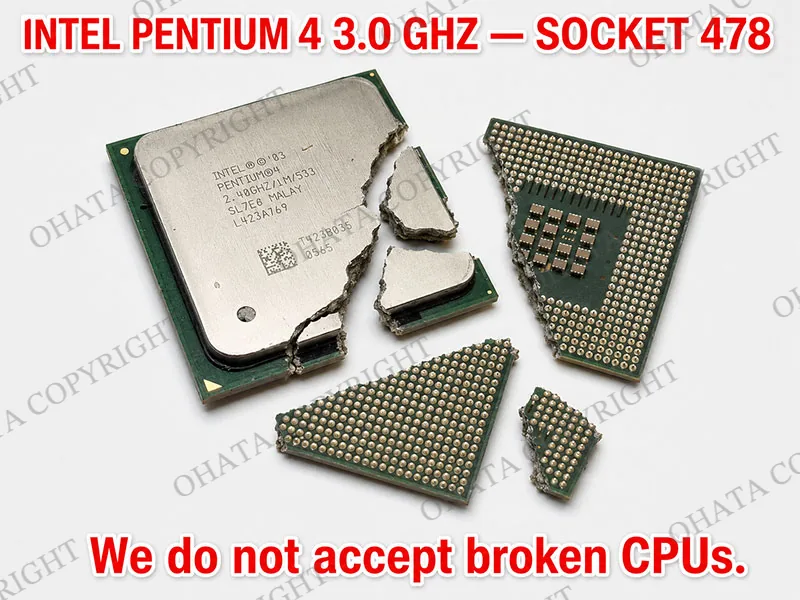
Pin condition is especially important for this grade. CPU S is identified partly by its gold-plated PGA pin array. When many pins are missing, crushed, corroded, or contaminated, the defining recoverable structure has been reduced.
Slightly bent pins may still be physically identifiable, but severe bending, widespread distortion, broken pin rows, or extensive pin loss can move the material into CPU F under the uploaded standard’s damaged-processor category.
The processor should never be repaired, polished, ground, or chemically treated merely to improve its appearance before sale. Destructive preparation may remove plating, introduce contamination, damage the substrate, and reduce the final buying value.
Separation of Different CPU Grades
CPU S should be stored separately from:
CPU SSS gold-cap ceramic processors
CPU SS ceramic gold-pin processors
CPU A LGA processors
CPU B BGA chips
CPU C fiber processors
CPU D slot modules
CPU E plastic ICs
CPU F damaged or contaminated processors
NONE items that are not CPUs
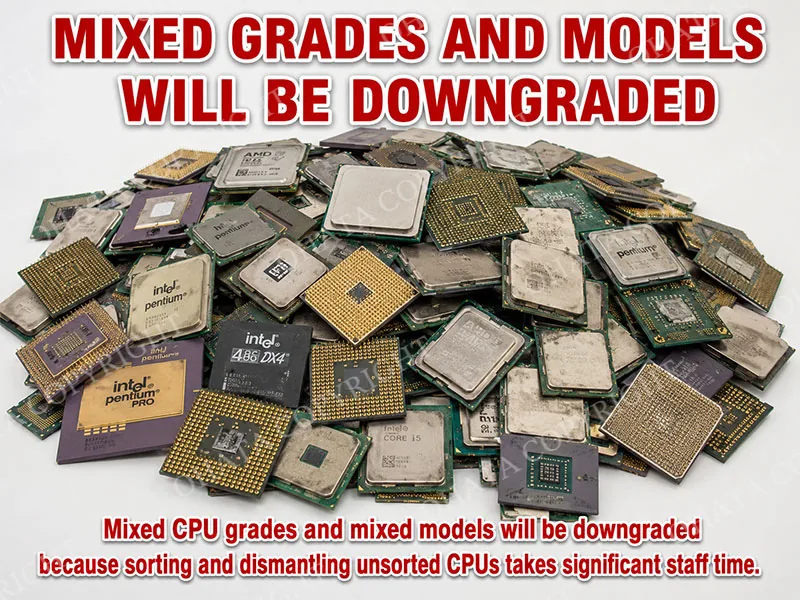
Combining these categories increases inspection and sorting time and may reduce the settlement value of the entire load. Mixed or unknown processors may be handled as CPU F until they are properly separated and verified.
Sellers should use individually labeled containers whenever possible. Transparent bags, rigid trays, shallow cartons, antistatic boxes, or divided storage bins allow faster visual inspection.
Safe Handling and Packaging
CPU S processors should not be compressed into overloaded sacks because pressure can bend and break the pins. Rigid trays, shallow boxes, padded containers, or antistatic packaging provide better protection.
Heatsinks and fans should be removed carefully before delivery, but the processor package must not be cut, cracked, heated, burned, or ground during removal.
Loose dust may be removed with a dry brush or gentle air cleaning. Aggressive chemical washing should be avoided because liquids may remain under heat spreaders, corrode pins, introduce hazardous residue, or make the material more difficult to process.
Comparison, and Official Ohata Classification
Within the Ohata hierarchy, CPU S sits below the two premium ceramic categories and above the modern LGA, BGA, general fiber, slot-module, low-grade IC, and damaged mixed categories.
The principal comparison can be summarized as follows:
Ohata Grade
Principal Identification
CPU SSS
Ceramic CPU with gold cap and gold-plated pins
CPU SS
Ceramic CPU without gold cap, with gold-plated pins
CPU S
PGA processor with gold-plated pins
CPU A
LGA processor with flat gold contact pads
CPU B
BGA CPU, GPU, chipset, or chip with solder balls
CPU C
Lightweight green or brown fiber CPU not qualifying higher
CPU D
Cartridge or slot-style CPU module
CPU E
Small low-grade plastic IC or processor chip
CPU F
Damaged, dirty, corroded, mixed, or unknown CPU scrap
NONE
Item is not a CPU
The official classification principle is:
Construction first, physical condition second, and model name third.
Model numbers are useful for confirming processor families, but they must not replace physical inspection. A rare CPU is not automatically SSS or SS, and an item labeled Athlon, Opteron, Socket 370, or Socket 478 is not automatically CPU S if its actual package, contact system, or condition does not meet the standard.
A clean, identifiable, and substantially intact processor should be classified as Ohata CPU S Grade when it meets all of the following conditions:
It is a genuine CPU.
It uses a Pin Grid Array package.
It has gold-plated processor-side pins.
It does not have the ceramic gold-cap construction required for CPU SSS.
It does not have the high-grade ceramic construction required for CPU SS.
It is not an LGA, BGA, slot cartridge, ordinary low-grade plastic IC, or non-CPU component.
It is not severely damaged, corroded, contaminated, mixed, or otherwise subject to CPU F classification.
All CPUs meeting these same structural and condition requirements should be purchased under the CPU S Grade price. The price category does not depend on whether the processor is AMD or Intel, whether it was designed for a desktop or server, or whether it is a specific Athlon, Opteron, Socket 370, Socket 478, or comparable model.
The final classification should always be checked in both directions. The evaluator should first compare the processor from CPU SSS downward to identify the highest qualifying grade. The evaluator should then review from CPU F upward to confirm that damage, contamination, package type, or another lower-grade feature has not been overlooked.
Under the official Ohata classification, the correct concluding definition is:
CPU S Grade consists of clean, identifiable, substantially intact PGA processors with gold-plated pins that do not meet the higher CPU SSS or CPU SS ceramic-package standards. All qualifying CPUs are valued according to the CPU S Grade buying category, regardless of their individual model, brand, original computing performance, or former market price.
View more Ohata's CPU recycling classifications
CPU SS Grade ( High Grade Ceramic CPU)
CPU S Grade ( Gold Pin BGA CPU)
CPU B Grade ( BGA CPU and IC chips)
CPU D Grade ( Slot CPU/ CPU Module)
- 1. What is today’s price for CPU S Grade (Gold-Pin PGA CPU) Buying?
- As of Sep 19,2026, Ohata Shoji America Inc., (Seattle, WA, United States) is purchasing CPU S Grade (Gold-Pin PGA CPU) Buying at 100.00 (USD/lb). We provide competitive scrap prices in Seattle, Bellevue, Renton, Tukwila, Kent, SeaTac, Tacoma, Everett, and surrounding communities.
- 2. What is an Ohata CPU S Grade processor?
- An Ohata CPU S Grade processor is a genuine CPU that uses a Pin Grid Array package and has gold-plated pins on its underside. Typical examples include certain AMD Athlon and Opteron processors, as well as Intel Socket 370 and Socket 478 processors. The exact model is not the primary grading factor. Any clean, identifiable, and substantially complete processor that meets the CPU S Grade construction standard is purchased according to the CPU S Grade price.
- 3. How can I quickly identify a CPU S Grade processor?
- Turn the processor over and inspect its underside. A CPU S Grade processor normally has hundreds of protruding pins arranged in a regular grid pattern. These pins should have a clearly gold-colored or gold-plated contact surface. The processor should not have a ceramic body with a gold cap, flat LGA contact pads, BGA solder balls, or a cartridge-style package.
- 4. What is the difference between CPU S Grade and CPU SS Grade?
- The main difference is the package material. CPU SS Grade processors use a high-grade ceramic package without a gold cap and normally have gold-plated pins. CPU S Grade processors also have gold-plated PGA pins, but generally use an organic, fiber, or non-ceramic package. When ceramic construction is clearly present, the processor should be evaluated for CPU SS before it is considered CPU S.
- 5. How is CPU S Grade different from modern CPU A Grade processors?
- CPU S Grade processors have long pins attached directly to the processor package. CPU A Grade processors use an LGA package with flat gold contact pads instead of protruding pins. Many modern Intel Core i3, i5, i7, i9, and Xeon processors are classified as CPU A because they use LGA construction. Processor age or computing performance does not determine the recycling grade.
- 6. Why are CPU S Grade processors valuable for recycling?
- Their recycling value comes mainly from the large number of gold-plated pins, together with copper, nickel, silver-bearing materials, and possible small quantities of palladium found in internal components. The pins are not made from solid gold; they normally contain a base metal, a nickel barrier layer, and a thin gold-plated contact finish. A large, clean, consistently sorted batch is generally more efficient to process than mixed CPU scrap.
- 7. Should heatsinks, fans, and brackets be removed before selling CPU S Grade material?
- Yes. Heatsinks, fans, brackets, motherboard pieces, and other attached hardware should normally be removed before delivery. These items add unnecessary weight and can interfere with inspection and processing. Removal must be performed carefully without cracking the CPU package, breaking the pins, applying excessive heat, or introducing oil and chemical contamination.
- 8. Does every Athlon, Opteron, Socket 370, or Socket 478 CPU qualify as CPU S Grade?
- Not automatically. These processor families are common examples, but the actual item must still be inspected. The processor must be genuine, use a PGA package, have gold-plated pins, and remain clean and substantially intact. It must also not meet the higher CPU SSS or CPU SS ceramic standards. Under the Ohata system, construction and condition take priority over brand, model name, processing speed, age, and original selling price.
- 9. Who can use the Ohata.ai online platform?
- Our digital ecosystem serves both individual consumers recycling small tech loads and large corporate enterprises liquidating mass data centre infrastructure.
- 10. Can I sell loose electronic components and scrap parts?
- Yes, we actively buy printed circuit boards (PCBs), hard drives, networking gear, and assorted electronic scrap via our digital storefront.
- 11. What happens to the raw materials extracted from electronic scrap?
- Recovered metals and non-ferrous elements are distributed into certified global smelting networks, reducing the environmental need for new geological mining.
Related Items
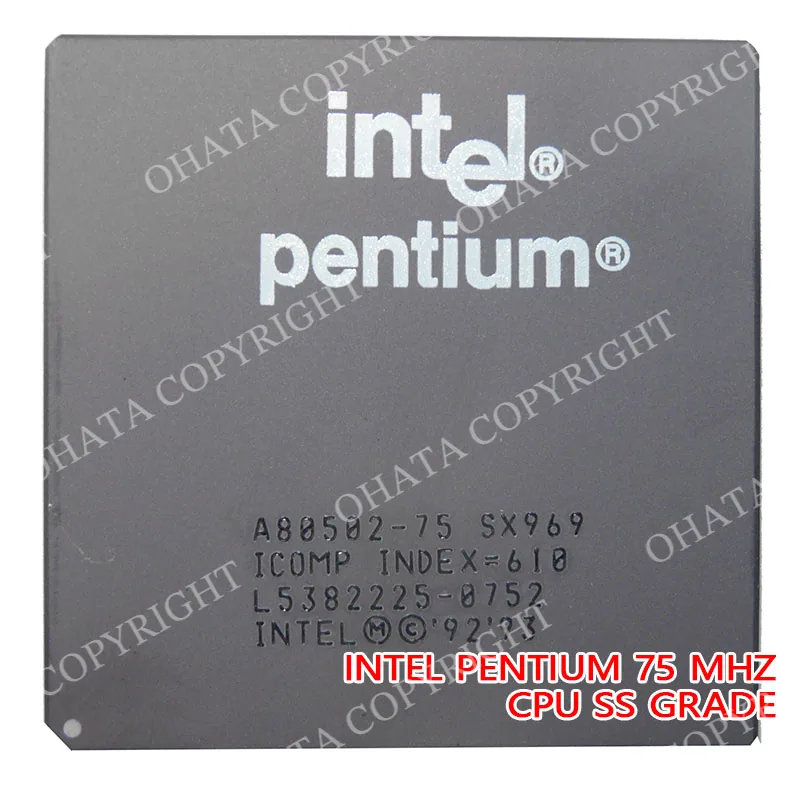
CPU SS Grade ( High Grade Ceramic CPU) Buying
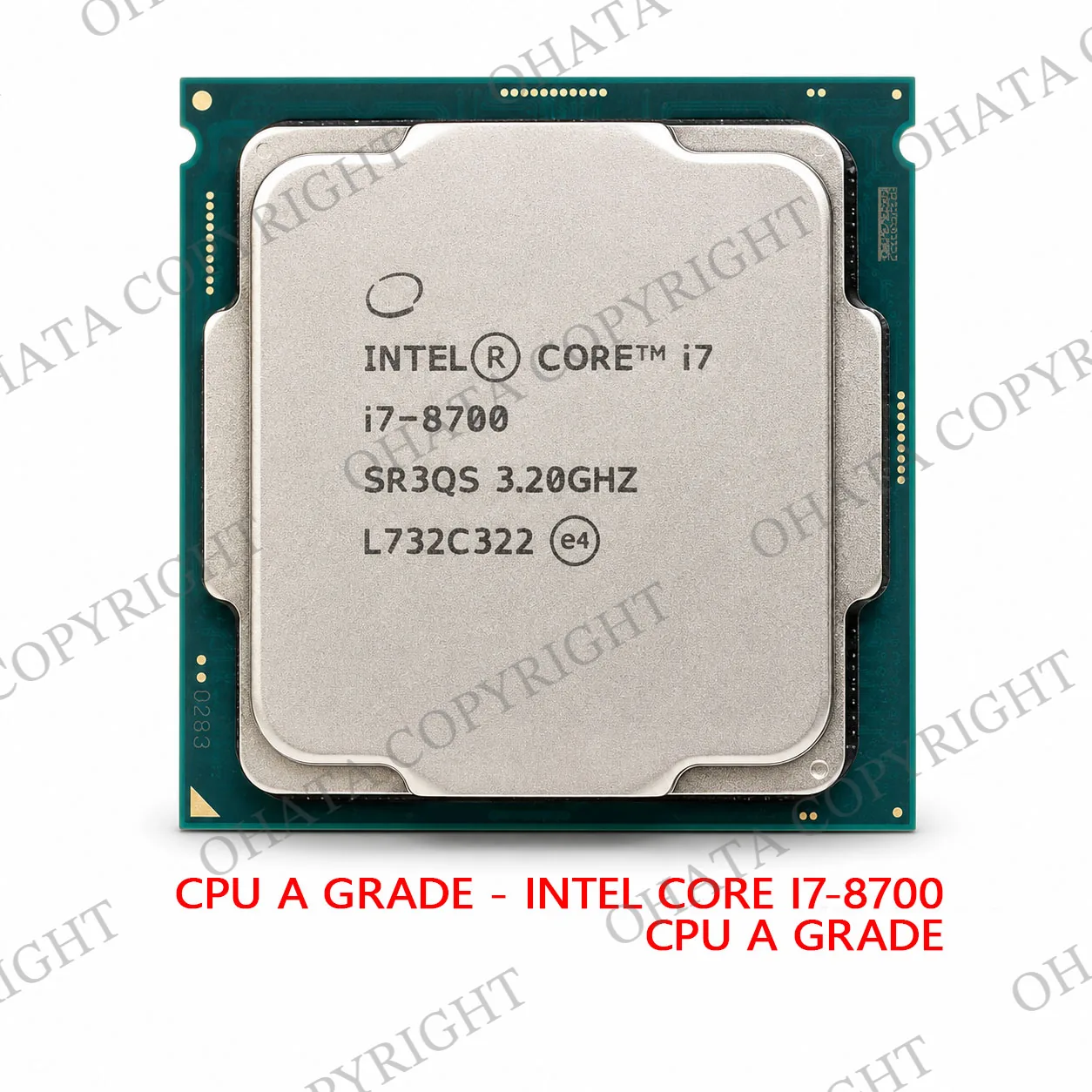
CPU A Grade ( Modern LGA CPU) Buying
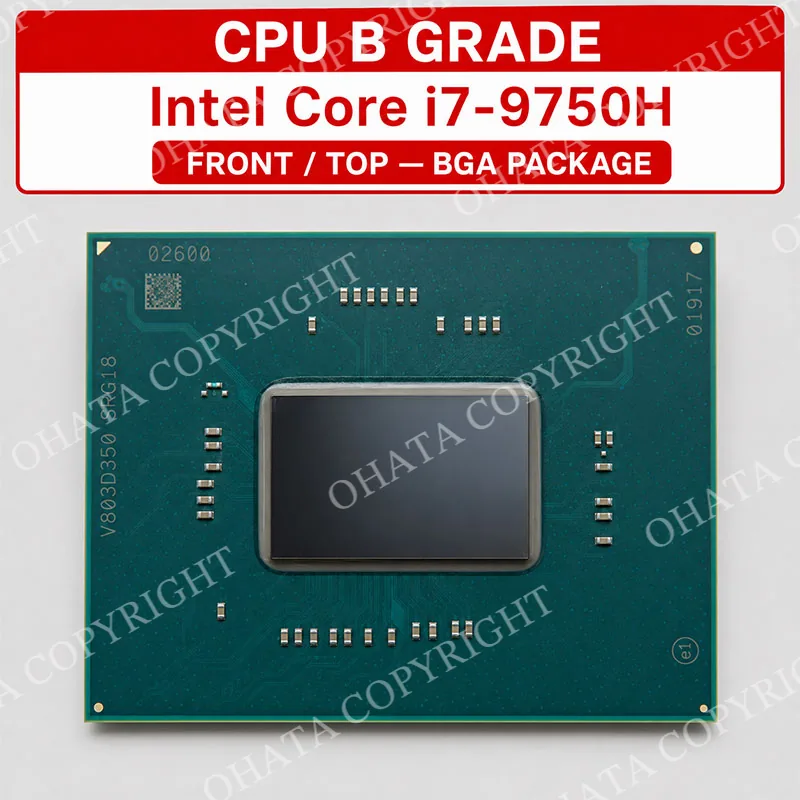
CPU B Grade ( BGA CPU and IC chips) Buying
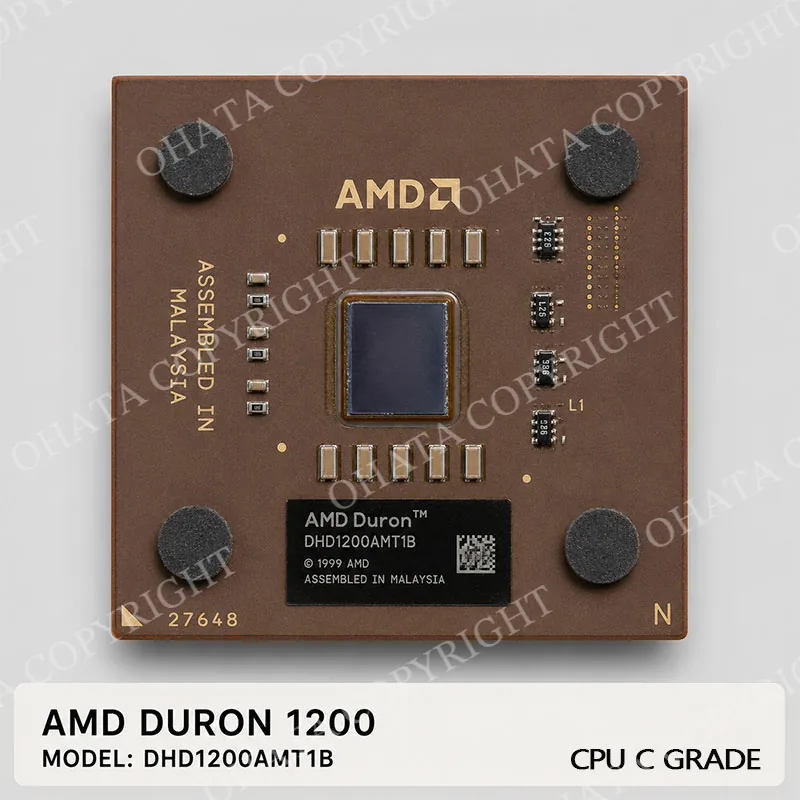
CPU C Grade ( Fiber CPU) Buying
CPU D Grade ( Slot CPU/ CPU Module) buying
CPU E Grade ( Plastic IC and Processor Chips) Buying