

A+ Grade Board Scrap Classification Wiki | Ohata Board Guide
Introduction, Classification Philosophy, Industrial Electronics, Enterprise Computing, Technical Characteristics, and Precious Metal Content
Introduction to A+ Grade Board Scrap
A+ Grade is Ohata's category for advanced industrial and professional circuit boards below S Grade and above A Grade. Typical candidates include Apple logic boards, SATA HDD controller boards, PLC CPU modules, CNC and robotics controllers, medical control boards, and selected server boards with two large purple ceramic CPUs. A product name, brand or socket count does not qualify a board by itself. Carrier-grade telecom, optical transport and network-backbone boards should first be checked against SS Grade. Legacy server boards with three or more large purple ceramic CPUs should be checked against S Grade, while boards with large plastic PGA sockets may fall into A or B Grade.
The A+ Grade within the Ohata Board Scrap Classification System represents a premium category of electronic circuit boards widely used in HDD , industrial automation, enterprise computing, medical technology, robotics, professional electronics, and high-performance commercial equipment. While SS Grade focuses primarily on telecommunications infrastructure and S Grade emphasizes premium legacy computer hardware, A+ Grade encompasses a diverse range of advanced electronic systems that combine sophisticated engineering with strong recoverable material value.
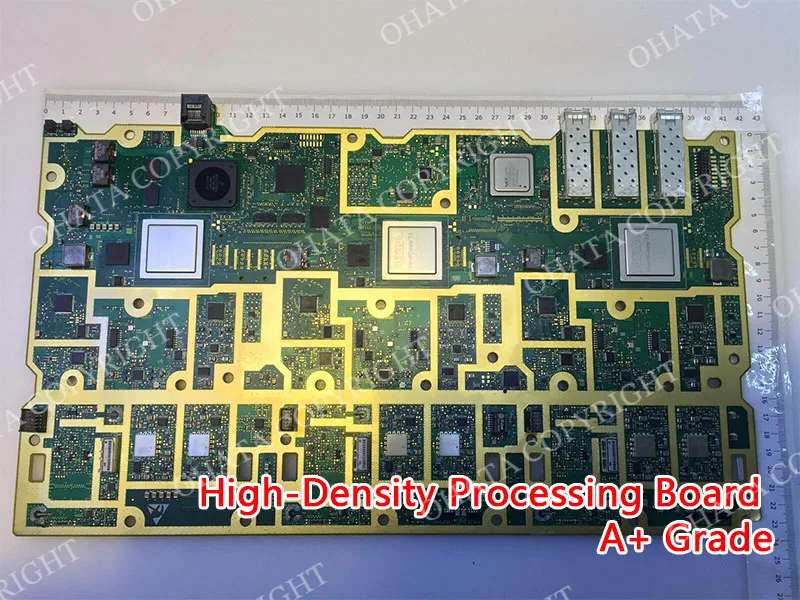
A+ Grade boards are typically designed for demanding applications where long-term reliability, operational stability, and high processing capability are essential. They are commonly found in HDD SATA Board , programmable logic controllers (PLCs), CNC machine controllers, robotics systems, industrial communication devices, medical diagnostic equipment, Apple logic boards, enterprise servers, process automation systems, and other professional electronic products. These applications require durable PCB construction, premium electronic components, high integrated circuit density, and reliable electrical performance, all of which contribute to the boards' recycling value.
Within the Ohata Board Scrap Classification System, A+ Grade boards are identified using objective technical characteristics rather than manufacturer names or market prices. Typical evaluation criteria include integrated circuit density, CPU socket configuration, multilayer PCB construction, connector quality, semiconductor coverage, industrial application, and overall recoverable precious metal content. This classification approach allows buyers, recyclers, and refiners to classify advanced electronic boards consistently while supporting transparent pricing and efficient material recovery.
Although A+ Grade boards generally contain fewer specialized networking processors than SS Grade equipment and fewer ceramic processor assemblies than many S Grade boards, they remain among the most valuable categories of commercial electronic scrap because of their advanced engineering and premium materials.
Why A+ Grade Exists
Modern electronic equipment covers an enormous range of industries, each with unique engineering requirements. Industrial automation systems, medical devices, robotics controllers, enterprise computing platforms, and process control equipment require significantly higher manufacturing standards than ordinary consumer electronics. These systems often operate continuously for many years under demanding environmental conditions, requiring superior electrical reliability and mechanical durability.
The A+ Grade category was created to recognize this class of advanced professional electronics. Without a dedicated classification, HDD SATA Board, industrial controllers, Apple logic boards, medical systems, and enterprise server boards might be grouped with standard desktop motherboards despite their substantially different construction and material value.
By separating these products into A+ Grade, the Ohata Classification System improves grading accuracy while providing buyers with a consistent method for evaluating premium industrial electronics. This distinction also benefits suppliers by ensuring that specialized boards receive classifications that better reflect their engineering complexity and recoverable materials.
The Ohata Classification Philosophy
The Ohata Board Scrap Classification System is built upon objective evaluation rather than subjective opinion. A board is classified according to measurable physical characteristics that remain relatively constant throughout its life, regardless of changing precious metal prices or fluctuations in the electronic scrap market.
For A+ Grade boards, classification considers multiple technical factors simultaneously. These include the density of integrated circuits, the quality of semiconductor packages, the presence of premium connectors, multilayer PCB construction, CPU socket size where applicable, industrial communication interfaces, board architecture, and intended application. No single feature determines the grade. Instead, the overall engineering quality of the board is evaluated to produce a consistent classification.
The philosophy also recognizes that professional industrial electronics often contain components designed for reliability rather than consumer affordability. Industrial manufacturers typically select higher-quality capacitors, connectors, voltage regulation systems, and communication devices because equipment failure can interrupt production lines, medical procedures, or critical infrastructure. These design choices contribute both to operational performance and to long-term recycling value.
Industrial Electronics
Industrial automation represents one of the largest sources of A+ Grade circuit boards.
Factories around the world depend upon electronic control systems to manage manufacturing processes, robotics, conveyor systems, packaging equipment, food processing lines, automotive assembly plants, chemical production facilities, and countless other industrial operations.
Typical industrial systems include:
Programmable Logic Controllers (PLC)
Human Machine Interface (HMI) controllers
Servo drive controllers
Motion control systems
Process automation controllers
Industrial Ethernet modules
Remote I/O controllers
Safety control systems
Variable frequency drive controllers
Industrial communication gateways
Unlike consumer electronics, these systems are expected to operate continuously in environments involving vibration, dust, electrical noise, and temperature fluctuations. Consequently, manufacturers employ premium PCB materials, industrial-grade electronic components, and advanced circuit designs that contribute to higher classification within the Ohata system.
Enterprise Computing
Enterprise computing equipment also contributes significantly to the A+ Grade category.
Large organizations rely upon high-performance computing systems for database management, virtualization, cloud services, engineering applications, scientific computing, and business operations. These systems commonly incorporate premium server motherboards, storage controllers, communication interfaces, and power management boards.
Enterprise computing hardware typically includes:
Multi-socket server motherboards
Storage controller boards
RAID controllers
Blade server modules
Enterprise workstation boards
Server management controllers
High-performance accelerator boards
Compared with standard desktop computers, enterprise systems contain more integrated circuits, larger power distribution networks, additional communication interfaces, and higher-quality electronic components. These features increase both technical complexity and recoverable material value.
Technical Characteristics of A+ Grade Boards
Several engineering characteristics consistently distinguish A+ Grade boards from lower-grade electronics.
High Integrated Circuit Density
A+ Grade boards generally exhibit extensive semiconductor coverage across much of the PCB surface.
Common devices include:
Microprocessors
FPGA devices
DSP processors
Communication controllers
Flash memory
DRAM
Analog interface ICs
Industrial network controllers
Power management ICs
High integrated circuit density reflects the sophisticated functionality required by industrial automation and enterprise computing systems.
Premium PCB Construction
Most A+ Grade boards utilize multilayer PCB construction to improve electrical performance and reliability.
Common features include:
Multiple copper layers
Thick power planes
Controlled impedance routing
High-temperature laminate materials
Reinforced fiberglass substrates
Premium solder masks
Precision surface finishes
These construction methods increase manufacturing cost but provide excellent durability under demanding operating conditions.
Large CPU Sockets and Enterprise Components
Many A+ Grade boards incorporate large processor sockets or enterprise-class semiconductor packages designed for professional applications.
Examples include:
Industrial CPU modules
Enterprise server processors
Large BGA processors
FPGA packages
High-performance chipsets
Communication ASICs
These components are often accompanied by extensive voltage regulation circuitry, premium capacitors, and numerous support controllers, all of which contribute to higher board complexity.
Precious Metals Found in A+ Grade Boards
A+ Grade boards contain a variety of recoverable metals that contribute to their recycling value.
Gold
Gold is commonly found on:
Edge connectors
Industrial communication connectors
Processor contacts
Memory interfaces
Gold bond wires inside integrated circuits
Premium expansion connectors
Copper
Copper represents the largest recoverable material by weight. Industrial PCBs frequently contain thick copper traces and multilayer power planes designed to support high electrical loads.
Silver
Silver may be present within electrical contacts, specialized connectors, and certain solder alloys used in professional electronic assemblies.
Palladium
Some legacy component types may contain palladium; composition varies by era and manufacturer.
Why Industrial Electronics Retain High Recycling Value
Industrial electronics remain valuable long after they become obsolete because their construction emphasizes quality rather than minimum manufacturing cost. Even when equipment is no longer operational or supported by the manufacturer, its circuit boards continue to contain high-quality electronic components, premium PCB materials, thick copper layers, and recoverable precious metals.
Unlike consumer electronics that are replaced frequently, industrial systems are often designed for service lives exceeding ten or twenty years. This results in durable construction, dense semiconductor layouts, and premium connectors that remain attractive for recycling.
For these reasons, A+ Grade boards occupy an important position within the Ohata Board Scrap Classification System. They represent advanced professional electronics that combine sophisticated engineering with substantial recoverable material value, making them an essential category for industrial electronic recycling and precious metal recovery.
Industrial Automation, Apple Logic Boards, PLC Systems, CNC Controllers, Robotics, Medical Equipment, Enterprise Servers, Major Manufacturers, and Identification Methods
Apple Logic Board Classification
Apple logic boards are among the most recognizable products within the A+ Grade category. Unlike conventional PC motherboards, Apple logic boards are designed specifically for macOS devices and emphasize compact layouts, advanced power management, and high component integration. They are commonly found in MacBook, MacBook Pro, MacBook Air, iMac, Mac Studio, and certain Mac Pro systems.
Apple boards typically feature high-density Ball Grid Array (BGA) processors, flash memory, dedicated power management integrated circuits (PMICs), Thunderbolt controllers, wireless communication modules, and finely routed multilayer PCBs. Their compact design results in exceptional integrated circuit density despite relatively small board dimensions.
The Ohata Board Scrap Classification System generally classifies Apple logic boards as A+ Grade because of their premium PCB construction, dense semiconductor coverage, gold-plated connectors, and high-quality manufacturing standards. Although they contain fewer expansion interfaces than enterprise server boards, their sophisticated architecture and recoverable precious metals make them one of the most valuable categories of notebook computer scrap.
PLC CPU Modules
Programmable Logic Controller (PLC) CPU modules form the core of many industrial automation systems. These boards execute industrial control programs, monitor sensors, communicate with field devices, and coordinate manufacturing processes.
Typical PLC CPU modules contain:
Industrial microprocessors
Flash memory
RAM
Real-time communication controllers
Input/output management circuits
Ethernet interfaces
Serial communication controllers
Power regulation systems
Because PLCs are expected to operate continuously for many years, manufacturers use premium electronic components and multilayer PCB construction. Their reliability requirements make them excellent examples of A+ Grade boards.
CNC Machine Controllers
Computer Numerical Control (CNC) systems control precision manufacturing equipment used in machining, milling, turning, laser cutting, and automated production.
CNC controller boards typically contain:
Motion control processors
Servo communication interfaces
Position feedback controllers
Encoder interfaces
Industrial communication ASICs
High-speed memory
FPGA devices
Precision analog circuitry
These boards are engineered for exceptional accuracy and long-term reliability. Their sophisticated electronic design and premium semiconductor content contribute to their classification as A+ Grade within the Ohata system.
Robotics Control Boards
Modern industrial robots rely on advanced electronic control boards to coordinate movement, sensing, machine vision, and communication with manufacturing equipment.
Robotics controller boards frequently include:
Multi-core processors
Motion control DSPs
FPGA devices
Safety monitoring circuits
Ethernet communication controllers
Servo drive interfaces
Sensor processing electronics
Power management modules
The combination of high integrated circuit density and industrial-grade components makes robotics boards one of the strongest examples of A+ Grade industrial electronics.
Medical Equipment Controllers
Medical electronic systems demand extremely high reliability because they support diagnostic, monitoring, imaging, and treatment procedures.
Typical A+ Grade medical boards are found in:
MRI systems
CT scanners
Ultrasound equipment
X-ray machines
Patient monitors
Laboratory analyzers
Surgical navigation systems
Clinical diagnostic instruments
Medical control boards commonly feature precision analog circuitry, digital signal processors, high-density memory, premium connectors, and multilayer PCB construction. Their sophisticated design reflects the strict reliability standards required by healthcare environments.
Industrial Communication Boards
Industrial communication boards provide reliable data exchange between programmable controllers, robots, sensors, drives, and manufacturing equipment.
Common communication standards include:
Industrial Ethernet
PROFINET
EtherNet/IP
EtherCAT
Modbus
DeviceNet
CC-Link
PROFIBUS
CANopen
Boards supporting these industrial protocols generally contain specialized communication processors, isolated interfaces, network controllers, and robust PCB construction designed for electrically noisy industrial environments.
Large Multi-Socket Server Motherboards
Enterprise server motherboards containing Selected server boards with two large purple ceramic CPUs may qualify; socket count alone is insufficient for A+ Grade because of their advanced engineering and premium component quality.
Typical features include:
Dual or quad CPU sockets
Multiple memory channels
Large voltage regulation systems
RAID controllers
Enterprise Ethernet controllers
Management processors
PCI Express expansion slots
High-capacity chipset architecture
Although dedicated telecommunications hardware generally belongs to SS Grade, enterprise server boards remain firmly within the A+ category due to their sophisticated construction and high recoverable material value.
Major Industrial Manufacturers
Several global manufacturers consistently produce equipment commonly classified as A+ Grade.
Siemens
Siemens manufactures PLCs, industrial computers, CNC controllers, process automation systems, and industrial communication equipment recognized for their robust construction and premium electronic components.
Allen-Bradley
Allen-Bradley, a Rockwell Automation brand, produces programmable controllers, industrial I/O systems, safety controllers, and automation hardware widely used in manufacturing.
Mitsubishi Electric
Mitsubishi Electric develops industrial PLCs, servo systems, robotics controllers, CNC equipment, and factory automation products that commonly contain dense semiconductor layouts and high-quality PCB construction.
Fanuc
Fanuc specializes in CNC controllers, industrial robots, servo systems, and factory automation equipment. Fanuc boards often contain sophisticated motion control electronics and premium communication processors.
Honeywell
Honeywell manufactures industrial process control systems, building automation equipment, aerospace electronics, and distributed control systems that frequently qualify as A+ Grade.
ABB
ABB develops industrial robotics, electrical automation systems, motion control equipment, and process management platforms incorporating advanced electronic assemblies and premium components.
Rockwell Automation
Rockwell Automation produces industrial controllers, communication modules, motion systems, and manufacturing automation products that consistently meet A+ Grade technical characteristics.
Omron
Omron manufactures PLCs, machine vision systems, industrial sensors, robotics controllers, and factory automation equipment featuring compact, high-density PCB designs.
Schneider Electric
Schneider Electric develops industrial automation platforms, energy management systems, programmable controllers, and communication hardware designed for commercial and industrial infrastructure.
Yaskawa
Yaskawa specializes in servo drives, motion controllers, robotics systems, and industrial automation equipment. Their controller boards commonly feature advanced digital signal processors and industrial communication interfaces.
Identification Methods
Correct identification of A+ Grade boards requires evaluating multiple technical characteristics rather than relying solely on manufacturer or product labels.
Component Density Analysis
High integrated circuit density is one of the strongest indicators of A+ Grade classification.
Buyers evaluate:
Number of integrated circuits
Large BGA processors
FPGA devices
Memory packages
Power management ICs
Communication controllers
Semiconductor coverage across both PCB surfaces
Boards with dense electronic layouts generally indicate higher engineering complexity and greater recoverable value.
PCB Construction
A+ Grade boards commonly exhibit premium PCB construction, including:
Multilayer fiberglass laminates
Thick internal copper planes
High-temperature substrates
Precision signal routing
Controlled impedance traces
Reinforced mounting structures
Premium surface finishes
These characteristics improve long-term durability while increasing the board's material value for recycling.
CPU Socket Identification
Although many industrial boards use soldered BGA processors, numerous enterprise systems still utilize removable CPU sockets.
Important identification features include:
Socket size
Processor generation
Single or multi-socket configuration
Industrial CPU modules
Server processor sockets
Embedded processor carriers
Large enterprise processor sockets, industrial CPU modules, and multi-socket server architectures generally indicate premium system design. When evaluated alongside component density, PCB construction, communication interfaces, and overall board complexity, CPU socket identification helps ensure accurate and consistent A+ Grade classification within the Ohata Board Scrap Classification System.
Recycling Value, Buying Guideline, Board Condition, Common Misclassification, AI Recognition, Comparison with SS and S Grades, Summary,and Ohata A+ Board Classification Disclaim
Recycling Value
A+ Grade circuit boards represent one of the most valuable categories of professional electronic scrap because they combine sophisticated engineering, premium electronic components, and high concentrations of recoverable materials. Unlike consumer electronics, industrial automation systems, enterprise servers, medical equipment, and Apple logic boards are designed for long service life, stable performance, and continuous operation. These requirements result in higher-quality PCB construction, denser semiconductor layouts, and more durable electronic components.
The primary recoverable material in A+ Grade boards is copper, which forms the internal power planes, signal traces, and communication pathways throughout multilayer printed circuit boards. Compared with standard consumer electronics, industrial and enterprise boards often contain thicker copper layers to support higher electrical loads and improve thermal performance.
Additional recoverable materials include:
Gold-plated edge connectors
Gold-plated communication interfaces
Gold bond wire integrated circuits
Silver-bearing contacts
Palladium-containing multilayer ceramic capacitors
Nickel-plated connectors
Tin-based solder alloys
Although the precise composition varies by manufacturer and application, A+ Grade boards generally contain higher-quality materials than ordinary desktop computers or appliance control boards. Their dense component population and premium construction make them attractive to refiners specializing in precious metal recovery.
Buying Conditions
The Ohata Board Scrap Classification System recommends buying conditions guideline to ensure consistent grading across different suppliers and recycling facilities.
When evaluating an A+ Grade board, buyers should consider the complete electronic assembly rather than individual components. Important evaluation factors include:
High integrated circuit density
Premium PCB construction
Large BGA processors or enterprise CPU sockets
Industrial communication interfaces
High-quality connectors
Multilayer PCB design
Component completeness
Industrial or enterprise application
Classification should always be based on the board's physical characteristics rather than the original selling price or manufacturer reputation. A board from a well-known manufacturer should not automatically receive A+ Grade if its technical characteristics do not meet the required guideline.
Preferred Board Condition
Functional operation is generally not required because electronic scrap is purchased for its recoverable materials rather than its ability to perform its original function. However, boards should remain structurally complete to allow accurate identification and efficient downstream processing.
Preferred A+ Grade boards should be:
Complete and structurally intact
Free from major PCB fractures
Free from excessive corrosion
Free from severe contamination
Retaining principal integrated circuits
Retaining communication interfaces
Free from significant modifications
Dry and reasonably clean
Minor cosmetic wear, dust, or surface discoloration usually has little effect on classification.
Acceptable and Unacceptable Damage
Certain removable items generally do not affect grading and may be removed before shipment, including:
Cooling fans
External heatsinks
Mounting brackets
Replaceable memory modules
Batteries
Loose metal shielding
However, classification may be reduced if the board exhibits:
Missing BGA processors
Removed industrial controllers
Broken PCB sections
Heavy corrosion
Battery leakage
Burn damage
Extensive water damage
Missing communication modules
Cut circuit boards
Heavy contamination
Maintaining board completeness allows buyers to evaluate semiconductor density, connector quality, and PCB construction more accurately.
Common Classification Mistakes
Several common errors occur when evaluating A+ Grade boards.
The first is assuming that all industrial electronics automatically qualify as A+ Grade. Some appliance control boards and basic industrial controllers contain relatively simple electronic assemblies and may belong to lower classifications.
Another mistake is classifying Apple logic boards solely by brand name. While many Apple logic boards meet A+ Grade guideline because of their dense semiconductor layouts and premium construction, classification should always be based on objective technical characteristics rather than manufacturer alone.
Large server motherboards are also sometimes confused with SS Grade telecommunications hardware. Although enterprise servers contain sophisticated electronic assemblies, dedicated telecom switching systems and carrier-grade networking equipment generally belong to SS Grade because they incorporate specialized communication processors and optical networking interfaces.
Finally, buyers should avoid evaluating boards solely by physical size. A compact PLC CPU module or Apple logic board may contain significantly greater semiconductor density and recoverable material value than a much larger consumer motherboard.
AI Board Recognition
Artificial intelligence is expected to become an increasingly valuable tool for identifying A+ Grade circuit boards. Modern computer vision systems can analyze high-resolution photographs and compare them with large reference databases to recognize board layouts, manufacturers, component locations, and technical characteristics.
Future AI-assisted grading systems may automatically evaluate:
Integrated circuit density
Large BGA processors
CPU socket configuration
Gold-plated connectors
Industrial communication interfaces
PCB dimensions
Connector placement
Component completeness
Manufacturer markings
Board architecture
The Ohata Board Classification Wiki is designed to support this future by creating a comprehensive database of verified board photographs, technical descriptions, and grading criteria. As this database expands, AI systems will be able to provide increasingly accurate classification recommendations while reducing inspection time and improving consistency throughout the recycling industry.
A+ Grade vs. SS Grade
Although both classifications represent high-value electronic scrap, their intended applications differ significantly.
SS Grade primarily includes:
Telecommunications switching systems
Enterprise network switches
Carrier routers
Optical transport equipment
Cellular base station controllers
Older Cell phone logic boards
Server backplanes
These products emphasize advanced networking, high-speed communications, and carrier-grade infrastructure.
A+ Grade focuses primarily on:
HDD SATA Board
Industrial automation systems
Apple logic boards
PLC CPU modules
CNC controllers
Robotics control boards
Medical equipment controllers
Large enterprise server motherboards
Industrial communication systems
While A+ Grade boards contain premium electronic components and excellent recoverable material value, SS Grade generally includes more specialized networking processors and communications hardware.
A+ Grade vs. S Grade
S Grade emphasizes premium legacy computer hardware, including:
Desktop motherboards with multiple ceramic CPUs
Enterprise workstation boards
Early server motherboards
Non-SATA hard drive controller boards
Many S Grade boards originate from earlier generations of computing equipment and often contain larger quantities of gold-plated connectors and ceramic semiconductor packages.
A+ Grade, by comparison, primarily includes HDD SATA Board, modern industrial electronics, Apple logic boards, enterprise computing platforms, and advanced automation systems. While ceramic processors are less common, A+ Grade boards compensate through higher semiconductor integration, advanced multilayer PCB construction, and sophisticated industrial communication technologies.
Summary
The A+ Grade within the Ohata Board Scrap Classification System represents advanced industrial and enterprise electronic boards that combine sophisticated engineering with strong recoverable material value. Common examples include Apple logic boards, PLC CPU modules, CNC controllers, robotics control systems, medical equipment controllers, industrial communication boards, and large enterprise server motherboards.
These boards are distinguished by high integrated circuit density, premium multilayer PCB construction, advanced semiconductor technology, industrial-grade connectors, and reliable long-term performance. Their design emphasizes operational stability and durability, making them valuable sources of copper, gold, silver, palladium, and other recoverable materials.
By applying evaluation criteria based on objective physical characteristics, the Ohata Board Scrap Classification System enables buyers, suppliers, recyclers, and refiners to identify A+ Grade boards consistently. This methodology improves pricing transparency, sorting accuracy, operational efficiency, and precious metal recovery while supporting the development of a comprehensive knowledge base for the global electronic recycling industry.
Ohata A+ Circuit Board Classification Disclaimer
The Ohata A+ Circuit Board Classification is an internal grading system developed by Ohata Shoji Inc. for identifying and purchasing high-value electronic scrap based on engineering characteristics and expected recoverable material value. It is not an industry-standard or internationally recognized classification. Examples, product names, and manufacturers are provided for identification only and do not guarantee an A+ Grade classification. Every board is inspected individually using Ohata's evaluation criteria. Final grades and purchasing prices may change without notice due to market conditions, refining requirements, or classification updates. Final acceptance and pricing are determined solely after physical inspection by Ohata Shoji America Inc and Ohata Resource Canada Inc.
Related References Resources
Readers may also find the following Ohata Board classification resources helpful: